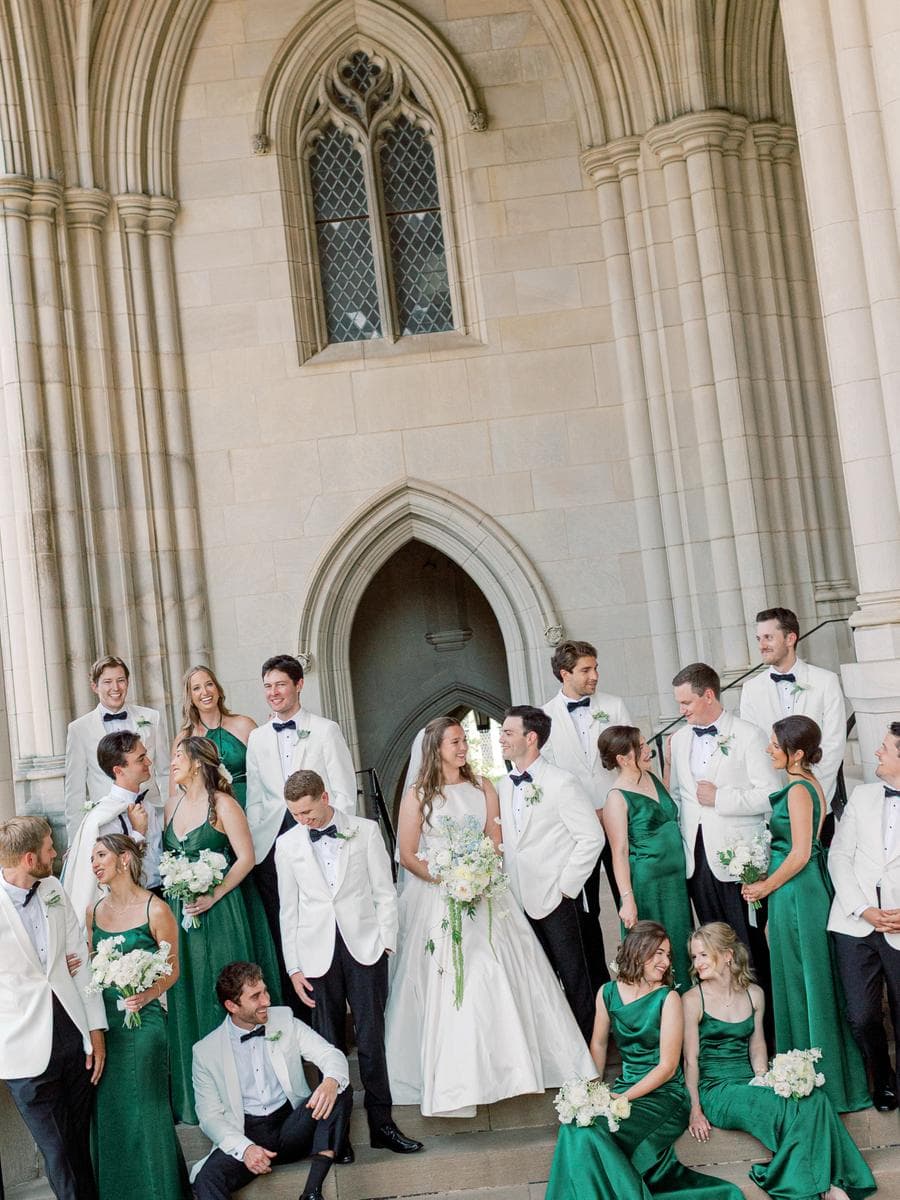
16 Wedding Dress Silhouettes Explained: Finding Your Perfect Bridal Shape
Before you choose a fabric or a veil, you need to choose a shape. These 16 bridal silhouettes determine everything else.

Before you fall in love with a lace appliqué or a cathedral train, something more fundamental is already deciding how you'll look on your wedding day. "A wedding dress silhouette is the shape or outline of your gown," according to Annasbridalcouture. "It's the first thing people see when you enter the room. More than fabric or details, it's how the waistline, skirt, and proportions work together." Everything else, the beading, the buttons, the blusher veil, is decoration layered on top of this foundation. Get the silhouette right, and the rest follows.
What makes silhouette shopping genuinely complicated is that the vocabulary is inconsistently used, even by industry insiders. Column and sheath appear as synonyms. Mermaid and trumpet are routinely conflated. Fit-and-flare hovers somewhere in between. What follows is a precise breakdown of each shape, grounded in what they actually look like and who they're most likely to flatter.
A-Line
The A-line is the workhorse of bridal fashion, and it earns that status. A fitted bodice gradually flares out from the waist to the hem, creating the literal shape of a capital A. Annasbridalcouture calls it "timeless and versatile, often considered the most universally flattering style for all body types," and it's not hyperbole: petite brides gain visual height from the elongating bodice, while pear and apple shapes benefit from the way the skirt softens the hips and midsection. If you are walking into a bridal boutique with no idea where to start, try an A-line first.
Ball Gown
The ball gown is the silhouette most people picture when they close their eyes and imagine a wedding dress. A fitted bodice gives way to a dramatically full, bell-shaped skirt that flares from the waist, creating the kind of entrance that fills a room. Annasbridalcouture describes it as "regal and dramatic, ideal for formal weddings and brides dreaming of a princess moment." The body-type specificity worth noting comes from Wonanyc: the ball gown is "a classic solution perfect for slim-hipped brides with fuller busts," where the voluminous skirt balances a fuller upper body. Cathedral ceilings and grand venues were made for this silhouette.
Sheath
The sheath, also called the column dress, does the opposite of the ball gown: it follows the body's natural contours from shoulder to hem without any dramatic flare. Annasbridalcouture calls it "sleek and minimalist, perfect for brides who love modern elegance with effortless lines." Wonanyc points out a practical benefit for petite brides specifically: "the snug fit gives petite brides an elongated look that helps them appear taller," while also noting it's an excellent choice for brides who want to draw deliberate attention to their curves. This is the silhouette for a minimalist civil ceremony or a sleek city hall wedding.
Column
Though often used interchangeably with sheath, column is the term preferred in certain bridal contexts to describe the same straight-line, form-fitting silhouette. Wonanyc explicitly pairs the terms as "sheath (column) dress," and The Knot's comprehensive silhouettes guide lists both column and sheath among the core bridal shapes. In practice, the distinction is largely semantic: both describe a dress that skims the body's natural shape without significant volume. The column framing tends to appear in more minimalist, architectural bridal collections.
Mermaid
The mermaid is the boldest of the curve-hugging silhouettes. It is fitted through the bodice and hips and then flares dramatically at the knee, creating the fin-like sweep that gives the silhouette its name. Thecollectionbridal puts it plainly: "the mermaid silhouette is fitted through the bodice and hips, then flares out at the knee. This style is perfect for brides who want to show off their curves and make a bold statement." The fit is uncompromising and the effect is cinematic, but movement can be restricted below the knee, which is worth factoring into reception plans.
Trumpet
The trumpet and mermaid are frequently confused, but the distinction matters enormously when you are the one wearing the dress. Thecollectionbridal offers the clearest technical breakdown: "while the mermaid shape has more volume and is more fitted through the hips, the trumpet silhouette is a more toned-down version. The trumpet wedding dress silhouette is straight from the bodice to the hips then gives way to a gradual flare starting at mid-thigh." That higher flare point makes the trumpet considerably more dance-friendly: you can "create or enhance your curves while still enjoying the freedom to dance the night away." If the mermaid is the drama queen of bridal silhouettes, the trumpet is its more practical sister.
Fit-and-Flare
Fit-and-flare sits in the comfortable middle ground between the rigidity of a mermaid and the volume of a ball gown. Wonanyc describes it precisely: the silhouette "is fitted through the bodice and hips, flaring out gradually towards the hemline in a soft and romantic finish." The key word is gradual. Where mermaid and trumpet flare at specific, defined points, fit-and-flare releases into the skirt more gently, creating what Wonanyc calls "terrific volume and movement" while still highlighting the upper body. It is explicitly described as "suitable for most body types," which makes it a strong starting point for brides who feel uncertain about both ends of the silhouette spectrum.
Empire
The empire waist gown is defined by its seam placement: the waistline sits just below the bust, and the skirt falls in a long, relatively unstructured line from that high point. Annasbridalcouture specifically recommends empire waist gowns for apple and oval body shapes, for brides "with a fuller midsection and less waist definition," noting that this style, combined with "vertical seams and soft draping," creates a lengthening, slimming effect. Historically associated with Regency-era romanticism, the empire waist has found renewed relevance in contemporary bridal through its forgiving, comfortable construction.

Tea Length
The tea-length dress falls between the knee and the ankle, roughly grazing the mid-calf. It is a silhouette with strong vintage credentials, closely associated with 1950s bridal and first-wave feminist wedding aesthetics, but it has maintained a consistent presence in modern collections for brides who want elegance without the weight of a full-length gown. It pairs naturally with block-heeled shoes and short veils and works particularly well for daytime and outdoor ceremonies where a sweeping train would be impractical.
Mini / Short
The bridal mini is no longer a novelty. Short dresses, falling above the knee, have moved from the reception-outfit category into primary wedding dress territory, particularly for civil ceremonies, elopements, and non-traditional celebrations. The silhouette allows for complete freedom of movement and lends itself to a wider range of fabrics, from crisp cotton to fluid silk charmeuse. Brides choosing a short dress often amplify the look with statement sleeves or significant embellishment at the neckline.
Asymmetrical
An asymmetrical hemline, whether it rises dramatically at the front and pools at the back or simply angles across one side, injects a sculptural quality into bridal dressing that more traditional silhouettes cannot replicate. This shape has particular resonance in contemporary editorial bridal, where the intersection of fashion and wedding wear has produced runway pieces that challenge what a wedding dress is required to look like. The asymmetrical hemline reads as confident and intentional rather than trying, which is precisely its appeal.
Jumpsuit
Wonanyc explicitly positions the bridal jumpsuit at the opposite end of the spectrum from the ball gown, framing it as "the contemporary" counterpoint to bridal tradition. Wide-leg, tailored, or cropped configurations all read as bridal when executed in ivory, champagne, or white fabrics. The jumpsuit silhouette is particularly well suited to brides who find dresses constricting and want to move, dance, and sit without managing a skirt, while still dressing deliberately for the occasion.
Drop Waist
The drop waist sits the seam below the natural waistline, at the hip, creating a elongated bodice and a skirt that falls from the lower hip point. This silhouette has roots in 1920s fashion and creates a lean, vertical line through the torso. It works well on athletic and rectangular body shapes, adding visual curve and definition where the natural waist is less pronounced.
Wrap
The wrap silhouette, borrowed directly from ready-to-wear, achieves its shape through fabric that crosses at the front and ties or buttons at the side. The result is a V-neckline that can be adjusted and a skirt that falls naturally from the point of crossing. In bridal, wrap dresses appear most often in softer fabrics: crepe, chiffon, and jersey that drape rather than structure. The silhouette is body-type-flexible and particularly flattering for brides who want to define the waist without the rigidity of boning.
Overskirt / Detachable Skirt
The overskirt or detachable skirt is less a silhouette on its own terms and more a transformation strategy: a dress designed to function as two distinct looks over the course of a wedding day. Typically, the ceremony look involves a fuller or longer overskirt, which is then removed to reveal a shorter or sleeker underlayer for the reception. Designers including Viktor and Rolf have built entire collections around this concept of sartorial transformation, and it has become a standard offering across all price points in bridal retail.
Square Neckline as Silhouette Modifier
While technically a neckline detail rather than a structural silhouette, the square neckline deserves a specific mention because it meaningfully alters how a silhouette reads on the body. Wonanyc describes it as "a straight edge that sits parallel to the collarbone," noting that it works across ball gown, A-line, and sheath silhouettes equally well. Critically, "the square neckline is the best choice for brides who don't mind showing off their shoulders and collarbones, as well as for those with a larger bust, as the straight line produces a balancing effect." The neckline is frequently paired with long, off-the-shoulder, or cap sleeves, giving it significant styling range.
Choosing a silhouette is not about finding the shape that is universally considered most beautiful. It is about understanding how the proportions of a given dress interact with your specific body, your venue's architecture, and the practical realities of how many hours you will spend wearing it. The brides who look most themselves on their wedding day are nearly always the ones who understood their silhouette first and built everything else around it.
Know something we missed? Have a correction or additional information?
Submit a Tip