A heartfelt San Miguel de Allende wedding after hurricane disruption
A hurricane rerouted the wedding, but the pivot made the style sharper: a Rebecca Schoneveld gown, a second look by Lesea Berry, and a deeply personal San Miguel de Allende celebration.
When the weather forces a pivot, the fashion gets better
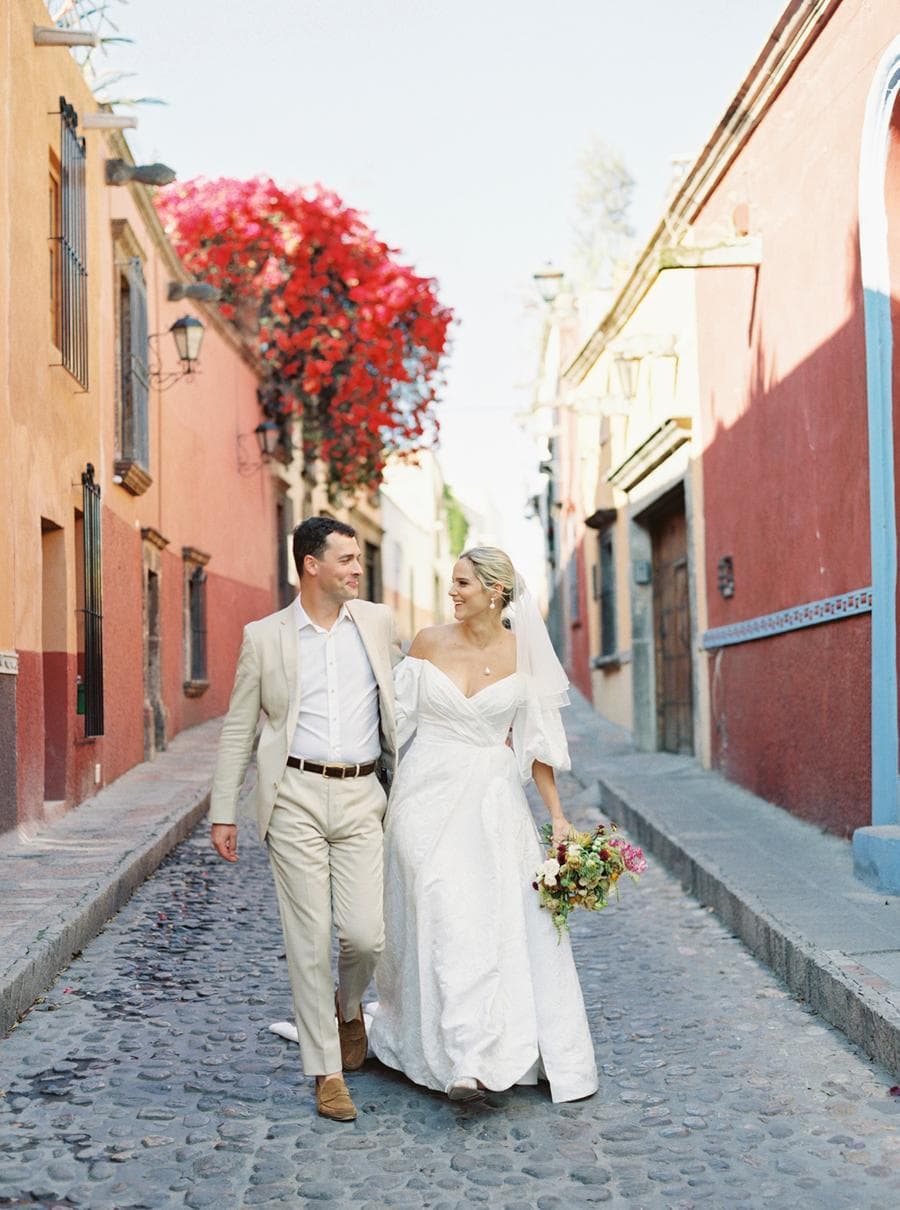
The hurricane did not flatten this wedding. It sharpened it. Hannah and Cory ended up with a more intimate San Miguel de Allende celebration that felt less like a backup plan and more like a very clear point of view: keep the clothes thoughtful, keep the setting historic, and let the emotion do the heavy lifting.
That is the real lesson here. A last-minute disruption does not have to dilute a wedding’s style story. If anything, it can strip away the excess and leave you with the good parts only, the pieces that feel personal enough to survive a change in location, scale, or mood.
Why San Miguel de Allende made the pivot work
San Miguel de Allende is built for this kind of wedding. The city’s historic center and the Sanctuary of Jesús Nazareno de Atotonilco were inscribed on the UNESCO World Heritage List on July 8, 2008, and Mexico’s INAH declared San Miguel de Allende a Zone of Historical Monuments back on July 28, 1982. That heritage shows up everywhere, in the colonial architecture, the cobblestone streets, and the old-world texture that makes the city such a magnet for destination weddings.
This is not a place that needs dressing up too hard. The stone, the courtyards, the layered history, all of it already gives you atmosphere. For a bride, that means the styling can be more exacting and less decorative. Instead of competing with the setting, the clothes can answer it.
The bridal wardrobe was smart, not overworked
Hannah wore a Rebecca Schoneveld gown for the day, and that choice makes perfect sense in a setting like this. Rebecca Schoneveld describes its bridal line as timeless and ethically produced, which fits a wedding that is trying to feel emotionally grounded rather than overly produced. The gown needed to carry the ceremony, move well through the city’s historic architecture, and look relaxed enough to belong in an intimate setting.
Then came the second look, which is where the styling really turned personal. For the evening, Hannah changed into a custom-made outfit by Lesea Berry, one of the photographer Lauren Megerdichian’s former brides. That detail matters because it turns the outfit into a relationship piece, not just a fashion one. The change from ceremony dress to custom evening wear gave the night a different temperature, something more intimate and a little more editorial, like a deliberate reset after the day’s emotional curveballs.
The morning look came from If Only If Nightwear, whose bridal pieces are designed in breathable cotton and silk for comfort while hair and makeup are being done. That is exactly the kind of detail brides should steal from this story: getting-ready clothes should not be an afterthought. If the morning is shared with your mother and best friend, and the day is already carrying the stress of a hurricane shift, the right robe or set needs to feel calm, soft, and photogenic without trying too hard.
The best contingency planning starts with the people in the room
The getting-ready morning included Hannah, her mother, and her best friend, and that intimacy is part of what gave the celebration its emotional weight. When a wedding changes shape, the temptation is to focus on logistics. This one did the opposite: it narrowed its circle and let the small moments become the luxury.
That is a strong model for bridal planning in a disruption-prone world. Instead of trying to recreate the original scale, the smarter move is often to make the day feel more considered. One beautiful gown, one comfortable prep look, one meaningful custom evening outfit, and the right people around you can say more than a bigger production ever could.
The venues kept the story anchored in place
The first part of the celebration unfolded at Belmond Casa de Sierra Nevada, a heritage hotel made up of several 17th-century mansions and one of the city’s most iconic celebration venues. It is the kind of property that already feels dressed for a wedding, with enough architectural character to make even a restrained event feel substantial.
Dinner moved to Casa Hoyos, a 17th-century manor in San Miguel de Allende’s old town. That shift from one historic property to another kept the night rooted in the city’s old bones, and it gave the celebration a progression that felt elegant rather than sprawling. If the first venue carries the ceremony, the second can tighten the mood, making dinner feel less like an add-on and more like the real afterglow of the day.
For brides planning around weather or travel uncertainty, this is the blueprint: choose spaces that can absorb a change in scale without losing identity. Old mansions, heritage hotels, and properties with strong architectural texture do that naturally. They make contingency feel intentional.
The tabletop styling proves that small-scale can still feel rich
The most tactile part of the wedding might also be the most useful one for anyone planning a pivot. Hannah and her mother designed the tabletop florals themselves using local flower-shop finds, handmade napkins, dishware, taper candles, and vases gathered in the days before the wedding. That mix of sourced and handmade elements gave the tables the kind of depth money alone cannot fake.
There is a real advantage to working this way after a disruption. Instead of forcing a uniform, overplanned reception look, you get a table that feels assembled with care. Local flowers bring immediacy. Handmade napkins and dishware add texture. Taper candles and gathered vases make the room glow without making it feel precious. The result is less polished in the corporate sense and more luxurious in the emotional sense.
- Use one standout gown for the day, then switch to a second look that shifts the tone for dinner.
- Treat getting-ready clothes like part of the event, not a hidden detail.
- Build tabletop styling from materials you can source quickly, then let handmade pieces carry the personality.
- Choose venues with enough architectural presence that they still feel complete if the guest count or timeline changes.
The larger lesson is about control, not perfection
This wedding works because it never looked like it was trying to erase the hurricane. It responded to it. The clothes became more personal, the guest list and morning rituals became more intimate, and the venues gave the celebration a sense of permanence even as the plans changed around it.
That is what elegant contingency planning looks like in bridal fashion: not a panic move, but a refinement. When the weather knocks a wedding off its original path, the smartest response is not to rebuild everything bigger. It is to strip the day down to the gestures that matter, then dress those gestures beautifully.
This article was produced by Prism’s automated news system from verified source data, official records, and press releases, then run through automated quality and moderation checks before publishing. The system is built and supervised by the people who set the standards it runs under. Read our full AI policy.
Did this article answer your question?