Bolder Bridal Rings, 2026 Couples Embrace Stacks, Mixed Metals and Gold
The new bridal ring formula is less matchy, more personal: thicker yellow gold, mixed metals and stacks built to evolve with the rest of your hand.
The end of the matching set
The bridal ring has stopped trying to be polite. Thick yellow-gold bands, bold eternity settings, mixed metals and stackable styles are taking over because couples want a ring that feels designed for their real life, not just the ceremony. The smartest 2026 choice is the one that works with your engagement ring, your wardrobe and the stack you may build later, not the one that simply matches by habit.
That shift makes sense in a wedding moment shaped by personality. The Knot’s wedding coverage has been clear that Gen Z couples are giving aesthetics more power because they grew up online, and the mood is leaning nostalgic too, with editors describing the season as one where “Something Old is Something New again.” In jewelry, that reads as updated classics rather than shy minimalism.
Start with the ring you already own
Before you fall for a band in a display case, look at your engagement ring as the anchor. If your center stone is delicate, a wider yellow-gold wedding band can give the whole hand more presence and keep the pairing from feeling too fussy. If your engagement ring already has strong sparkle or a distinctive shape, a clean plain-metal band or a slim diamond band can keep the balance sharp instead of crowded.
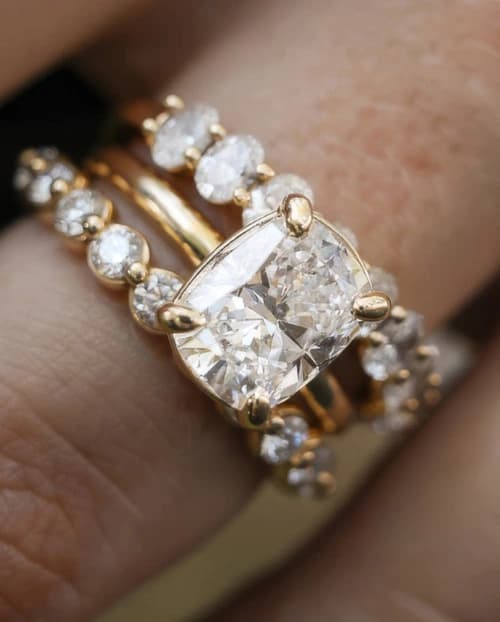
That is why chunky stacks have become so compelling. The Knot’s wedding-jewelry coverage pointed to stacks made from fancy-cut eternity bands, wide plain metal bands and classic diamond bands, and Annie Chen, VP of Merchandising at Brilliant Earth, said some customers are even choosing stacks instead of an engagement ring. That is the real story here: the wedding band is no longer just the supporting role. Sometimes it is the lead.
Yellow gold is back because it feels decisive
The move toward thicker yellow-gold bands is not only about nostalgia. Yellow gold has a warmer, more saturated presence than white metal, and in a chunkier profile it reads as intentional rather than dainty. A substantial gold band also has more visual weight next to an engagement ring, which matters if you want the wedding ring to look like part of a composed look rather than a thin afterthought.
For brides deciding between yellow gold and a mixed-metal stack, the choice comes down to mood. Yellow gold alone gives you a strong, cohesive statement. Mixed metals feel looser and more fashion-led, especially if you already wear silver hardware, have a platinum engagement ring or want the band to work with future additions. The appeal is that the hand starts to look styled, not just accessorized.

If you plan to stack, think in layers now
Stackable styles are the most practical expression of this trend because they let you build over time. A wedding band can begin as the base layer, then make room for an anniversary ring, a slim pavé band or a second metal later. That is a very different mindset from the old one-and-done bridal formula, and it is exactly why the trend feels fresh rather than merely decorative.
The Knot’s jewelry expert Annie Chen described stacks that mix fancy-cut eternity bands with wide plain bands and classic diamond bands, and that combination is useful because it gives each layer a job. One ring can bring shine, one can bring structure and one can bring contrast. If you like a hand that looks collected rather than matched, this is the easiest route to a personalized bridal set.
Don’t ignore the men’s ring, because the trend has widened
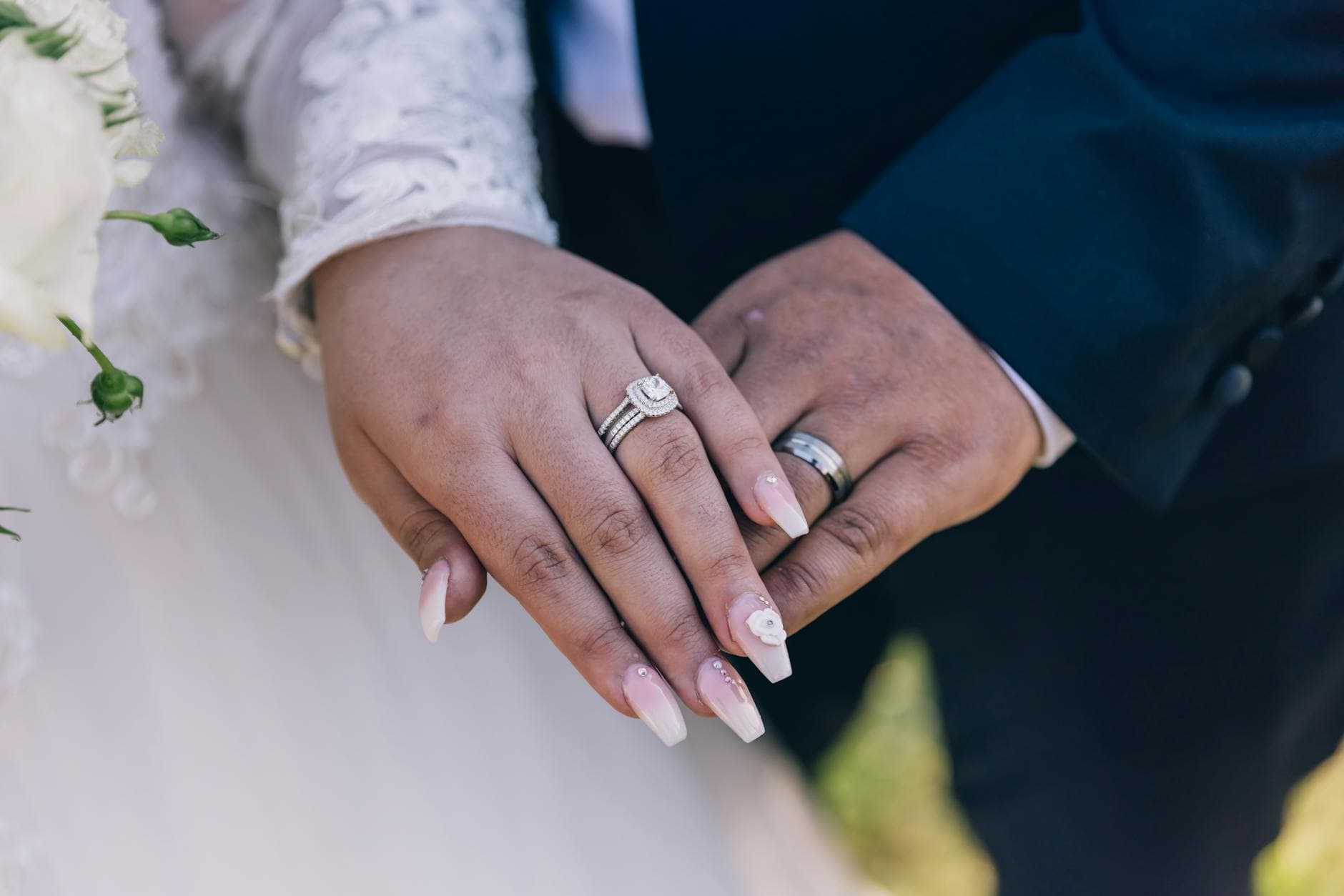
Bridal style is broadening across genders, and the men’s ring conversation matters here. The Knot’s men’s ring coverage pointed to thinner bands expanding in the United States, influenced partly by European styles in the 2mm to 3mm range, and noted that slimmer bands can be easier to stack with an engagement ring. It also highlighted coordinating rings and watches, which tells you the language of bridal jewelry is becoming more complete and more edited.
That broader view matters for couples who want both rings to feel like part of the same visual family without looking identical. A slimmer men’s band alongside a stacked or mixed-metal bridal set creates contrast, not competition. It also gives the overall wedding look a cleaner finish, especially if the rest of the styling leans modern or tailored.
Why this feels like a fashion story, not just a jewelry one
The best clue to where bridal rings are heading came from the runways and high jewelry. W Magazine’s 2025 coverage of Paris Couture Week showed designers going bigger, bolder and more experimental with color and technique, using unconventional materials like black titanium, 3-D-printed materials, aluminum and black ceramic coating. That appetite for risk is part of why bold bands and mixed-metal stacks now feel so current. They echo fashion’s wider move toward stronger silhouettes and more expressive material choices.
W’s spring 2026 accessory coverage made the point even more clearly, showing how classic silhouettes are being updated rather than discarded. Bridal jewelry is doing the same thing. A thicker gold band, a statement eternity ring or a stack that mixes metals may look traditional at first glance, but the proportions and combinations are what make them feel modern.
How to choose the right band for your life, not just your wedding photos
A bridal ring should survive more than one camera flash. It should make sense at dinner, at work and years into the marriage when you start adding rings around it.
- Choose a thicker yellow-gold band if you want a confident, highly visible ring that can stand up to a solitaire or anchor a stack.
- Choose a fancy-cut eternity band if you want sparkle that feels more architectural than delicate.
- Choose a wide plain metal band if your engagement ring already does a lot of the talking.
- Choose mixed metals if you want flexibility, contrast and a look that can evolve with future additions.
- Choose a slimmer band if you are pairing it with another ring later, or if you want the hand to feel lighter and more tailored.
The old bridal rule was harmony at all costs. The new one is far better: choose the ring that reflects how you actually dress, how you already wear jewelry and how many layers you want your story to have. In 2026, the most convincing bridal ring is not the one that matches the set. It is the one that makes the entire hand look finished.
This article was produced by Prism’s automated news system from verified source data, official records, and press releases, then run through automated quality and moderation checks before publishing. The system is built and supervised by the people who set the standards it runs under. Read our full AI policy.
Did this article answer your question?