Bridal Capes, Capelets, and Detachable Overskirts: A Complete Style Guide
The bridal cape is having a moment, and it's not going anywhere. Here's how to wear one right.
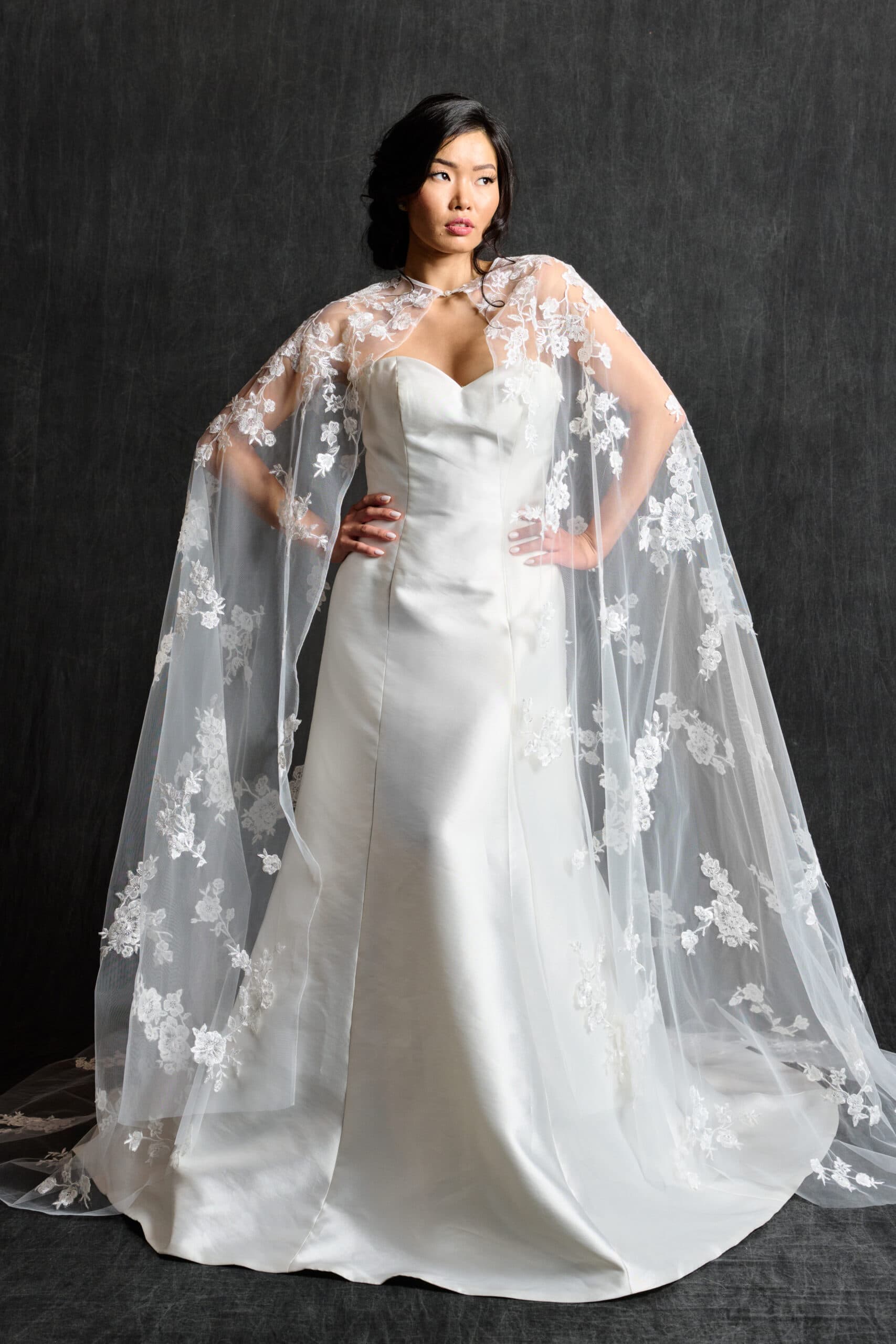
The internet has spent the last two seasons collectively losing its mind over a single bridal accessory: the cape. Not the veil, not the corset, not the statement sleeve. The cape. From floor-grazing silk charmeuse panels worn over column gowns to delicate lace capelets that graze the collarbone, this one piece has quietly repositioned itself as the most versatile, most rewearable, most visually arresting thing a bride can put on her body. And once you understand the different forms it takes, it's nearly impossible to unsee it at every major bridal market.
What makes a bridal cape different from a veil
The veil carries weight, literally and symbolically. It signals tradition, ceremony, a specific kind of femininity. A cape does something different: it adds drama without submission to ritual. You wear it; it doesn't wear you. That distinction matters to a new generation of brides who want presence without pageantry. Where a cathedral veil trails behind you as an afterthought, a floor-length bridal cape frames the entire silhouette, front to back, creating a complete look rather than an addendum. The practical argument is equally strong: a cape can be removed after the ceremony and worn again, to a dinner, a gallery opening, even styled over tailored trousers for an anniversary.
The main types
Understanding the vocabulary of bridal capes is the first step to shopping them intelligently.
The *full floor-length cape* is the most theatrical option. It typically attaches at the shoulders or neckline and falls all the way to the floor, often with a slight train. In silk organza or tulle, it reads as ethereal; in duchess satin or structured crepe, it's architectural and commanding. This is the choice for a bride who wants a single dramatic statement rather than layered accessories.
The *shoulder cape*, often called a capelet, is shorter, typically hitting somewhere between the mid-back and the waist. It's inherently more relaxed, and it layers beautifully over strapless or off-shoulder gowns without competing with the neckline. A lace shoulder cape over a clean silk slip gown is one of the most elegant combinations in contemporary bridal dressing.
*Collar capes* sit closer to the neck and shoulders, functioning almost like an exaggerated collar or a structured bertha. They're the most architectural of the three and tend to photograph exceptionally well because they frame the face and shoulders in every shot. In beaded or embroidered fabrications, a collar cape can serve as the entire jewelry statement for the look.
The *detachable overskirt* is technically in its own category, but it belongs in this conversation because it operates on the same logic: it transforms the silhouette, it's removable, and it gives a bride two distinct looks within a single outfit. A fitted crepe gown with a detachable silk organza overskirt reads as formal and romantic for the ceremony; remove the skirt for the reception and suddenly you're in a sleek, dancing-ready dress. It's one of the most practical innovations in bridal design.
Fabric and what it communicates
Fabric choice in a bridal cape is a decision about mood as much as aesthetics. Tulle and silk organza catch light and movement, creating the impression of something barely there; they're the right choice when the goal is softness. Lace, particularly Chantilly or Alençon, signals heritage and romance, and it connects the cape visually to more traditional bridal codes. Structured fabrics like duchess satin or silk mikado give the cape weight and presence; these are capes that make a room aware of you when you enter.

Embellishment pushes any of these further. Scattered beading along the hem of a tulle cape creates the impression of candlelight. Dense floral embroidery on a collar cape can replace every other accessory on the body. The key editorial principle: let the cape be the statement. If the gown is heavily embellished, the cape should be clean and simple. If the gown is minimal, the cape is where you spend the drama.
Styling the two-look approach
One of the strongest arguments for a detachable piece of any kind is the ceremony-to-reception transformation. Brides who wear a full floor-length cape for the ceremony and remove it to reveal a simpler gown for the reception consistently report it as one of their best styling decisions. The visual shift is dramatic without requiring a full outfit change, and it marks the transition between the two parts of the day in a way that feels intentional rather than accidental.
- Choose a gown that reads as complete on its own. The cape should enhance it, not rescue it.
- Match fabrication weight. A heavy satin gown can carry a structured cape; a fluid bias-cut gown needs something equally soft over it.
- Consider the removal moment. If you're wearing a floor-length cape with elaborate fastenings, you need a plan for who is removing it and when.
- Photograph both looks intentionally. Ask your photographer to capture the cape on and the gown alone as distinct editorial moments.
The styling logic for this approach:
Who this approach works for
The practical appeal of a bridal cape extends across body types and venue contexts. For brides who want coverage without the visual weight of a long sleeve, a shoulder cape provides exactly that. For brides marrying in colder months or in venues where bare shoulders feel inappropriate, a full cape solves the modesty question without compromising the gown. For brides who find veils uncomfortable or anachronistic, a cape offers the same ceremonial gravitas through silhouette rather than tradition.
The venue conversation matters too. A floor-length cape in silk organza works in a cathedral or a great hall. A lace capelet is better scaled to a garden ceremony or a small chapel. A structured collar cape suits modernist or industrial spaces where the architecture itself is minimal and the fashion needs to carry the visual weight.
The rewear argument
This is where the cape distinguishes itself from almost every other bridal accessory. A veil has exactly one context. A bridal cape, particularly one in ivory, champagne, or a neutral that skews wearable, can be restyled after the wedding in ways that make the cost-per-wear calculation genuinely attractive. Over a black turtleneck and wide-leg trousers, a silk organza cape reads as evening wear. Over a blazer, a structured crepe cape becomes outerwear with a point of view. The brides who approach the cape as a wardrobe investment rather than a one-day costume tend to make the most interesting choices and end up with the most compelling photographs.
The bridal cape has earned its place not because trends demanded it but because it solves real problems: drama, coverage, versatility, and the ability to mark time across a single day. That combination of function and fantasy is, in the end, exactly what the best bridal fashion has always been built on.
Know something we missed? Have a correction or additional information?
Submit a Tip