Bridal rings turn bold, as east-west settings gain favor
Bold engagement rings are making the matching band feel optional, and east-west settings are leading the reset.
The old bridal formula is being rewritten
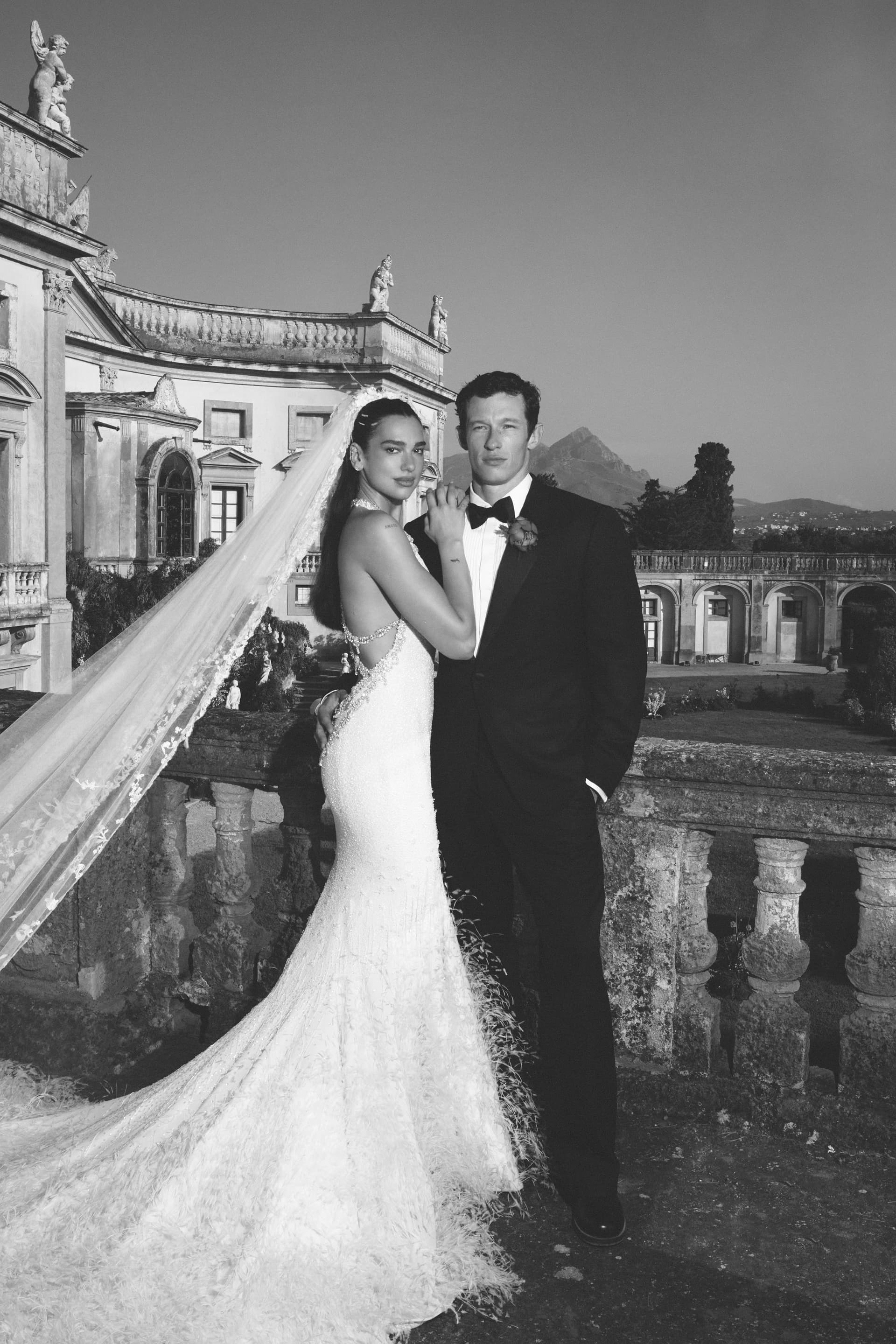
The matched wedding set is losing its monopoly. A chunky gold ring can now carry the whole look, which is exactly why Dua Lipa’s summer 2025 engagement ring, a round diamond in a semi-bezel setting, set off a rush toward cigar bands and heavier profiles. Miley Cyrus followed with a thick yellow-gold east-west cushion-cut ring in a semi-bezel setting, and the message was clear: the new bridal ring is meant to look styled, not simply paired.
That shift is changing what couples expect from the wedding band. WWD describes this moment as a new era of bold, statement-making personality, with some clients skipping a separate wedding band altogether, others building a stack over time, and more jewelers offering enamel bands, mixed metals, and design-driven alternatives that feel closer to everyday jewelry than ceremonial punctuation. Jillian Sassone of Marrow Fine Jewelry puts it plainly: the band is evolving alongside the engagement ring because people want the two pieces to work together through contrast, shape, and texture rather than simply match.
East-west settings: the smartest way to keep a ring feeling fresh
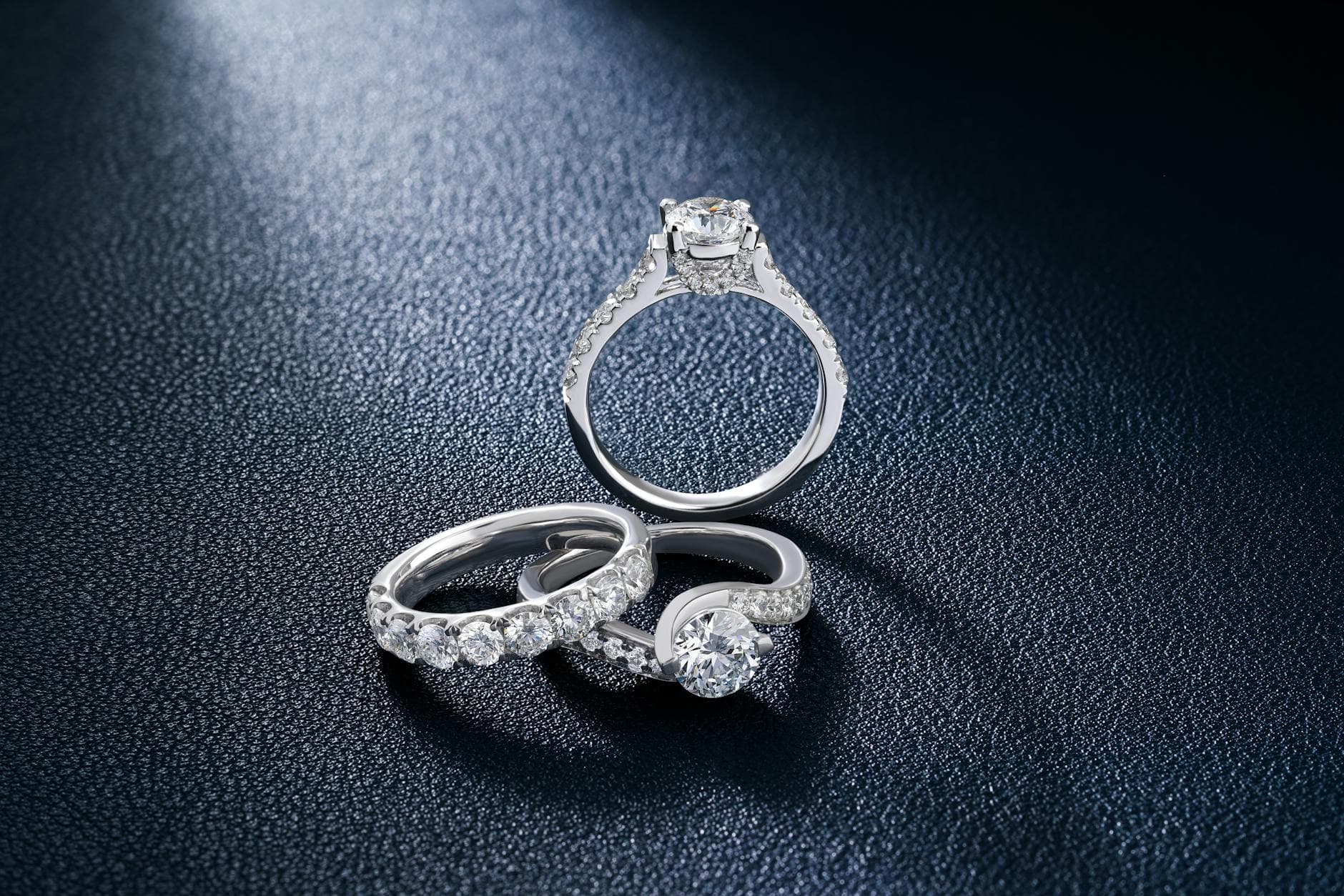
East-west rings are not a passing novelty. The style dates back to the 1920s Art Deco movement, and The Knot says it has been a significant trend since 2020, which helps explain why it feels both vintage and sharply current. Rotating the center stone sideways gives even a familiar shape, like oval or cushion, a new line and a little tension on the hand.
For the wedding band, that sideways orientation calls for restraint. A slim band, a clean half-eternity, or a simple metal ribbon usually works best because it lets the horizontal stone stay the focal point. If the engagement ring already reads graphic, the band should support the composition, not compete with it. Marrow Fine Jewelry’s stackable bands are designed to sit flush or nearly flush against engagement rings, which is exactly the kind of fit that makes an east-west setting feel intentional rather than improvised.
What to wear with an east-west ring
- Choose a narrow band if you want the setting to look architectural and modern.
- Look for a band that sits flush or nearly flush if the ring has a low profile.
- Skip anything so ornate that it fights the sideways stone for attention.
Chunky domes and cigar-band energy need breathing room
The rise of chunky gold engagement rings has made the old “match the weight” rule look dated. When a ring is already broad, rounded, or cigar-band-adjacent, the wedding band should usually ease off the volume. A delicate pavé band, a fine plain band, or a softly contoured design gives the eye somewhere to rest and keeps the set from feeling heavy.
That does not mean the look has to be minimal. In fact, the appeal of chunky domes is their confidence, so the band can echo that mood without copying it. A second thick band can work if you want a stacked, fashion-forward effect, but the most elegant result often comes from contrast: one substantial statement and one lighter line beside it. That is the difference between looking fully styled and looking overbuilt.
How to balance a chunky ring
- Pair a dome or cigar-band ring with a thinner wedding band for contrast.
- Try a plain band in the same metal if you want the set to feel polished, not busy.
- Save heavy-on-heavy stacking for when you want the ring set to read like a deliberate fashion piece.
Sculptural profiles call for bands that repeat the shape, not the drama
Sculptural rings, with softened edges, curves, and custom-looking contours, are part of the same move toward jewelry that feels designed around the wearer. These are the rings that look less like a template and more like a small object with presence. The wedding band should answer that language, not flatten it into a generic pairing.
A rounded band can echo the sculptural feel without overwhelming it. So can a clean, slightly knife-edge profile or a refined half-bezel-inspired band if the engagement ring already has strong geometry. The goal is not perfect symmetry; it is visual conversation. That is why so many couples are moving away from the old assumption that both rings must be identical in mood.
Mixed metals and enamel bands are making the set look collected, not prescribed
Mixed metals are no longer an accident to hide. They are part of the look. Jewelers are leaning into yellow gold, white gold, rose gold, and even enamel bands because modern bridal jewelry is increasingly treated like a wardrobe, not a uniform. If the engagement ring is warm yellow gold, a white or rose gold wedding band can sharpen the contrast and keep the stack from feeling flat.
The Knot’s 2024 Jewelry and Engagement Study shows why this works so well right now. Round center stones still lead the U.S. market at 28 percent, with oval at 25 percent, but the metal picture is more varied: white gold remains the most popular at 35 percent, rose gold follows at 33 percent, and yellow gold has risen 15 percent over the past three years. The average center stone sits at 1.7 carats, which tells you the market still values wearability, even as styling gets bolder.
The practical rule for mixed metals
- Use contrast on purpose, not by default.
- Keep one metal dominant and let the second act as a highlight.
- Consider enamel if you want color and an everyday-jewelry feel.
The market is still classic, even as taste gets sharper
The broader diamond picture is not abandoning tradition so much as loosening it. The Natural Diamond Council’s 2025 report, based on more than four million transactions across 2,500 U.S. specialty jewelers, found that specialty jeweler sales of natural diamonds rose 2.1 percent and the average price of natural diamond jewelry increased 10 percent. Round brilliant diamonds still led engagement-ring sales at 62 percent, but marquise shapes grew 12 percent year over year, proof that buyers are still anchored in familiar stones while becoming more open to distinctive silhouettes.
That tension is the whole story. Couples still want a ring that feels like an engagement ring, but they want more room inside the category for shape, texture, and personality. A separate wedding band is no longer obligatory if the engagement ring already reads complete. A stack can grow over time. A two-in-one ring can do the whole job from the start. Even the budget tells the story: a Plumb Club and Jewelers Mutual study put the average engagement-ring value range between $2,500 and $5,000, which is exactly the kind of range where design choices matter as much as carat weight.
The new bridal set is not about matching everything perfectly. It is about building a combination that feels considered now and still makes sense after the wedding photos are done.
This article was produced by Prism’s automated news system from verified source data, official records, and press releases, then run through automated quality and moderation checks before publishing. The system is built and supervised by the people who set the standards it runs under. Read our full AI policy.
Did this article answer your question?