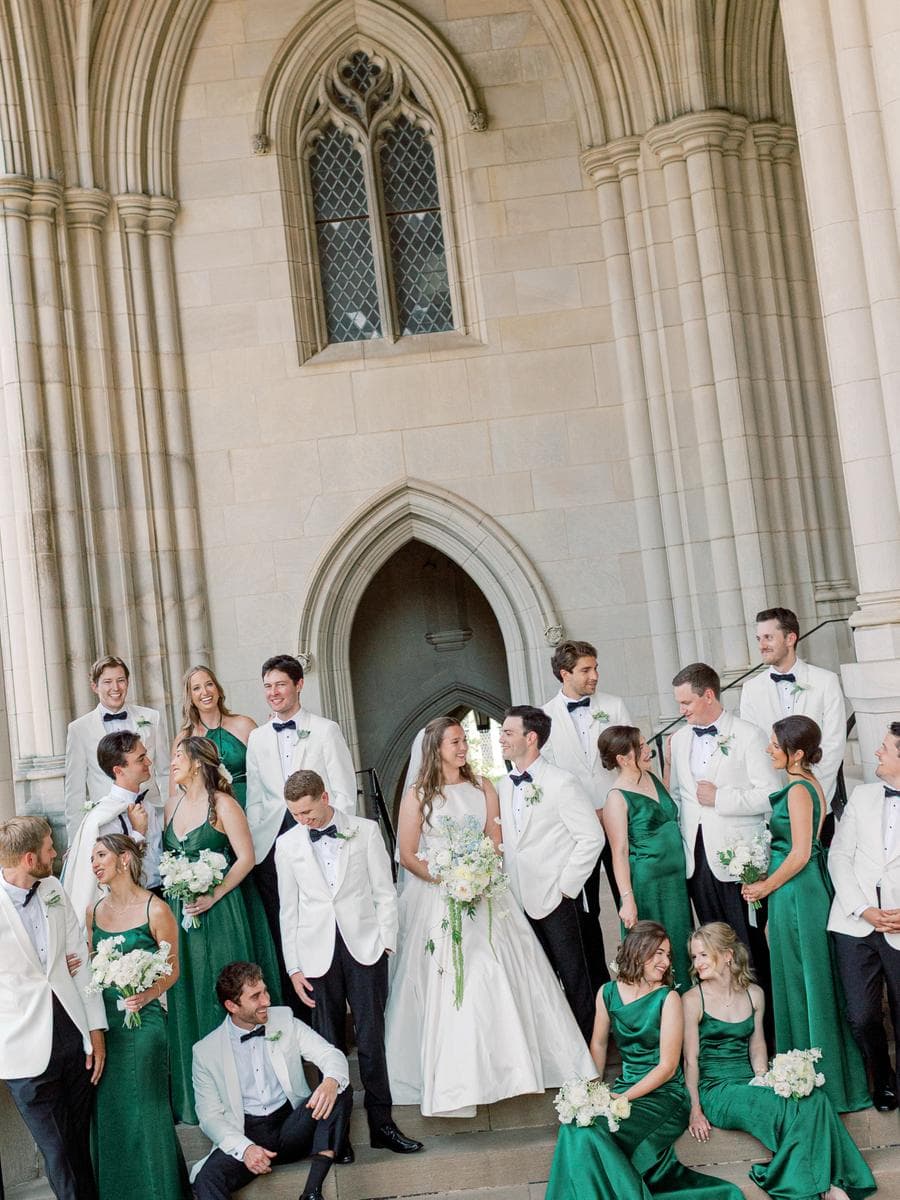
Bride Transforms Her Mother's 1990 Wedding Gown Into a Fall Reception Look
A bride's decision to rework her mother's 1990 wedding gown into a fall reception look is the kind of sentimental style move that the rest of the internet is only just catching up to.
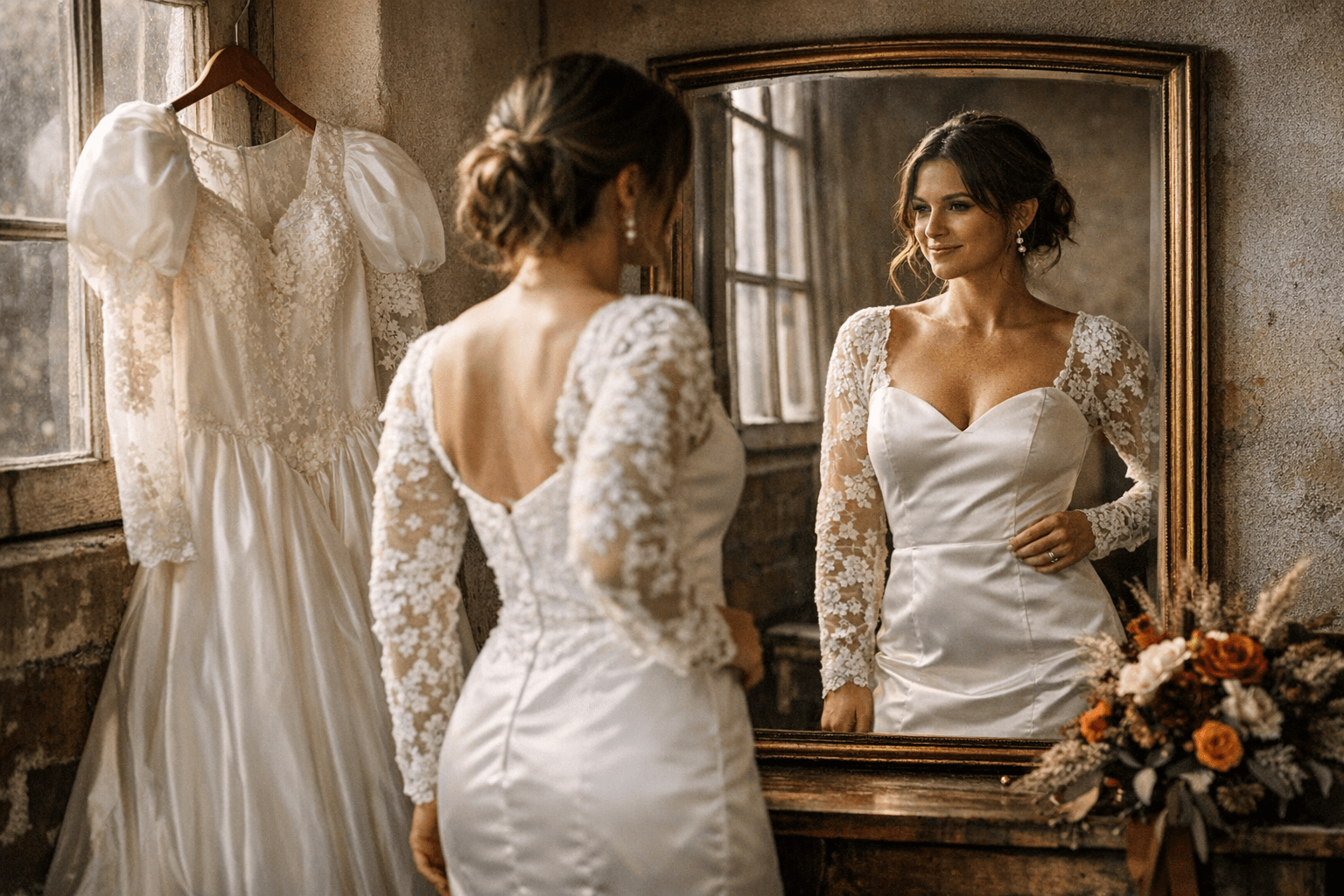
Something shifts when a bride walks back onto the dance floor in a dress her mother wore to say "I do." It isn't just a costume change; it's a conversation across thirty-six years, stitched into a new silhouette. That's exactly what happened at a rustic-meets-garden fall wedding at The Inn at Fernbrook Farms, where one bride transformed her mother's 1990 wedding gown into a reception look — a decision that captures one of the most meaningful style movements in bridal fashion right now.
Why a 1990 Gown Is the Most Compelling Thing You Can Wear to Your Own Reception
The early 1990s were a distinctive moment in bridal fashion: puffed sleeves with strong structure, voluminous skirts in ivory or stark white, lace overlays with a slightly stiff formality, and silhouettes that read as ceremony-serious from every angle. Wearing one of those gowns as-is to a fall harvest reception would be a statement, but refashioning it into something wearable on the dance floor is where the real artistry lives. The challenge, and the thrill, is honoring the original without being held hostage to it.
Many brides today choose to repurpose their mom's wedding dress into a rehearsal dinner, bridal shower, or second reception dress. The Fernbrook bride took that impulse further, making the transformed gown her actual reception look — not a separate event outfit, but the dress she changed into for the party portion of her own wedding day. That positioning matters. It makes the gesture visible to everyone who matters most.
The Setting: Why Fernbrook Made It Work
The choice of venue was no accident. The Inn at Fernbrook Farms is a charming country wedding venue located in Chesterfield, New Jersey, with 230 acres of stunning farmland surrounded by gardens and exquisite living quarters. The three-story Georgian Manor House was built in 1760 and proudly sits on 230 acres of what is actually a working farm. That kind of setting, rooted, living, aged with intention, creates natural permission for a fashion moment that draws on the past. A repurposed heirloom gown would feel out of place against a sleek ballroom backdrop; against Fernbrook's meadows, stone walls, and autumn light, it feels like it was always meant to be there.
Twenty acres of organic vegetable farmlands provide the freshest ingredients for the Kitchen at Fernbrook, which provides seasonal menus planned with their Resident Chef, each freshly prepared from seasonal farm ingredients. The whole ethos of the place, farm-to-table, handmade, rooted in the land, is a natural philosophical companion to the idea of wearing something inherited and remade.
The Art of the Redesign
Refashioning an heirloom gown for a reception requires a clear editorial eye. The goal isn't preservation; it's transformation. A 1990 gown typically arrives with excess: excess fabric in the skirt, excess structure in the bodice, excess formality in the sleeve. A skilled redesign strips away what no longer serves and keeps what carries meaning.
One of the most effective wedding dress alterations is to shorten the gown and wear it as a fun wedding reception second dress. But shortening is only the beginning. The bodice can be restructured, sleeves removed or recut, and decorative elements like lace trim or appliqué repositioned to suit a modern silhouette. For a fall wedding, warm-toned accessories — think amber-heeled boots, a burnt sienna ribbon sash, or deep floral hair pieces — can bridge the gown's original era with its autumnal new context.
Lovell Cox, owner and designer of Lovellfaye, specializes in remaking brides' mothers' wedding dresses into totally custom creations. Cox describes the redesign process as "a way to incorporate new memories that can be passed down." That framing is exactly right: the Fernbrook bride wasn't just altering a dress; she was authoring a new chapter in its story.
What the Bridal Fashion World Is Doing Right Now
This bride's instinct is completely in step with where bridal fashion is heading. According to bridal boutique founder Annelise Sealy, "The art of layering takes centre stage in 2026," with an "unexpected approach that adds depth, dimension, and personalisation, allowing a single gown to feel effortlessly ceremonial for the aisle and stripped-back for the reception." The repurposed heirloom gown takes that layering principle to its most meaningful extreme.
For 2026, detachable overskirts and sleeves are trending, as well as accessory change-ups like adding a neck scarf for the reception. The multi-look wedding day has become a full design philosophy. One style in particular is up around 230% from this time last year. What this bride did at Fernbrook isn't a sentimental outlier; it's the editorial edge of a major fashion movement.
How to Pull This Off at Your Own Wedding
If a mother's gown is sitting in a box somewhere and the date is set, here is how to approach the redesign with intention:
1. Assess the fabric first. Thirty-year-old silk, satin, and lace can yellow, stiffen, or fray.
Have a specialist examine the material before committing to a cut. Fabric in poor condition can still yield beautiful accessories even if a full dress remake isn't viable.
2. Define the new silhouette before touching the original. Sketch or source inspiration images for what the reception look should feel like.
A mini dress, a column skirt, a tea-length A-line: commit to a direction before any scissors come out.
3. Preserve at least one original element. Whether it's a section of lace at the hem, a button detail at the wrist, or an embroidered neckline panel, keeping one recognizable piece of the original gown makes the story legible to guests and to the mother who wore it first.
4. Match the redesign to the venue's mood. Using a repurposed mother's wedding dress is the perfect way to honor tradition and family while putting your own modern spin on an heirloom.
At a rustic farm setting like Fernbrook, that modern spin might mean looser construction, earthy textures, and a hemline that clears the ground for dancing. A formal ballroom calls for a different edit entirely.
5. Plan the reveal. The reception entrance in the remade dress is a full fashion moment.
Consider how the lighting, the room, and the crowd will receive it — and make sure your photographer knows it's coming.
Why This Matters Beyond One Wedding
There is a quiet cultural argument being made every time a bride walks into her reception in a dress her mother once wore to hers. It pushes back against the disposability that defines so much of fashion: the idea that a garment serves one moment and then disappears into storage or a donation bin. The nostalgic element of using a mom's repurposed wedding dress is an extra special way of wearing "something borrowed" for your wedding.
A 1990 gown redesigned for a 2025 fall reception at a 1760 Georgian farmhouse isn't just a style choice. It's an argument that the best things you can wear are the ones that already mean something. The Fernbrook bride made that argument beautifully, and bridal fashion is paying attention.
Know something we missed? Have a correction or additional information?
Submit a Tip