Bride's Convertible Gown and Mantilla Veil Transformed From Ceremony to Reception
One bride's custom mantilla veil and convertible gown did double duty: sweeping ceremony drama, then an effortless reception transformation that every wedding-season bride should steal.
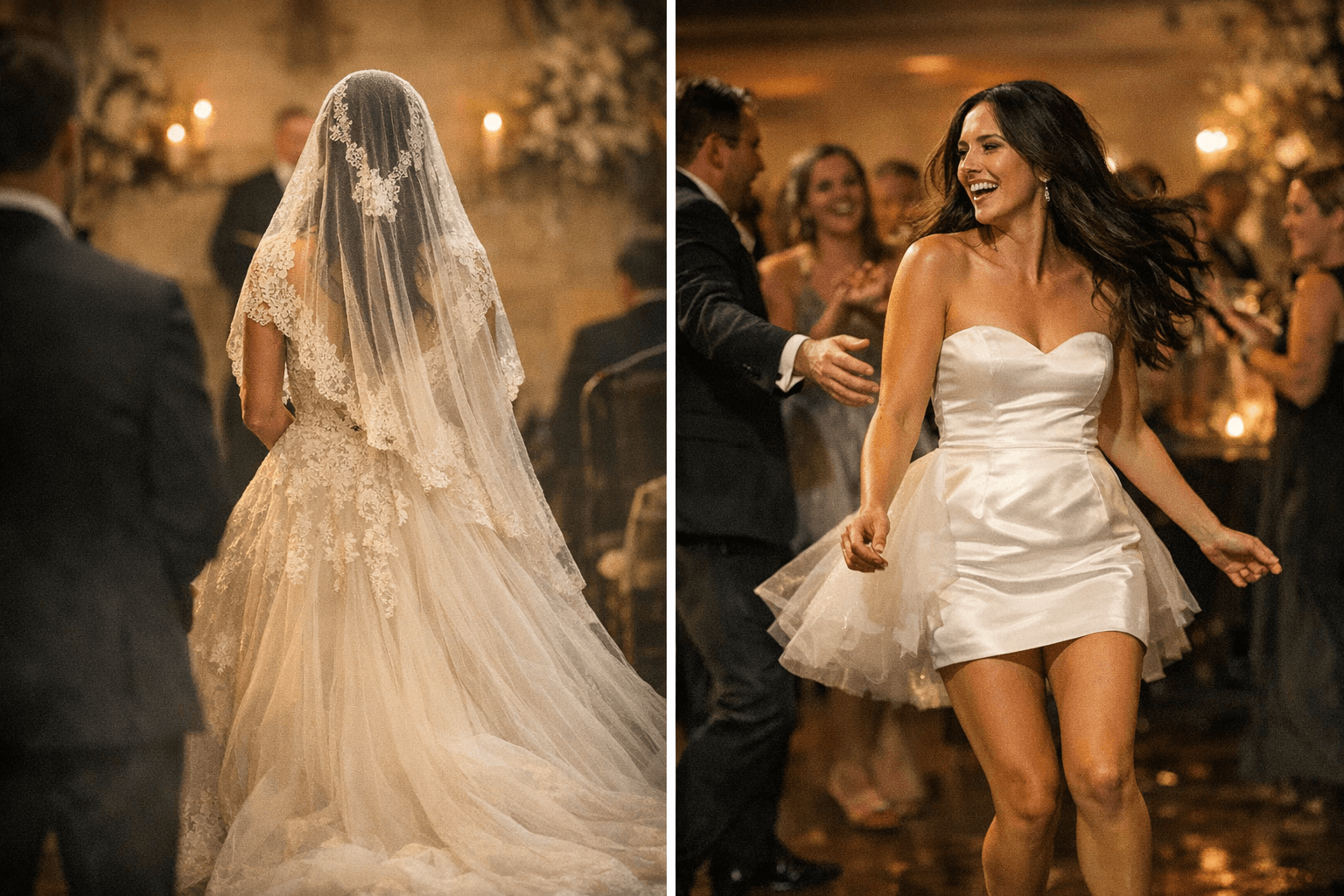
There's a specific kind of wedding photograph that stops you mid-scroll: a bride from behind, a lace mantilla cascading from crown to floor, a train pooling at her feet, the whole image somehow both ancient and entirely of this moment. That was the vision one bride executed with precision, building a Northern Lights-inspired wedding around muted sage, organic ikebana florals, and a bridal look engineered to transform completely from ceremony to reception. The strategy was simple and brilliant. One gown, one veil, two entirely distinct silhouettes.
A convertible wedding dress is a single gown designed with removable or detachable elements that allow a bride to transform her look between the ceremony and the reception, and these two-in-one styles are one of the fastest-growing bridal trends for 2026 and 2027. This bride chose the most elegant expression of that concept: a timeless classic gown with a detachable train, worn with a custom mantilla veil that gave the ceremony the full weight of occasion, then came away to reveal something altogether freer for the party that followed.
The Gown: Ceremony Grandeur, Reception Freedom
Detachable trains, also known as court trains, extend from the waistline of the dress and are considered a more formal touch than a train that extends from the hem of the skirt. The distinction matters aesthetically: a waist-attached train creates a clean, uninterrupted line from bodice to hem, so that when it is removed, the underlying silhouette reads as complete and intentional rather than abruptly truncated.
The biggest perk to a wedding dress with a detachable train is not having to find a way to bustle yards and yards of fabric or try to celebrate in a heavy skirt. The key distinction from an accessory is that convertible elements are designed with the gown using the same fabric, same beading, and same aesthetic, so removing or adding them feels intentional and seamless, not like an afterthought. For a bride who wanted the full classical drama of a sweep down the aisle without sacrificing her ability to actually move through a reception, this was the only sensible choice.
Most brides who choose convertible gowns wear the fuller, more dramatic version for the ceremony and photos, then remove the detachable element for cocktail hour or the reception. The transformation isn't merely practical; it is theatrical in the best sense, a reveal that gives the reception its own distinct visual chapter.
The Mantilla Veil: Heritage Drama
Rooted in centuries of Spanish tradition and worn by queens, countesses, and the world's most photographed brides, the mantilla is one of bridal fashion's great icons, and in 2026, it is having the kind of cultural moment that only comes around once in a generation.
This bride commissioned a custom mantilla rather than pulling from ready-to-wear, a decision that shows in the photographs. The mantilla is one of the few bridal accessories with genuine heritage weight; unlike trends that feel of-the-moment, it connects a bride to something older and more significant, the tradition of draping fine lace over a woman's face and hair as she walks towards the most important moment of her life.
No other veil silhouette frames the face in quite this way, and none creates the same soft halo effect in photographs. Paired with a gown that was already doing the architectural work of a formal silhouette, the mantilla layered on that secondary quality of softness that only lace can provide: structured from a distance, delicate up close.
Mantilla veils are the fastest-growing bridal accessory trend of the year, outpacing cathedral veils, blusher veils, and embellished headpieces combined, and bridal editors, fashion directors, and real brides are all saying the same thing: this is the silhouette of the season.
Styling the Transition
The ceremony-to-reception transformation required no outfit change, only a strategic removal of two pieces. Off came the train, detached at the waist. Off came the mantilla. What remained was the same classic gown, now reading as something altogether more contemporary: cleaner, lighter, ready to move. Later in the evening, the bride changed entirely, completing the three-act arc that the best wedding days tend to follow.
Detachable sleeves and overskirts can shift a ceremony gown into something appropriate for a dinner table, then be removed entirely for dancing, and this is not just a styling conversation but a practical one: brides who invest in convertible pieces or versatile separates are getting significantly more use from their bridal wardrobe, spreading the cost and the joy across an entire weekend rather than a single afternoon.
The sequencing here was the point. The ceremony called for ceremony-level dressing: the full train, the mantilla, every inch of the look engineered for the gravity of the aisle. The reception called for something that could keep pace with the dancing, the toasts, the movement of a long night. In 2026, veils are less about tradition for tradition's sake and more about intentional styling, with brides choosing veils that feel personal, fashion-forward, and thoughtfully aligned with their overall wedding vision. Wearing the mantilla for ceremony and removing it for the reception is exactly that kind of intentionality made visible.
The Setting: Northern Lights Palette and Ikebana Florals
The bride's styling choices landed with far greater impact because of the world built around them. The wedding's Northern Lights-inspired palette in muted sage is the kind of color direction that works precisely because it refuses to compete. Sage has become one of 2026's defining wedding tones; there is a notable shift towards bold and joyful colour, with sage among the palettes defining this season alongside terracotta, ochre, and lavender. Here, muted sage kept the atmosphere cool and luminous, a quiet backdrop that made white lace read all the more brilliantly.
The florals completed the picture. The fusion of Japanese and Scandinavian aesthetics has become a major trend in 2026, defined by elegant simplicity, clean lines, and neutral tones, with ikebana-inspired floral arrangements among its defining elements. In ikebana-style arrangements, every stem is a superstar, respecting and showcasing the natural beauty of each element. Against a sage-and-white palette, organic ikebana florals brought the same structural intention to the room that the gown brought to the bride: nothing superfluous, every element earning its place.
Ikebana-inspired design embodies the essence of presence, grace, and balance. It is not a themed aesthetic but a modern, intentional wedding with flowers that feel like art. That alignment between the bridal look and the surrounding environment, both committed to deliberate, uncluttered beauty, is what elevates a Northern Lights wedding from a mood board concept into a fully realized visual statement.
Why This Approach Works
The convertible gown paired with a custom mantilla veil isn't a compromise between two looks; it is a strategy for having both, fully. The ceremony got lace and length and the kind of slow-walk drama that photographs will not let you forget. The reception got freedom. The bride got to move through both moments as herself, without the particular anxiety of managing yards of tulle across a dance floor.
The convertible gown, the versatile separate, the nostalgic accessory: all of it adds up to a season where the best-dressed brides will be the ones who planned not just a dress, but a wardrobe. What this bride understood is that the two moments of a wedding day, ceremony and reception, are genuinely different occasions with genuinely different demands. Dressing accordingly is not indecision. It is precision.
Know something we missed? Have a correction or additional information?
Submit a Tip