Buying a Wedding Dress Online in 2026: The Smart Bride’s Guide
Tariffs just pushed some wedding gowns past $4,000, return windows close in 72 hours, and most alteration budgets are wildly wrong. Here's how to not get caught.

The viral horror show has a recurring character: a bride holding up a dress that looks nothing like the listing photos, crying in a TikTok that clears two million views before lunch. With 90% of wedding gowns manufactured in China, a 145% US import tariff now reshaping what "affordable" actually means, and dozens of direct-to-consumer bridal sites competing aggressively for your deposit, buying a wedding dress online in 2026 is simultaneously the smartest and riskiest move you can make. The friction points are specific, the mistakes are predictable, and almost none of them have to do with the dress itself. They have to do with the fine print.
Start With Silhouette, Not the Algorithm
Before you bookmark a single listing, make a decision about silhouette. Not trend. Not what's performing on Pinterest this week. Silhouette. A ballgown that photographs beautifully on a 5'10" model can completely overwhelm a 5'3" frame; a bias-cut column that reads liquid on a runway sample is unforgiving on anything other than its intended proportions. The algorithm will serve you whatever is converting right now. Knowing your silhouette first, whether that's A-line, ballgown, trumpet, sheath, or column, lets you filter with intention rather than scroll into a wish list that doesn't work for your body or your venue.
This is also where online shopping can actually work in your favor. The inventory available online is broader than almost any physical showroom, which means once you know your silhouette, you can compare designers, price points, and construction quality side by side without burning a Saturday on appointments.
Measure Everything. Then Measure Again.
The single most expensive mistake brides make when shopping online is ordering by numeric dress size. Bridal sizing runs consistently small: a street-size 8 is commonly a bridal size 12. More critically, every designer's measurements are different. Vera Wang's size 12 is not the same as Jenny Yoo's size 12. The only number that matters is what's on the tape measure.
Get a professional measurement taken: bust, waist, hips, and hollow-to-hem. Then pull the size chart for the specific designer you're ordering from and order to your largest measurement. If your bust fits a size 10 but your hips fit a size 14, order the 14 and alter down. Taking in fabric costs significantly less and is far more structurally precise than adding it. Most gowns carry enough seam allowance to accommodate taking in by one to two sizes, but very little room to let out.
The Photos-and-Video Rule for Resale and Sample Gowns
If you're buying resale or a sample gown, and in 2026 a lot of brides are, because import tariffs have pushed some entry-level styles from $2,000 to over $4,000, the listing photos are not enough. Demand real photos and video of the actual dress, today, in its current condition. Not the original editorial shoot. Not the designer's stock image. The dress in the seller's hands, in natural light, from every angle.
Video is non-negotiable for assessing drape and movement. A gown can look pristine in stills and reveal stress points, pulls, or fabric delamination the moment it moves. Tulle compressed in storage loses volume in ways that don't photograph flat. Lace that has been heavily steamed may look intact until the fabric flexes. A 30-second video of someone walking the dress toward the camera tells you more than twenty product photographs ever could.
Honest sellers comply immediately. Sellers who stall or redirect you to the original listing photos are communicating something important.
Decode the Condition and Alteration Terminology
Resale listings use language that sounds neutral but carries real cost implications. "Minor alterations done" often means the hem has been cut, which may limit how much the length can be adjusted. "Taken in at the bodice" signals reduced seam allowance in that area; ask exactly how much seam allowance remains before committing. "Steamed and ready to wear" does not mean professionally cleaned. It means surface-pressed, which is categorically different from the careful wet cleaning required to lift oil-based staining from fabrics that look pristine until your wedding photographer captures them under direct flash.
"Sample condition" can mean anything from one fitting to sixty. Ask directly: how many times was this gown tried on, and has it been altered from its original design?
The Real Alteration Math
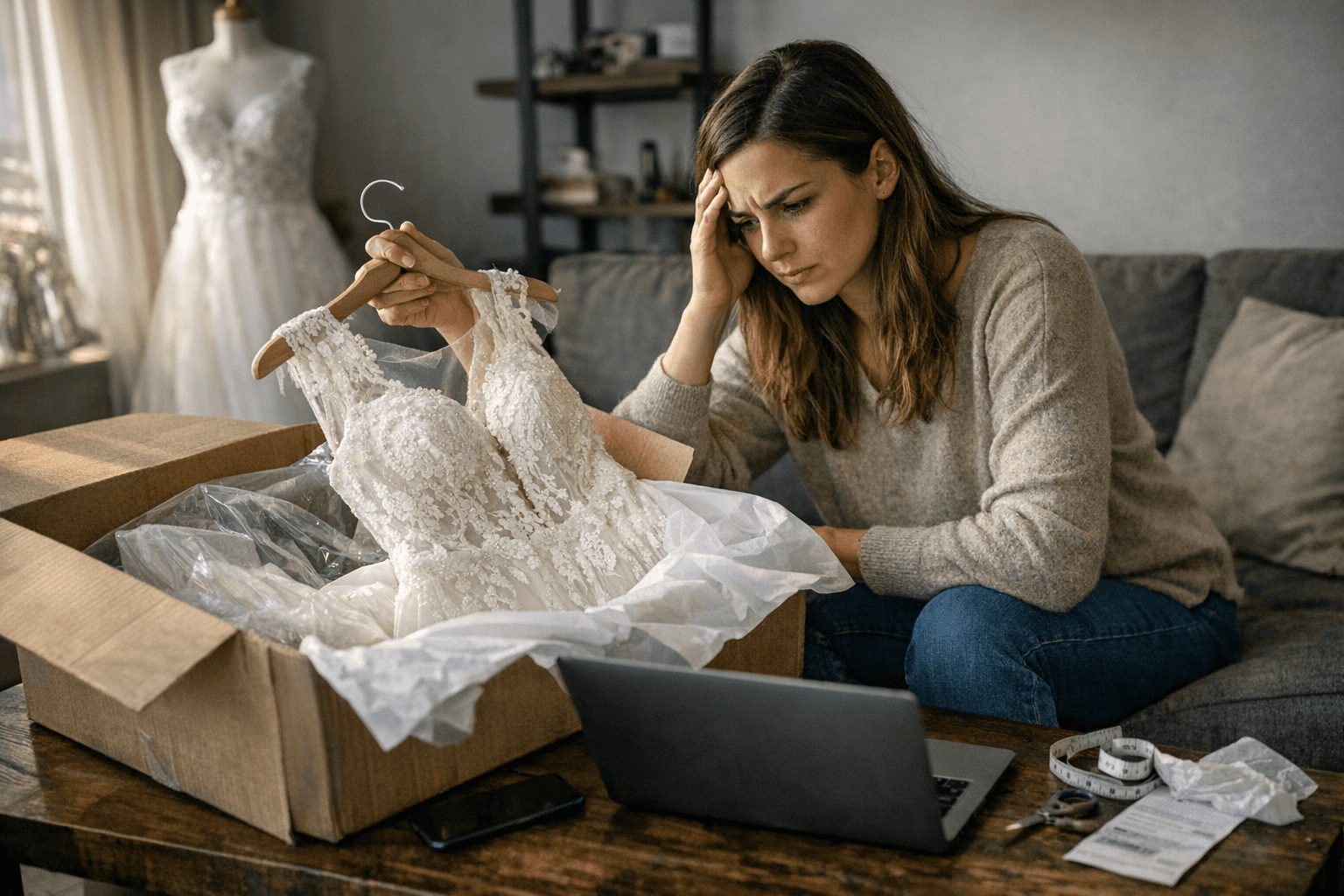
Brides consistently underbudget for alterations, and the numbers are not subtle. Standard work, a hem, a bustle, and bodice adjustments, runs between $700 and $1,000 according to bridal tailoring specialists. Simple single-fix adjustments start around $50 but rarely stay there once a seamstress sees the full scope of what needs doing. Beadwork repairs run $30 to $40 per hour because they require painstaking handwork. Book fewer than eight weeks before your wedding and rush fees add another 25 to 50% on top.
The practical rule: add 20 to 30% of your dress purchase price to your budget as a dedicated alteration fund from day one. If your gown cost $1,500, hold $300 to $450 in reserve before you meet a seamstress. For heavily constructed gowns, think corseted bodices, layered skirts, cathedral trains, budget at the higher end without hesitation. The dress you bought on a screen will not fit off the screen. Book your alteration appointments the week the gown arrives. The tailors worth working with fill their calendars three months out.
Secondhand Couture: Ask for the Paperwork
For high-end resale, Monique Lhuillier, Oscar de la Renta, Vera Wang, Elie Saab, provenance documentation matters beyond authentication. You want the cleaning history. A gown preserved immediately after the wedding in professional archival packaging is a fundamentally different purchase from one that sat folded in a garment bag in a closet for three years. Oils from skin and deodorant product oxidize over time, emerging eventually as yellowing that is difficult to reverse and expensive to attempt.
Ask for: the original receipt or proof of purchase, any preservation or professional cleaning records, and the name of the boutique or atelier where the dress originated. Reputable couture resellers provide this without friction. If a seller can't confirm where the dress was originally purchased, that hesitation is worth weighing carefully. Used gowns in excellent condition that are under two years old typically hold around 50% of their original retail price on the resale market; coveted designer names like Oscar de la Renta and Vera Wang can command up to 60%. That premium only holds if the condition genuinely matches what the listing claims, which is precisely why the documentation protocol matters.
The Fine Print Checklist
Return windows for online bridal purchases are extremely limited. Made-to-order gowns typically allow cancellations only within 72 hours of order placement. Ready-to-ship and clearance items are frequently final sale regardless of fit. Understanding this before you pay a deposit means understanding that the purchase is essentially irreversible once that window closes.
On customs duties: a gown listed at $800 from an overseas retailer can clear US customs at nearly double that cost once the 145% tariff on Chinese-manufactured goods and brokerage fees are applied. Always verify the country of manufacture, not just the country the seller is shipping from. Those are often very different places.
The checklist that actually protects you:
- Know your silhouette before you open any shopping app
- Get a professional measurement: bust, waist, hip, hollow-to-hem, and compare to the specific designer's size chart
- Order to your largest measurement; plan to alter down, not up
- For resale or sample gowns: demand current photos in natural light and a walking video before committing
- Ask exact questions about seam allowances and hem cuts before purchasing
- Budget 20 to 30% of your purchase price as a separate alteration fund
- Book your tailor the week the dress arrives; rush fees at eight weeks or fewer add 25 to 50% to the bill
- For secondhand couture, request the original purchase documentation and any cleaning records
- Verify customs duties before ordering internationally; the tariff landscape has materially changed what counts as a deal
The brides who navigate online shopping successfully are not lucky. They are specific. One misread return window or one overestimated seam allowance is the difference between a beautiful gown and an expensive lesson, and in this market, that lesson comes with a four-figure price tag.
Know something we missed? Have a correction or additional information?
Submit a Tip