Creative Ways to Repurpose, Upcycle, or Donate Your Wedding Dress
Your wedding dress deserves more than a dusty box. Here's how to transform it into something you'll actually use, wear, or pass down.
Most wedding dresses spend their post-ceremony lives in a garment bag, shoved to the back of a closet, too sentimental to sell and too precious to part with. If yours is one of them, you're in very good company. The question isn't whether to do something with it. The question is what.
"Upcycling isn't just a trend," wrote Andrea Pesce in a piece spotlighting Unbox the Dress, the first online wedding dress transformation service. "It's a movement rooted in personalization, preservation, and purpose." That framing gets it exactly right. What's happening in bridal right now isn't about decluttering. It's about extending the meaning of a garment that already carries serious emotional weight, and finding ways to make that weight feel lighter by putting it to use.
The Case for Doing Something With Your Dress
There's a specific kind of guilt that comes with owning a dress you adore but will never wear again. Selling it feels transactional, even cold. Keeping it boxed up starts to feel like avoidance. And the longer you wait, the more the decision calcifies. But the options available right now are genuinely creative, and some of them are so specific they'll make you look at that garment bag differently.
The movement has picked up real momentum in the bridal industry. To kick off its partnership with Unbox the Dress, David's Bridal worked with the service to upcycle deadstock gowns into one-of-a-kind, handcrafted gift bags for attendees at New York Bridal Fashion Week. The fact that one of bridal retail's biggest names is activating around dress transformation at an industry showcase tells you everything about where this conversation is headed.
Turn It Into Something You'll Actually Keep
The most emotionally resonant route for most people is conversion into a keepsake. A skilled bridal seamstress can harvest the most significant panels of your gown and transform them into pieces that hold the fabric close to your daily life.
The most popular conversions include:
- Veils, which let the original fabric live on in a piece another person in your family might actually wear down the aisle someday
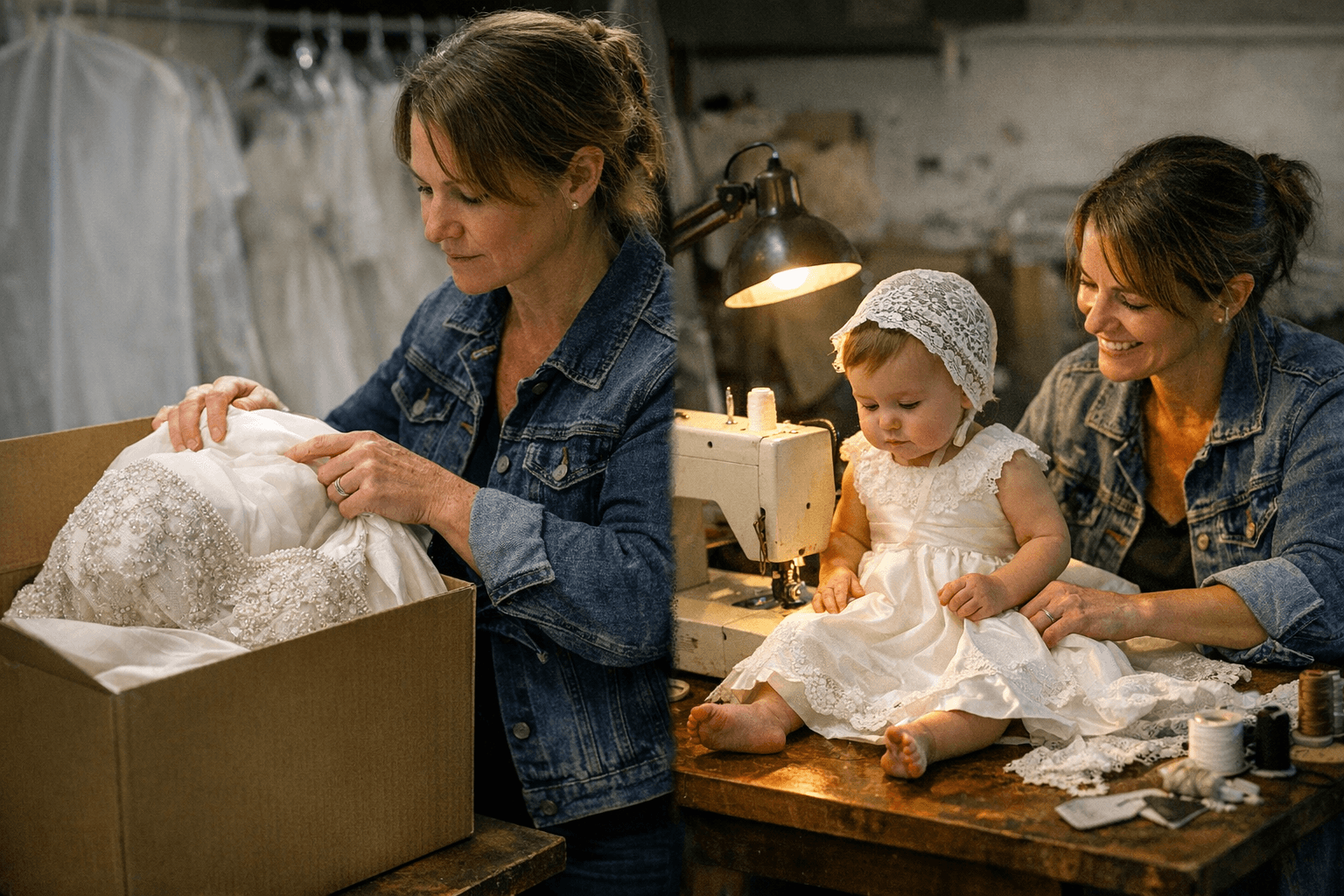
- Christening gowns, one of the most meaningful generational hand-me-downs you can create, turning bridal silk or lace into a baby's first formal garment
- Pillows, which preserve the embroidery, beading, or texture of the original gown in a form you'll see every day
- Christening blankets, a softer variation on the same idea, especially effective with lightweight fabrics like chiffon or organza
These aren't novelty items. When a dress with hand-sewn French lace or cathedral-length silk gets repurposed into a christening gown, you're not diminishing it. You're multiplying its significance across a new life event.
Modernize a Vintage Gown Into Something Wearable
This is the option that tends to surprise people most: the dress you can't wear as-is might have a second life as something you'd genuinely reach for. Silhouette modernization has become one of the more skilled offerings in the transformation space. A full ballgown with a structured corseted bodice might become a sleek sheath. An A-line with excessive volume might be edited into something that reads much more contemporary.
The multi-generational angle here is particularly compelling. Maybe you don't see yourself walking down the aisle in your mom's gown, but you could repurpose it into a stunning little white dress for your rehearsal dinner. That reframe unlocks a whole category of possibility: your grandmother's satin column dress from the 1960s, with its clean tailoring, might need very little work to feel current again.
Custom Pieces: Robes, Bags, and Wearables
Beyond keepsakes and silhouette work, there's a growing category of functional custom pieces made from bridal fabric. Custom robes have become especially popular as getting-ready wardrobe items that brides want to hold onto after the wedding itself. Unbox the Dress specifically offers robes and little white dresses as conversion options, alongside more traditional keepsakes.
The New York Bridal Fashion Week activation with David's Bridal demonstrated what's possible even at scale: deadstock gowns converted into handcrafted gift bags. When you're thinking about what's possible with your own gown, the range runs from intimate (a pillow from your mother's veil fabric) to genuinely structural (a bespoke robe built from the skirt of a gown with more fabric than you know what to do with).
Professional Restoration: When the Dress Needs Help First
Not every gown arrives at the transformation stage in good condition. Vintage dresses in particular, whether pulled from a box in your mother's attic or sourced from a consignment shop, often need professional restoration before any conversion work can begin. Yellowed silk, weakened seams, fragile lace, and set-in stains all require specialized treatment that differs significantly from standard dry cleaning.
Professional restoration as a standalone service is worth considering even if you're not planning to transform the gown. If your goal is preservation, whether for sentimental reasons or eventual donation, getting the fabric stabilized first protects the investment of any work that follows.
Ethical Donation Pathways
If transformation isn't the right move for your specific gown, ethical donation pathways offer a way to give the dress a purposeful second life without the hands-on commitment of conversion work. This category has grown significantly as more brides look for sustainable exits from garments they don't want sitting unused.
Unbox the Dress includes ethical donation as one of its formal service pathways, which matters because a thoughtful donation process, cleaning, routing to the right recipient, and ensuring the gown actually gets worn, is different from simply dropping a dress at a thrift store. The infrastructure behind ethical donation programs handles the logistics that most people don't have time to manage themselves.
Where Unbox the Dress Fits In
Unbox the Dress operates as the first online wedding dress transformation service, and its partnership with David's Bridal has brought that offering into a much wider conversation. The service covers the full range of options described above: keepsakes including veils, christening gowns, and pillows; silhouette modernization; custom robes and Christening blankets; LWD conversions; professional restoration; and ethical donation pathways.
The entry point is a DressBox kit and an online quiz designed to match you with the right service for your specific gown. That structure matters because the right transformation for a 1980s meringue ballgown in ivory taffeta is not the same as the right transformation for a 2015 minimalist crepe column. The quiz handles the triage so the work that follows is actually suited to what you have.
The Multi-Generational Dimension
It's worth sitting with the generational aspect of all this for a moment. The most emotionally resonant transformations aren't just about the original wearer. Converting a gown into a christening garment means a baby's first formal photograph exists in the same fabric as a wedding day. A veil made from your grandmother's skirt means someone walks down the aisle carrying her with them.
"It's also a beautiful way to remember the love from generations before," Pesce writes in the Unbox the Dress piece. That line might sound sentimental, but it's practically accurate: the fabric itself becomes a carrier of memory in a way that a stored gown, sealed and invisible, simply cannot.
The dress in your closet is already doing that work in its own quiet way. The question is whether you want it to stay quiet.
Know something we missed? Have a correction or additional information?
Submit a Tip