Dua Lipa’s wedding suit revives Bianca Jagger’s bridal rebellion
Dua Lipa’s custom Schiaparelli suit turns a celebrity wedding look into a bridal trend signal, echoing Bianca Jagger’s 1971 anti-gown benchmark.
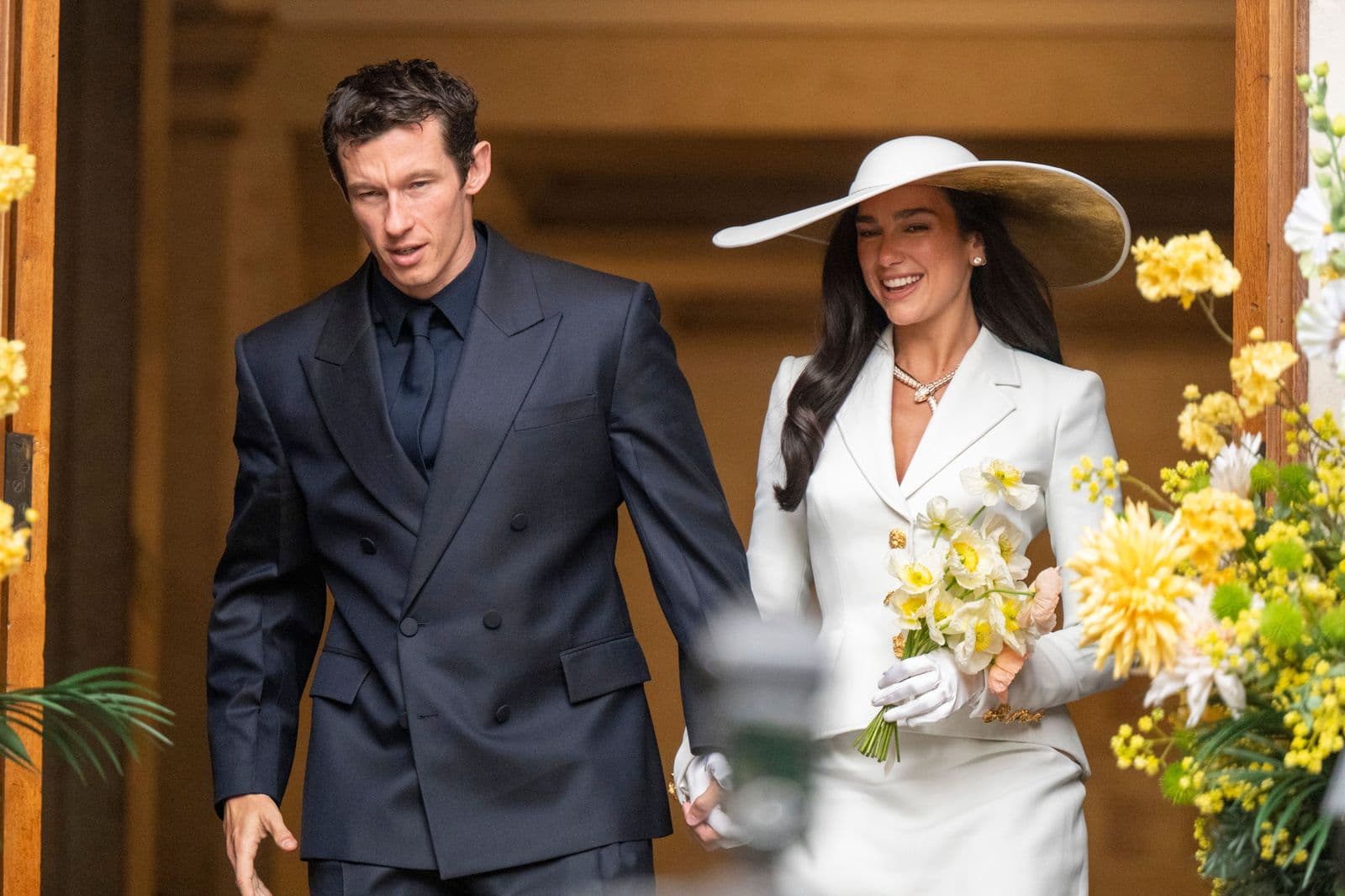
Dua Lipa did not just wear a wedding suit. She stepped into one of bridal fashion’s sharpest arguments, the idea that ceremony does not have to mean a dress. Her custom Schiaparelli look for a civil wedding to Callum Turner in London on Sunday, May 31, 2026, reads as part of a larger swing back toward tailoring, and it lands with extra force because Bianca Jagger already wrote that language into bridal history more than five decades ago.
Bianca Jagger set the bridal suit’s original standard
The reference point is exact: 12 May 1971, Saint-Tropez, France. That was when Bianca Jagger married Mick Jagger in a white Yves Saint Laurent ensemble built around the house’s Le Smoking jacket, a matching skirt, and a wide-brimmed hat. The outfit still resonates because it rejected the expected bridal silhouette without losing elegance, turning tailoring into a declaration of independence.
That is why the comparison keeps returning. Bianca’s look did not simply offer an alternative to the gown, it created a new bridal archetype, one that felt polished, cool, and unmistakably self-possessed. In bridal fashion, that kind of rupture matters because it shifts the category from costume to identity.
Why Dua Lipa’s Schiaparelli look feels so current
Dua Lipa’s wedding outfit lands in a very different era, but the emotional charge is familiar. Coverage identifies the look as a custom Schiaparelli bridal outfit, and the house already has a direct relationship with the artist, which gives the ensemble the weight of a considered fashion statement rather than a one-off celebrity styling moment. Schiaparelli, with its taste for drama and precision, is exactly the kind of maison that can make tailoring feel ceremonial instead of strictly formal.
The context around the look matters as much as the look itself. W Magazine has treated Lipa’s suit as proof that bridal tailoring is surging again, while broader bridal commentary points to a clear change in taste: modern brides want personalized, comfort-forward, statement-making pieces instead of conventional gowns. Lipa’s civil ceremony suit fits that mood perfectly, because it suggests that the most luxurious choice is not always the most traditional one.
The long history behind women’s tailoring
This is not simply about one star wearing trousers. Women’s tailoring has a longer lineage in fashion history, one tied to early icons of gender-nonconforming dress such as Marlene Dietrich, who helped make the suit feel daring, chic, and powerfully modern. Bridal fashion inherits that history whenever it borrows from tailoring, because the suit carries with it a whole vocabulary of control, confidence, and resistance to convention.
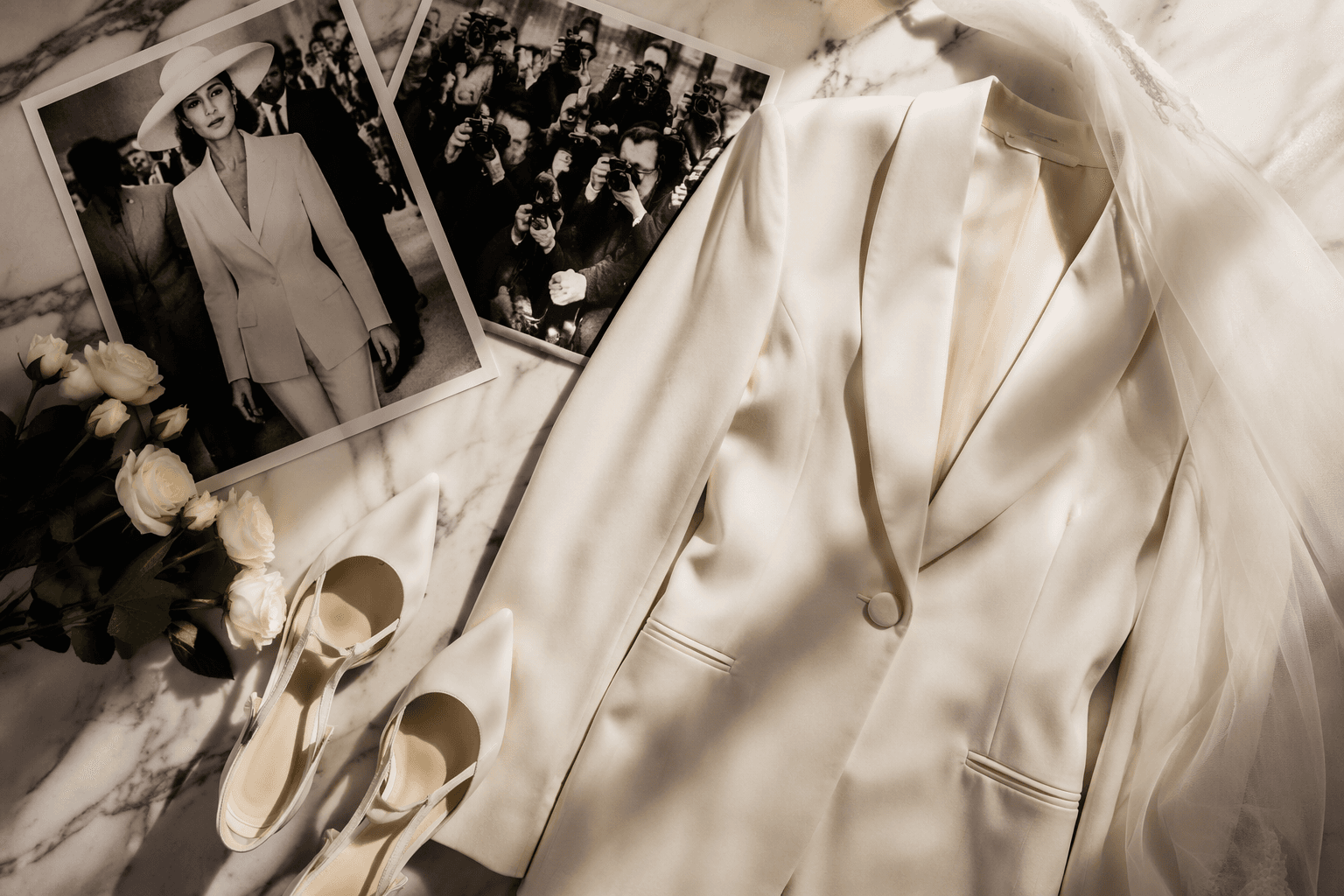
That lineage gives Lipa’s look its depth. Bianca Jagger’s YSL suit in 1971 and Lipa’s Schiaparelli ensemble in 2026 are separated by time, but linked by the same instinct: to use cut and structure to say something about selfhood. The bridal suit works when it does more than flatter. It has to signal that the wearer is writing her own dress code.
What this means for bridal houses and occasionwear
If brides keep choosing sharp suiting, the brands best positioned to benefit are the ones already fluent in tailoring as luxury. Schiaparelli is an obvious contender because it can deliver theatricality without losing exactness, and Yves Saint Laurent remains the historical touchstone, thanks to Le Smoking and the Bianca Jagger benchmark it created. Those are not just names from fashion history; they are houses with the authority to make a suit feel like an occasion.
Traditional bridal houses will also have to decide how far they want to move. The labels most likely to capitalize are the ones that can translate corsetry, finish, and ceremony into a tailored vocabulary, rather than merely shrinking a daywear suit into white. Occasionwear brands, too, have an opening here, especially if they can offer ivory, pearl, and cream suiting that feels elevated enough to replace the second dress, or even the ceremony gown itself.
The new bridal signal is structure, not softness
The appeal of bridal tailoring is that it gives brides another way to feel dressed for the moment without disappearing into it. A suit can be as expressive as a gown when the cut is right, when the shoulder line is crisp, when the proportions feel deliberate, and when the overall effect carries the same emotional charge as a veil or train. Bianca Jagger proved that in 1971; Dua Lipa has reminded everyone of it in 2026.
What makes this shift compelling is not that women are abandoning dresses altogether. It is that bridal fashion is widening again, making room for looks that are sharper, cooler, and more individual. If the next wave of brides follows Lipa rather than the old rulebook, the real winners will be the houses that understand tailoring not as an alternative to romance, but as one of its most modern forms.
This article was produced by Prism’s automated news system from verified source data, official records, and press releases, then run through automated quality and moderation checks before publishing. The system is built and supervised by the people who set the standards it runs under. Read our full AI policy.
Know something we missed? Have a correction or additional information?
Submit a Tip