Every Wedding Dress Silhouette and Neckline, Explained for Your Body Type
Your silhouette is the first thing the room sees — here's exactly which shape and neckline works for your body, from A-line to mermaid.
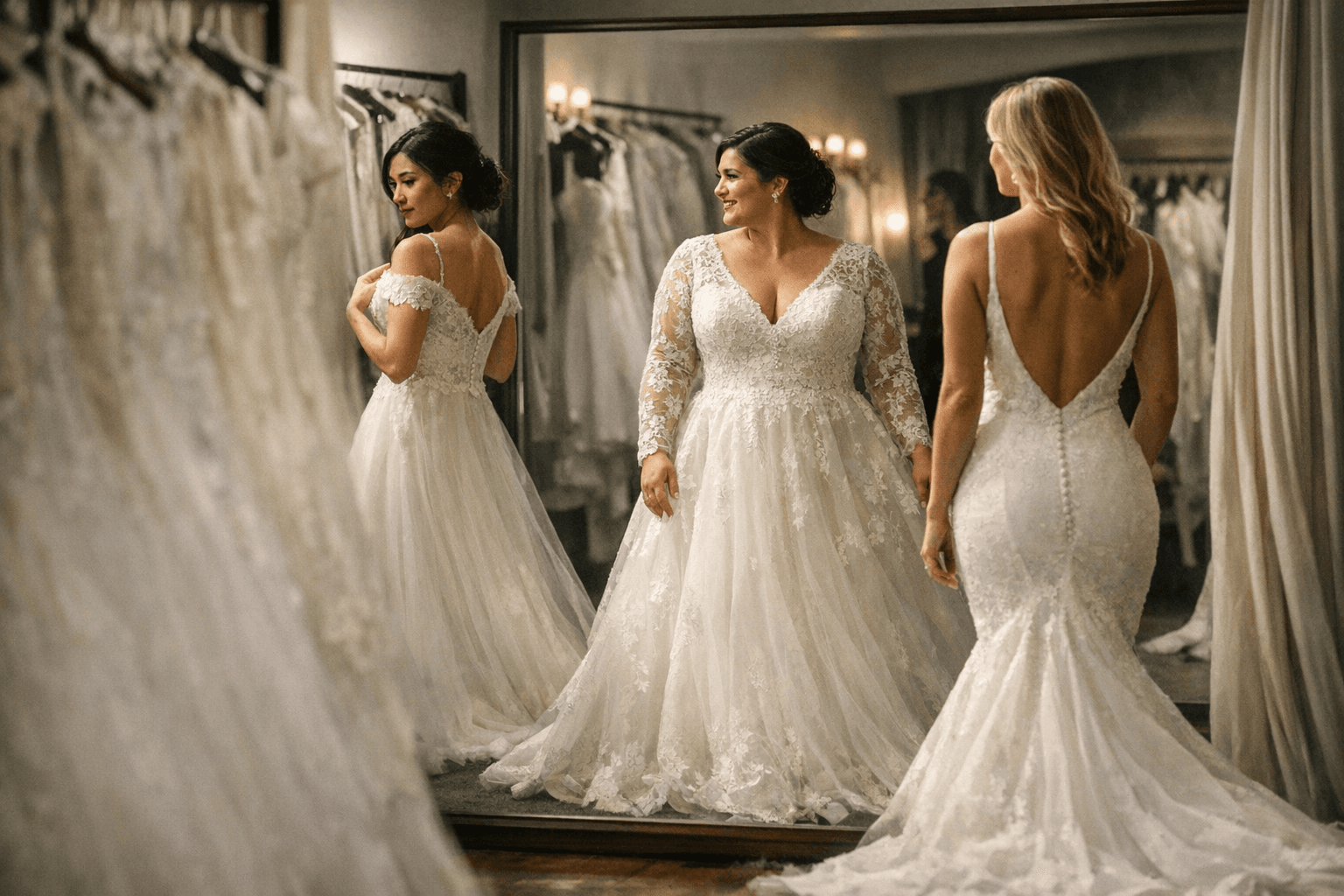
The moment you walk into a bridal salon, before anyone clocks the lace or the train or the buttons running down the back, they see your silhouette. That outline — the relationship between your bodice, waist, and skirt — is the architecture of your entire look. Get it right, and everything else follows. So before you fall in love with a fabric or a designer name, understand the shapes. Here's every silhouette and neckline worth knowing, matched to the body types they actually flatter.
What a Silhouette Actually Is (and Why It Matters)
A wedding dress silhouette is the shape or outline of your gown. More than any single detail, it's how the waistline, skirt, and proportions work together to create an overall impression. The silhouette, neckline, waistline, and fabric together determine how flattering a dress feels — and the right combination can completely transform how you carry a look. Think of the silhouette as your foundation; everything else is styling.
The A-Line: The One That Works for Everyone
The A-line silhouette flares out from the waist to form a soft "A" shape — fitted in the bodice, relaxed through the skirt. It's the silhouette that comes up first in almost every stylist conversation because it genuinely flatters almost every bride. Petite brides love how it adds the illusion of height. Pear and hourglass shapes find it balancing. The A-line is, simply put, universally flattering and works for nearly every body type.
A strong current example of the silhouette done right: the Martina Liana Style 1813, a strapless lace and tulle A-line with a high leg slit and long sweeping train. It's the kind of gown that reads classic from across the room and editorial up close. For styling, a fingertip-length veil and loose curls create a dreamy, natural finish that lets the dress do the talking.
The Ball Gown: Fairytale with a Modern Update
The ball gown is the true "princess" dress: fitted bodice, bell-shaped full skirt, unambiguously dramatic. It's regal, it photographs beautifully in grand spaces, and it delivers the kind of entrance that people remember. One perspective frames it as a classic solution perfect for slim-hipped brides with fuller busts; another notes it's ideal for most body types but can be overwhelming on petites with very small frames. The reconciliation is simple: petite brides can absolutely wear a ballgown, provided the volume is balanced and the bodice is well-fitted to elongate the frame.
The ball gown is getting a serious update right now. Modern versions are arriving in matte mikado, with square necklines, corset bodices, and statement sleeves. And yes — pockets. Wedding gowns with pockets exist, and they are everything, perfect for stashing tissues, mints, or even your vows. If you're planning a formal ceremony at a grand venue, the ball gown earns its place completely.
The Sheath: Understated and Architectural
Minimalist and sleek, the sheath gown follows the body's natural line without adding volume. It's the silhouette for brides who want modern elegance over spectacle. Tall, lean, and rectangle figures wear it beautifully, as do athletic builds. For plus-size brides, a sheath with structure — built-in boning or a defined waistline — is the move, creating shape without overwhelming the frame. The sheath is a natural fit for intimate ceremonies and destination weddings, where a sweeping skirt would feel out of place.
The Mermaid, Fit-and-Flare, and Trumpet: Drama from the Hips Down
These three silhouettes share the same essential logic: they hug the body through the torso and hips before flaring dramatically near or below the knee. The difference is mostly in where the flare begins — trumpet styles flare earlier, mermaid silhouettes hold tight lower on the leg. All three are curve-accentuating by design. Hourglass figures wear them beautifully; athletic builds can use the flare to add the suggestion of curves.
A Blush stylist's standing recommendation: pair any of these silhouettes with delicate off-the-shoulder straps or a romantic sweetheart neckline to balance the fitted shape and draw the eye upward. Add loose waves and a cathedral veil for maximum effect. For 2025, designers are adding layered lace, shimmering tulle, and illusion corsetry to elevate these styles further — red-carpet energy is very much on the bridal runway.
The Drop Waist and Other Silhouettes
The drop waist silhouette — which places the waistline below the natural waist, sitting at the hip — appears across multiple body type recommendations. It works particularly well for hourglass, tall, athletic, and plus-size figures. Beyond these core shapes, contemporary bridal has expanded to include tea-length styles, which hit mid-calf for a vintage-inflected look, and even jumpsuits for brides who want something genuinely outside the traditional framework.
Necklines: Where Personality Meets Proportion
Once you have your silhouette, the neckline is where you refine the look. Here are the ones worth understanding:
- Sweetheart: A curved neckline resembling the top of a heart. Romantic, consistently flattering, and one of the most popular for good reason. It draws the eye upward and works across body types.
- V-Neck: Plunges into a V shape at the center. Classic and visually elongating — ideal if you want to create the impression of a longer neck and torso.
- Off-the-Shoulder: Drapes gracefully over the arms and exposes the collarbones and shoulders. It adds a romantic, slightly vintage quality without sacrificing structure. Pairs especially well with fit-and-flare and mermaid silhouettes.
- Illusion: Features sheer fabric — usually lace or tulle — over a more solid bodice, creating the impression of intricate detail directly on the skin. A way to wear lace that reads incredibly delicate and modern simultaneously.
- High Neckline: Sits high on the collarbone, covering most of the neck and chest. Available in illusion, lace, or collar variations. It works particularly well on brides with smaller busts and provides a flattering line for taller frames.
- Boat Neck: A wide, horizontal neckline that runs from shoulder to shoulder along the collarbone. Elegant and sophisticated, often paired with long or cap sleeves for a vintage-inspired finish. Especially good for brides with a smaller bust, as it creates the illusion of a broader upper body.
Modern ballgowns have also made the square neckline newly relevant — it's clean, architectural, and slightly vintage in the best possible way.
Silhouette by Body Type: The Quick Reference
The following pairings reflect established styling guidance across multiple bridal sources:
- Hourglass: Mermaid, Fit-and-Flare, Drop Waist
- Pear-Shaped: A-Line, Ballgown
- Petite: Sheath, Fit-and-Flare
- Tall: Ballgown, Drop Waist, A-Line
- Athletic: Sheath, Drop Waist, Mermaid
- Plus Size: A-Line, Drop Waist, Ball Gown, Sheath with Structure
These are starting points, not rules. Every silhouette can be adapted with the right construction and fit.
How to Actually Shop for Your Dress
The research, the inspiration boards, the saved screenshots — all useful. But in the fitting room, four things matter most:
1. Consider your body type honestly, but stay open. Some silhouettes naturally flatter certain figures more than others, but an A-line's universal appeal means it's almost always worth trying first.
2. Think about your venue and theme. A grand ball gown belongs in a formal ballroom. A sheath dress makes sense for a beach wedding or an intimate courthouse ceremony. Let the setting inform the scale of the dress.
3. Try on styles you wouldn't choose from a hanger. You might be surprised by what you love once you actually see it on. Don't limit yourself to one idea before you've felt the dress move.
4. Trust your instincts. Ultimately, the best bridal gown is the one that makes you feel beautiful, confident, and like yourself on your wedding day. That's not a platitude — it's the actual goal.
The silhouette is the first thing the room sees when you walk in. Make sure it's telling your story.
Know something we missed? Have a correction or additional information?
Submit a Tip