Everything Brides Need to Know About Choosing the Right Bridal Undergarments
Your dress determines everything — get the silhouette, fabric, and neckline right before you even think about what goes underneath.
The rule every bridal stylist will tell you before anything else: start with the dress. Determine the fabric, neckline, backline, and silhouette before selecting any foundation garments. Everything else flows from there.
It sounds obvious until you're standing in a fitting room realizing the adhesive bra you brought doesn't work with the corset-back gown you just fell in love with. The goal of bridal undergarments, as Normans Bridal puts it, is to "stay supported, smooth, and confident without visible lines or discomfort." That means discreet choices that enhance the gown's natural architecture rather than compete with it.
The Three Questions to Ask Before You Shop
Before you buy a single undergarment, answer these: What is the silhouette? What is the neckline and back design? What is the fabric? These three factors determine everything. Kleinfeld Bridal's expert alterations staff and bridal managers are direct about this: keep undergarments in mind from the very first shopping appointment, not just at final fittings. If you're a busty bride, wear a bra to every dress appointment so your stylist can assess fit accurately.
Fabric is especially telling. Kleinfeld specifically calls out crepe, silk, and satin as unforgiving materials where smoothing shapewear becomes your best friend, capable of eliminating stubborn underwear lines entirely. Some shapewear pieces are even made with sweat-wicking fabric, which can actually keep you cooler than going without. Sheer and illusion fabrics present a different challenge: visibility. Under bright lighting and sheer materials, as Normans Bridal notes, a nude or skin-tone color close to your complexion will always blend better than pure white. This applies to every undergarment category, bras and shapewear alike.
Matching Your Undergarments to Your Silhouette
Mermaid and fitted gowns are the most demanding. These silhouettes hug the natural figure and emphasize curves, which means every line shows. Pronovias recommends specially made contouring shapewear for dresses with a tighter fit, paired with seamless underwear to prevent lines and maintain a clean, smooth profile. The beaded lace mermaid silhouette, like the Avalon style, is a good visual reference for why this matters: there is nowhere for an errant seam or visible waistband to hide.
Princess-style gowns, which Pronovias notes are popular among plus-size brides, call for a different kind of structure. Here, bridal corset shapewear worn under the structured upper bodice can streamline the waist, creating an even more dramatic contrast against the voluminous skirt. The architecture of the gown does some of the work; the shapewear refines it.
A-line silhouettes are the most forgiving. The relaxed cut gives more freedom of choice: a minimalist bra and thong works for brides who prefer less coverage, while brides wanting more support can layer in longer shapewear without the same risk of visible lines. It's the silhouette where personal preference genuinely has the most room to breathe.
Corset-style gowns have built-in structure through their lace-up detailing, which shapes the waist and enhances posture while allowing gentle adjustments throughout the day. Because that structure already exists, Pronovias advises skipping heavy shapewear entirely and opting instead for lightweight seamless underwear or a simple strapless bra that won't interfere with the corset's lines.
For fit-and-flare and sheath gowns, which hang along the natural curvature of the body with minimal structure, Martin Thornburg recommends a seamless nude-colored thong that lies flat without creases. For brides who want a slightly more elevated lingerie option, high-tech lace can achieve the same seamless effect. A lightweight satin slip is also worth serious consideration here: Martin Thornburg describes it as one of the most romantic undergarment options available, smoothing out any wrinkles and keeping the look in place through hours of dancing. If the gown has an illusion lace overlay, a satin slip in a slightly different shade can add subtle visual dimension to the whole look.
Ball gowns and voluminous styles offer the most latitude. With all that fabric overhead, creases and visible lines become a non-issue. Martin Thornburg puts it plainly: with a ball gown, you essentially have the luxury to wear whatever kind of undergarment you want.
Matching Your Undergarments to Your Neckline and Back
Silhouette tells half the story; neckline and back design tell the rest.
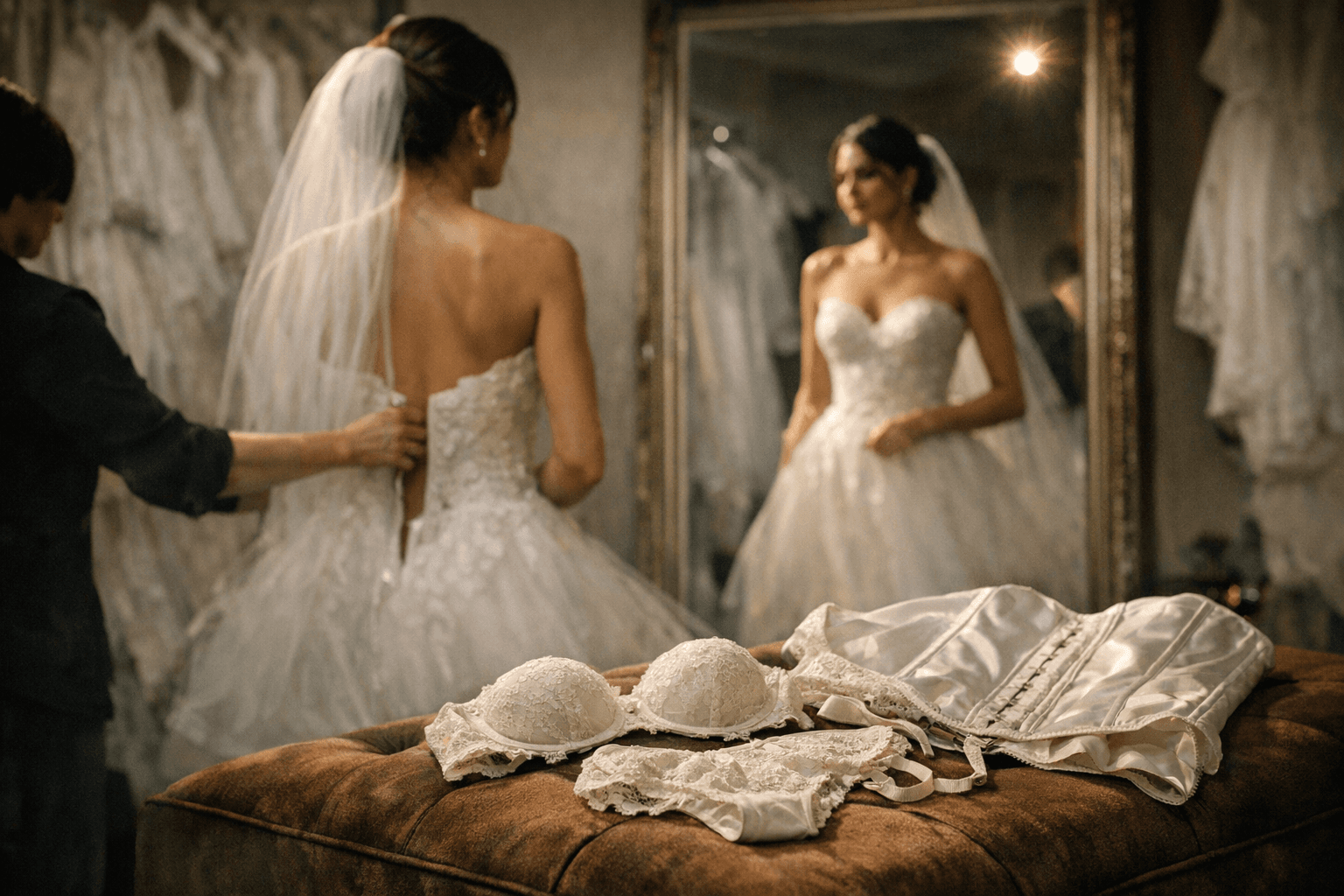
For strapless gowns, The White Dress By The Shore recommends a strapless, long-line bra as the most flattering option across the widest range of silhouettes, offering the support brides need while staying invisible under the dress. Look for versions with a low back and adjustable strap options, depending on exactly where the neckline sits.
For gowns with wide straps, cap sleeves, or any shoulder coverage, a standard bra is not only viable but ideal. Kleinfeld notes that a standard bra under these gowns provides maximum support and shape, and since the straps are covered by the dress, the whole process feels entirely normal. The key requirement: the gown needs a higher back to cover the bra properly.
Open-back gowns require a different approach entirely. Martin Thornburg is direct: a strapless, adhesive bra is the best option for providing support while keeping the back of the gown pristine. The White Dress By The Shore echoes the importance of paying close attention to the back neckline, specifically noting that any shapewear or bra that peeks out of an open back or through a skirt slit is a styling problem no bride wants to discover in photos.
For plunging necklines, deep v-necks, and backless styles where a traditional bra simply isn't an option, The White Dress By The Shore recommends supportive fashion breast tape for lift, or pasties for coverage. Kleinfeld adds important clarity: pasties and nipple covers are well-suited for dresses with sheer illusion bodices or thin fabric over the bust, but they provide coverage only, not support. Understanding that distinction before the wedding day matters.
For v-necks and deep v-necks where bra visibility is a persistent worry, Normans Bridal offers one of the most practical solutions in the guide: seamstresses can sew cups directly into the gown for a custom, no-slip fit that eliminates bra concerns entirely. It's an alteration worth discussing with your seamstress early in the fitting process.
The Shapewear Question
Whether to wear shapewear at all is, as The White Dress By The Shore frames it, "ultimately a personal decision as to what makes you feel the most comfortable on wedding day, but it's not a necessary item you have to wear." Many brides choose it for the smoothing effect and the confidence boost it provides; others find it unnecessary or uncomfortable. Neither approach is wrong.
If you do choose shapewear, look for construction that combines smooth shaping with breathable materials. The best bridal shapewear, according to Normans Bridal, keeps you comfortable through an entire wedding day, not just the ceremony. And whatever style you choose, color matters as much as cut: always choose a nude or skin-tone shade close to your complexion rather than pure white, which tends to show through bright lighting and sheer fabrics.
If you skip shapewear altogether, The White Dress By The Shore recommends going with nude or neutral-tone seamless underwear instead, keeping the finish clean and eliminating any risk of visible panty lines.
What to Bring to Your Fittings
Undergarments aren't something to figure out on the morning of the wedding. Kleinfeld Bridal's alterations staff recommend keeping them in mind from the first shopping appointment forward. Wearing the bra or adhesive solution you plan to use on the day ensures that your alterations are done with the correct foundation in place. A dress hemmed without your wedding shoes and undergarments accounted for is a dress that may not fit the same way when it counts.
If you're planning to ask your seamstress to sew cups into the gown, bring it up early. It's a straightforward alteration that many bridal salons accommodate, but it requires lead time and should be factored into your fitting schedule.
The foundation layer of a bridal look is invisible by design, but its effect on how the gown drapes, how confidently the bride moves, and how the whole silhouette reads in photos is anything but small. Getting it right starts long before the wedding day.
Know something we missed? Have a correction or additional information?
Submit a Tip