Everything Brides Need to Know About Wedding Dress Shopping
Most brides don't start dress shopping nearly early enough. Here's the exact timeline, from inspiration phase to final fitting, that makes the difference.

The moment a wedding date is set, the clock on the dress starts ticking, often faster than anyone anticipates. Designer lead times alone can stretch months beyond what most brides expect, and that's before alterations, accessories, and the quiet pressure of wanting everything to be exactly right. Knowing the sequence changes everything.
Start Earlier Than You Think: 12 to 14 Months Out
The inspiration phase begins over a year before the wedding, and that timeline is not arbitrary. At 12 to 14 months out, the work is exploratory: trying on different silhouettes, handling fabrics, and identifying which designers speak to your aesthetic. This is also the window where sample gowns, available at a lower price point than made-to-order pieces, are worth seeking out. Trying a sample gives you tactile information that no Pinterest board can replicate. You'll learn, for instance, whether you actually love the weight of a duchess satin ball gown or whether a bias-cut crepe moves the way you imagined. There is no pressure to commit at this stage, only to gather information.
The practical reason for starting here is designer lead time. Between ordering a gown and having it arrive at the boutique, months pass. Starting the inspiration phase at 12 to 14 months gives you the runway to make a considered decision, place the order with time to spare, and avoid the elevated costs and anxiety that come with a compressed timeline.
Ordering the Gown and Setting a Budget
Once the inspiration phase has narrowed your focus, the next critical step is ordering, and that decision intersects directly with budget. Budget-setting at the start of the process prevents the disorienting experience of falling in love with a gown that was never a realistic option. The full cost of a wedding dress is not only the sticker price on the sample; it includes alterations, which can run into hundreds of dollars depending on the complexity of the fit, as well as accessories. Getting clear on your total dress budget before your first appointment, rather than after, is one of the more quietly important decisions in the entire planning process.
Sample sizing is another variable worth understanding before you walk into a boutique. Bridal samples are typically held in a narrow range of sizes, meaning the gown you try on may be several sizes larger or smaller than what you'll order. A skilled stylist will use clips and pins to simulate the fit, but knowing this in advance prevents the disorienting experience of a sample that gaps or bunches in ways that have nothing to do with the actual gown you'd receive.
6 to 8 Months Before: Accessories and Styling
Once the gown is ordered, attention shifts to the full look. At the six-to-eight month mark, brides typically select their veils or capes, jewelry and hairpieces, and shoes. That last item matters more than it might seem: shoes need to be chosen and in hand before the first alterations appointment because hem length is pinned to the exact heel height you'll be wearing on the day. Buying shoes after your hem is set is an expensive mistake.
This window is also the right moment to decide on any customizations to the gown itself. Whether that means adding straps, incorporating sleeves, or commissioning a matching accessory, changes of this nature need to be communicated to the boutique well before the dress arrives, not after. The more complex the customization, the more lead time it requires.
2 to 3 Months Before: The First Alterations Appointment
When the gown arrives, the alteration process begins. The first appointment, typically scheduled two to three months before the wedding, is where fit takes shape. At this session, the seamstress pins the hem, bodice, and sides; adjusts straps or the neckline; and assesses how the structure of the gown supports movement. A wedding dress is not a static garment: you'll be walking, sitting, dancing, and possibly embracing dozens of people, and the fit needs to account for all of it.
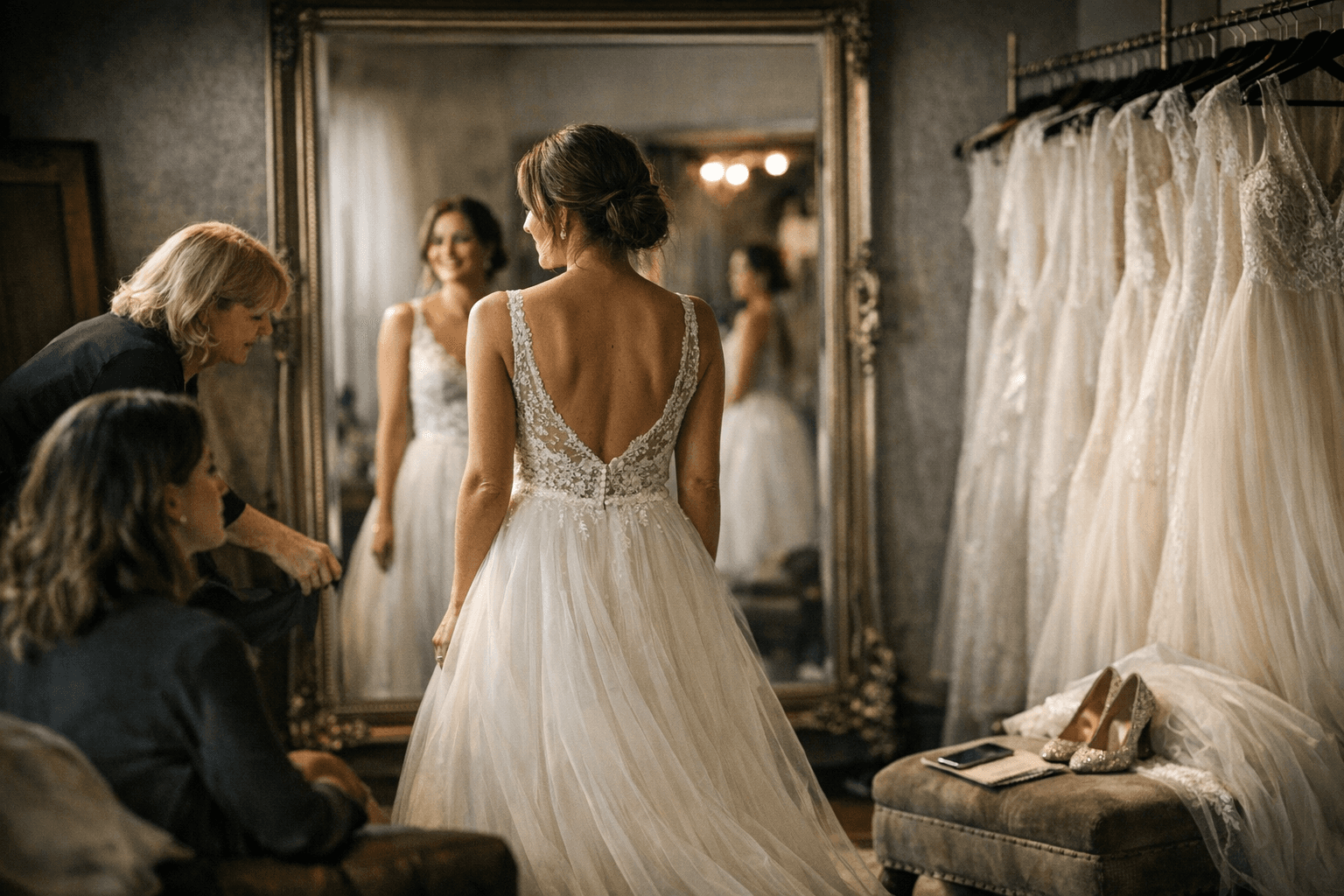
What you bring to this appointment matters. Wear or bring the exact undergarments you plan to wear on the wedding day, as different foundations change the line of the bodice and the way the gown sits at the chest and waist. Bring your wedding shoes as well. The hem cannot be accurately pinned without the heel height you'll actually be wearing. Arriving without either is the single most common way to add an unnecessary extra fitting to the process.
4 to 6 Weeks Before: The Second Alterations Appointment
A second alterations appointment, typically scheduled four to six weeks before the wedding, follows the first round of work. This is where the adjustments made at the initial fitting are checked, refined, and often finalized. By this point, the dress should be approaching its final form, and any remaining tweaks, whether to the hem, the bodice, or the bustle, are addressed before the final pressing and packaging.
The gap between the first and second appointment exists for a reason: the body can shift slightly between fittings, and some alterations need to be assessed after they've been worn and moved in, not immediately after pinning. Respecting this timeline, rather than compressing it, is how brides arrive at their wedding in a dress that truly fits.
What to Bring to Every Fitting
The practical checklist for alterations appointments is short but non-negotiable:
- Your wedding shoes, at the exact heel height you'll wear on the day
- The undergarments, shapewear, or foundation pieces you plan to wear
- Any accessories you've already purchased, particularly if they affect the neckline or back of the gown
Some brides also find it useful to bring a trusted person whose eye they trust, someone who will give an honest opinion rather than an enthusiastic one.
The Bigger Picture
The through-line in all of this is time. "Between designer lead times, alterations, and styling your full bridal look, there's a lot that goes into saying yes to the dress," as The White Magnolia's team puts it. The brides who feel most at ease on their wedding day are rarely the ones who found the perfect gown; they're the ones who gave the process enough time to unfold without rushing. Starting at 12 to 14 months, ordering decisively, building the full look at six to eight months, and attending both alterations appointments without skipping steps is not overcaution. It is the actual sequence that makes the difference between a dress that fits and a dress that was made for you.
Know something we missed? Have a correction or additional information?
Submit a Tip