Kinari and Jigar blend Indian traditions with a Watters white reception gown
Kinari and Jigar turned three wedding events into one clean style arc, moving from embroidered Indian ceremony looks to a Watters white reception gown without breaking the mood.
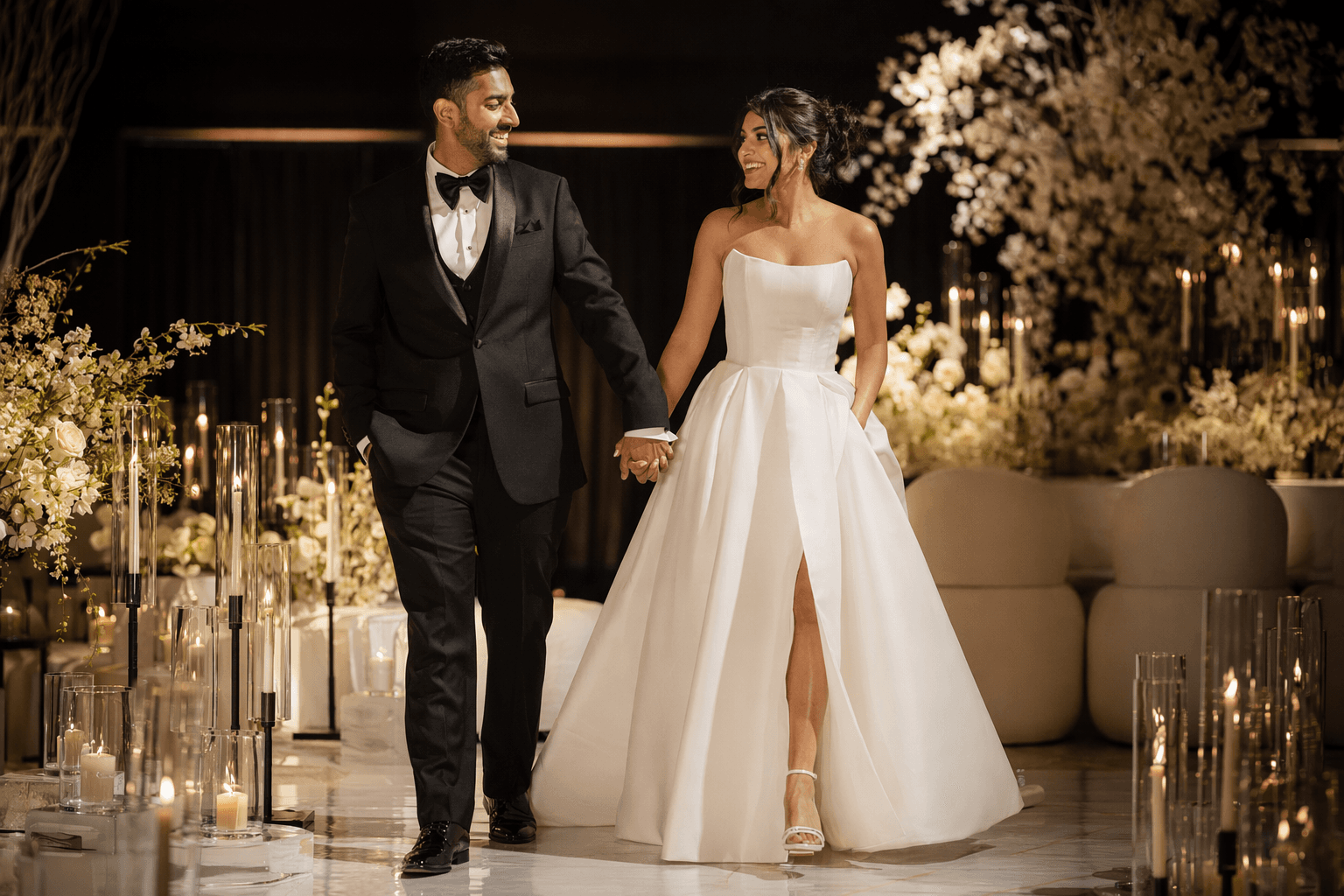
The smartest move in Kinari and Jigar’s wedding was treating three events like one fashion story. Autumnal hues, natural wood tones, marigolds, and ginkgo leaves carried the same visual thread through every celebration, so the shift from traditional ceremony dress to a white reception gown felt deliberate, not decorative.
A color story that held the whole weekend together
Hayes Mansion in San Jose gave the whole wedding an old-world frame that matched the couple’s vision. The estate sits on 20 acres of historic grounds and dates back to 1905, which matters here because the setting already had the kind of quiet grandeur that lets color do the talking. Orange florals glowed against the rooms, the altar was layered with draped and suspended blooms, and ginkgo leaves showed up again in the stationery and signage, tying the paper goods to the tables and the ceremony itself.
That repetition is what made the design feel sharp. A lot of weddings scatter pretty things everywhere and call it cohesion. This one had a point of view: warm, saturated, and grounded in natural materials. Even the welcome moment hit the note, with each guest greeted by a handwritten note of gratitude at the seating chart. It was intimate without being fussy, the kind of gesture that makes a large celebration feel personally held.
Why the ceremony wardrobe worked
Kinari and Jigar honored both Jain and Hindu traditions across all three events, and the clothing reflected that respect. Jain weddings are often associated with purity and simplicity, while Hindu wedding rituals draw from centuries-old Vedic traditions and tend to unfold through colorful, symbolic, multi-day festivities. The styling here sat right in that overlap, where reverence and visual richness can coexist without fighting each other.
For the ceremonies, the couple wore traditional Indian attire with intricate embroidery, delicate beading, and carefully chosen accessories. That mix is the key. When the fabric work is already dense, the rest of the look needs discipline, not excess. The embroidery brought texture, the beadwork caught the light, and the accessories finished the sentence instead of rewriting it. In a wedding built around cultural continuity, the clothing read as part of the ritual, not a costume change between photo ops.
The best multicultural wedding wardrobes understand timing as much as taste. Here, the ceremony looks gave way to the reception in a way that felt natural because the color story had already done the connective work. The wedding did not jump from one identity to another. It moved, smoothly, from ceremonial depth into contemporary polish.
The white reception dress, and why it lands
Then came Kinari’s dream “white dress moment,” and it worked because everything before it had earned the shift. Her Watters gown featured a tulle halter neckline and a bow-tied back that opened into a sweeping train. That silhouette has the right balance of structure and softness for a bride who wants the reception to feel lighter without losing drama.
Watters has long leaned into halter gowns with back-tied or bow details, and this version fits that language exactly. The tulle kept it airy, the halter line sharpened the upper body, and the bow back gave the dress its point of view from behind, which matters at a reception where guests are constantly watching the bride move, turn, and dance. The train added the payoff. It looked modern, but not severe, which is exactly why it read so well after the richly embellished ceremony attire.
What made the transition especially effective was timing. The white gown did not erase the earlier looks. It made them feel even more intentional. The shift from saturated ceremony color to crisp bridal white created a clean visual punctuation mark, the kind that makes a reception feel like its own chapter rather than an afterthought.
The food and dancing made the styling feel lived-in
The couple’s shared love of cooking shaped the sangeet and reception menus, and that detail matters more than it sounds. Food is part of the wardrobe of a wedding, especially when the events are culturally layered. Working with Jalsa Catering, they curated creative offerings from various cuisines, which gave the menu the same plural energy as the clothes and décor.
The sangeet brought that energy to life. It was a joyful evening of dance performances, and one especially memorable moment had Kinari dancing with lifelong friends who had shared many stages of her life. That kind of scene tells you everything about how a wedding feels in person. It is not just about the outfit reveal, it is about how the outfit moves when the room comes alive.

Caitlin McDonald Events kept the whole structure polished enough to support all that color, motion, and meaning. When the planning is strong, the style does not have to work overtime. It gets to breathe.
The backstory makes the fashion read even better
Kinari and Jigar first met at Kinari’s birthday celebration, when a mutual friend brought Jigar along. They talked all night and had their first date just a few weeks later, which is exactly the kind of origin story that makes a wedding feel personal instead of packaged. Jigar later proposed at Inspiration Point in the Presidio Forest, after arranging for his cousin to suggest a casual dinner plan and having Kinari’s friend discreetly capture the moment.
That proposal setting adds another layer to the wedding’s visual language. Inspiration Point Overlook gives sweeping views across the Presidio’s forest and out toward San Francisco Bay, so the engagement already began with landscape, atmosphere, and a sense of horizon. The Presidio itself has a long military history, but here it reads as something more romantic: an elevated place where a proposal could feel private even with the Bay in view.
What this wedding gets right
This is the blueprint for a multicultural bridal wardrobe that feels edited, not crowded. The ceremony outfits stayed rooted in tradition, the reception dress brought a clean white reset, and the palette held everything together through marigolds, ginkgo leaves, orange florals, and wood-toned details. That is the real trick: not choosing between cultural specificity and contemporary bridal style, but using one to sharpen the other.
When the color, fabric, and timing all line up like this, the result is not just beautiful. It is coherent, and coherence is what makes a wedding look unforgettable long after the last dance ends.
This article was produced by Prism’s automated news system from verified source data, official records, and press releases, then run through automated quality and moderation checks before publishing. The system is built and supervised by the people who set the standards it runs under. Read our full AI policy.
Did this article answer your question?