Match Your Metals to Your Gown Tones for a Polished Bridal Look
Gold with champagne, silver with bright white: the metal-to-gown pairing rule that separates a polished bridal look from a chaotic one.

The difference between a bridal look that reads as intentional and one that feels thrown together often comes down to something most brides overlook until the last fitting: the relationship between jewelry metal tones and gown color. It's not about matching everything perfectly or sticking to one metal family. It's about understanding undertones, how light interacts with fabric, and why a warm yellow gold ring against a stark white dress can create visual tension that no amount of flowers or styling will fix.
Warm Metals, Warm Gowns
Gold jewelry, whether it's a family heirloom or something you sourced yourself, carries warmth. Yellow gold, rose gold, and antique gold all pull toward the amber and honey end of the spectrum. The gowns that answer that energy best are the ones with warmth built into their base: ivory, champagne, blush, ecru, and the full range of creamy off-whites. These tones share the same underlying warmth, so when a gold piece sits against them, the whole look harmonizes rather than competes.
Champagne gowns in particular are exceptional partners for gold. The slight golden cast in champagne silk or satin echoes the metal directly, creating a layered richness that feels deliberate and luxurious. If you're wearing an heirloom piece, this pairing is one of the most reliable ways to honor the jewelry without letting it fight the dress.
Cool Metals, Cool Gowns
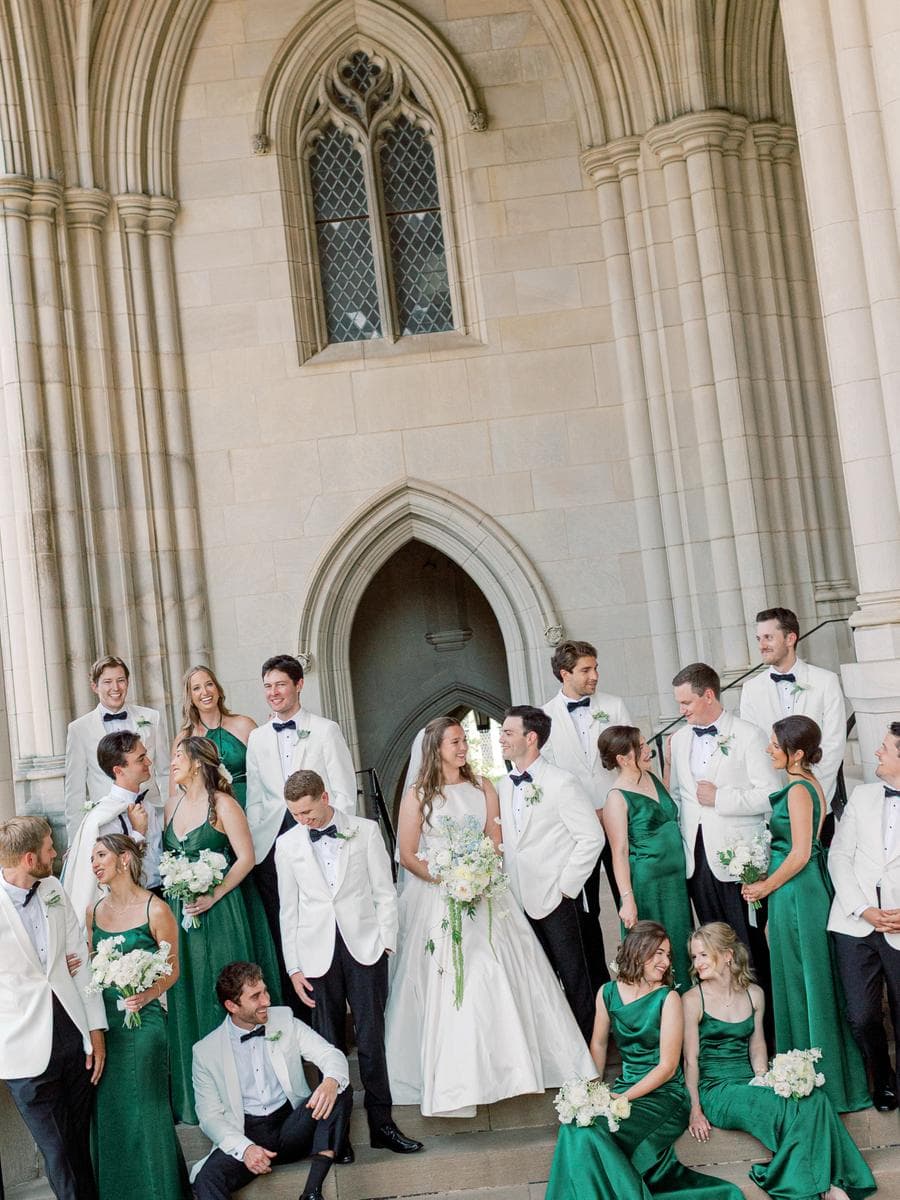
Silver, white gold, and platinum operate in an entirely different tonal register. These metals are cool, sometimes almost blue-white in their brightness, and they need a gown that meets them at that temperature. Bright white, optical white, and icy or stark tones in fabrics like mikado, duchess satin, or structured crepe are the natural counterparts. Against these gowns, a silver or platinum piece catches the light cleanly and reads as crisp and modern rather than cold.
The mistake many brides make is wearing silver jewelry with a warm ivory or champagne gown. The contrast isn't dramatic in a good way. It creates a subtle but persistent visual disconnect, as if one element of the look hasn't been fully considered. Cool metals want cool fabric tones, and when you give them that, the result is sharp and cohesive.
When Your Metals Don't Match Your Gown
Real bridal styling rarely happens in a vacuum. You may have inherited your grandmother's platinum engagement ring and fallen in love with a champagne silk gown. You might be committed to a yellow gold band but drawn to a bright white ballgown with a structured silhouette. These situations aren't problems to avoid; they're puzzles to solve.
The fix is simpler than most brides expect: add a small coordinating accent that bridges the gap. If your ring is cool-toned platinum but your gown is warm champagne, introduce a piece of warm-toned jewelry, even something minimal like a thin gold bracelet or delicate gold earrings, to create a visual connection between the metal and the fabric. The accent doesn't need to dominate. It just needs to exist, giving the eye a logical path from the gown to the metal rather than a jarring jump.
The same logic works in reverse. A yellow gold heirloom necklace against a bright white gown can be grounded by adding a cooler-toned accent, perhaps a pair of subtle silver or diamond studs, that pulls the look back toward balance. You're not hiding the contrast; you're managing it.
Fabric Finish Matters as Much as Fabric Color
Gown color is the starting point, but the finish of the fabric changes how metals read against it. A matte crepe in ivory absorbs light differently than a high-sheen duchess satin in the same shade. Shiny fabrics create more visual competition with metallic jewelry, so on a highly reflective gown, restraint with statement metals tends to work better. Matte or textured fabrics, like lace, chiffon, or organza, are more forgiving and let metals carry more visual weight without overwhelming the look.
This becomes especially relevant when considering the silhouette. A heavily embellished gown, one with beading, sequins, or metallic threadwork, already has metallic elements built into the fabric. In that case, the smartest approach is to read those existing tones and match your jewelry metals to whatever the gown's embellishment is already doing. Fighting that built-in metallic language with a contrasting metal in your accessories will fracture the look.
Building a Metal-Matching Checklist
Before the final fitting, run through these points:
- Identify your gown's true base tone. Hold it in natural light and look past the surface. Is it pulling warm (yellow, beige, amber) or cool (blue, grey, stark white)?
- Lay your jewelry against the fabric. Do they share the same warmth or coolness? If they don't, that's your signal to either reconsider a piece or find a bridging accent.
- Consider the finish of both the fabric and the metal. High-polish metals on high-sheen fabrics can compete; matte or brushed metals often sit more quietly against smooth fabrics.
- If you're mixing metals intentionally, anchor the look with one dominant tone and let the other play a supporting role.
- Check the full look in a mirror with your actual lighting conditions, whether that's the soft gold of a candlelit venue or the crisp daylight of an outdoor ceremony. Metals shift dramatically under different light sources.
The Bigger Picture
Bridal styling at its best is a system where every element reinforces the others. The gown tone, the jewelry metals, the fabric finish, and even the venue lighting are in conversation. Getting the metal-to-gown relationship right doesn't require a complete overhaul of your jewelry choices; it requires reading the tones honestly and making intentional decisions. The brides who look most put-together on the day aren't the ones who spent the most or accessorized the heaviest. They're the ones who understood that cohesion is its own form of beauty, and they built their look from that principle outward.
Know something we missed? Have a correction or additional information?
Submit a Tip