Mokhueleigbe Studios Reimagines Yoruba Bridal Style With Bold Color and Sculptural Tailoring
Mokhueleigbe Studios drops a Yoruba bridal look that swaps white-gown convention for saturated color, sculptural shoulders, and cut-out detailing that is genuinely impossible to ignore.
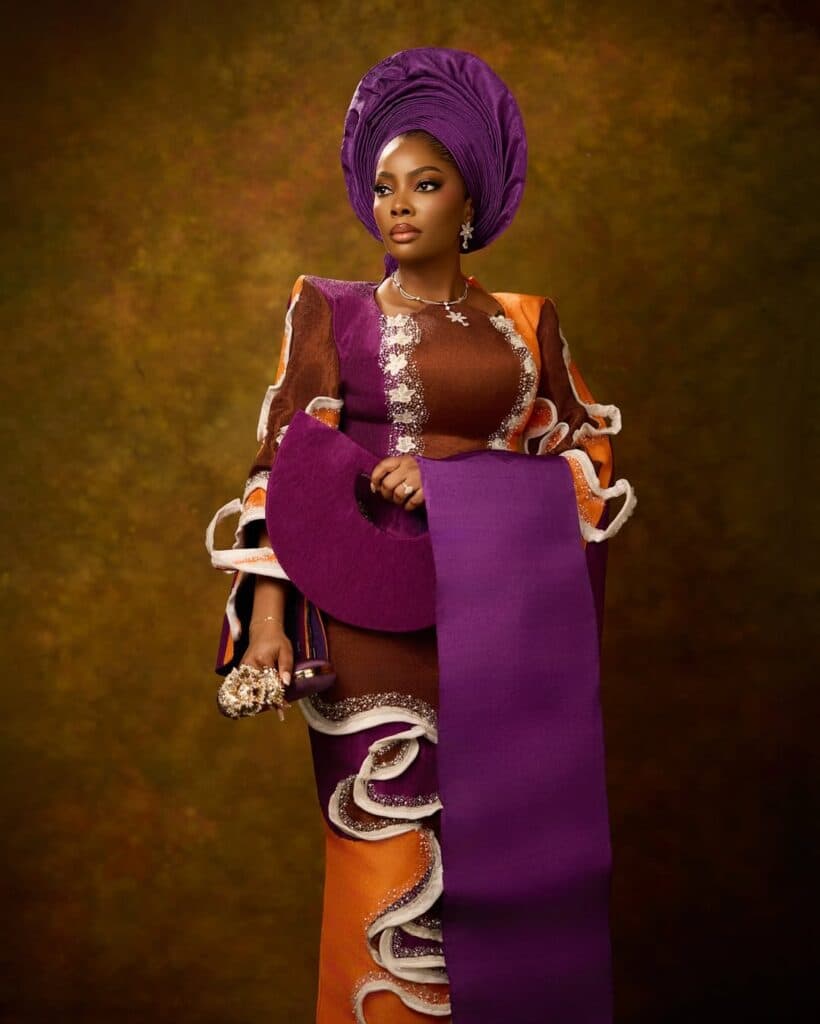
Walk into any bridal market in Lagos right now and you will see the shift happening in real time: the modern Yoruba bride is not toning it down. She is turning it up. Mokhueleigbe Studios has built its reputation on understanding exactly that impulse, and its latest bridal offering makes the argument with a look so visually commanding that it reads less like wedding attire and more like architecture you can wear.
The Case for Color-Forward Bridal Dressing
The default mode for Western bridal aesthetics has always been subtraction: softer shades, quieter fabrics, restrained ornamentation. Yoruba bridal tradition operates on the opposite logic, and Mokhueleigbe Studios leans into that contrast without apology. The studio centers bright, saturated palettes as a deliberate design decision, not an accent. Color here is not decoration; it is the whole argument.
This approach works because aso-oke, the traditionally woven fabric at the heart of Yoruba ceremonial dressing, was never meant to whisper. Its rich texture and vivid patterning have signaled prestige and heritage for generations, appearing in everything from agbada to the iro-and-buba combination that remains a cornerstone of Yoruba bridal costuming. Mokhueleigbe Studios treats that history not as a constraint but as a creative foundation, using bold, saturated hues to modernize the silhouette while keeping every cultural signifier firmly intact.
Sculptural Tailoring as a Design Statement
The structural choices in the Mokhueleigbe Studios look are where the design becomes genuinely distinctive. Structured shoulders anchor the silhouette, projecting a confidence that reads on camera and holds up in person. This is not the softly draped, ethereal quality that dominates most bridal imagery: this is intentional architecture, the kind of shoulder construction that makes a bride's entrance feel like a scene rather than just an arrival.
The cut-outs add another layer of contemporary edge. Rather than placing them predictably at the waist or décolletage, the detailing at the hem of the sleeves introduces a playfulness that keeps the look from reading as overly formal. This is one of those design choices that only works when the rest of the garment has enough structural weight to carry it, and here the balance is exactly right. Swirling cut-out details alongside sharp shoulders create a push and pull between softness and precision that is difficult to execute and striking when it lands.
The overall effect is what the fashion world has started calling wearable art: pieces where the construction itself is the statement, where a bride does not need a cathedral-length train or ten layers of tulle because the garment is already its own spectacle.
Getting the Gele Right
Any Yoruba bridal look lives or dies on the gele, and Mokhueleigbe Studios treats headgear not as an afterthought but as a structural element in its own right. The gele in this look is tied with the kind of precision that adds height and grandeur without competing with the sculptural tailoring below the neckline. The two elements work in dialogue: the architecture of the dress is echoed by the architecture of the headwrap.
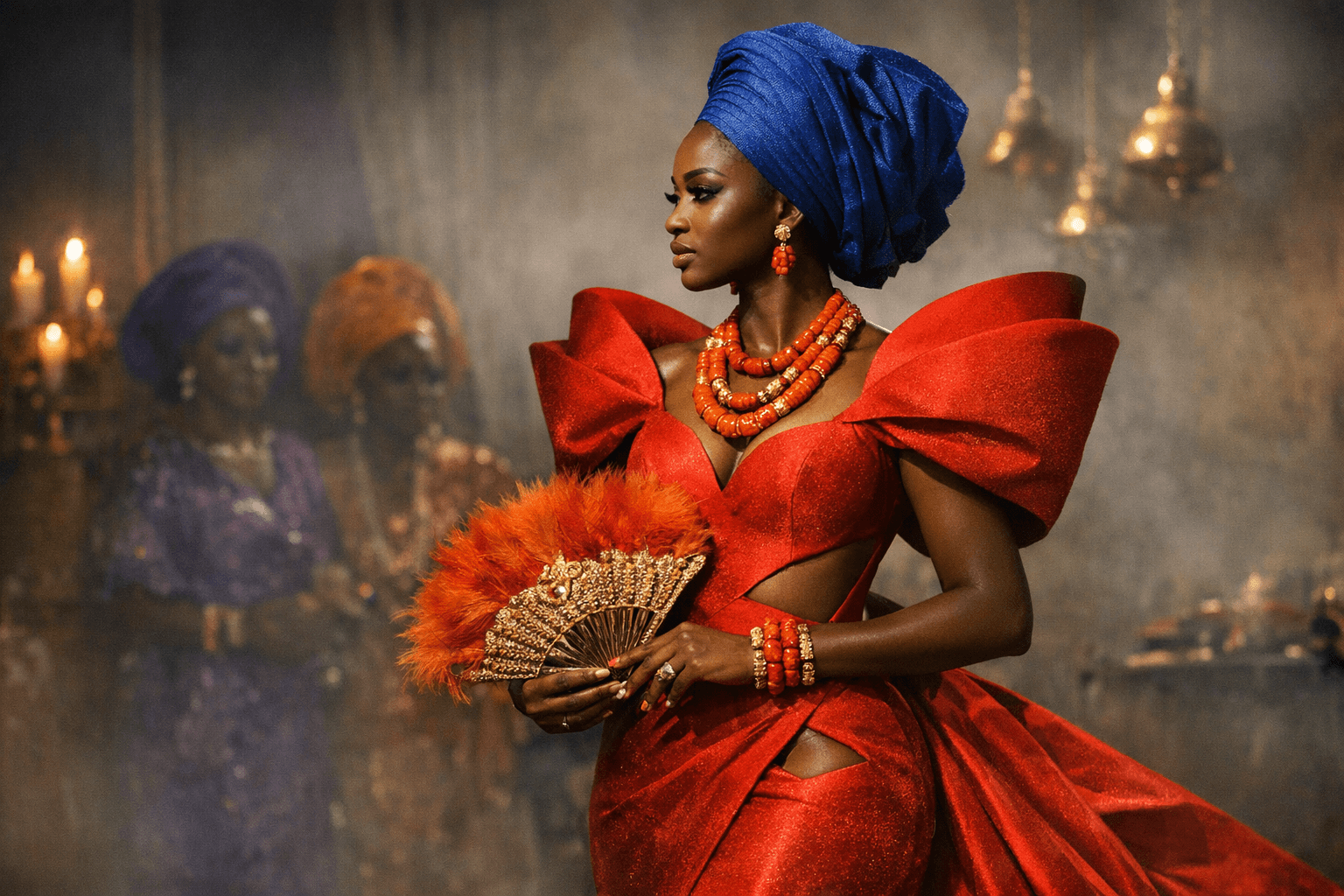
For brides navigating this balance, the key principle is proportion. A fuller, more dramatically structured gele pairs best with cleaner lines on the bodice, allowing the headwrap to own its space. Where the dress itself carries heavy surface detail, a more restrained gele tie keeps the overall composition readable. The Mokhueleigbe Studios look demonstrates that both elements can be maximalist when the proportions are calibrated carefully, though that calibration requires either exceptional skill or an experienced gele artist.
Beadwork and the Jewellery Edit
One of the most practically useful decisions in this look is how it handles accessories. Saturated fabric and sculptural silhouettes can easily tip into visual overload, and beadwork is particularly prone to competing with the dress when it is applied without restraint. The Mokhueleigbe Studios approach uses beadwork as an accent that reinforces the cultural coding of the look rather than as a competing focal point.
The jewellery edit reads as deliberately minimalist against the weight of the garment. This is smart styling for any bride working with a heavily textured or vividly colored aso-oke look: when the fabric already carries significant visual energy, the jewellery's job is to frame and finish, not to add another layer of noise. A single statement piece, whether a beaded collar or a bold cuff, tends to land harder against a structured, color-rich bridal look than a full stack of competing elements ever would.
Why This Look Matters Beyond the Ceremony
Bridal fashion has spent several years in a slow conversation with non-Western aesthetics, but that conversation often stops at surface-level cultural borrowing rather than genuine engagement with the design intelligence underneath. What Mokhueleigbe Studios is doing is something more rigorous: demonstrating that Yoruba bridal tradition contains structural and chromatic ideas that are not just culturally significant but genuinely avant-garde by any global standard.
The structured shoulder is having a moment across every segment of fashion right now. Bold color in bridal has been building as a trend for the better part of two seasons. Cut-out detailing has moved decisively from evening wear into ceremony dressing. Mokhueleigbe Studios is not following those trends; the design vocabulary here is rooted in a tradition that was operating this way long before global runways caught up.
For brides planning Yoruba traditional ceremonies, this look is proof that the richest aesthetic choices available to them are already embedded in the culture. The work is not in finding something new; it is in finding a designer with the technical skill and cultural fluency to interpret those elements with the precision they deserve. On that count, Mokhueleigbe Studios makes a persuasive case that it knows exactly what it is doing.
Know something we missed? Have a correction or additional information?
Submit a Tip