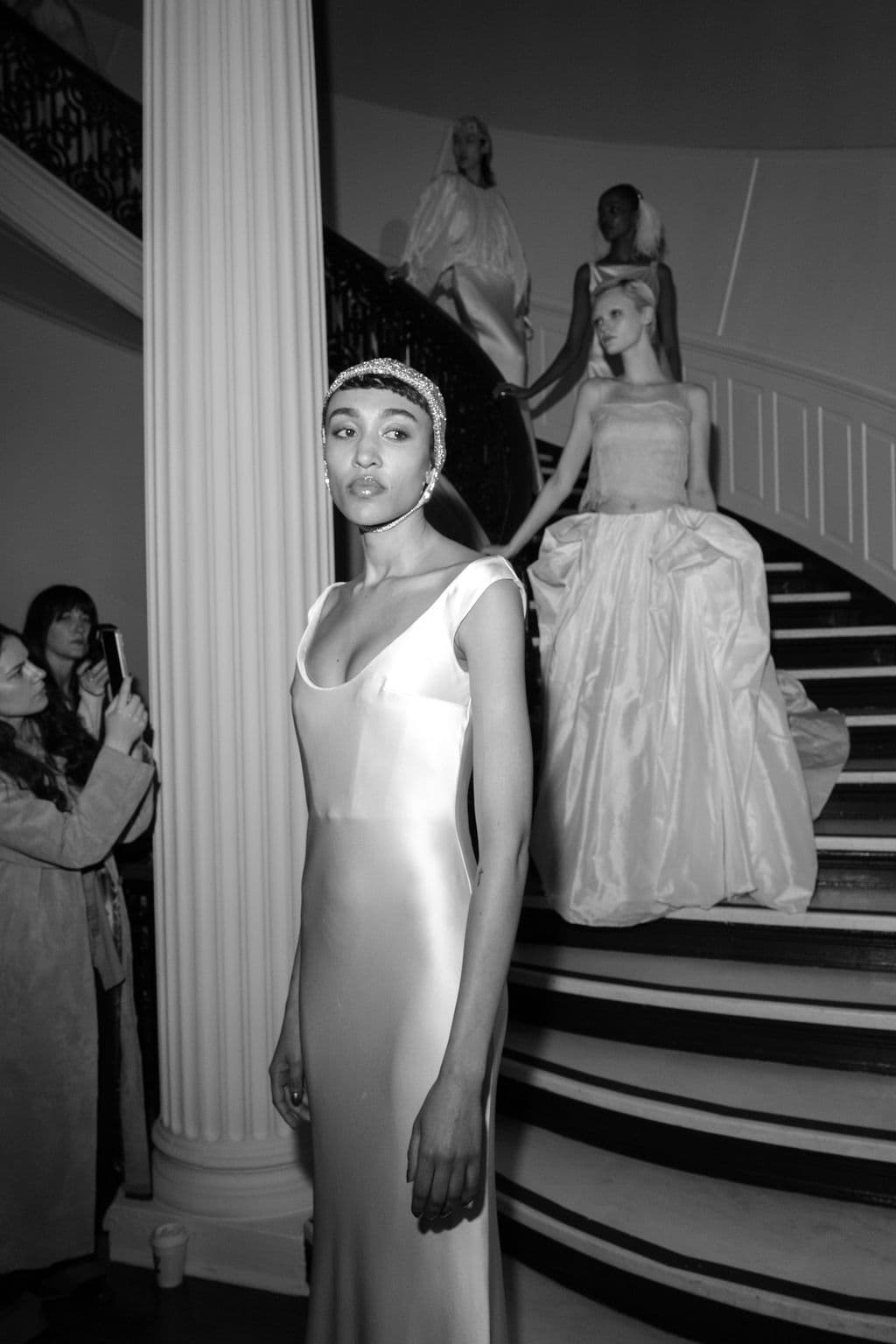
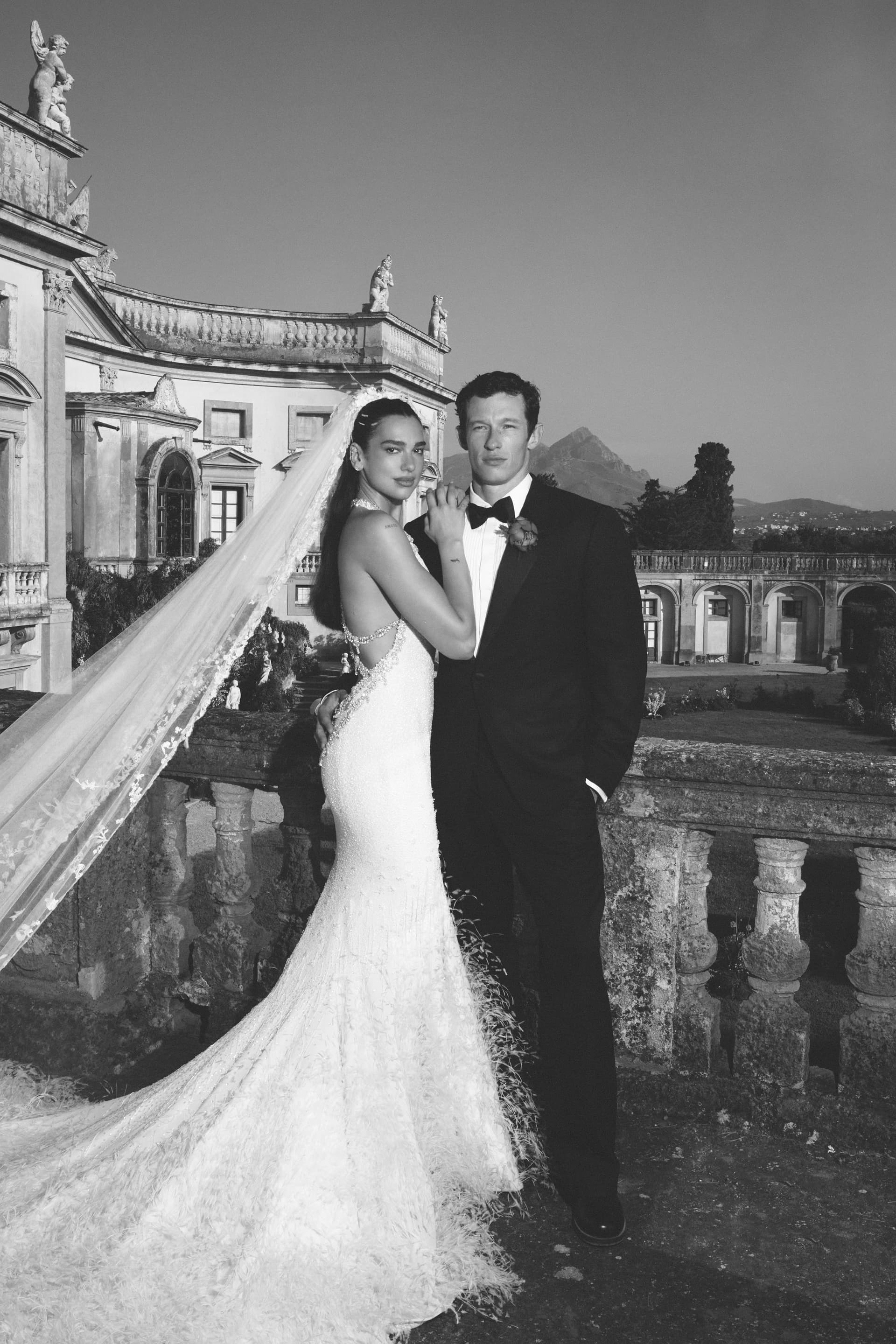
Monique Lhuillier’s Bridal Spring 2027 leans into sensual, relaxed femininity
Monique Lhuillier’s Spring 2027 bride is softer, sexier, and more practical than she looks. Lace, sleeves, and corsetry do the heavy lifting.

Monique Lhuillier’s Spring 2027 bride is not here to pose. She is here to move. That is why the collection lands so cleanly: it keeps the name recognition brides already know, then gives them something useful to steal. The brand showed up again as one of New York Bridal Fashion Week’s anchor names during the April 7-10 run, and the Spring 2027 gallery that followed makes the case for a bride who wants polish without stiffness. Even WWD’s trend map folded one image into the season’s Love Story mood, which feels right, because this is romance with a backbone.
The big idea: sensuality, but edited
Monique Lhuillier’s own framing is very clear. The Spring 2027 story channels a modern-day Brigitte Bardot, which means the clothes are built around quiet confidence rather than sugary bridal fantasy. The result is a collection that feels feminine, but not fragile; sexy, but not loud. That balance is exactly why the line works for real brides who want their dress to look considered in photos and feel believable in motion.
The smartest part is that the sensuality comes from construction, not gimmick. Lace sits at the center, but it is paired with sculpted separates, drop-waist corsetry with precise boning, and silhouettes that stay strong even when they read soft at first glance. If you want a gown that says old-school glamour without turning into costume, this is the lane.
Lace gets the spotlight, but the shape does the talking
Lhuillier is leaning hard into lace, and not in the fussy, overworked way that can make a bride disappear into decoration. Here, lace is the starting point, then structure sharpens it. The sculpted separates and drop-waist corsetry give the collection a long, elongating line, the kind that flatters without screaming for attention.
This is the detail for the bride who wants her dress to feel lived-in rather than sealed off behind layers of tulle. It works best for a candlelit restaurant reception, an art-filled city venue, or a historic house where the architecture already gives you drama. Borrow the idea even if you never buy the full look: choose a gown with visible internal structure, a lower waistline, or lace that shows skin in a controlled way instead of covering every inch.
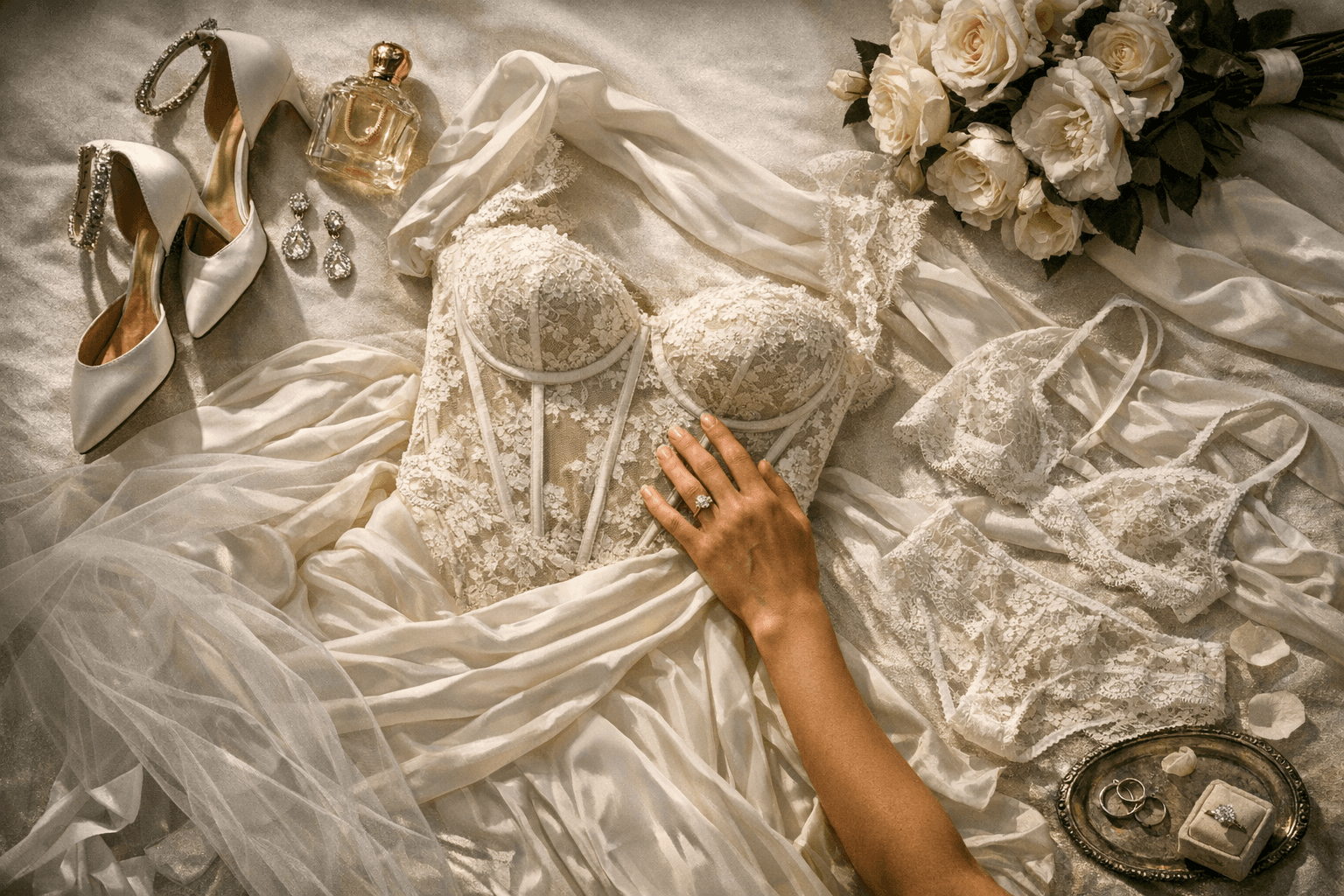
The real flex is versatility
The collection’s most practical move is the one brides will actually remember after the mood board glow fades: jackets, voluminous overskirts, and detachable sleeves. That is not just styling theater. It lets one dress travel through the entire wedding day, from ceremony to dinner to dance floor, without making the bride feel trapped in a single silhouette.
That matters for anyone planning a long celebration or trying to squeeze maximum impact out of one look. Detachable sleeves can soften a strapless shape for the ceremony, then come off when the party starts. An overskirt gives you the sweep and sweep-away entrance moment, then leaves behind a cleaner dress for the reception. This is the kind of bridal modularity that actually makes sense, especially for brides who want options but do not want to look pieced together.
Chiffon and 1990s minimalism bring the air
For all the lace and boning, the collection never feels heavy-handed because draped chiffon keeps interrupting the drama with air. The lookbook’s reference to strong yet fluid silhouettes, along with 1990s sensual minimalism, gives the whole thing a less-is-more tension that feels very current. You can see the logic in the way the fabric moves, not just the way it photographs.
This is the sweet spot for brides who hate anything too fussy or over-embellished. Think rooftop ceremonies, destination weddings, warm-weather receptions, or any setting where a dress needs to catch light and move with a little ease. The practical takeaway is simple: if your dream dress feels too precious to breathe in, keep looking. Lhuillier’s best pieces here prove that softness is more convincing when the line stays clean.
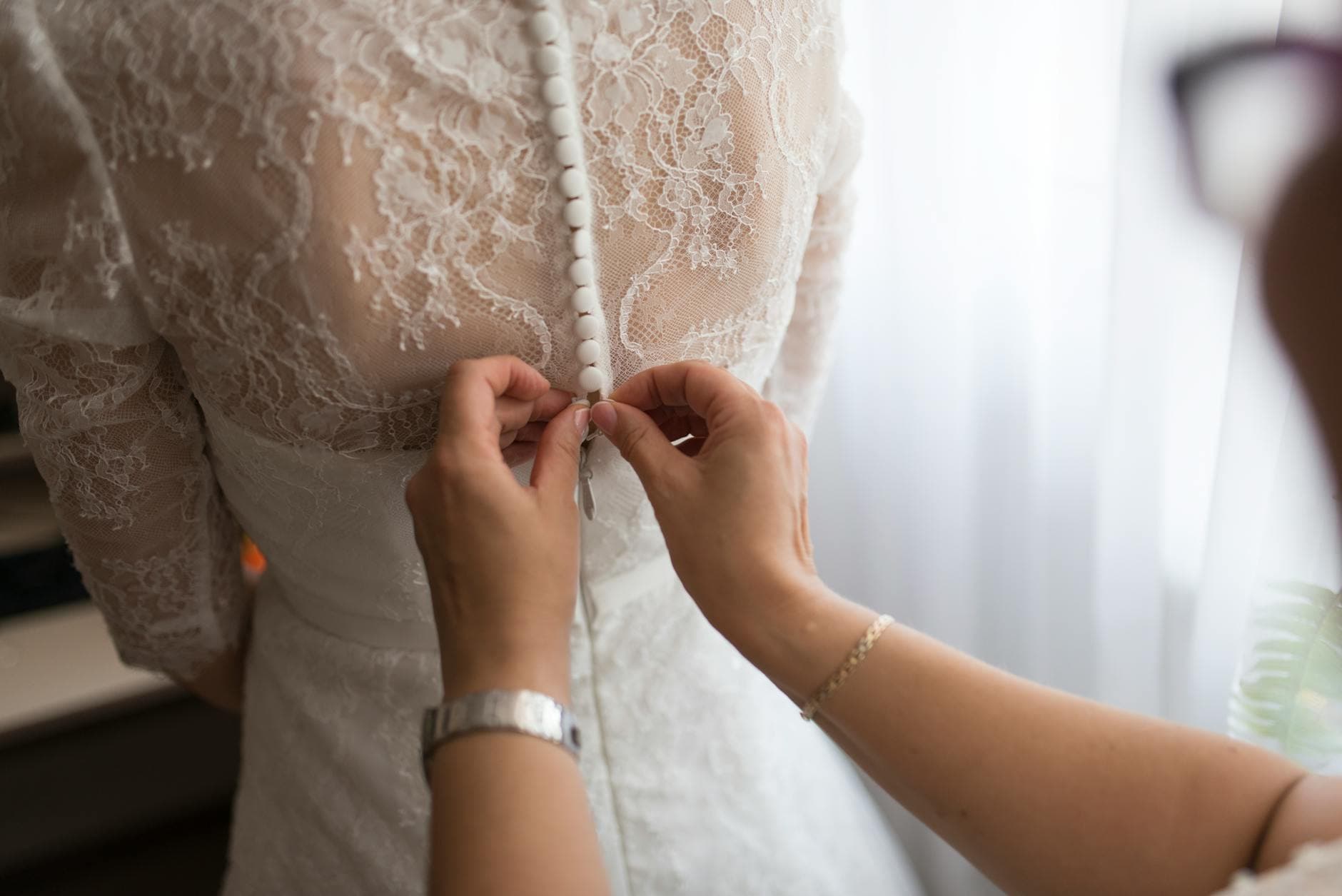
The color and finish moments are the ones that stick
The standout surprises are the red Chantilly lace gown and the noir draped tulle gown with a textured bib. Those two pieces snap the collection out of classic bridal territory and into something sharper. Red is for the bride who wants to disrupt the room on purpose, while the noir look leans into evening glamour and a little bit of edge.
Then there are the smaller styling notes that do real work: flirty veilettes and pearl accents. Veilettes bring instant attitude, especially if you want a bridal look that feels a touch retro without tipping into costume. Pearls add restraint and polish, which keeps the collection grounded even when the silhouette gets dramatic. If your wedding mood is more after-dark than fairytale, these are the details to steal first.
Why this collection matters now
Monique Lhuillier was established in 1996 by Monique Lhuillier and Tom Bugbee, and the brand still knows exactly how to speak to brides who want luxury with feeling. That long view matters, because the Spring 2027 collection does not chase novelty for its own sake. It sits inside the broader Love Story wave, but it upgrades romance with better structure, more versatility, and a sharper sense of what brides actually wear well.
That is the payoff here. The collection gives you lace without lace overload, sensuality without excess, and ceremony pieces that can survive the whole day. If bridal is moving toward relaxed femininity, Monique Lhuillier is showing the version that feels most convincing: polished, softly provocative, and built to be worn, not just admired.
This article was produced by Prism’s automated news system from verified source data, official records, and press releases, then run through automated quality and moderation checks before publishing. The system is built and supervised by the people who set the standards it runs under. Read our full AI policy.
Did this article answer your question?