Nardos Bridal Marks 10 Years With New York Retrospective and Spring Collection Debut
Nardos Imam turned the Rainbow Room into a live atelier for her brand's 10th anniversary, with sewing machines, real-time draping, and a spring 2027 collection debut.

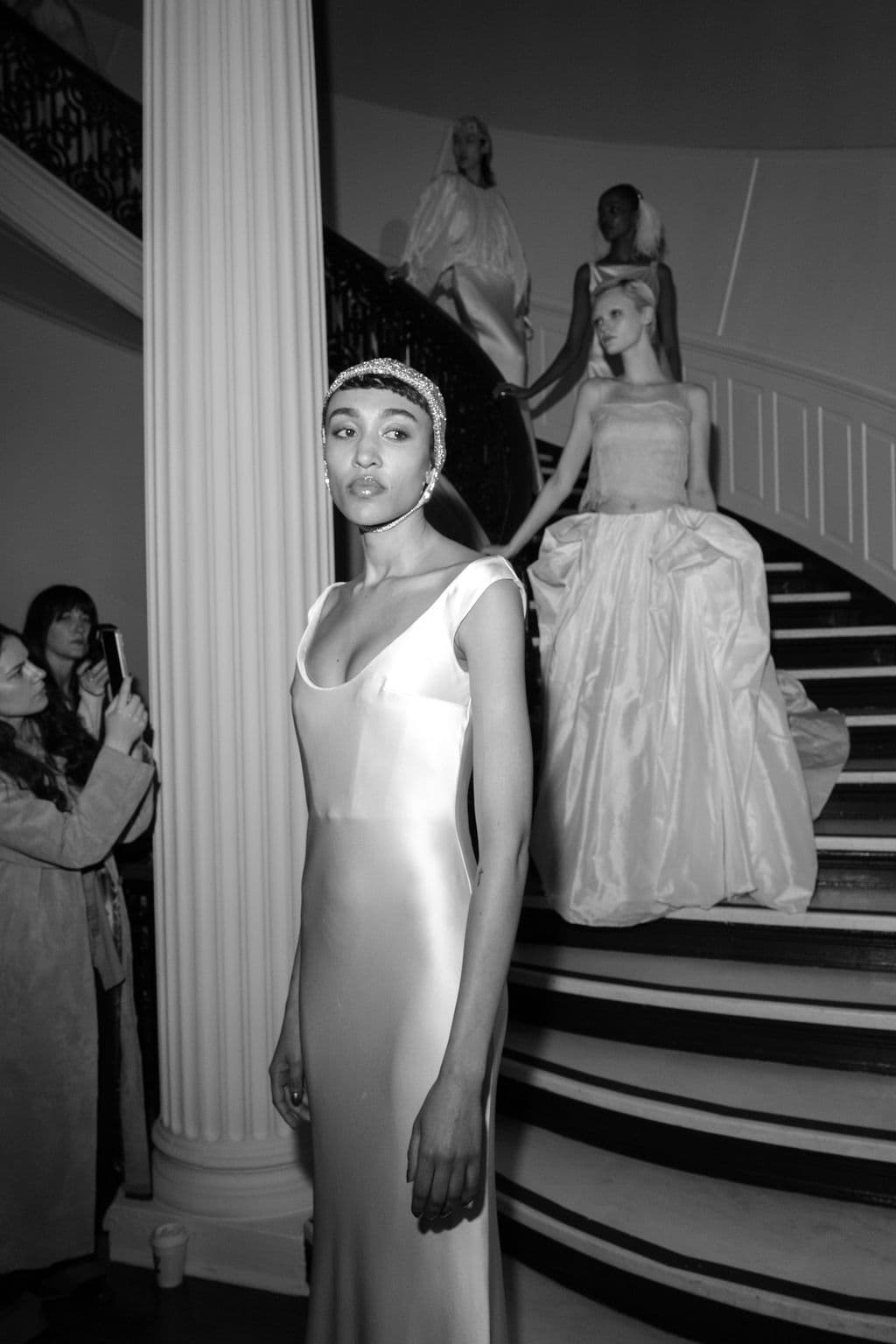
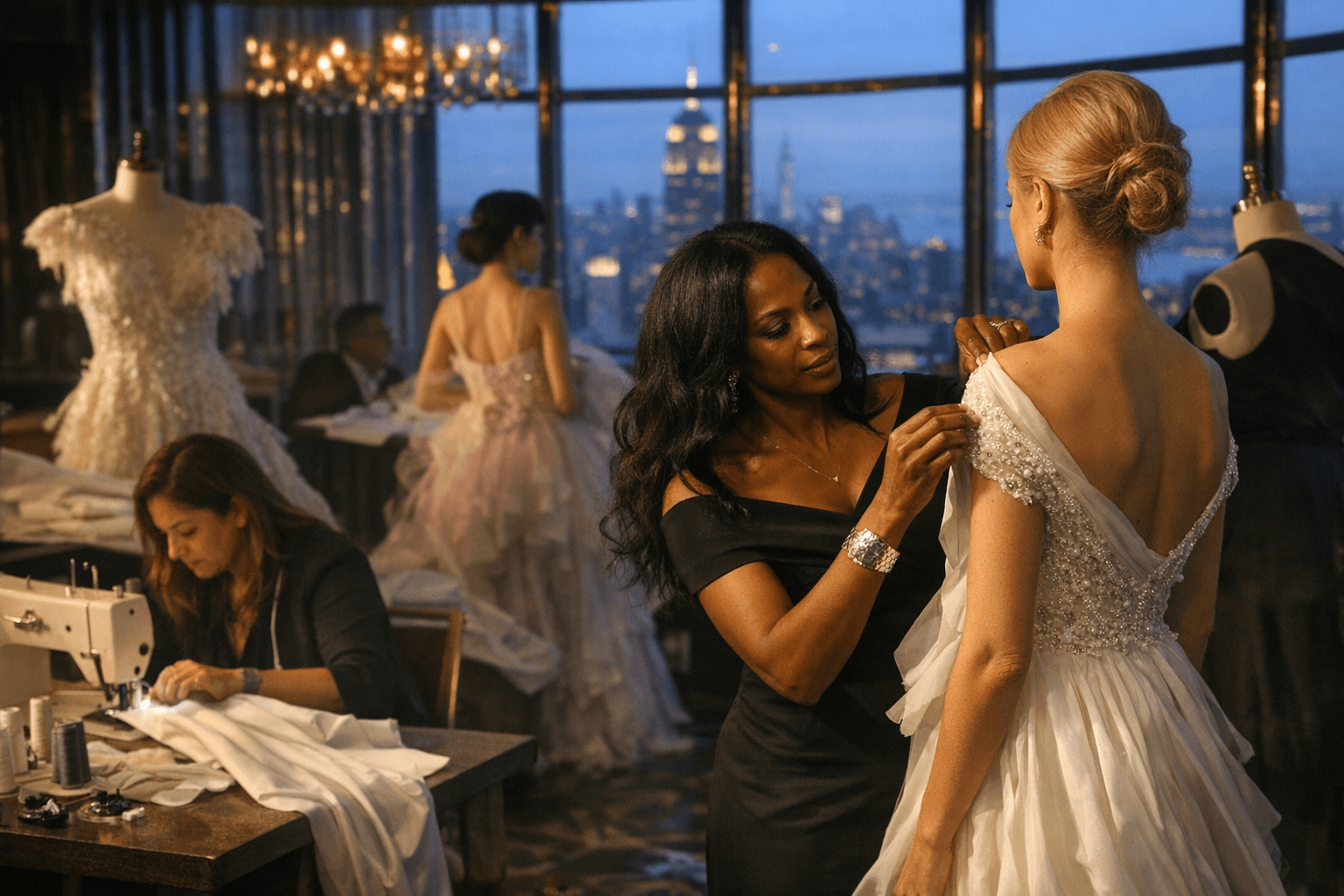
At the Rainbow Room on April 7, Nardos Imam did something most luxury bridal houses would never dare: she opened the atelier in real time, in public, inside one of New York City's most architecturally dramatic rooms. For the brand's 10-year anniversary during New York Luxury Bridal Fashion Week, guests didn't just look at finished gowns. They watched them being made.
The event layered a retrospective exhibition of signature pieces from the past decade against the debut of the spring 2027 bridal collection. But the centerpiece was the "Art of the Making," a live demonstration of the draping and construction techniques that define the Nardos house. Sewing machines were brought onto the floor. The process moved from pencil sketch through pattern to finished silhouette, tracing the full arc of how a dress is made.
Imam explained the approach with precision. "The Rainbow Room has a circular, oval shape that rotates, so I want to invite people into what we do every day at our atelier. We're bringing sewing machines and showing from the perspective of pencil drawing to what became the craft of making dresses. I want to bring the beginning and the end of the collection together to tell a story about the making of art," she told WWD.
That transparency carries more weight than it might appear. In luxury bridal, the atelier process is almost never shown to clients in real time, which means buyers routinely can't distinguish between a couture-level construction and a polished sample-room piece. What the demonstration made visible are exactly the details that justify both the pricing and the production timeline. Imam's key design signatures, fluid draping, dimensional floral embellishments, and sculptural corsetry, were on display not only through the spring 2027 collection but also through a decade's worth of signature Nardos gowns. A sculptural corset holds its shape through internal boning and hand-finished panel construction, not just the fabric. A dimensional floral embellishment is built petal by petal, hand-cut and layered in a process that adds days to any production schedule. Fluid draping requires a cutter who can read how a specific cloth behaves on a specific body, a skill that doesn't transfer to a template.
For brides investing at this level, the vocabulary is worth learning before the first appointment. Ask which elements are handworked versus machine-applied. Ask how long each construction phase takes. Ask about preservation protocols specific to the construction, because a gown with internal boning, hand-applied florals, and couture-grade seaming requires different long-term care than a simpler structured dress.
Imam noted the brand's trajectory: "We're based in Dallas, but when we opened our store four years ago in New York, that was a huge jump." That New York expansion, alongside her debut runway show at The Plaza, marked the milestones that moved the label from a well-regarded regional atelier into the national luxury market. Born and raised in Eritrea, Imam originally dreamed of becoming a costume designer before pivoting to bridal, using imagination as her guide through the fashion industry.
The retrospective pulled that arc into focus. Ten years of gowns, arranged together, read as a sustained design conversation: the floral language pushed season by season, the corsetry growing more architecturally resolved, the draping more decisively executed. The spring 2027 collection continues that conversation without abandoning what built it. In a bridal market that mistakes novelty for progress, a decade of coherent vision is the harder credential.
This article was produced by Prism’s automated news system from verified source data, official records, and press releases, then run through automated quality and moderation checks before publishing. The system is built and supervised by the people who set the standards it runs under. Read our full AI policy.
Did this article answer your question?