New York Bridal Week signals sheer silhouettes and sculptural romance for spring 2027
Sheer layers, drop-waist corsetry and sculptural lines defined New York Bridal Week, where established houses and fresh names rewrote spring 2027 bridal.
The new bridal mood
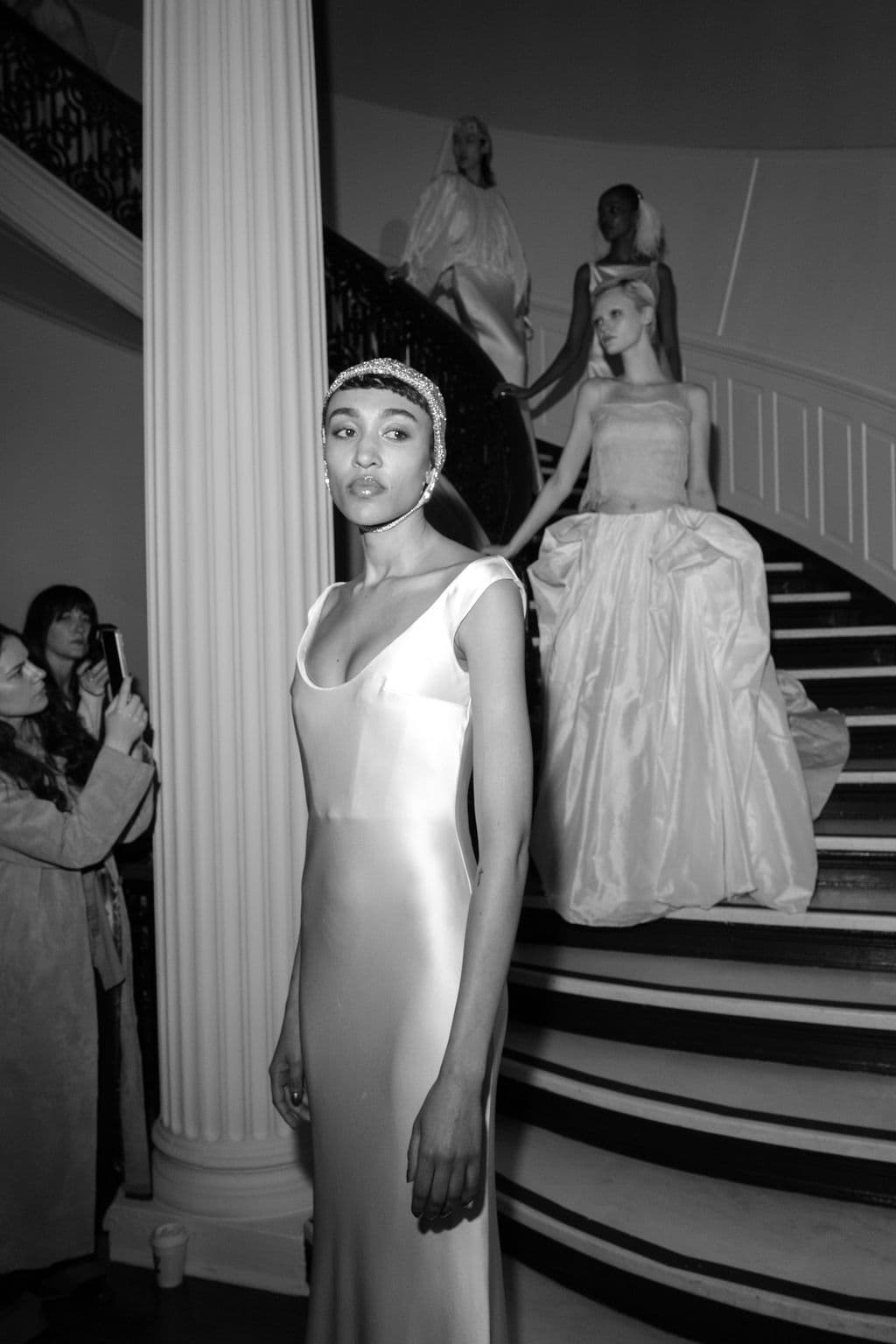
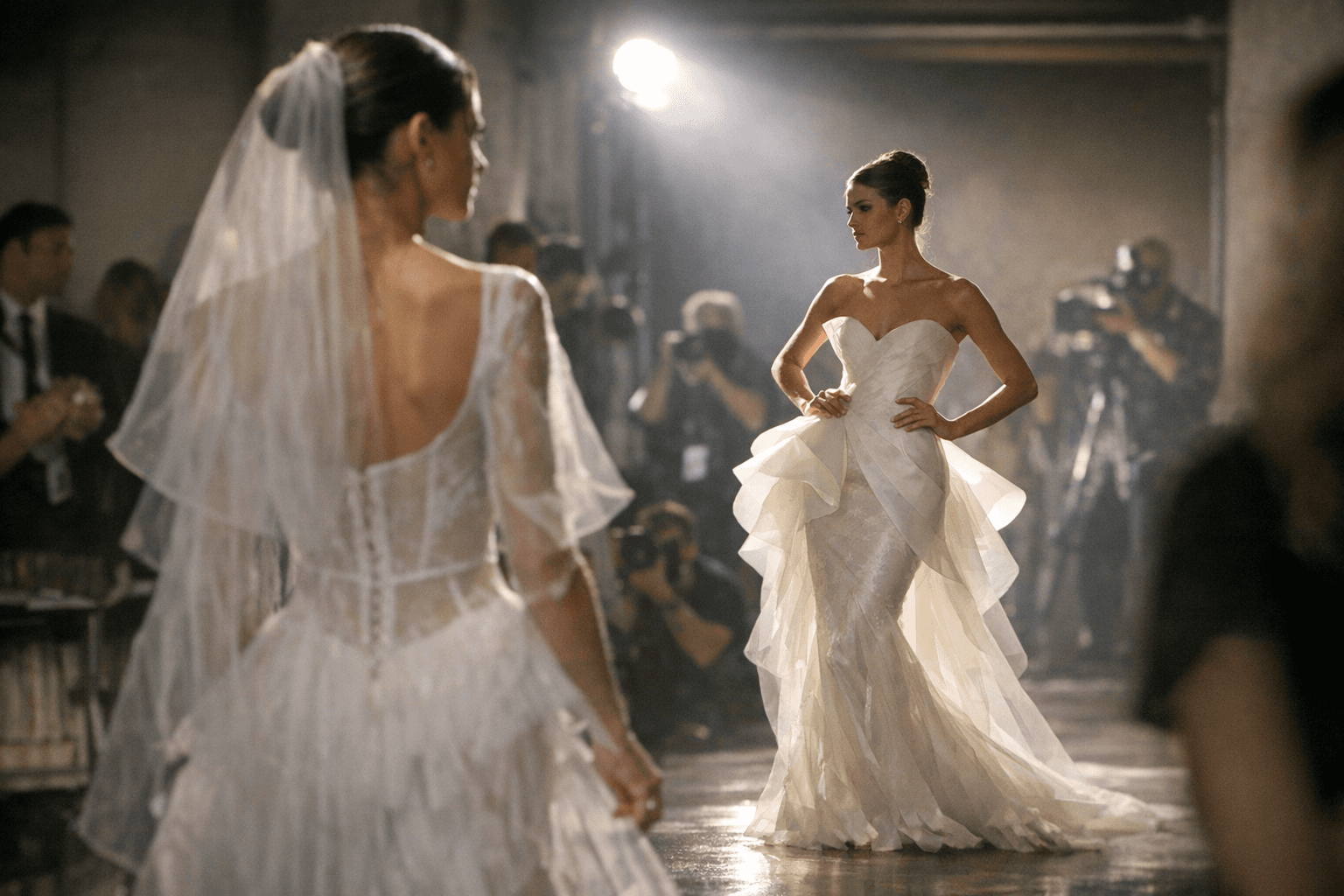
The strongest bridal message in New York was not excess, but tension: softness sharpened by structure, romance cut through with transparency. Sheer fabrications, sculptural silhouettes and a more sensual, minimal read on wedding dressing set the tone for spring 2027, making this feel less like a parade of princess gowns and more like a reset for the modern bride.
A roster that mixed legacy with disruption
NYFW Bridal Spring 2027 ran April 7 to 10, 2026, and the official schedule stretched beyond 35 designers, a scale that signals how serious bridal has become inside the New York fashion calendar. Monique Lhuillier, Naeem Khan and Tanner Fletcher Weddings anchored the week, while Batsheva made her bridal debut, a move that instantly widened the conversation from classic ceremony dressing to something more editorial and unexpected.
That roster mattered because it blended the category’s established powerhouses with labels that feel more open to how brides actually dress now. Returning names such as Amsale, Anne Barge, Berta, Galia Lahav, Hayley Paige, Ines Di Santo, Justin Alexander Signature, Mira Zwillinger, Sareh Nouri, Viktor&Rolf Mariage and WONÁ Concept & Eva Lendel gave the week its commercial backbone, while new additions including Alyssa Kristin, FERRAH, Netta BenShabu Elite Couture, OUMA Bridal, Poeza, Priscilla Couture and RENHUE suggested that the bridal wardrobe is getting broader, lighter and more personal.
The week also carried two quieter but important milestones. Mark Ingram Bride marked 25 years as a luxury bridal retailer, while Verdin Bridal celebrated five years in the industry. In a category built on memory, those anniversaries read as more than anniversary notes; they are reminders that bridal fashion is now supported by a mature ecosystem of retailers and independent voices, not just the runway names that dominate the mood board.
Monique Lhuillier set the emotional center
If the week had a north star, it was Monique Lhuillier’s Spring 2027 lookbook, which framed the collection around a modern-day Brigitte Bardot mood: sensual, quietly confident and intentionally relaxed. That is the key shift to understand. The bride is no longer being pushed toward stiffness or overworked embellishment; instead, she is being dressed in a language of ease that still demands construction discipline.
Lhuillier’s formula was precise. Lace took center stage, but it was paired with drop-waist corsetry with exacting boning, weightless sheer layers, detachable sleeves, overskirts and draped chiffon. Those details matter because they show where bridal is headed: toward pieces that can be adjusted, exposed and re-styled through the day, rather than a single fixed look that only works for the aisle.
The silhouette story was just as important as the fabric story. Sculpted separates and strong yet fluid shapes created a bride who feels composed without looking rigid, while the collection’s contrast pieces, including a striking red Chantilly lace gown and a noir draped tulle look with a dramatic textured bib, pushed bridal away from a narrow definition of white purity. Even the veilettes and pearl accents had a point of view, adding a little flirtation and a little old-world polish without tipping into costume.
What spring 2027 bridal is really saying
This season’s most persuasive idea was not that every bride should wear sheer fabric. It was that transparency, when balanced with engineering, can make bridal feel more modern, not less formal. In the strongest looks, the body was suggested rather than concealed, but the garments still had the kind of internal structure that makes bridal clothes feel expensive, controlled and camera-ready.
That balance between exposure and structure is why the week felt so coherent, even across very different labels. Monique Lhuillier leaned into lace and corsetry, Batsheva’s debut brought anticipation for something less expected, and the broader schedule suggested a market that wants both the emotional sweep of a gown and the flexibility of pieces that can evolve through a wedding day. The message is clear: spring 2027 bridal is moving toward wardrobes, not just dresses.
The details that matter most now
- Sheer layers are no longer a novelty effect. They are being used as a way to create air, light and movement, especially when they sit over boned foundations or sculpted corsetry.
- Drop-waist corsetry gives the bride shape without the old-school severity of a fully structured ball gown. It lengthens the torso and lets the skirt fall with more ease.
- Detachable sleeves and overskirts answer the modern demand for transformation. They let one look work for ceremony, dinner and dancing without sacrificing polish.
- Draped chiffon and soft tulle temper all that structure, keeping the mood romantic rather than architectural. The result is sculptural, but never hard.
Why this season feels different
What made New York Bridal Week stand out was not one viral dress, but a collective push toward a more intelligent bridal wardrobe. The legacy houses proved that classic glamour still sells when it is updated with transparency, movement and cleaner lines, while the newer names and Batsheva’s debut hinted at a bride who is less interested in formal rules and more interested in character.
Spring 2027 bridal is shaping up to be about poise with a pulse: sheer, but not fragile; sculptural, but not stiff; romantic, but sharp enough to feel current long after the aisle photos are taken. That is the real shift New York just confirmed.
This article was produced by Prism’s automated news system from verified source data, official records, and press releases, then run through automated quality and moderation checks before publishing. The system is built and supervised by the people who set the standards it runs under. Read our full AI policy.
Did this article answer your question?