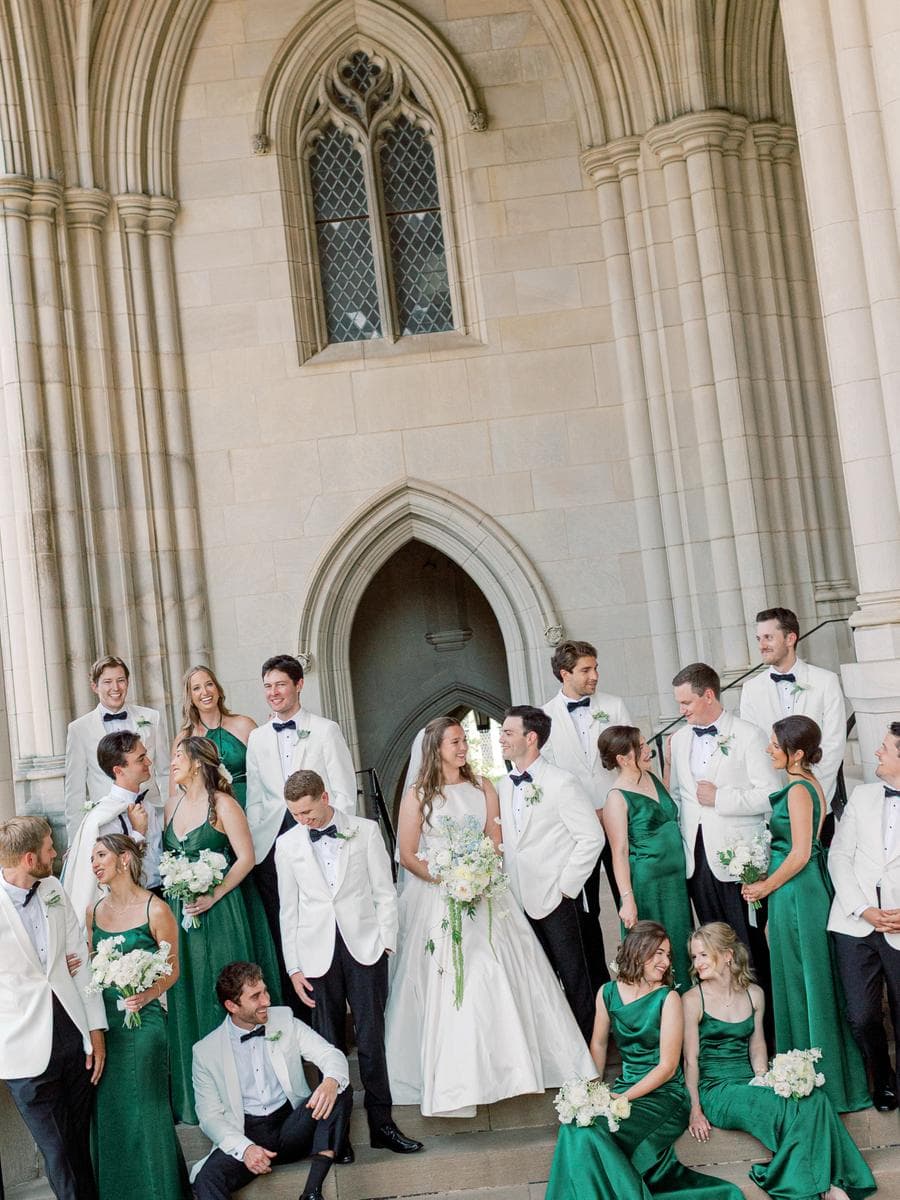
Pick a Color and Fabric First, Then Let Silhouettes Flatter Every Bridesmaid
Start with one color or one fabric, then set your bridesmaids free: the mix-and-match approach solves the age-old problem of dressing every body beautifully.
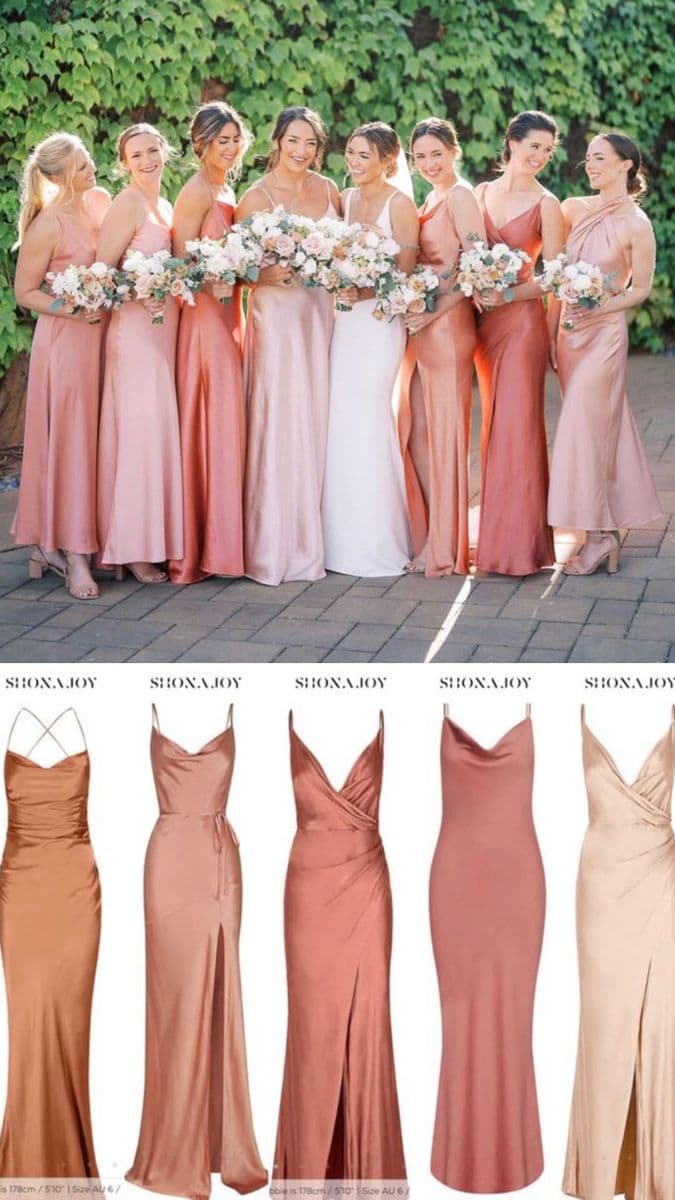
The bridesmaid dress conversation is one of the most fraught in wedding planning, and for good reason. A bridal party rarely comes in one shape, one height, or one skin tone, yet the expectation is that six women of entirely different proportions will stand together looking like they belong to the same photograph. The answer is not to find one perfect dress and force everyone into it. The answer is to lock down one unifying element first, then release your bridesmaids to choose what actually flatters them.
Start with a unifying anchor: color or fabric
The strategic pivot that makes everything else easier is this: pick a cohesive color palette and fabric first, then allow silhouette flexibility. It sounds simple because it is, but it takes discipline to resist the urge to over-prescribe.
The color-first approach means choosing one shade, whether that is a classic blush, a deep navy, or a warm champagne, and allowing your bridesmaids to choose everything else. You end up with a group of women in beautiful gowns with varied necklines, sleeves, and lengths but all the same hue. The visual effect is coordinated without being a uniform. The fabric-first approach works slightly differently: you select a single versatile material, chiffon being the most frequently cited example because it drapes beautifully on every body type, and let each bridesmaid choose her preferred style and color within that textile. The lightweight, fluid nature of chiffon means the dresses will photograph with a similar texture and movement even if the silhouettes diverge entirely.
Both approaches share a core logic: everyone still looks like they belong to the same party, but the rigidity of a one-style-fits-all approach disappears. If you want the tightest visual cohesion, you can anchor both color and fabric simultaneously and open the silhouette entirely to individual choice.
The mix-and-match framework: structure with freedom
The mix-and-match trend is not a free-for-all. Flexibility is important, but some structure is essential to prevent the group from looking like they arrived from separate weddings. The framework that works best is setting one or two non-negotiable parameters and letting your bridesmaids self-select within them. WalG London's approach illustrates this well: choose a signature color, such as their Dark Khaki or Dark Mauve, and allow each bridesmaid to pick the neckline and hemline she feels most comfortable in. The result is a bridal party that celebrates individual beauty while reading as a cohesive group.
What this means practically is that your role as the bride is not to choose a dress but to choose a direction. Set the color, set the fabric, note any length preferences if you have them, and then let your bridesmaids shop within those parameters. From there, a shared finishing touch — matching shoes, a coordinated clutch, or a subtle piece of personalized jewelry, like a hand-engraved name necklace in 14k gold from Theo Grace — can thread individuality through the group without disrupting the visual harmony.
Silhouettes: avoid restriction, embrace universality
When it comes to silhouettes, the single most important rule is to avoid anything overly bodycon or restricting. A tight, unforgiving cut does not serve a diverse bridal party; it creates anxiety, discomfort, and photographs nobody is proud of. Prioritize silhouettes known for their universally flattering nature instead.
If you are looking for one single silhouette to suit everyone, the A-line is the undisputed champion. It cinches at the natural waist before skimming gracefully over the hips, making it flattering across a wide range of figures. For necklines, the V-neck consistently earns its reputation as the most universally flattering option because it elongates the torso, creating length and proportion regardless of height or bust size.
Dressing for specific figures
*Plus-size bridesmaids*
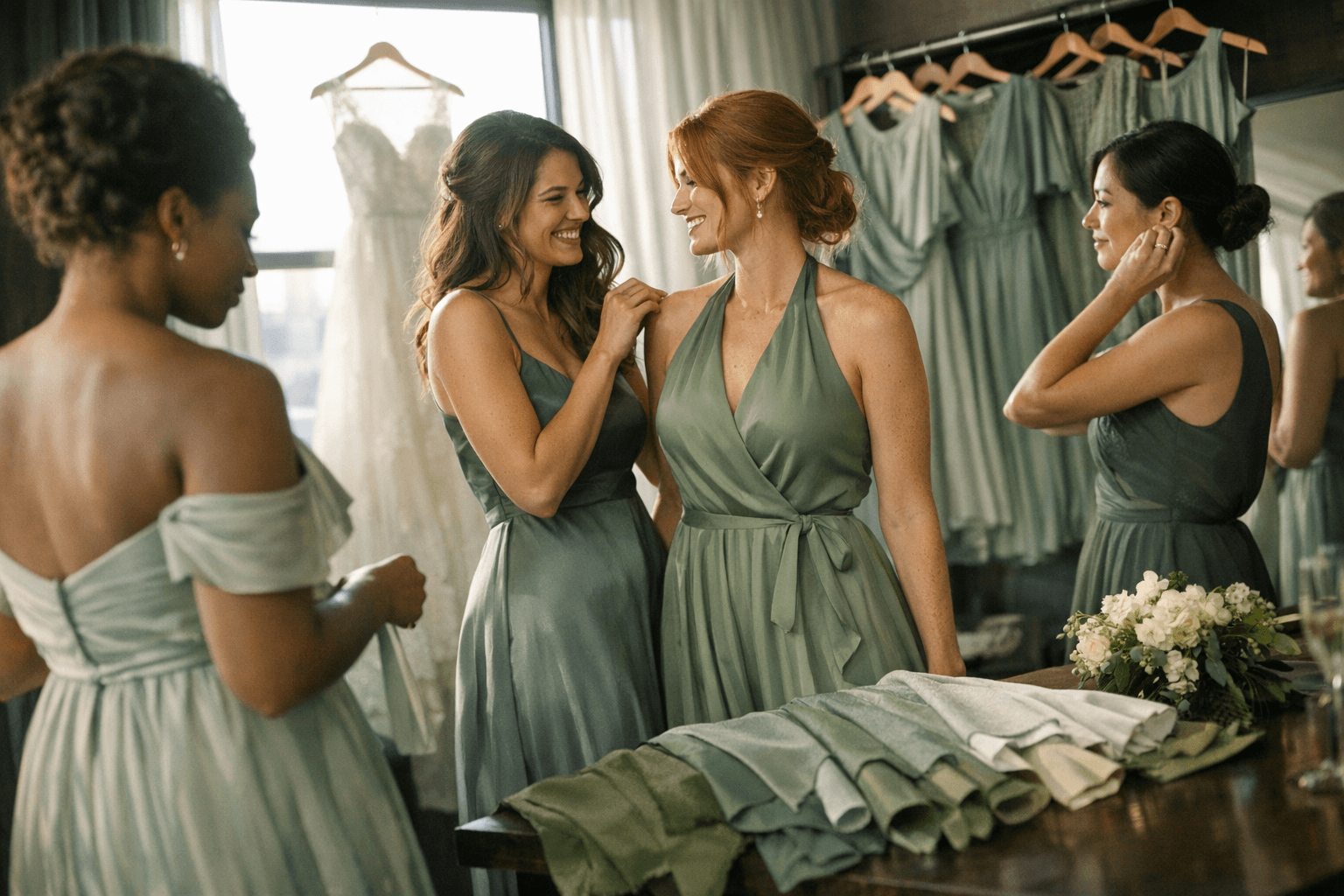
The guiding principle here is that bridesmaid dresses for all body types should celebrate curves, not conceal them. The key to flattering plus-size figures is supportive structure and thoughtful draping. A V-neckline is fantastic for elongating the upper body, while wider straps offer extra support and comfort, importantly accommodating supportive lingerie underneath. Bodices with ruching or twist details are particularly effective because they highlight the waist without compressing. For bridesmaids with a larger bust, the strongest neckline options are V-necks, scoop necks, and sweetheart cuts; all three create visual balance and provide coverage without minimizing curves.
*Tall bridesmaids*
Tall bridesmaids have a genuine advantage: they can carry off bold patterns and dramatic lengths that would overwhelm a shorter frame. The critical thing is ensuring that proportions are right. The one hemline to avoid is the mid-calf length, which on a tall woman reads as too small rather than intentionally midi. Floor-length or clearly midi-proportioned hems both work; it is the in-between zone that creates the impression of a dress that has been borrowed from someone else.
*Petite bridesmaids*
Guidance for petite figures tends toward higher waistlines that visually lengthen the leg, shorter hemlines that do not cut the body at an unflattering point, and vertical details that draw the eye upward. As a general rule, the same bodycon-avoidance principle applies: a structured A-line or a flowy chiffon silhouette will serve a petite frame far better than anything that clings through the hip and thigh.
Fabric and climate: the practical layer
Color and silhouette get the most attention, but fabric is the detail that determines whether your bridesmaids are comfortable from the ceremony through the last dance. Lightweight, breathable, and forgiving fabrics are particularly important if your wedding falls in a warmer season. Chiffon again leads the conversation for warm-weather weddings: it is forgiving across body types, moves beautifully in outdoor settings, and does not trap heat. More structured fabrications offer a polished look for cooler months or formal indoor venues, but even there, the best bridesmaid dresses balance structure with enough flow to allow movement and comfort.
Color and skin tone: choosing shades that work across the group
Because your bridesmaids will have varying skin tones and hair colors, the color you choose as your unifying anchor needs to work across the board, not just on the woman you have in mind when you first see it on a hanger. Universally wearable shades tend to sit in either the deep, saturated range, navy, forest green, rich mauve, or in the soft neutral range, blush, champagne, dusty rose. Stark, cool-toned colors can flatten some complexions; earthy tones like khaki and warm greens tend to photograph generously across a range of skin tones. WalG London's signature Dark Khaki and Dark Mauve are both examples of shades chosen for their cross-complexion versatility.
The goal beneath all of it
Navigating this for six, eight, or ten women of different sizes, heights, and comfort levels is genuinely complicated. But the framework simplifies the decision tree considerably: anchor color or fabric, release silhouette. The bridesmaids who feel confident and comfortable will look confident and comfortable, and that photographs better than any single perfectly-matched dress ever could. As WalG London puts it: "The best bridesmaid dresses are the ones that make your friends feel their absolute best." That is not a styling note; it is the entire brief.
Know something we missed? Have a correction or additional information?
Submit a Tip