plus-size bridal fashion embraces corsets, basque waists, and curves
Corsets, basque waists, and mermaids are giving curvy brides real shape, but sample-size limits and alterations still decide the final fit.
The new shape of bridal confidence
The strongest plus-size bridal gowns right now do not ask curvy brides to vanish into tulle. They build a waist, hold a bust, and photograph with intent. That shift showed up across New York Bridal Fashion Week, where editors watched hundreds, if not thousands, of gowns to forecast the next wave, and the CFDA’s April bridal calendar, running April 7 to 10, 2026, put Monique Lhuillier, Naeem Khan, and Tanner Fletcher Weddings at the center of the conversation, with Batsheva making its bridal debut.
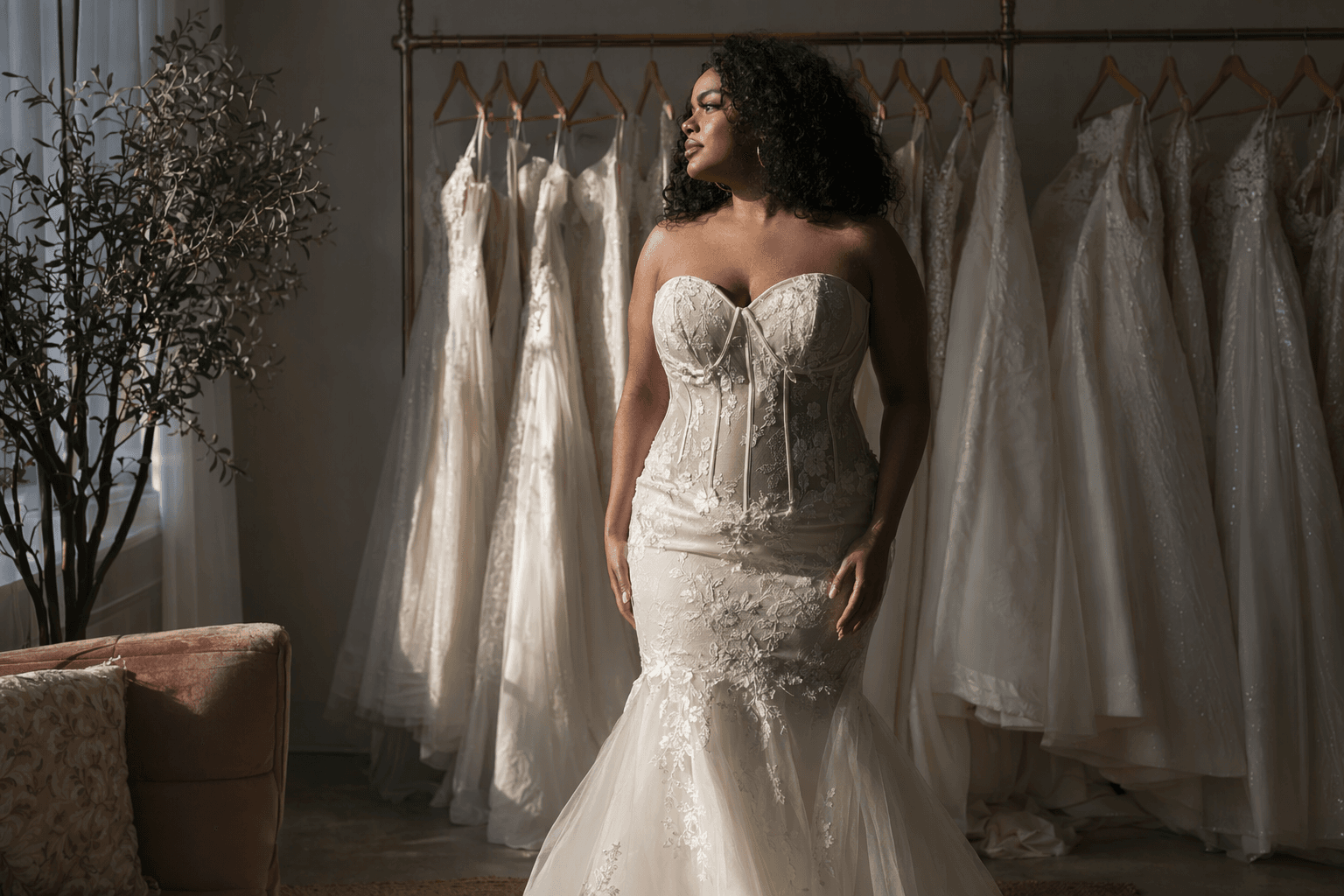
What feels distinctive about this moment is not a single fantasy trend but a cleaner, more structural way of thinking about fit. Corset bodices with structured boning, basque waists, drop waists, mermaid shapes, and soft A-lines are leading the conversation, while details like detachable overskirts, pearls, and 3D florals are adding polish without overwhelming the body. The best gowns in this category are not trying to flatten curves; they are framing them.
The silhouettes that actually do the work
Corset bodices are the clearest answer for brides who want support before they want embellishment. A well-built corset lifts the bust, smooths through the torso, and creates a defined shape that reads beautifully in photos, especially when the gown has a clean neckline or a controlled amount of surface detail. The point is structure, not compression for its own sake.
Basque waists are the other major player, and they are not a novelty gimmick. The Knot describes the basque waist as a viral trend defined by a V-shaped waistline, which gives the torso a longer, more sculpted look. On curvy bodies, that V can be incredibly flattering because it creates a clear waist without cutting the body off abruptly at the natural waistline.
Why drop waists and mermaids keep coming back
Drop-waist gowns bring a different kind of drama. The Knot traces the shape back to the 1920s, and the modern version works especially well when the skirt begins lower on the torso and opens into a mermaid line. That long, sleek upper body accentuates curves rather than competing with them, which is why this silhouette can look so polished in photographs.
Mermaid dresses remain one of the most effective curve-forward options because they follow the body before flaring at the hem. They give you waist definition, hip definition, and a deliberate finish, but they ask for honest fitting. If the dress is too tight through the thigh or too rigid at the knee, it stops looking elegant and starts looking trapped. The right mermaid should skim, not fight.
Where soft A-lines still win
Soft A-lines deserve more credit than they usually get in trend conversations. They offer movement, ease, and a little more forgiveness through the hip, which is useful if you want support up top without a body-hugging skirt. For many curvy brides, that balance is the sweet spot: a corseted or structured bodice paired with a softer skirt that can handle dancing, sitting, and long ceremonies without losing shape.
The value of the soft A-line is that it gives you visual calm. In a market full of sculpted waists and dramatic curves, a softer shape can still feel modern if the bodice is precise and the fabric has enough body to hold its line. Think of it as the silhouette that lets the tailoring do the talking.
Fit is the real luxury
Bridal sizing is still its own universe, and that matters more than the moodboard. The Knot says wedding dress sizes typically run about three sizes larger than regular dress sizes, and bridal salons often stock only sample sizes 6 to 10. If you are shopping curve-friendly silhouettes, the first step is not falling in love with the tag. It is checking each designer’s size chart before you commit.
That gap between salon samples and real bodies is exactly why alterations matter so much. A basque waist only looks intentional if the point of the V lands in the right place. A corset only works if the boning follows your body instead of fighting it. A mermaid only flatters when the seam placement, hem length, and flare point are tuned to your proportions. The dress may be beautiful on the hanger, but it becomes bridal only when the fit is engineered.
Why inclusive access still varies wildly
Some plus-size bridal boutiques now carry gowns from size 18 to 34, and other inclusive vendors advertise ranges up to 44. That is a meaningful expansion from the traditional salon model, but it is not yet standard. The shopping experience can still vary dramatically from store to store, which is why brides with more curves often need to ask direct questions about sample inventory, order sizes, and alteration timelines before booking an appointment.
The industry is moving because the numbers are hard to ignore. Allied Market Research valued the global plus-size clothing market at $579.8 billion in 2023 and projects it to reach $964.9 billion by 2033. Grand View Research estimated the wedding wear market at $82.42 billion in 2024 and expects it to hit $109.93 billion by 2030. Bridal fashion has finally caught up to the commercial reality that inclusive sizing is not a niche request. It is part of the business.
Visibility is still the lagging piece
The retail side is improving faster than the runway. In Spring 2024 coverage, The Knot saw only one curvy model across more than 35 New York Bridal Fashion Week events, a stark reminder that representation on the runway and in campaigns still trails what is being offered in stores. That gap matters because brides do not just shop for a dress. They shop for proof that the dress was made with their body in mind.
For now, the smartest way to shop this trend is to think in layers: structure first, then silhouette, then finish. Choose corsetry if you want lift and control. Choose a basque waist if you want a lengthened, sculpted line. Choose a mermaid if you want to showcase your curves with drama. Choose a soft A-line if you want elegance that moves. Add the right undergarments, give alterations their due, and let the construction do what vague body-positive language never quite manages to do, which is make the dress actually fit.
Know something we missed? Have a correction or additional information?
Submit a Tip