Queer couples reshape bridal rings with color, sculptural gold and gender-neutral style
Queer couples pushed bridal rings past the solitaire. Color, sculptural gold and gender-neutral settings are now setting the rules for mainstream engagement style.
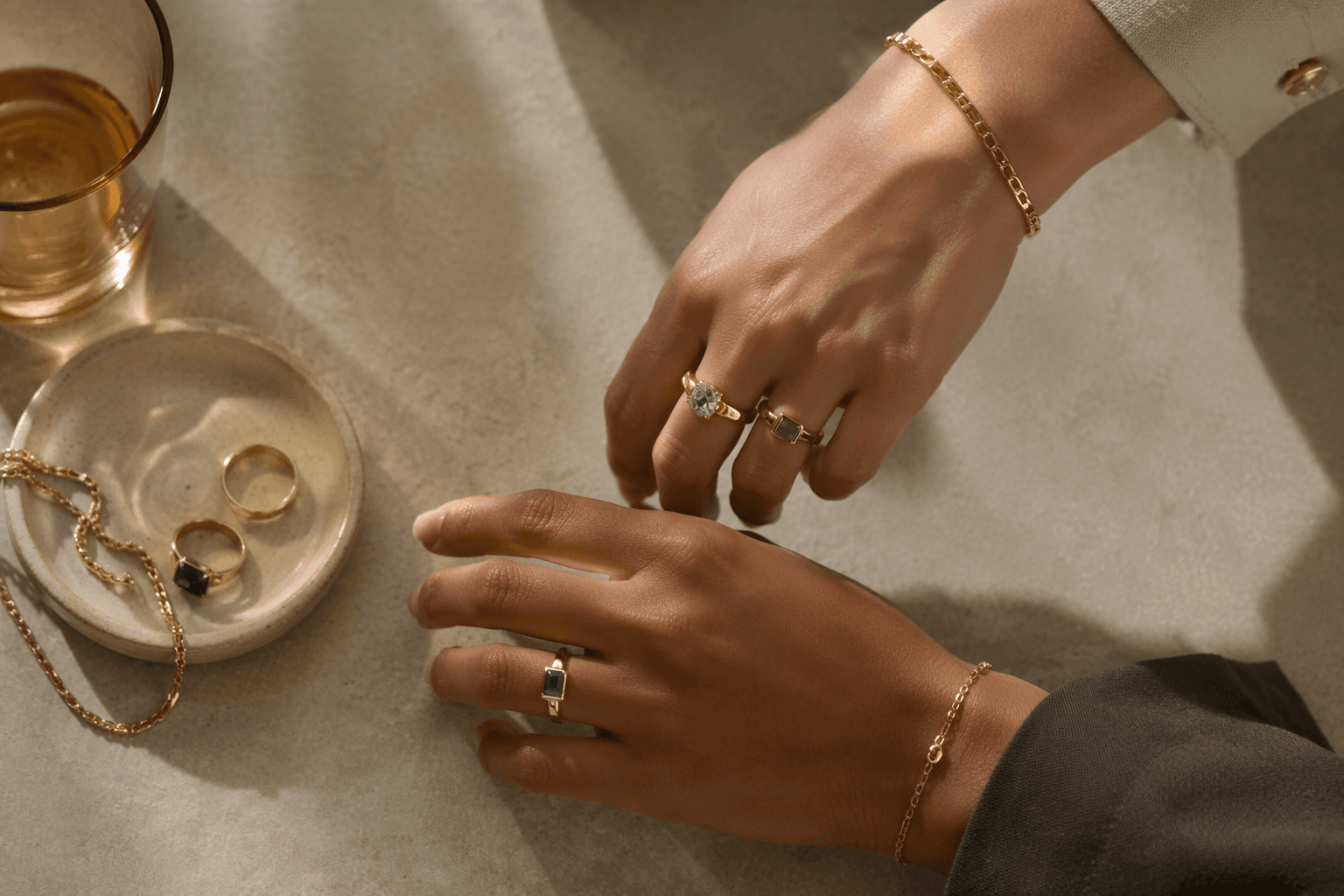
The engagement ring has broken out of its old little prison of one diamond, one setting, one idea of who gets to wear it. Queer couples and queer-owned jewelers pushed the category toward colored stones, east-west settings, sculptural gold bands and gender-neutral silhouettes, and what started as a niche design language is now bleeding into the mainstream bridal case.
How the solitaire became the default
The U.S. obsession with the diamond solitaire did not happen by accident. De Beers’ 1947 campaign, “A Diamond Is Forever,” was created by copywriter Frances Gerety for N.W. Ayer & Son, and it helped lock in the solitaire as the dominant engagement-ring symbol in America. The message was simple and sticky: if you were getting engaged, you were getting one very specific kind of ring.
That old script shaped the market for decades. It made the center stone the whole story, and it flattened everything else into a supporting role. Metal choice, setting shape and ring profile were supposed to stay polite, predictable and mostly invisible.
Marriage equality changed who was shopping, and what they wanted
The real market shift picked up speed after the U.S. Supreme Court’s Obergefell v. Hodges decision on June 26, 2015, which made same-sex marriage legal nationwide. By June 2025, the Williams Institute at UCLA School of Law estimated 823,000 married same-sex couples in the U.S., more than double the 390,000 estimated in June 2015. That is not a side note, that is a bigger customer base with a very different sense of what commitment should look like.
Once more couples were shopping with their own relationship language in mind, the ring stopped being a ritual object and started becoming a design brief. The question shifted from “What does an engagement ring look like?” to “What does our engagement ring look like?”
Queer designers rewrote the brief
Ashley McGinty of Chouette Designs gets to the heart of it when she says fine jewelry is “historically very traditional,” but queer consumers are “usually at the forefront of trends.” That is exactly how this category moves: slowly, then all at once, once a group with strong taste forces the market to catch up. Kris Harvey of Kris Averi is even blunter about the old order, saying the jewelry industry ran on “a narrow script for a long time.”
That script is what queer-owned and LGBTQ-focused brands have been tearing up. Instead of treating the ring as a gendered prop, they are building around gender-neutral engagement rings, custom ordering and materials that feel more aligned with the values behind the purchase. Recycled gold, lab-grown diamonds, reclaimed gemstones and ethically sourced stones are part of the package now, not an afterthought.
The new bridal ring language is about shape, color and attitude
The most visible change is aesthetic. Colored stones have moved from unconventional to expected, east-west settings have turned familiar silhouettes sideways, and sculptural gold bands have given bridal rings real physical presence. These rings read less like status symbols and more like tiny objects of design, with weight, asymmetry and a deliberate refusal to look dainty.
That shift lines up with what The Knot found in its 2021 Jewelry & Engagement Study: engaged couples were taking a “highly personalized approach” to engagement planning and buying. The same study pointed to yellow gold, oval diamonds and alternative center stones as standouts, which tracks perfectly with the queer-led move away from one approved look. Yellow gold feels warmer and more intentional than the old bright-white default; oval cuts stretch the finger differently; alternative center stones open the door to rings that do not revolve around a diamond at all.
What started in queer spaces is now mainstream bridal taste
This is the part the broader market can no longer pretend is fringe. Queer couples helped normalize rings that are customized instead of standardized, expressive instead of generic, and visibly designed instead of quietly traditional. The influence shows up every time a couple chooses an east-west oval over a classic round solitaire, every time a band gets chunkier and more architectural, and every time a center stone comes in color instead of clear.
Mainstream bridal jewelry is now moving on the same terms. The new baseline is not “diamond, period.” It is personal shape, personal material, personal meaning. That is a much richer business, and it is what happens when the people with the most to say about commitment finally get to shape the object that represents it.
This article was produced by Prism’s automated news system from verified source data, official records, and press releases, then run through automated quality and moderation checks before publishing. The system is built and supervised by the people who set the standards it runs under. Read our full AI policy.
Know something we missed? Have a correction or additional information?
Submit a Tip