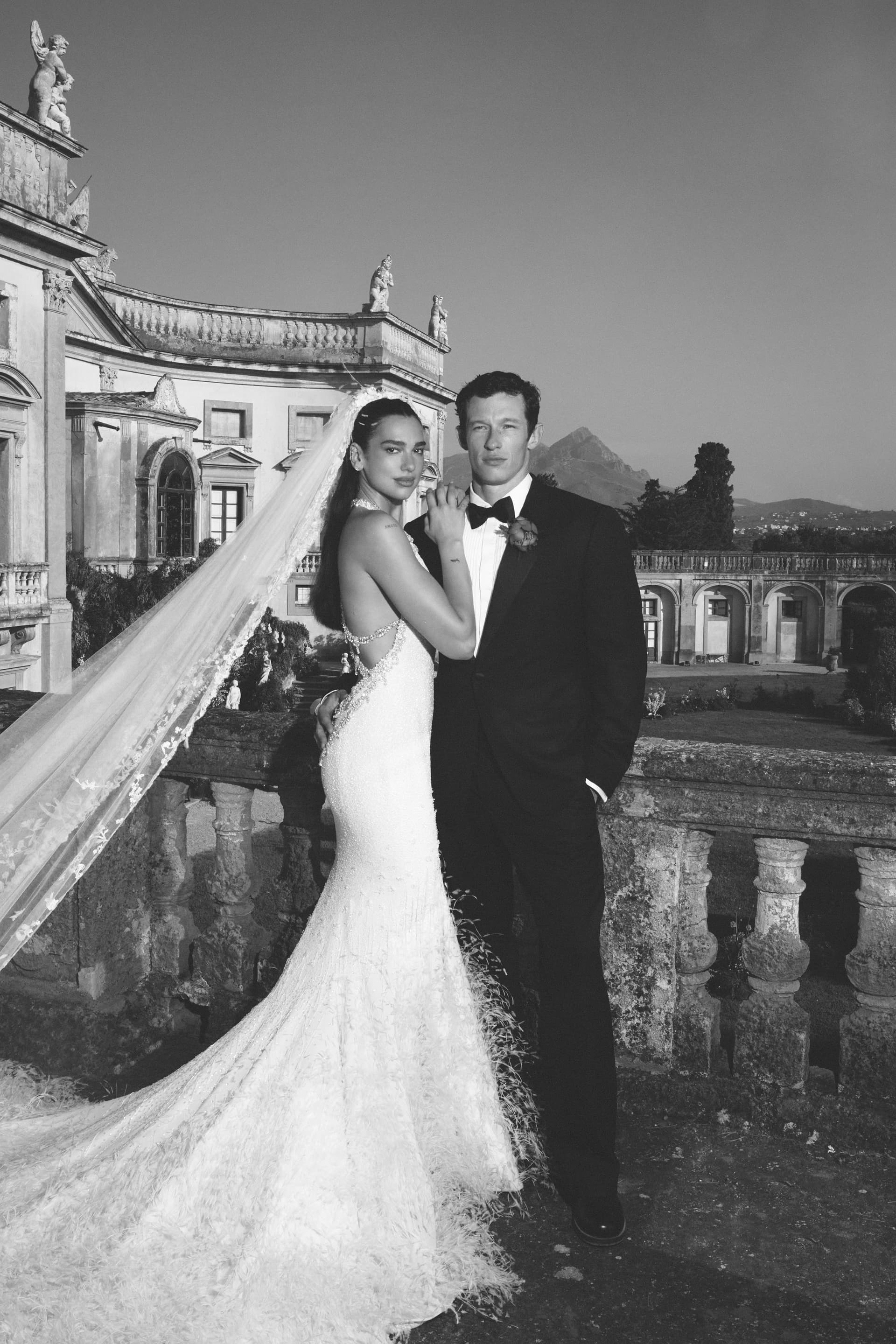
Rising Costs and Tariffs Force Bridal Industry to Rethink Pricing
A $2,000 gown now costs $120 more as tariffs on Asian imports hit not just the dress, but every crystal, veil, and French lace trim underneath it.

A $2,000 wedding gown just got $120 more expensive. That's the math at Justin Alexander, the New Jersey-based bridal group that produces roughly half its gowns in China and 45 percent in Vietnam. CEO and creative director Justin Warshaw added tariff surcharges to new orders, landing at approximately a 6 percent retail price increase. For pre-tariff orders, Justin Alexander held the original price, a decision Warshaw said could erase the company's profits. "We understand a bride said yes to the dress at a price," he explained. For new orders, the surcharge is a live variable: "The situation remains fluid, and if tariff rates are reduced or removed, the surcharge will be adjusted accordingly."
That volatility is the defining condition of the bridal market right now. The wedding industry contributed more than $100 billion in total spending in 2025, matching 2024 levels according to the Knot's Real Wedding Study 2026, so demand hasn't softened. But the supply chain absorbing that demand is under sustained strain. Nearly 90 percent of wedding gowns and formalwear sold in the U.S. are manufactured in Asia, according to the American Bridal and Prom Industry Association, with China, Vietnam, the Philippines, India, and Myanmar all playing roles in a production infrastructure that took decades to establish. Myanmar, where some production was redirected as China tariffs initially spiked, carried duties sitting at 40 percent throughout much of the disruption, higher than China and Vietnam at their respective peaks. With IEEPA tariffs recently struck down by courts, rates have reset again, currently settling at a plus-10 percent baseline across all sources.
The hit doesn't stop at the gown. Embellishments, trims, crystals, veils, hairpieces, and even garment bags carry the same tariff exposure as the dress itself. Gowns defined by hand-beading, French lace, or imported silk sustain the heaviest impact because each component crosses multiple international borders before a seam is even cut. Yuliia Lobachova, creative director of Ukrainian brand Ricca Sposa, said brands are now "paying anywhere from 15 to 50 percent more on inputs alone, and that increases compound quickly." Her material list reads like a price-sensitivity map: European lace, silk satin, Italian mikado, layered tulle, all of which have climbed in cost. Simpler constructions in domestic-adjacent fabrics, minimally embellished crepe or structured mikado, carry significantly less tariff exposure at each production stage.
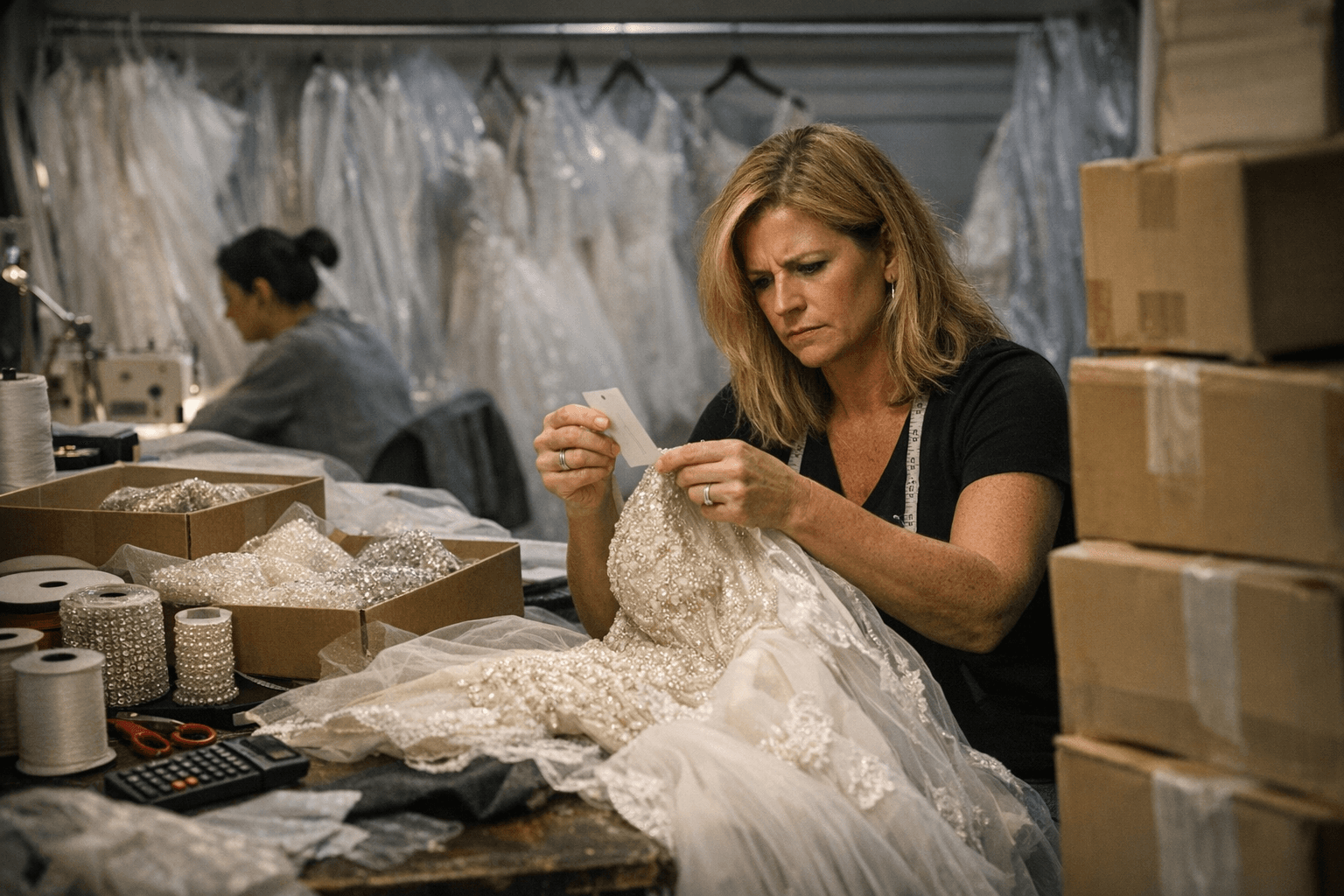
For brides shopping now, the most reliable move is also the most straightforward: lock in pricing at order placement. Most boutiques honor the quoted price at that moment, not at delivery, making a placed order a hedge against further shifts. Made-to-order timelines, already stretching toward six to eight months during high-volume periods, function as both a production accommodation and a pricing guarantee. Trunk shows remain one of the few occasions where discounts and expanded style access can offset tariff-driven markups, since designers often sell directly through these events. The bridal resale market, which pre-dates the tariff cycle, is now absorbing brides who want pre-tariff inventory at prices that no longer appear on boutique floors.
The convertible gown, gaining traction for its ceremony-to-reception flexibility, is quietly becoming a cost-conscious proposition too: one purchase, one tariff exposure, multiple looks. Warshaw captured the boutique-level pressure in plain terms: "The mom-and-pop retailers really need a stable partner that they know what price you can deliver the product for and what to communicate to the bride." In the current environment, that kind of stability is the most valuable thing in bridal, and the hardest to promise.
This article was produced by Prism’s automated news system from verified source data, official records, and press releases, then run through automated quality and moderation checks before publishing. The system is built and supervised by the people who set the standards it runs under. Read our full AI policy.
Did this article answer your question?