Soft Blues and Pastels Define This Coastal Garden Wedding's Dreamy Bridal Style
Soft blues and painterly pastels hit different in coastal light, and this impressionist-inspired seaside wedding is the bridal palette blueprint 2026 needed.
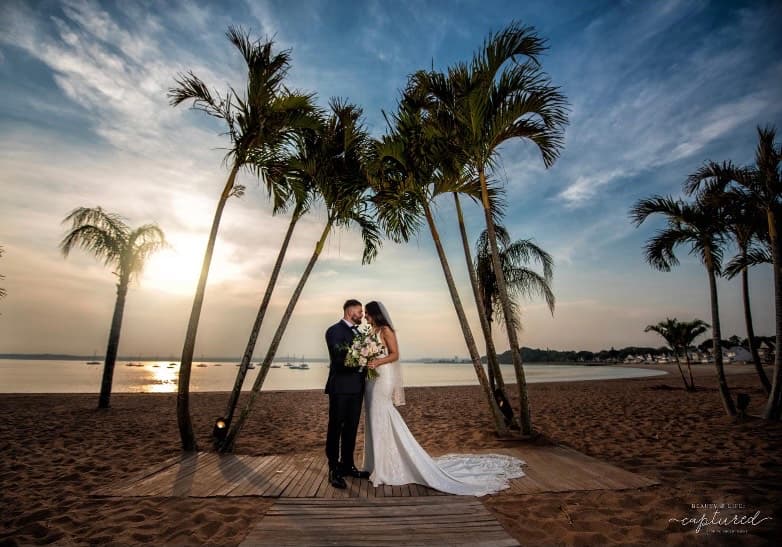
The internet has been circling this one. A feature on Style Me Pretty published March 26, 2026 stopped scrolls with something that felt less like a wedding gallery and more like a Claude Monet study rendered in silk and sea breeze: an impressionist-inspired seaside garden celebration built entirely around soft blues and painterly pastels, with a styling approach so considered it reads as a full bridal fashion editorial. If you've been trying to articulate a color direction for your own wedding look and keep landing on "dreamy but not saccharine," this is the reference you've been searching for.
The Palette: Soft Blues and Painterly Pastels Done Right
The color story here is the whole point. Soft blues in the 2026 bridal landscape sit in a specific register: not icy, not navy-adjacent, not the flat dusty blue that dominated mood boards three years running. The sweet spot is closer to cornflower and sky, cool-toned and airy in a way that reads as genuinely luminous rather than washed out. Bridal colorists and designers across the current season have been gravitating toward this exact register, noting that these hues interact with natural light in a way that warmer pastels simply cannot replicate.
What makes the impressionist framing so smart is the "painterly" qualifier on the pastels. This isn't a palette of flat, matchy-matchy sherbet tones. Think soft lilac bleeding into powder blue, blush that leans slightly warm against cooler sky tones, layered the way pigment builds on canvas rather than matched like a swatch card. The result photographs as something that shifts and glows depending on the angle, which is exactly the point when you're shooting outdoors in coastal light.
Tonal Layering: How the Styling Logic Works
The styling leaned deliberately into soft tonal layers, and this is where the look earns its editorial credibility. Tonal dressing in bridal, which has been building momentum through the early part of 2026, is the move away from stark optic whites toward a more nuanced, stacked approach. Imagine a gown in soft ivory or the palest blue overlaid with sheer fabric in a slightly deeper or pinker tone, or a skirt with subtle dimensional texture created by layers of the same hue at different opacities. The effect is sculptural and romantic simultaneously, and it reads on camera as something far more complex than it actually is to execute.
For a coastal garden setting specifically, this layered approach solves a real photographic problem. In bright, reflective outdoor light, flat white can blow out entirely and lose all surface detail. Tonal layering in pastels retains definition; the fabric reads as three-dimensional, the texture stays visible, and the overall look holds its delicacy without disappearing into overexposure.
The Veil Moment: Forward, Intentional, Editorial
The feature committed fully to a veil-forward editorial look, and given where bridal accessory trends are landing in 2026, the timing is precise. Lace veils are having a significant reemergence right now, with botanical motifs, Chantilly lace borders, and mantilla-style draping moving away from vintage nostalgia and toward something intentional and fashion-forward. The mantilla in particular is currently the fastest-growing bridal accessory trend of the season, outpacing cathedral veils and embellished headpieces.
What distinguishes a veil-forward look from simply wearing a veil is the editorial commitment: the veil isn't an afterthought or a ceremony-only layer that gets yanked out after the first dance. It's a central design element that shapes the silhouette from the back, interacts with the fabric of the gown, and creates movement in outdoor photography. At a seaside setting, even the lightest breeze becomes a styling tool. Longer lengths, including dramatic 300-centimeter options that exceed the train of the gown itself, create that lifting, floating quality that makes coastal wedding photography feel alive rather than posed.
For brides working with a pastel palette specifically, a lace-edged or Chantilly-bordered veil adds textural contrast against soft fabric without introducing a competing color. The intricacy of the lace reads clearly in close-up photography, while at distance it contributes softness and that characteristic painterly blur that made this feature feel impressionist-coded rather than conventionally bridal.
Fabric Choices for Coastal Light
The close-up photography in this feature was chosen deliberately to showcase lace and textured fabrics in coastal light, and that choice reveals something important about the styling philosophy at work. Coastal light is diffuse, bright, and highly reflective. It is genuinely flattering to the right fabrics and genuinely punishing to the wrong ones.
Fabrics that perform in this environment share a few qualities: they hold surface detail without requiring structured support, they move naturally in coastal air, and they interact with diffused light in a way that creates soft shimmer rather than harsh shine. Chantilly lace, which has established itself as the defining lace of this bridal season, is soft, airy, and intricately detailed in a way that reads beautifully under this kind of light. For the gown itself, fabrics in the chiffon, georgette, and layered tulle family photograph well outdoors because they have natural movement and translate dimensionally even in full sun.
Heavily structured fabrics like duchess satin or heavy mikado, while stunning in a ballroom or against a stone interior, flatten under open-sky coastal light. The impressionist-inspired palette works precisely because the fabrics chosen for this wedding understood that principle.
Working the Tented Ceremony Setting
The tented ceremony introduces a specific variable that shapes every styling decision: controlled diffused light. A tent filters direct sunlight into something even and soft, creating an environment that is flattering to skin and fabric alike, but that also requires gowns and accessories with enough visual presence to read beautifully without harsh shadow or bright highlight for definition.
In this context, the veil-forward styling choice becomes even more deliberate. A substantial veil, particularly one with lace or textured edging, creates its own visual architecture inside the tent. The soft blues and pastels of the palette hold their saturation and depth in this light in a way they wouldn't in full midday sun, which means the color story reads fully rather than washing out.
Bringing the Palette Together for Your Own Outdoor Look
If this feature functions as anything beyond a visual mood board, it is a blueprint for building a pastel bridal look that is specifically designed to perform outdoors. A few principles emerge clearly:
- Choose pastels with a cool or slightly muted undertone rather than warm, saturated candy hues. Soft blue, powder lavender, and ivory with the palest grey cast all hold their composure in coastal and garden light.
- Build texture through layering rather than embellishment. Surface detail at the fabric level photographs better outdoors than heavy beading or sequins, which can create unpredictable hot spots in reflective light.
- Commit to the veil as a design element, not an accessory. Lace edging, Chantilly borders, and extended lengths transform outdoor photography from portrait-style to editorial.
- Fabrics with natural movement, including chiffon, organza, and layered tulle, behave like collaborators in an outdoor setting rather than subjects to be managed.
The impressionist framing of this wedding was not accidental or purely aesthetic. It reflects a coherent understanding of how color, fabric, light, and setting interact. The result is a bridal look that feels like it belongs to a specific place and a specific quality of light rather than a backdrop-neutral studio ideal. That specificity is exactly what makes it worth studying.
Know something we missed? Have a correction or additional information?
Submit a Tip