South Asian Bridesmaid Trends 2026: Lehengas, Sarees, and Mix-and-Match Looks
South Asian bridesmaids are ditching the matchy-matchy moment for mix-and-match lehengas and remixed saree drapes built for multicultural, multi-event weddings.
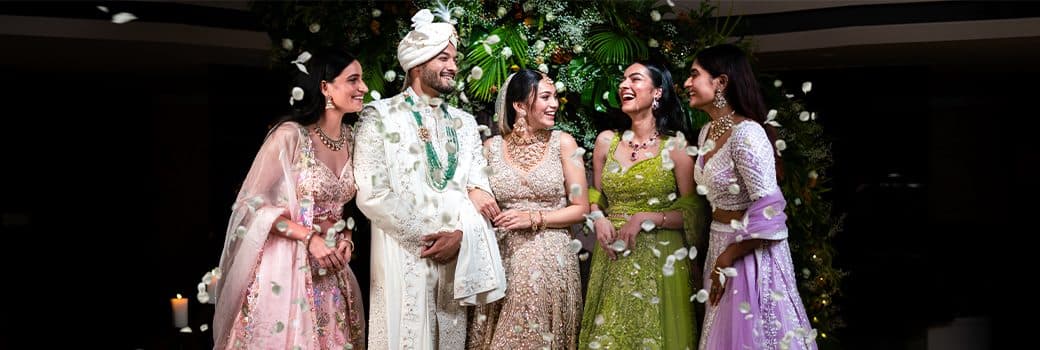
The bridal party is getting a identity upgrade, and it's coming straight out of South Asian fashion's most exciting design shift in years. Across weddings that span continents, cultures, and four-day itineraries, bridesmaids are no longer dressing in lockstep. Instead, they're working with a shared color story and a single unifying element, then running with it. Mint green organza here, powder blue tissue silk there, the same gold threadwork border tying every look together. This is what the 2026 "global bridal party" looks like: intentional, identity-forward, and built for women who actually want to wear their outfit again.
The Lehenga Choli Reboot: Lighter, Smarter, Still Stunning
The lehenga choli is not going anywhere, but 2026's version barely resembles its predecessor. The heavy brocade constructions that once left bridesmaids counting down the minutes to outfit change are giving way to what the industry is quietly calling "Weightless Grandeur." Fabrics like organza, tissue silk, and georgette now do the heavy lifting aesthetically while keeping the physical burden close to zero. These materials catch light beautifully, which is the whole point of a lehenga, without making the wearer feel like she's draped in architecture.
The embroidery shift is equally significant. Dense zari and stonework are being replaced by fine threadwork and mirror accents, the kind that scatter light rather than announce their own weight. For multicultural weddings where not every bridesmaid has grown up wearing a lehenga, this recalibration matters enormously. A bridesmaid who can breathe, dance, and pour a glass of champagne without readjusting her skirt every ten minutes is a bridesmaid who actually looks good in the photos.
For the sangeet, this lighter lehenga is the non-negotiable. The sangeet is a dancing event, full stop, and fabrics like georgette and chiffon move with the body rather than against it. Pocket lehengas, yes, pockets, are one of the most practical design innovations threading through 2026 collections, and they belong here. Mint green, powder blue, and soft pink are the palette for daytime sangeet energy: fresh, photogenic, and universally flattering across skin tones.
The Saree Strikes Back
The saree's comeback in bridesmaid fashion is not the traditional six-yard marathon it once was. In 2026, it's showing up in forms that make it genuinely accessible to women who have never draped one before. Belted sarees give the silhouette structure and stop the fabric from shifting mid-reception. Ruffled saree styles add volume and movement that photographs like a dream. Dhoti drapes offer a fashion-forward, fashion-week energy that reads as intentional rather than traditional. And pre-stitched sarees eliminate the draping anxiety entirely, making them an ideal choice for bridesmaids who identify with South Asian heritage but didn't grow up wrapping six yards of fabric around themselves every weekend.
This is where the multicultural wedding context becomes most interesting. A bridal party that includes a non-South Asian bridesmaid can now realistically wear a saree without a two-hour tutorial and a team of aunties on standby. The pre-stitched option preserves the visual vocabulary of the saree while removing the technical barrier, which is exactly the kind of design thinking that makes ethnic wear viable for identity-forward, cross-cultural ceremonies.
For the wedding ceremony, the saree carries gravitas that a lighter lehenga sometimes cannot. Belted drapes in deeper colors, think emerald, wine, and navy, read as formal and intentional. Pair the bridal party in one unifying saree color with differentiated blouse designs, one bridesmaid in a structured corset blouse, another in a cape-style back, and the result is cohesive without being a uniform.
Mix-and-Match: The Framework That Actually Works
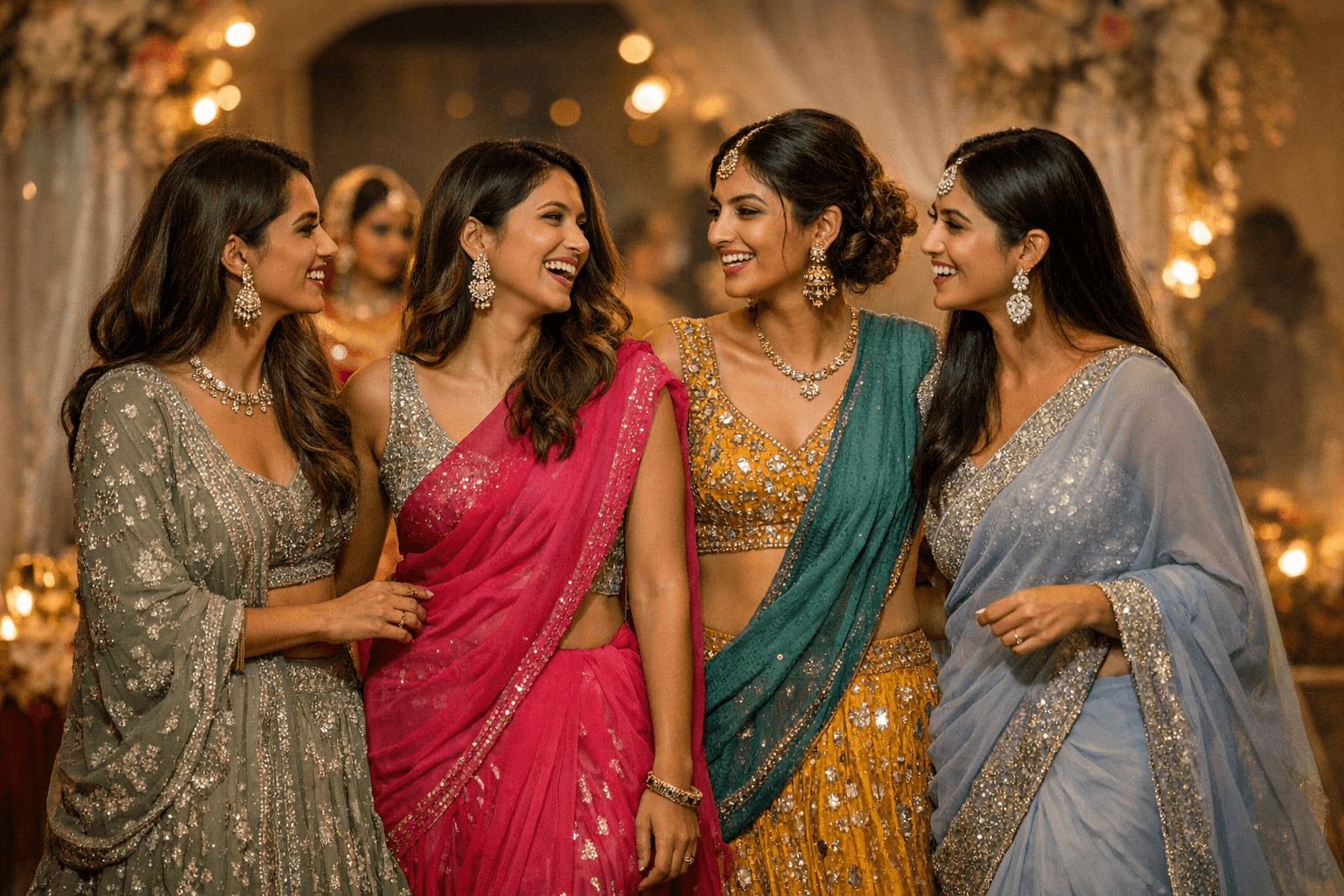
The mix-and-match approach is not an excuse for chaos. Done right, it's the most sophisticated bridal party direction in the 2026 South Asian fashion landscape. The framework works on one principle: share one element across every look, then let everything else breathe. That shared element can be a dupatta border in the same metallic, a threadwork motif that repeats across different garments, or a single accent color that appears in every bridesmaid's jewelry. The individual looks can vary dramatically in silhouette, fabric, and even color family, but the shared thread (sometimes literally) creates visual cohesion in every photograph.
In practice, this looks like: one bridesmaid in a powder blue organza lehenga with a cape blouse, another in a mint green belted saree, a third in a tissue silk skirt with a structured corset top. Different bodies, different comfort levels, different style preferences, all tied together by, say, a gold mirror-work border on each dupatta. It's the kind of bridal party that signals a bride who has taste and knows her people.
Mix-and-match also solves a genuine logistical problem in multi-event wedding schedules. When bridesmaids are attending a mehndi, a sangeet, a ceremony, and a reception across several days, prescribing a single rigid look for every event is unrealistic. Instead, a color story and a shared detail give the bridal party a visual language they can work across occasions.
Comfort as a Design Philosophy
Adjustable waist lehengas are one of the most underreported developments in South Asian bridesmaid fashion, and they deserve a real conversation. Wedding-season eating is real. Events run long. Bodies change between the fitting and the function. An adjustable waist isn't a compromise; it's a design acknowledgment that real women wear these clothes, not mannequins.
Lighter dupattas are the complement to lighter lehengas. Sheer styles in organza and net with minimal embroidery and a single embellished border are replacing the heavy, structured dupatta of previous seasons. For bridesmaids who want to style the dupatta as a shoulder drape, a belt, or a half-tuck, lighter fabrics make that styling flexibility actually possible rather than theoretical.
Mapping the Color Story Across Events
The 2026 color playbook for South Asian bridesmaid looks runs in two distinct registers:
- Daytime and pre-wedding events (mehndi, haldi, sangeet): Mint green, powder blue, soft pink, peach, and dusty rose. These read as joyful and photogenic in natural light, complement flower jewelry as well as gold, and work especially well in organza and georgette.
- Evening and formal events (ceremony, reception): Emerald, wine, and navy carry the weight of the occasion. These deeper tones photograph beautifully under warm reception lighting and pair with more structured silhouettes, corset blouses, boned bodices, and dramatic dupattas.
The Cohesion Rule
Every bridal party needs one: a single shared element that runs through every bridesmaid's look regardless of silhouette or color variation. In 2026, the strongest options are a unified dupatta border in the same metallic, a repeating mirror-work accent, or a consistent jewelry metal across the group. Pick one and protect it. That's what makes a mix-and-match bridal party look like a direction rather than a decision made in a group chat at midnight.
For the reception, this rule does the heaviest lifting. When bridesmaids are arriving from outfit changes, hair touch-ups, and the general chaos of a wedding day, a single visual anchor, say a gold border dupatta or a shared emerald accessory, is what makes the group feel unified in every candid shot without requiring military coordination.
The 2026 South Asian bridesmaid moment is ultimately a statement about who gets to wear this clothing and under what terms. Lighter fabrics, smarter construction, mix-and-match frameworks, and pre-stitched options aren't concessions to modernity; they're an expansion of who the clothes are for. That's a genuinely exciting shift, and the best-dressed bridal parties of this year will be the ones who understood it first.
Know something we missed? Have a correction or additional information?
Submit a Tip