Spring 2026 Bridal Runways Reveal 20 Trends Worth Watching Now
Bridal runways just made a strong case for sculptural drama: bubble hems, basque waists, and removable everything dominated Spring 2026.
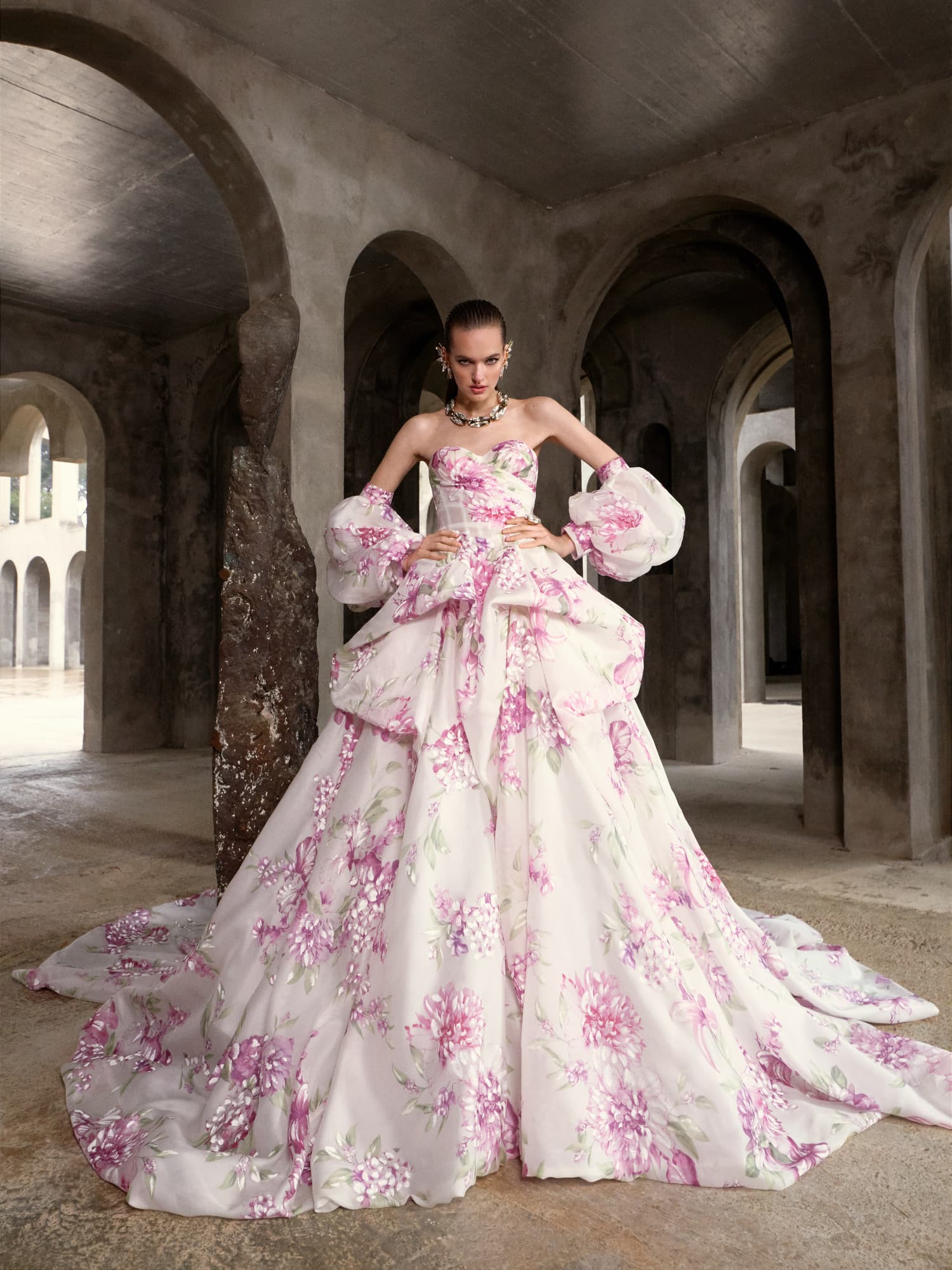
The morning after New York Bridal Fashion Week wrapped, the conversation among stylists wasn't about which dress was prettiest. It was about which dress could do the most. Removable sleeves. Detachable overskirts. Boning worn on the outside, not hidden underneath. The Spring 2026 bridal runways sent a clear message: the modern bride wants architecture she can feel, drama she can control, and silhouettes that photograph like sculpture. Here are the 20 trends that earned the most attention on the runway and have the clearest path to the altar.
1. Basque Waists
The basque waist, which dips into a V at the front of the bodice, creates the illusion of a longer torso and a more pronounced hip curve. It appeared across multiple Spring 2026 collections, bringing back a silhouette that flatters a wide range of body types without relying on heavy boning or constriction. The shape feels romantic without being retro.
2. Bubble Hems
The bubble hem migrated from cocktail dresses into bridal with surprising ease this season. The hem is gathered and tucked under to create a rounded, puffed-out edge that hovers above the ankle or falls at tea length. It reads playful and modern, making it a strong option for the bride who wants something that moves differently on the dance floor.
3. Removable Sleeves
Detachable sleeves were everywhere at New York Bridal Fashion Week, and their appeal is purely practical: one dress, two looks, zero compromises. For the ceremony, a structured or lace sleeve adds modesty and formality; for the reception, the sleeveless silhouette underneath takes over. The execution ranged from simple snap attachments to elaborate buttoned cuffs.
4. Removable Overskirts
Like detachable sleeves, removable overskirts give brides a convertible option without the cost of a second gown. Worn over a sleek fitted sheath or a mini dress, the overskirt creates a full bridal silhouette for the ceremony that can be unhooked entirely for the party. Designers showed these in tulle, organza, and structured mikado.
5. Exposed Boning
Where previous seasons hid boning inside the bodice, Spring 2026 put it on display. Visible boning stitched onto the exterior of corseted bodices turned structural necessity into ornament. The effect is intentionally undone and intimately detailed, referencing historical corsetry while feeling distinctly contemporary.
6. Sculptural Draping
Fabric was pulled, twisted, and knotted into forms that barely resembled traditional bridal construction. Sculptural draping appeared on bodices, skirts, and trains, with designers using the technique to create asymmetry and volume without added layers. The result is a gown that looks hand-finished even when it isn't.
7. Corseted Bodices
Beyond exposed boning, the lace-back and hook-front corset bodice appeared as a standalone trend this season. These bodies offer adjustable fit, a structured silhouette, and a directional sensibility that moves bridal away from conventional strapless or sweetheart necklines. They were shown in both ivory satin and sheer fabrics, adding to their versatility.
8. Asymmetric Necklines
One-shoulder and draped asymmetric necklines were a strong recurring motif across the Spring 2026 shows. The off-balance silhouette breaks with bridal convention in a way that feels sophisticated rather than risky, especially when cut in clean ivory crepe or duchess satin. A single floral detail or knot at the point of asymmetry appeared frequently as a finishing choice.
9. Cape Attachments
Bridal capes, attached at the shoulders or fastened at the back, offered a ceremonial moment without committing to a full cathedral train. Several designers showed floor-length silk organza capes over minimal slip dresses, creating a grand entrance silhouette that disappeared after vows. The detachability factor made it as practical as it was dramatic.
10. Sheer Layering
Transparency remained a key technique, but Spring 2026 used it with more intentionality than prior seasons. Rather than simply sheering out a bodice or skirt, designers layered sheer fabrics over opaque ones to suggest depth and movement. Sheer overlay panels on ball skirts created a ghostly softness; sheer bodices over lace underlays referenced lingerie dressing in the most elevated way.
11. Micro Trains
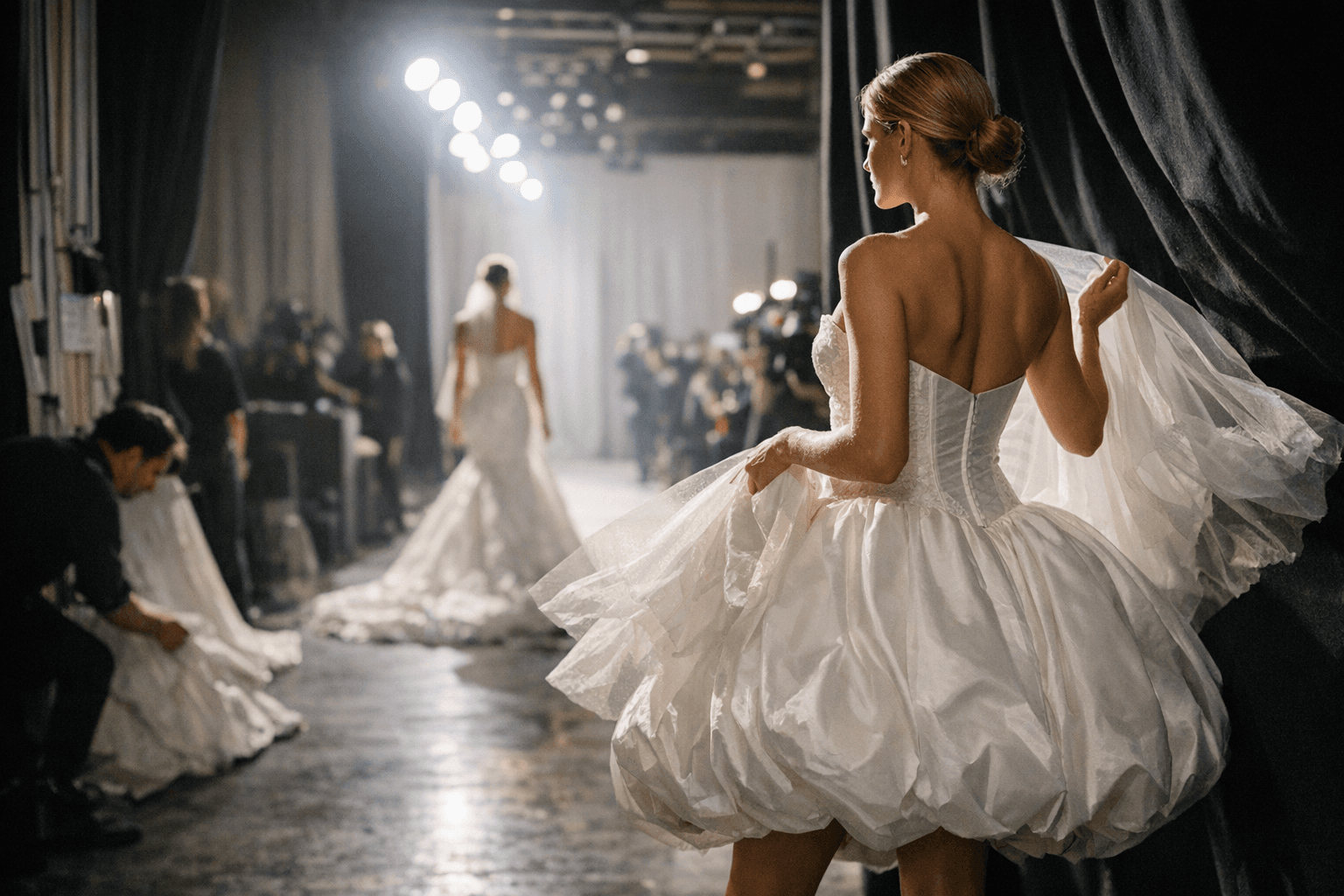
The micro train, barely sweeping past the heel, was positioned as the practical alternative to cathedral excess. It gives the bride the visual grammar of a train without the logistical effort of a six-foot sweep. Several New York Bridal Fashion Week looks paired micro trains with high-low hemlines, adding a modern irreverence to the back of the gown.
12. Tea-Length Silhouettes
Tea-length returned with confidence, worn not as a vintage throwback but as a modern length choice with contemporary construction. Structured A-line skirts cut at mid-calf appeared in duchess satin and heavy taffeta, framing the shoes and leg in a way that longer gowns simply cannot. This length is also increasingly practical for outdoor ceremonies.
13. Floral Appliqué at Scale
Three-dimensional floral appliqué moved beyond delicate trim into full-scale decoration this season. Oversized blooms were placed at the hip, clustered at the shoulder, or used to mark the point where a train begins. The technique reads maximalist without requiring embellishment across the entire gown.
14. Puff Sleeves
The puff sleeve persisted into Spring 2026 bridal in a more refined form than its earlier iterations. Rather than the exaggerated runway proportions seen two seasons ago, this version is controlled and bishop-shaped, ending in a fitted cuff. It brings volume to the upper body in a way that photographs beautifully against both indoor and outdoor settings.
15. Column Silhouettes
For brides who want nothing to do with volume, the column silhouette dominated the minimal end of the Spring 2026 runways. Cut in silk charmeuse, stretch crepe, or matte jersey, these gowns rely entirely on fabric weight and cut to do their work. The challenge is finding one with enough structure to hold its shape through a long day.
16. Bow Detailing
Oversized bow details appeared at the back neckline, waistline, and hem across multiple designers. The bow is currently one of the most commercially reproduced bridal details because it photographs clearly and communicates romance without sentimentality. On the runway, designers pushed the proportion: one look featured a back bow that rivaled the width of the skirt.
17. High Necklines
The high neckline, executed in lace, sheer fabric, or clean structured crepe, gave bridal a modesty option that doesn't read conservative. Long before the ceremony begins, the high-neck gown is already providing full coverage without requiring a veil or wrap. Several designers paired these necklines with open or low backs to maintain the tension between coverage and skin.
18. Embellished Hems
Rather than scattering embellishment across the entire gown, Spring 2026 concentrated beading, sequin work, and crystal detail at the hem. The result is a gown that glows from the floor up, with the movement of the hem catching light with every step. This placement also means the embellishment registers most clearly in photos where the skirt fans out.
19. Cowl Backs
The cowl back, where fabric pools into a low drape at the posterior, returned as one of the most quietly sophisticated details of the season. It adds sensory texture from behind in gowns that appear simple from the front, creating a reveal effect that works beautifully during the processional. In silk charmeuse especially, the drape takes on an almost liquid quality.
20. Mixed Fabric Constructions
Designers closed out the Spring 2026 season with gowns that combined two or more contrasting textiles: matte and shine, structured and fluid, lace and satin. The mixed fabric gown creates visual interest without requiring heavy embellishment and signals craft in a way that single-fabric constructions often cannot. It also opens up the possibility of using different fabrics to define different zones of the silhouette, channeling the bodice-skirt contrast that has become a hallmark of modern bridal design.
The through line across all twenty of these trends is a preference for intention over excess. Spring 2026 bridal is not about the loudest gown in the room; it is about the gown that reveals more the longer you look at it. Whether that means boning worn like jewelry or a hem that curves in an unexpected way, the best of this season's runway will translate directly to brides getting married in the months ahead.
Know something we missed? Have a correction or additional information?
Submit a Tip