Tanner Fletcher unveils genderless Going to the Chapel Spring 2026 bridal collection
Tanner Fletcher staged a full wedding at St. Paul’s church, capped by a mid-runway Tinder-vows moment and a Late Show Gospel Choir finale.

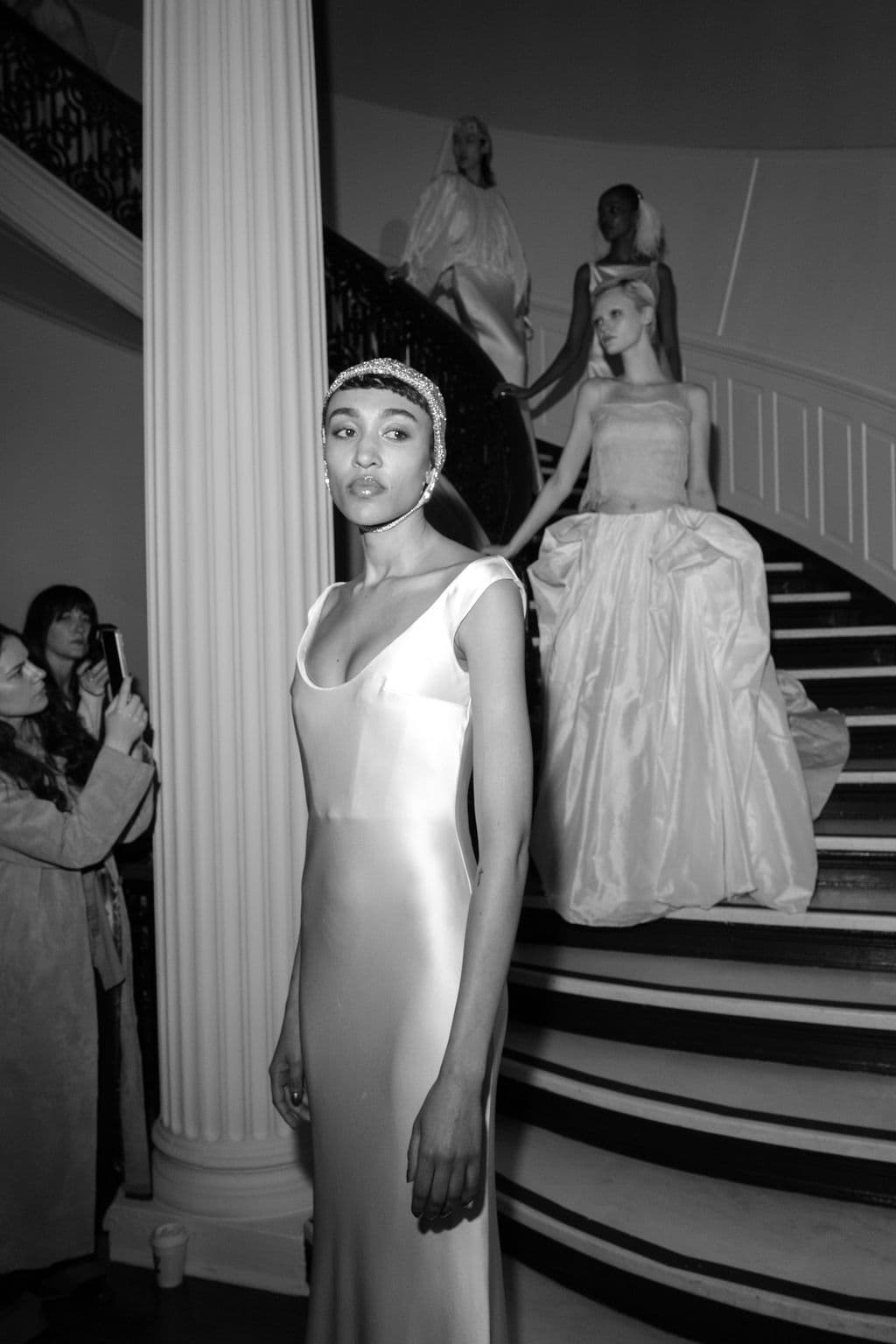
Tanner Richie and Fletcher Kasell presented Going to the Chapel, Tanner Fletcher’s Spring 2026 bridal collection, as a ceremony as much as a runway show at St. Paul’s German Evangelical Lutheran Church on February 20, 2026. The New York–based brand foregrounded a genderless point of view and a clear division in the collection: half tailoring, half slim silk and satin gowns inspired by 1930s silhouettes.
The production read like an intimate service. White roses and baby’s breath lined the aisles, a flower girl processed, and a live harpist accompanied couples walking as if to be married. Designers promised emotion; Kasell said, “It’s gonna be moving,” and added, “We’re hoping there’s happy tears and celebrating at the end.” The Late Show Gospel Choir closed the show in jubilant harmony, performing “Going to the Chapel,” “Cupid,” “Your Love Keeps Lifting Me Higher,” and “Oh Happy Day.”
The show staged a centerpiece moment when a real couple who met on Tinder exchanged vows mid-runway, described in coverage as “a heartfelt tribute to modern love”, and the presentation culminated in a donation to the American Civil Liberties Union in support of LGBTQ+ rights. Casting reflected the brand’s clientele: gay, lesbian and gender-queer couples represented a large portion of the cast while straight couples also appeared, underlining the designers’ claim that bridal should be for everyone. Fletcher put it bluntly: “It’s weird that it’s still called Bridal Fashion Week as if it’s just women who are shopping. Like, it doesn't make sense to me that there’s nothing for the men.”
On the garments, tailoring held equal weight with dresses. Richie summed up the difference in construction: “It’s something different than what’s on the market right now for bridal,” noting the absence of restrictive boning and cage skirts. Tuxedos arrived in blue toile de Jouy and brocade overlaid with lace; floral jacquard suiting and toile sequin tailoring added texture to the suiting story. Dresses skewed slim and sculptural in ivory silk charmeuse, with lace-covered bustiers, quilting, taffeta rosettes, and rosette embellishment punctuating otherwise pared-back silhouettes. Alexandraephoto’s notes highlighted oversized bows, custom blazers, billowy skirts and asymmetric shaping that interrupted expectations.

Production credits and collaborators were visible in the staging. Photographers Lawrence De Leon and Alex Frank captured the ceremony-like runway, and floral work was credited to Poppy Flowers in one report for the white roses and baby’s breath. The show featured a whimsical “10 Commandments of Wedding Planning” installation that has been variously credited to Mostest and to Caroline James New York in different write-ups; both attributions appear in the coverage.
Beyond a collection of garments, Going to the Chapel positioned Tanner Fletcher as an explicit answer to a gap in bridal retail and imagery. With half the collection devoted to tailoring, visible moments of inclusion on the aisle, celebrity-driven traction among straight men, and a gospel-choir benediction, Richie and Kasell turned a runway into an argument: wedding fashion can be genderless, celebratory, and deliberately political.
This article was produced by Prism’s automated news system from verified source data, official records, and press releases, then run through automated quality and moderation checks before publishing. The system is built and supervised by the people who set the standards it runs under. Read our full AI policy.
Did this article answer your question?