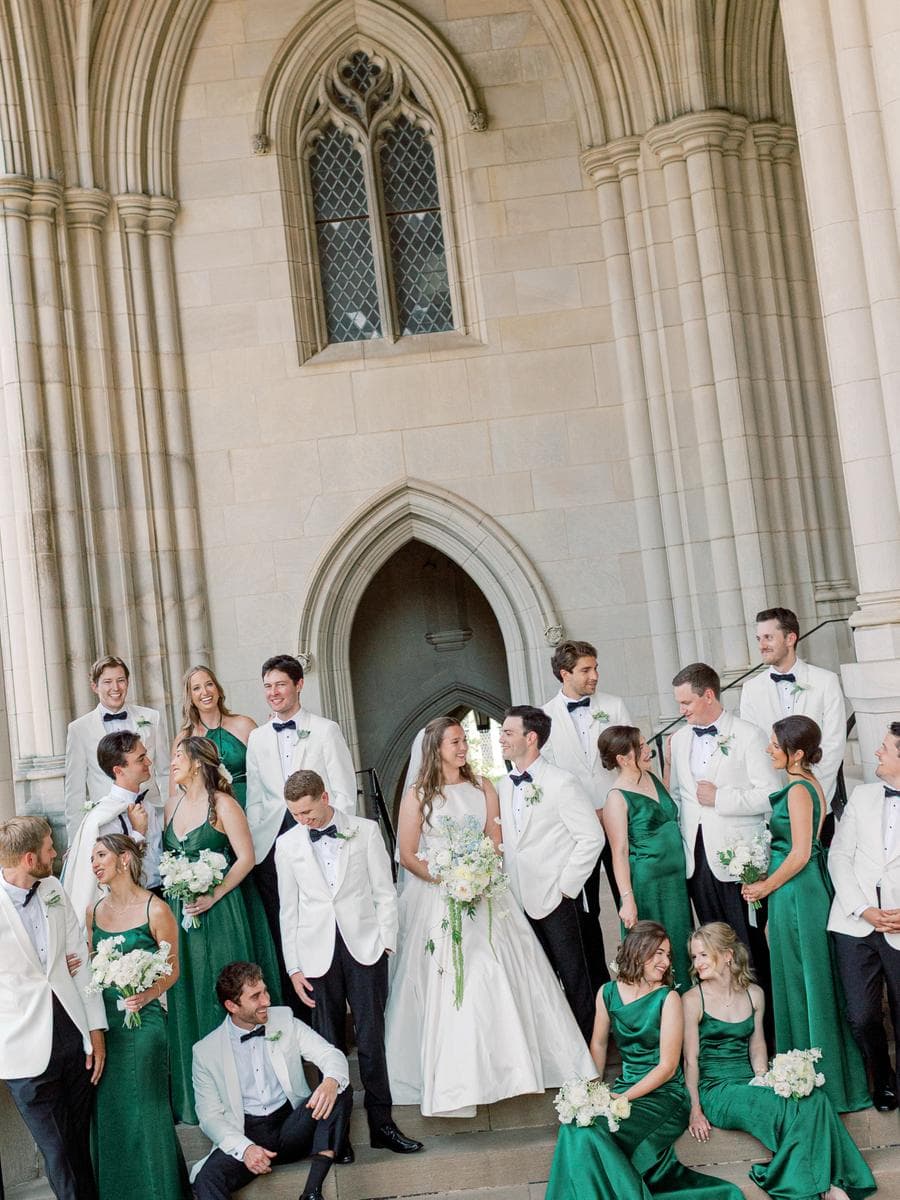
“The Great Gown Makeover” hosts fourth annual fashion show
32 donated wedding gowns hit Fort Wayne's runway as coats, purses and costumes, transformed by 42 designers, 28 of them high-schoolers keeping bridal castoffs out of landfills.
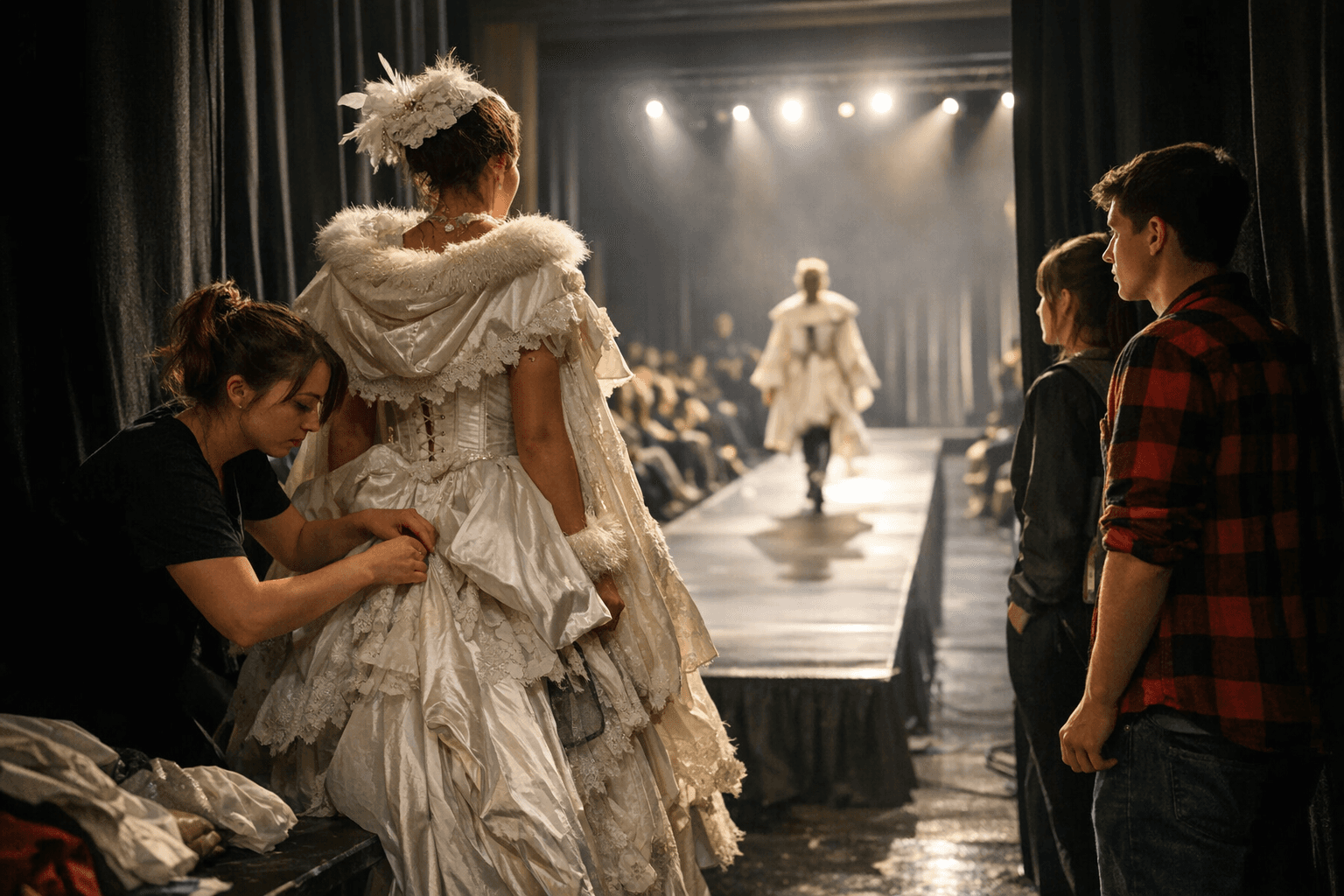
Something quiet is happening in bridal fashion that has nothing to do with Paris or the spring collections: brides, daughters, and thrifters are looking at old wedding gowns and seeing something other than nostalgia. They see raw material. The Great Gown Makeover, a Fort Wayne, Indiana runway competition organized by nonprofit From This Day Forward: Events Ministry, is four years into proving the point, and its fourth annual show on March 20 was its most compelling argument yet.
Forty-two Northeast Indiana designers received 32 donated gowns in January, each labeled "outdated" by their original owners, and walked them down the runway at Ceruti's Summit Room on Innovation Boulevard as something else entirely. Coats. Purses. Structured cocktail dresses. Elaborately themed costumes. The competition's one standing directive: the final piece does not have to remain a wedding dress, or even a gown. That single permission is what separates the Great Gown Makeover from a sewing competition and makes it, quietly, one of the more forward-thinking fashion events in the Midwest.
Twenty-eight of those 42 designers were students from Wayne, Carroll, East Noble, and Columbia City High Schools, alongside homeschoolers and community participants, many of whom had never worked with bridal fabric before receiving their assignment. Industry professionals judged the finished pieces on creativity, craftsmanship, and innovation, presenting awards at the end of an evening that also included heavy appetizers and a dessert bar, all for a $35 ticket.
Heather Krempel, executive director of From This Day Forward, launched the event four years ago as a solution to a logistical problem that became a creative one. "We were struggling with storage space and didn't want to simply donate gowns elsewhere," she has said. What began as a way to move inventory evolved into a competitive runway that now draws professional designers, amateur sewists, and teenagers discovering what they can do with a seam ripper and several yards of duchess satin. "Our students, they're so grateful for the opportunity to actually work on a real wedding dress," Krempel said. "They are learning super awesome skills, whether or not it's to go into the fashion industry or whether it's simply just to learn how to sew a button. We've gotten feedback from our amateurs and professionals that this is a creative outlet for them. It's not a client, it's not a customer telling them what they want; this is something for them."
The most dramatic transformations tend to hinge on a handful of structural decisions. Hem changes alone can pull a gown out of its decade: a full ballgown shortened to tea length loses its period silhouette entirely. Removing a lace or tulle overlay exposes the cleaner underlayer of the skirt and instantly modernizes the shape. Stripping heavy beading from a bodice reveals the architectural bones underneath, often a simple fitted base that can be tailored into a blazer, a crop top, or a structured column. Fabric dye is the highest-risk, highest-reward option: a yellowed ivory gown can emerge as dusty sage or deep champagne if the original fiber content cooperates, and most natural fiber blends do. The designers at this year's Great Gown Makeover worked across all of these approaches, with 32 gowns yielding pieces that ran the range from wearable formalwear to sculptural costume work.
"We're seeing students discover talents they never knew they had," Krempel said. "Many participants tell us, 'Creating wearable art is my passion' or 'I love taking a gently worn gown and breathing new life into it.' This event provides a platform for emerging talent alongside established designers." Her framing of the gown as potential, rather than finished object, is also the event's clearest argument for the second-life bridal movement. "Just because something doesn't look like your Pinterest vision board right now doesn't mean that it can't, or it can look even better."
The sustainability impact is tangible. Thirty-two gowns redirected from landfill or indefinite closet storage in a single evening represents a meaningful contribution from a volunteer-driven 501(c)3 with no paid staff. From This Day Forward, which Krempel co-founded in June 2016, also operates the Gown Garden boutique, where bridal gowns are available starting at $25, a figure that puts the average cost of the organization's offerings somewhere between $25 and $700 against a national average new gown price that routinely exceeds $1,800. Proceeds from the Great Gown Makeover support the organization's year-round programming, including event planning assistance for families with limited resources and a free prom dress program for area students.
For anyone sitting with a mother's gown in a garment bag or a thrifted find with structural promise, the process the Makeover models is more approachable than it looks from the outside. Start with the fabric: pull back any overlay and assess what the base layer is made of, because that determines what the gown wants to become. Heavy satin carries structure and is best reimagined as a blazer, wrap skirt, or fitted column. Layered chiffon dismantles readily into separates or a duster. Remove all embellishments before cutting into the silhouette so you can see what you are actually working with. If the gown is too damaged or too heavily beaded to reshape in full, extract its cleanest panels for accessories, a clutch cut from a lace bodice or a structured tote assembled from a satin train. A hem change is the lowest-commitment, highest-impact alteration available: shortening to midi or tea length modernizes almost any silhouette. Dyeing should be the last decision, not the first, made only once you know what the restructured piece needs to finish. None of this requires formal training. What it requires, as 42 designers demonstrated at Ceruti's Summit Room, is the willingness to stop treating a wedding dress like a museum piece and start treating it like the remarkably versatile raw material it actually is.
Know something we missed? Have a correction or additional information?
Submit a Tip