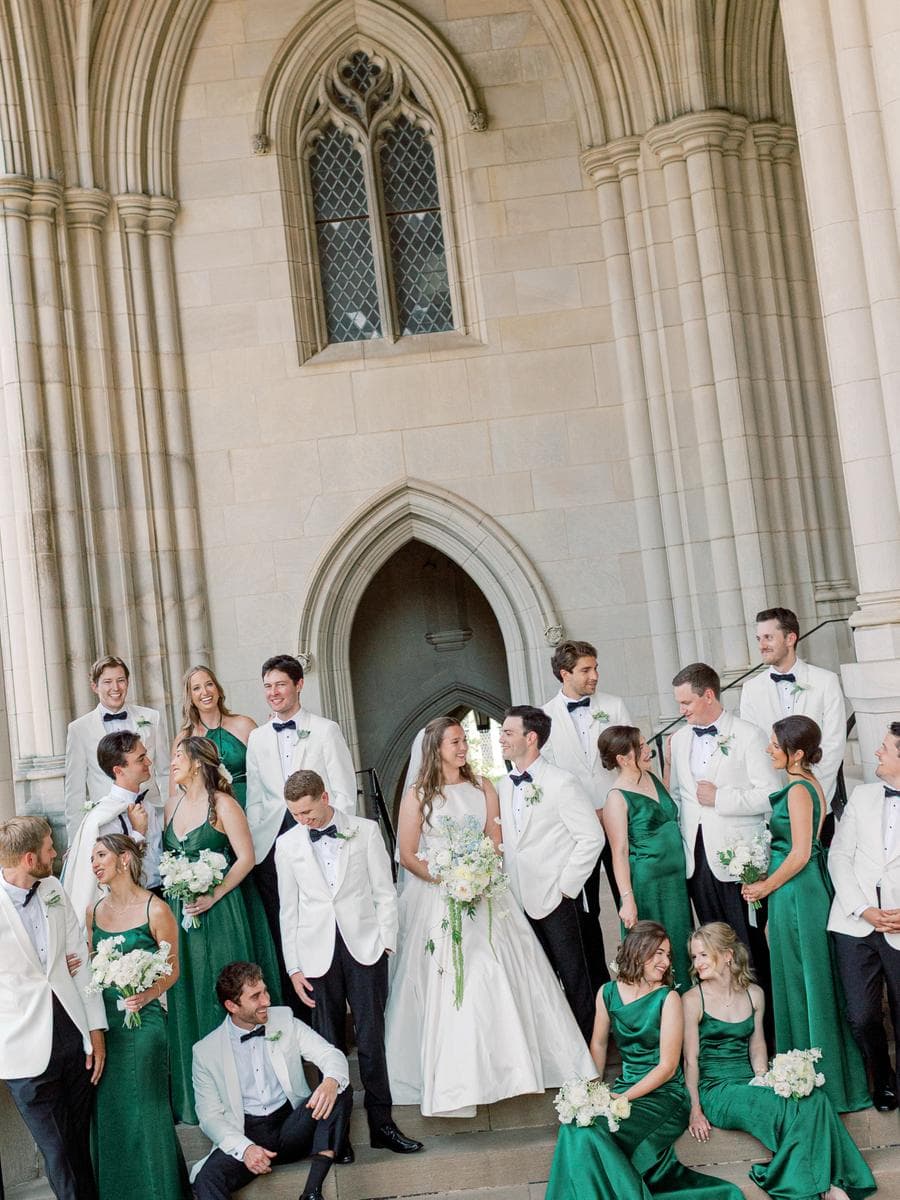
The Knot's 2026 Real Weddings Report Reveals Five Key Bridal Trends
Gen Z now makes up 41% of the wedding market, and their obsession with meadowcore florals, values-driven vendors, and lab-grown diamonds is rewriting the rules for every couple.
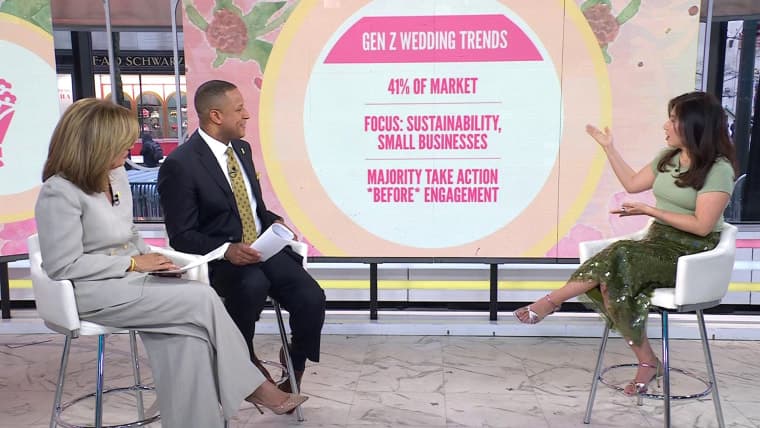
We are finding that weddings are extremely resilient," Esther Lee told TODAY's Hoda Kotb and Craig Melvin. "Last year in the U.S. alone, more than 2 million couples got married, resulting in $100 billion spent." That's not a industry holding its breath — that's a juggernaut in full flower. The Knot Worldwide's 2026 Real Weddings Study captured self-reported responses from 10,474 U.S. couples married between January 1 and December 31, 2025, making it one of the most comprehensive reads on how couples are actually choosing to celebrate. Lee, The Knot's editorial director, joined Kotb and Craig Melvin to discuss The Knot Worldwide's annual Real Weddings Study for 2026, and the five trends she outlined reveal a wedding industry being quietly, decisively transformed — by technology, by a new generation, and by a collective desire for celebrations that actually mean something.
AI Has Entered the Wedding Planning Chat
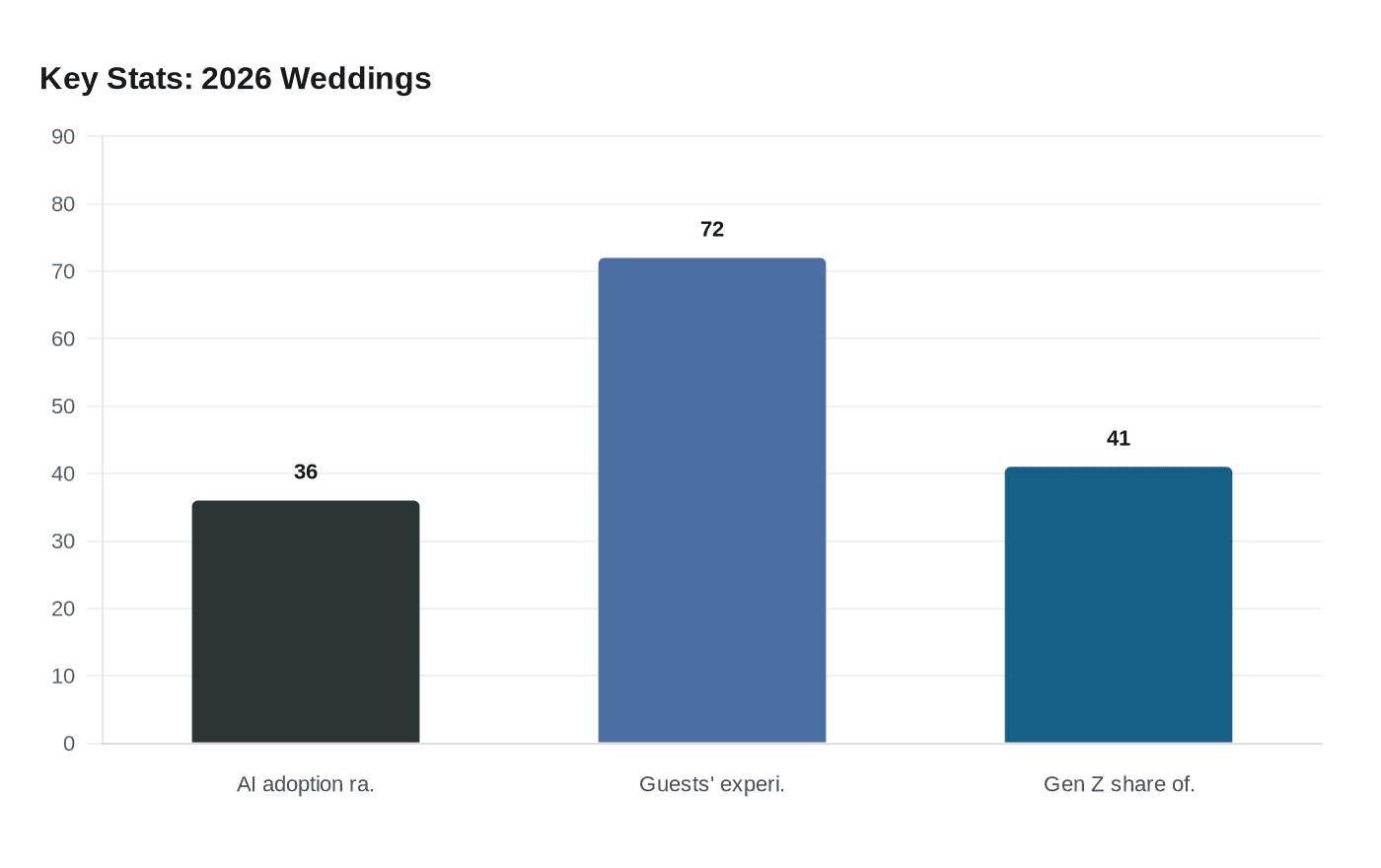
The most statistically striking shift in this year's study isn't about florals or gowns — it's happening on a laptop screen. According to The Knot's survey, a third of couples are now using artificial intelligence to save time and money while planning and researching their wedding. That figure represents a dramatic acceleration: AI adoption nearly doubled year-over-year among couples, increasing to 36%.
Couples primarily use AI to spark inspiration, answer early-stage questions, and draft communications, before turning to trusted industry platforms to validate details and make final decisions. Lee is quick to draw a line, though. She recommends using AI to assist with "the more mundane tasks," such as drafting emails to wedding vendors or composing thank-you notes, and acknowledges that some couples find it useful for a rough draft of a wedding ceremony script. Writing vows, however, is another matter: "We wouldn't highly recommend that, necessarily. They might all sound the same over time," she says. The distinction is telling — AI as logistics workhorse, not as stand-in for the emotional core of the day.
The Guest Experience Is the New Extravagance
Forget maximalist tablescapes staged for no one in particular. Couples are more focused on the guest experience than on having an extravagant wedding. That pivot is showing up in a very specific, visual way: dress codes have evolved from a single line on an invitation into a full aesthetic directive. In addition to focusing on their own outfits, couples are orchestrating what their guests wear, too, with hyper-specific dress codes.
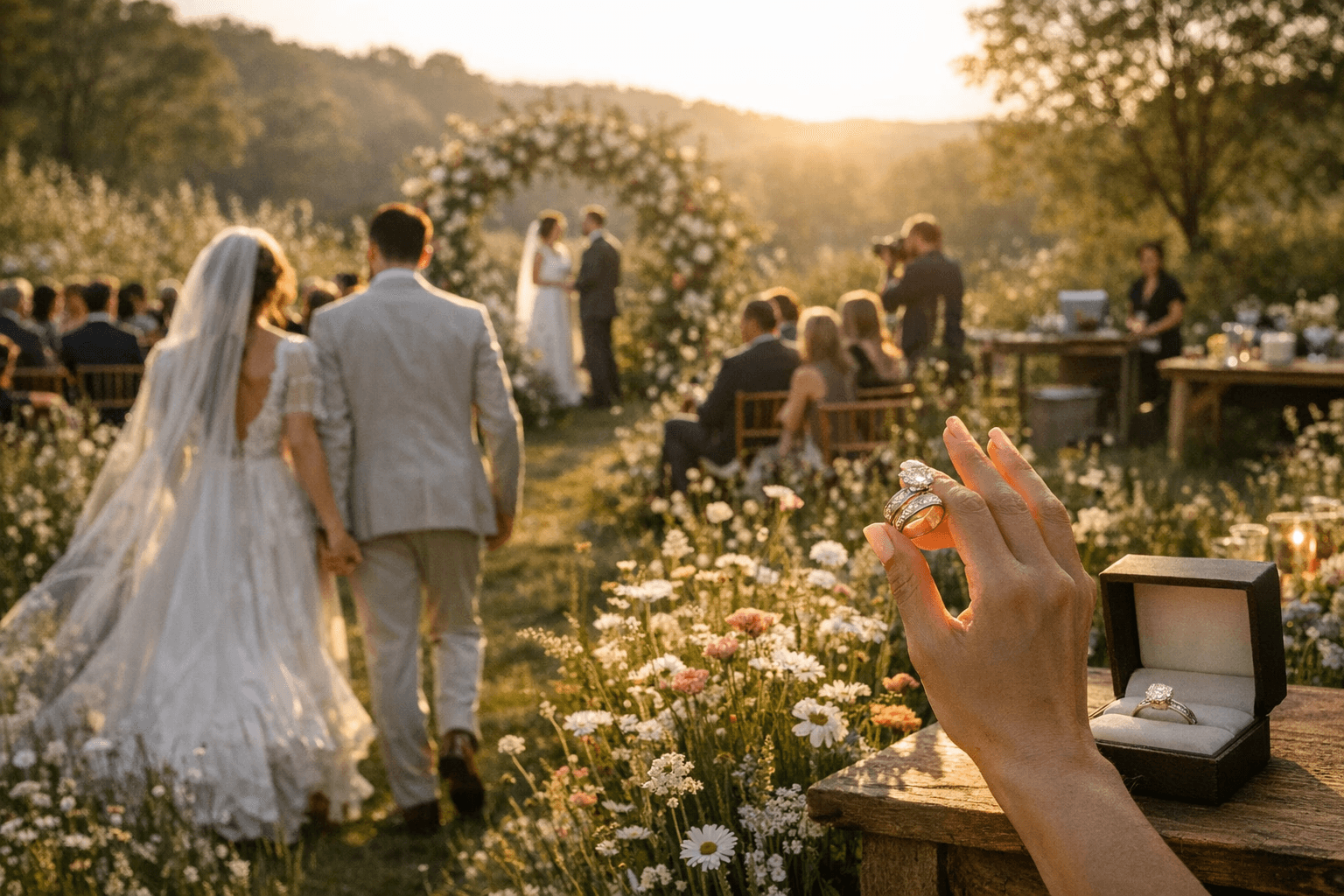
Lee frames this as both hospitality and art direction at once. "Guests are also now becoming part of the decor, which is kind of fun. Let's say that you have a garden party wedding and you have a very specific color palette for your guests. It sort of just blends in beautifully with the wedding day photography too," she says. What reads as a styling decision is also, quietly, a philosophy: the people in the room matter more than the room's price tag. According to The Knot's data, 72% of couples said the most important aspect during the planning process was that guests were well taken care of and had a good time.
Gen Z and the Rise of Meadowcore
As of 2026, Gen Z now represents 41% of the market getting married. That is not a niche cohort shaping a subcategory — that is nearly half the entire bridal market, and their aesthetic convictions are landing everywhere. The generation has ushered in its own aesthetic trends, including one called "meadowcore," which is less a design scheme than a mood: untamed, lush, and deliberately imperfect.
Lee describes it as "floral displays that are ebullient": "They're everywhere. They have it around the cakes, so all of these florals around the cake. It's this idea that it's wild, it's authentic, it's beautiful," she says. Think cascading blooms tumbling off cake tiers, ceremony arches that look less like floral installations and more like a corner of a wildflower field that wandered indoors. The aesthetic is a direct rebuke to the rigid, symmetrical arrangements that defined the mid-2010s wedding aesthetic, and it pairs naturally with another Gen Z instinct: Gen Z couples are "super focused on values-driven wedding planning," meaning hiring vendors who align with their personal values and taste. As Gen Z enters peak marrying age, "cookie-cutter" is out, replaced by highly intentional, personalized celebrations that prioritize human connection and professional expertise.
Lab-Grown Diamonds Take Over
The engagement ring category has undergone what can only be described as a structural reset. 61% of engagement rings now feature lab-grown center stones, a 239% increase since 2020. Lee's observation is blunt: "We're seeing bigger stones and more sparkle." The math is straightforward: the average cost of a lab-grown diamond is $4,600 compared to $7,000 for a mined diamond.
But the shift isn't purely financial. 40% of couples say it is specifically important that their stone be lab-grown, reflecting evolving values and economic pragmatism. Lab-grown diamonds have reshaped expectations around luxury, with an average carat size of 1.9ct. Nearly 9 in 10 proposers still pop the question with a ring in hand, which means the ritual itself hasn't diminished — only the calculus of what constitutes the right stone. For a generation that grew up understanding the marketing history of the mined diamond industry, choosing lab-grown is less a compromise than a considered stance.
Weddings Are Resilient, Even Under Economic Pressure
The macro story underpinning all five trends is this: couples are not abandoning their wedding vision under economic pressure; they are editing it with more intention. The average wedding cost in 2025 was $34,000, holding steady year-over-year despite ongoing economic pressures, with couples spending an average of $292 per guest, up $8 per guest from 2024 and well above pre-pandemic levels.
Three in four couples say their wedding was financially worth the investment, and while 85% reported the economy impacted their planning, most adapted rather than scaled back — with 77% of those adjusting budgets actually increasing spend. As Lee put it in The Knot Worldwide's study release: "The wedding industry continues to be remarkably resilient. No matter the economic climate, couples continue to prioritize celebration and are investing accordingly. What is new is that today's couples are leading with intention — blending creativity and innovation to design celebrations that reflect their values and are uniquely theirs."
That word — intention — is doing a lot of work in 2026. Whether it's directing guests' wardrobes to complement a garden color palette, choosing a florist whose ethics align with your own, or spending $4,600 on a lab-grown stone rather than $7,000 on a mined one, these are not decisions made by default. They are the signature of a wedding culture that has stopped performing for the algorithm and started designing for the room.
Know something we missed? Have a correction or additional information?
Submit a Tip