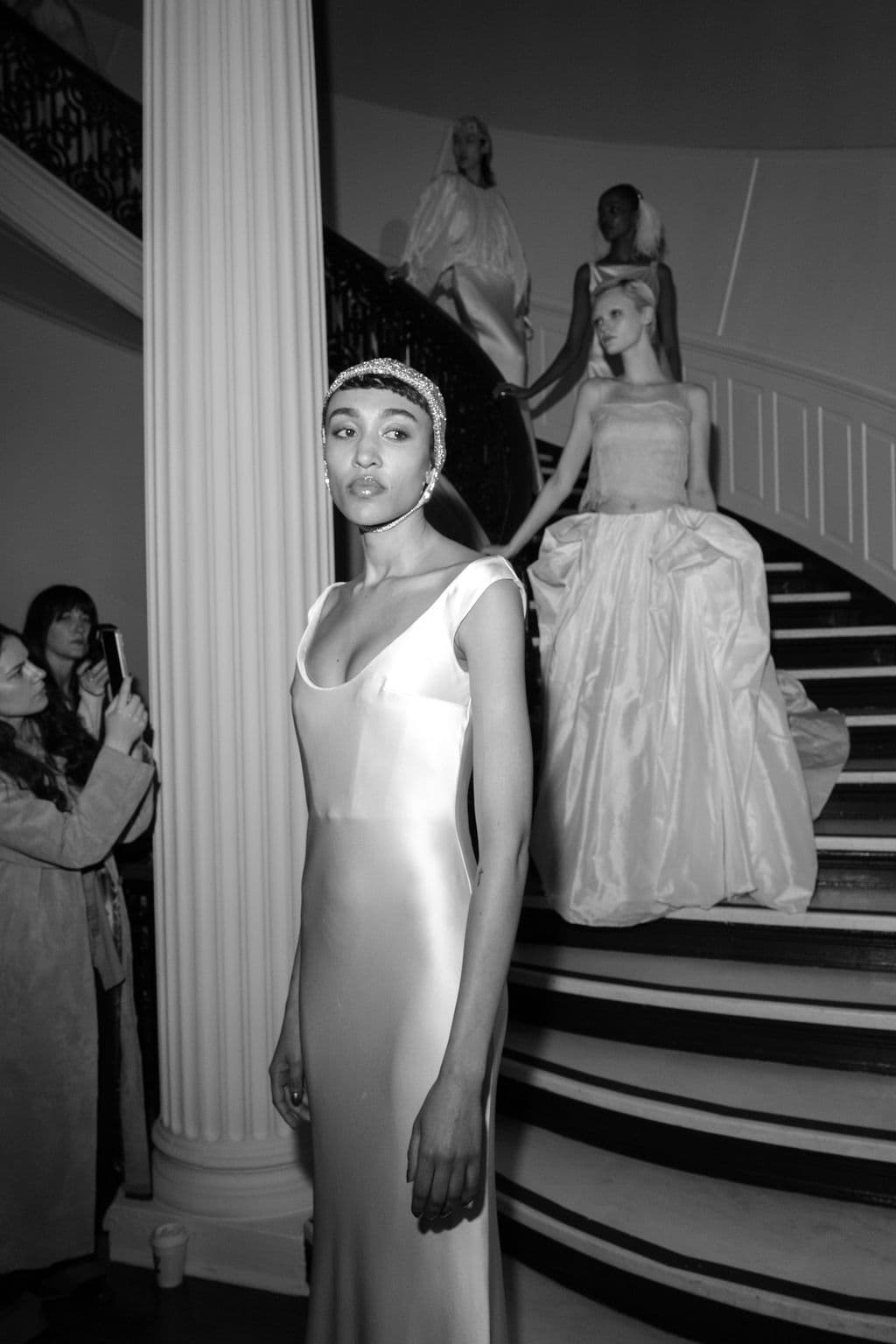
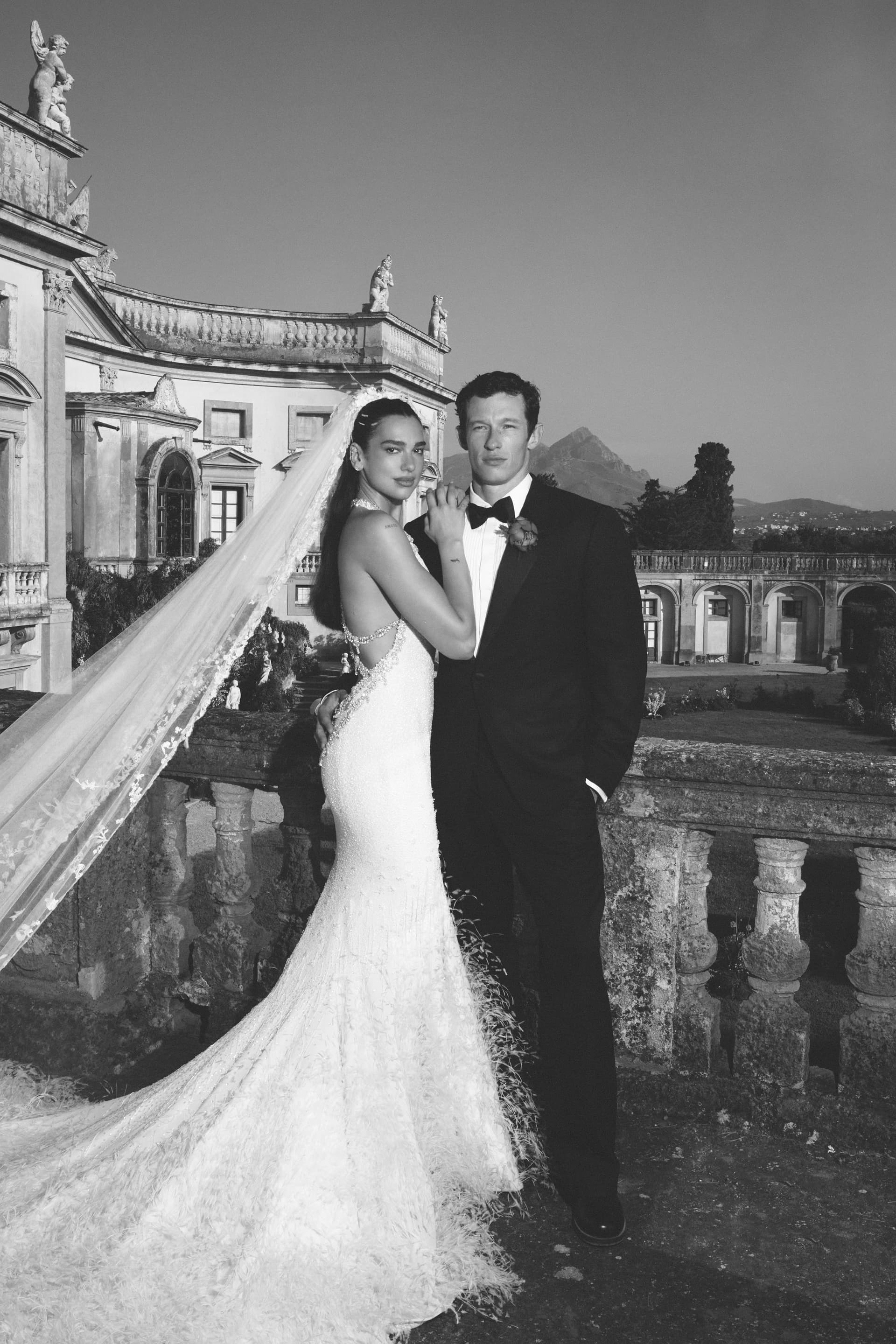
Vintage-inspired bridal looks and dramatic draping define New York Bridal Week
Bridal Week’s most compelling gowns traded quiet minimalism for corsetry, drape and vintage references that feel sharply contemporary, not costume-like.
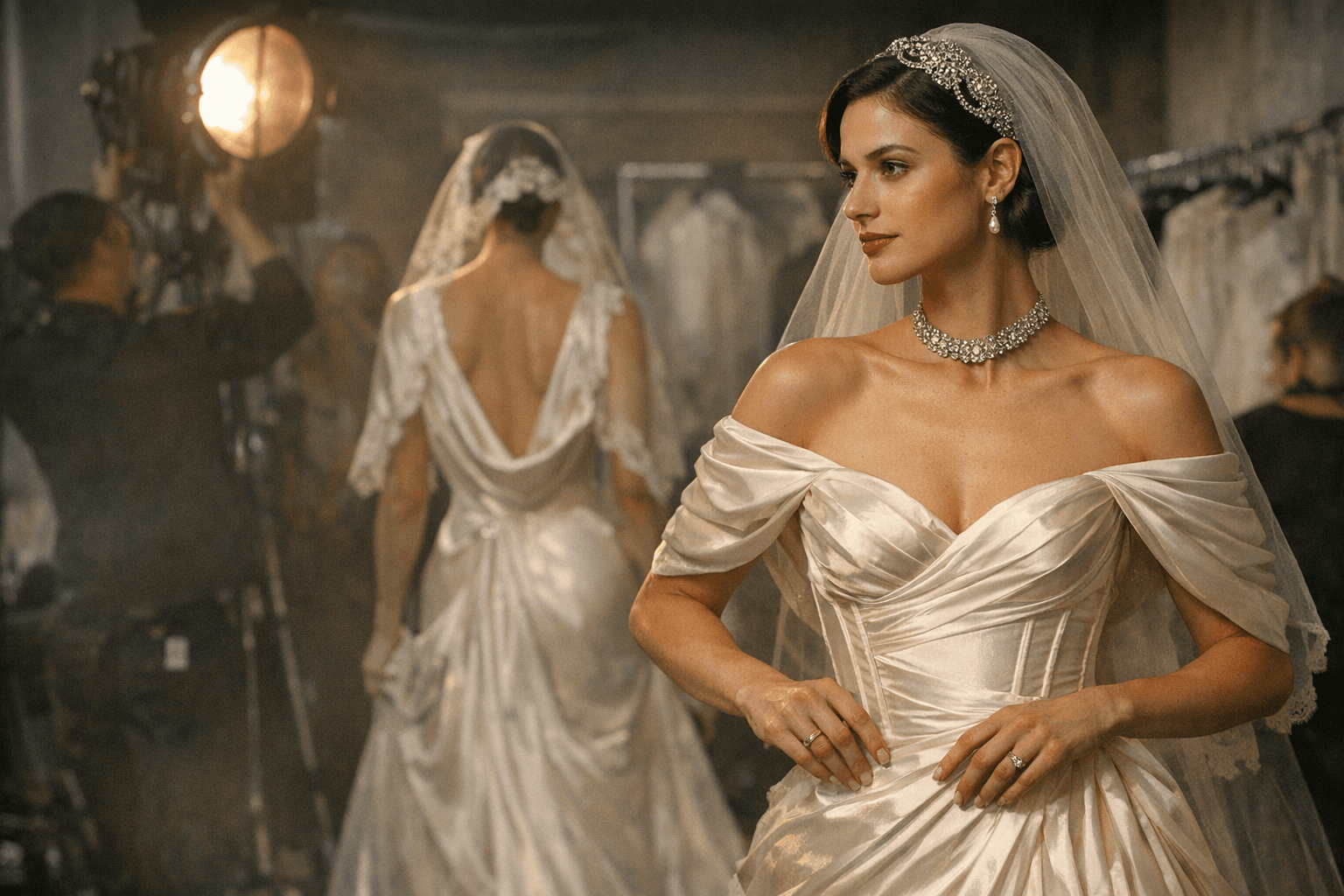
A season that finally wants a point of view
Monique Lhuillier’s Spring 2027 collection makes the clearest case for where bridal is headed: lace, sculpted separates, drop-waist corsetry and sheer layers, all filtered through a modern-day Brigitte Bardot mood. It is romantic, but not sweet; polished, but not precious. The magic lies in the structure beneath the softness, with jackets, overskirts and detachable sleeves giving brides the kind of dressed-up flexibility that feels made for a ceremony and a second look.
That shift mattered across New York Bridal Fashion Week, where the official April 7 to 10, 2026 schedule brought back anchors like Monique Lhuillier, Naeem Khan and Tanner Fletcher Weddings, while Batsheva made its bridal debut and a new crop of names, including Alyssa Kristin, FERRAH, Netta BenShabu Elite Couture, OUMA Bridal, Poeza, Priscilla Couture and RENHUE, widened the field. Mark Ingram Bride also marked 25 years, while Verdin Bridal celebrated five, a reminder that bridal’s center of gravity is still strong even as the clothes become more experimental.
The bigger takeaway is that brides are no longer being offered one default lane. The season felt less like a parade of safe white dresses and more like an argument for personality, with fashion used to signal taste, era and attitude.
The two cultural poles shaping spring 2027
Across the spring 2027 collections, the references split into two vivid camps: “Wuthering Heights” and “Love Story.” One camp leaned into historical fantasy, with Victorian necklines, pickup skirts, basques, panniers, corsetry and rich embellishment. The other leaned toward Carolyn Bessette Kennedy-inspired ’90s minimalism, with slips and a quieter, more sensual line.
That split is useful for real brides because it clarifies the difference between a trend and a mood. The “Wuthering Heights” side is for someone who wants drama in the silhouette itself, not just in the accessories. Think a basque waist that sharpens the bodice, a pickup skirt that creates movement and a neckline that feels properly period-aware without becoming theatrical.
The “Love Story” side works differently. It is not about stripping romance away, but about editing it until it looks effortless. A clean slip with liquid drape, a softly cut bodice or a gown that skims rather than clings gives that 1990s ease without collapsing into plainness. The smartest version of this look is polished enough for a ceremony, then unfussy enough to live on in photographs for decades.
Vintage is back, but it has become more specific
The market has already been primed for this shift. Lily Kaizer of Happy Isles called vintage “always booming,” and said brides are coming in with references from every decade, with especially strong demand for the ’90s and early 2000s. There is also growing interest in ’20s liquid looks and ’70s bohemian style, which explains why bridal dressing suddenly feels more layered, more referential and more willing to borrow from the archive.
What matters here is not simply that vintage is back. It is that brides are shopping vintage like they shop fashion, with discernment. A bride drawn to the ’20s usually wants a fluid, body-skimming line and a sense of movement. A bride leaning into the ’70s may want softness, ease and a little undone texture. The early-2000s influence brings in the column, the bias cut and the kind of minimal glamour that looks expensive without shouting.
For a real wedding, the trick is to borrow one era clearly and keep the rest modern.
- Choose one historical signal, not three. A basque waist needs a pared-back veil.
- If the dress is already ornate, keep hair and jewelry clean.
- If you want a liquid ’20s mood, let the fabric do the talking and skip heavy embellishment.
- If you lean ’70s, use texture and ease, not costume references like literal fringe or peasant styling.
Dramatic draping is the new shorthand for movement
The other major theme is draping, but not the vague kind that appears every few seasons and means almost nothing. This version is more architectural. It shows up in sculptural romance, dropped waists, over-layers and the kind of construction that creates shape as the bride moves. In other words, the dress is designed to photograph from every angle, not just front-on.
Monique Lhuillier’s lookbook made that especially clear. Lace takes center stage, but it is paired with sculpted separates and practical drama: jackets, overskirts, detachable sleeves and drop-waist corsetry. That combination gives brides options, which is part of why it feels so current. You can wear a more formal version for the aisle, then shed layers for the reception without losing the look.
This is also where fit becomes fashion. A drop waist lengthens the torso and feels especially elegant on brides who want the waist to sit lower and the skirt to begin with a cleaner sweep. Sheer layers can soften a strong bodice, while an overskirt adds ceremony without requiring a different gown. The best draped dresses do not smother the body; they trace it, then release it.
How to wear the trends without looking costume-y
The temptation with vintage-coded bridal is to lean too hard into the reference. The better approach is restraint. If you are drawn to Victorian necklines, balance them with modern fabric or a pared-back skirt. If you love panniers or a pickup silhouette, keep the rest of the styling crisp so the dress reads as fashion, not reenactment.
The same logic applies to the newer accessories story. Statement veils, over-layers and three-dimensional florals can look extraordinarily fresh when the base gown is controlled. A clean column with a dramatic veil feels intentional. A basque-waist gown with sculpted corsetry and nothing else competing at the neckline feels considered. A sheer sleeve or detachable jacket can deliver drama without locking you into one look for the entire day.
For venue and mood, the range is wide. A more historical, richly embellished gown belongs beautifully in a formal ballroom, a townhouse setting or any space with architectural presence. The cleaner Carolyn Bessette Kennedy side works for a city hall ceremony, a gallery reception or a modern hotel where the dress should feel like a quiet statement rather than a costume piece. Either way, the new bridal language is less about hiding in white and more about dressing with intention.
Why this shift matters beyond the runway
The broader market backdrop only sharpens the point. Third-party industry forecasts put the global bridal wear market at about $35.7 billion by 2027, with North America representing a major share. That scale matters because runway ideas do not stay on runways for long when brides are shopping with this much appetite for distinction.
Spring 2027 suggests bridal is moving away from a narrow idea of softness and toward something more editorial, more personal and more historically aware. The strongest dresses are not asking brides to choose between romance and modernity. They are giving both, then asking her to wear them with conviction.
This article was produced by Prism’s automated news system from verified source data, official records, and press releases, then run through automated quality and moderation checks before publishing. The system is built and supervised by the people who set the standards it runs under. Read our full AI policy.
Did this article answer your question?