Why bridal shoppers queue for hours for coveted Mysore silk sarees
Bridal shoppers are treating Mysore silk like an heirloom, not a quick buy, and that is why the line begins before dawn.
The line is part of the look
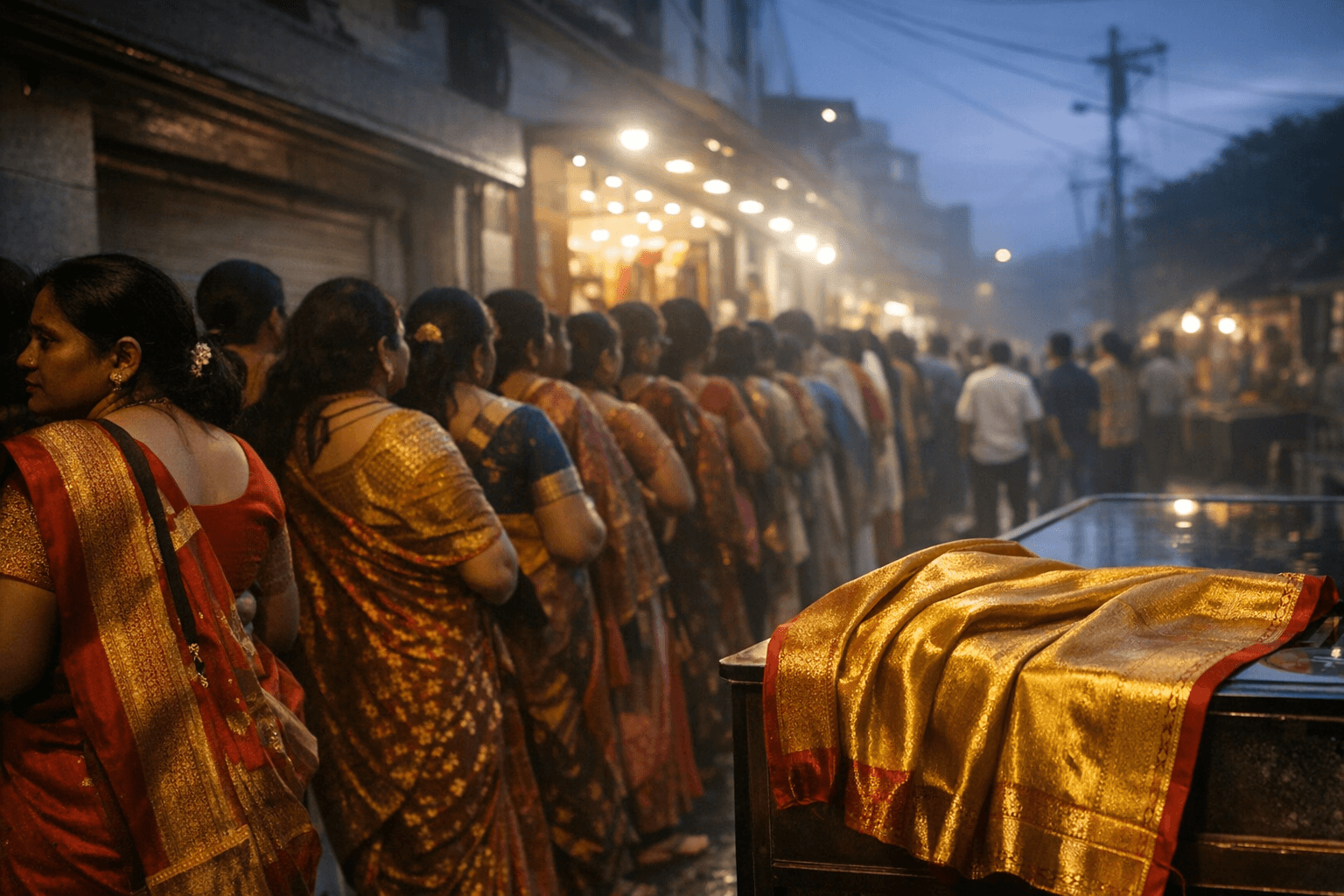
A Mysore silk saree is the kind of bridal purchase people will plan around a 4 am wake-up, a six-hour wait and a 10-minute shopping window. The scarcity is not a deterrent; for brides and their families, it is part of the appeal, a sign that the drape still carries the cultural weight and wedding-season urgency of something worth passing down.
Why Mysore silk still feels special
KSIC, the Karnataka Silk Industries Corporation Limited, traces the Mysore silk weaving factory back to 1912, when Sri Nalvadi Krishnaraja Wodeyar established it with 10 looms. The unit later expanded to 138 looms and was handed over to KSIC in 1980, a detail that matters because this is not just another festive textile but a state-backed craft with deep institutional memory.
KSIC says it controls the full silk-production chain, uses 100% pure silk with pure gold zari, stamps each zari saree with a unique code number and hologram, and holds Geographical Indication registration for Mysore Silk. In bridal terms, that means the fabric does double duty: it looks luxurious in photographs and carries the reassurance of authenticity in a market where heirloom value matters as much as shine.
The silk tradition itself is even older than the factory. Karnataka’s Department of Sericulture says sericulture has been practiced in the state for 250 years, flourishing under Tippu Sultan and the Wodeyars, and today supports nearly 12 lakh households. That scale explains why a saree can feel personal and ceremonial at once. It is tied to family rituals, but it also sits inside a major livelihood economy.
How the shopping ritual works
The fever around KSIC showrooms is not a one-off viral moment. Recent reporting shows one Bengaluru shopper reached the Jayanagar showroom at about 4 am and waited nearly six hours for a 10-minute purchase window. Only 10 people are allowed inside at a time, and customers are limited to one saree per token or per person, which turns buying into a controlled, almost collectible experience.
That structure has only intensified the sense of urgency. The showroom restocks on Thursdays and Saturdays, and one queue can already have dozens of names by dawn. Some shoppers arrive as early as 3 am, while others turn up the previous night, a rhythm that says everything about wedding shopping in India: when the right textile is on the line, families will endure discomfort, repetition and rules that would feel excessive anywhere else.
- Expect a token system, not a casual browse.
- Go early, especially on Thursday or Saturday restock days.
- Plan for a strict cap, since purchases are limited to one saree per token or person.
- Move fast once inside, because the shopping window can be just 10 minutes.
What the price jump says about bridal demand
The numbers make the obsession look even less irrational. Recent reporting puts Mysore silk sarees at roughly ₹19,000 to ₹2.5 lakh depending on design and zari content, and a 2024 report said demand stayed strong even after an 11% to 15% price hike. That kind of price spread tells you these sarees sit in a rare lane: accessible enough for a serious wedding buy, elevated enough to be treated as a keepsake.
CNBC-TV18 reported that KSIC sells around 8,500 saris every month and posts annual profits of more than ₹100 crore. For brides, that points to a textile that is still commercially hot because it satisfies two competing desires at once: the urge to spend on something visibly special and the need to make a purchase that will still feel sensible after the wedding lights go down.
This is why Mysore silk functions so well as bridal and festive wear. It has the authority of a traditional weave, but it also delivers a clean, unmistakable visual payoff. The gold zari catches light without looking brittle, and the pure silk base gives the drape a smooth, formal fall that photographs beautifully in wedding portraits and temple settings alike.
How to think about it when you are shopping for a wedding
If you want the saree to feel truly bridal, let the textile do the talking. Mysore silk already brings color, weight and luminosity, so the smartest styling keeps the rest disciplined, with a blouse and jewellery that complement the weave rather than crowd it. That approach is what keeps the look modern: the saree remains the star, and the bride looks polished instead of overworked.
The real reason families queue for hours is not only scarcity. It is emotional arithmetic. A Mysore silk saree feels like a promise that the money, the wait and the hassle will return as something useful for the wedding itself and meaningful long after it. In a season built on memory, that is the rare purchase that still earns its place in the family archive.
This article was produced by Prism’s automated news system from verified source data, official records, and press releases, then run through automated quality and moderation checks before publishing. The system is built and supervised by the people who set the standards it runs under. Read our full AI policy.
Did this article answer your question?