5 Wimbledon style cues that translate into capsule wardrobes
Wimbledon’s dress code makes the case for polish, but only five courtside cues are worth translating into real-life summer staples.
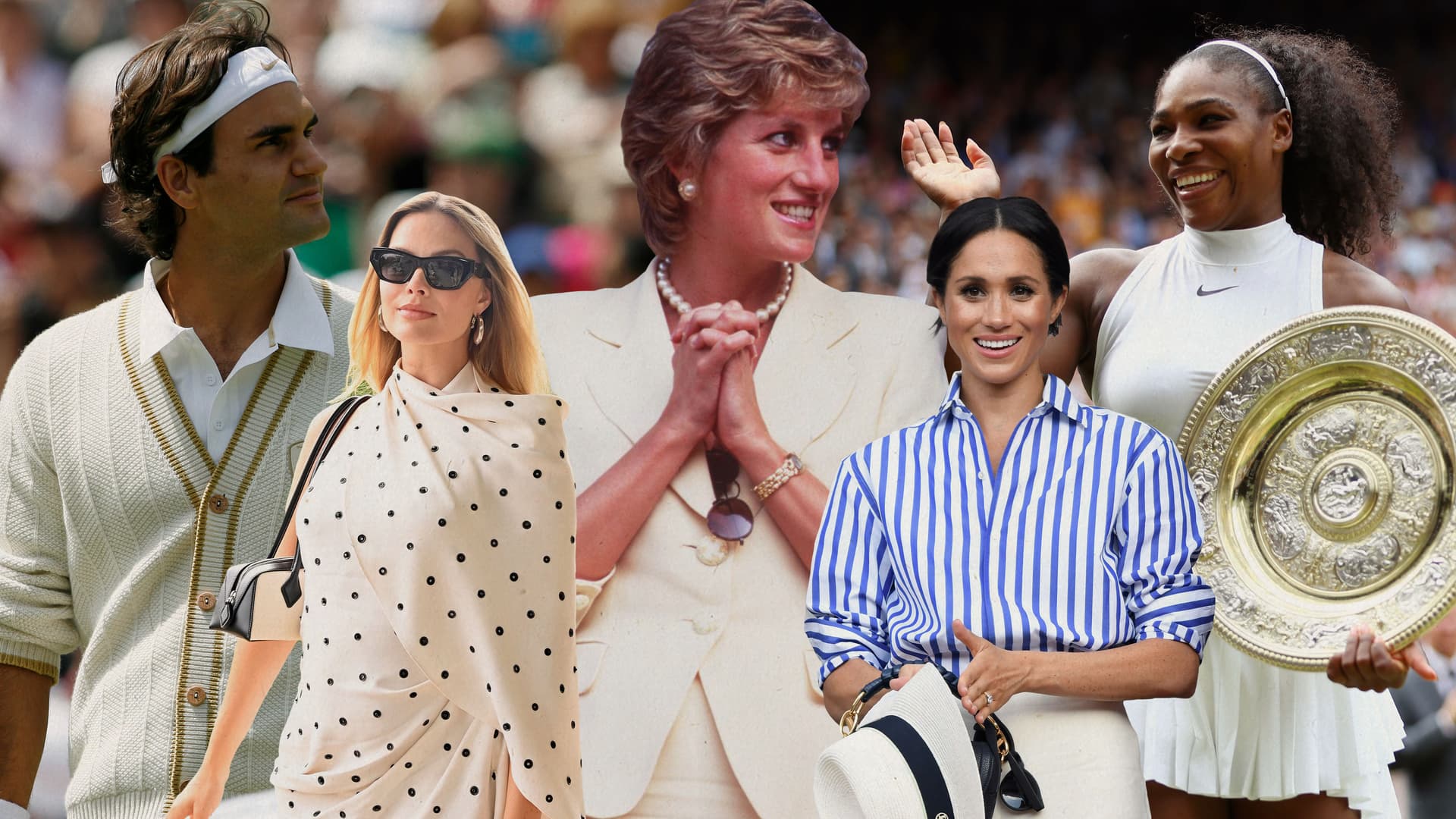
Wimbledon has a way of making clothes look smarter than they are. Between the 74-seat Royal Box, the Members’ Enclosure dress expectations, and a courtside culture shaped by almost entirely white playing kits, the tournament turns even the most familiar outfit formulas into a study in restraint. This year’s most useful style takeaway is not a fantasy wardrobe, but a selective one: polka dots, butter-yellow suiting, varsity sweaters, striped button-downs, and gingham all have a place, but not every look deserves to leave Centre Court.
Polka dots
If one pattern captures Wimbledon’s social energy, it is the polka dot. It feels festive without tipping into costume, which is exactly why it keeps resurfacing among celebrities who know how to dress for a camera and a crowd at once. Who What Wear highlighted Sienna Miller in a polka-dot skirt look at Wimbledon 2024 and Margot Robbie in a polka-dot dress paired with black-and-white accessories, and that pairing tells you everything: this print works best when it is crisp, graphic, and controlled.
This is the polka dot that earns a place in a capsule wardrobe. Buy it if you want one printed skirt, silk top, or airy dress that can move from lunch to a late-afternoon match to dinner with flat sandals. Skip anything too oversized or novelty-driven; the version worth keeping is small enough to feel chic, large enough to register from a distance, and simple enough to wear with white, black, or tan pieces already in your closet.
Butter-yellow suiting
Butter yellow is the soft-spoken color trend that keeps proving it can do real work. Who What Wear had already flagged it as a major summer color in 2024, and the appeal is obvious at Wimbledon, where the formality of the setting rewards a shade that feels sunny rather than loud. In a room full of white, navy, and cream, butter yellow reads fresh and expensive without trying too hard.

This is one of the easiest trends to translate into capsule dressing because the pieces do not need to be showy to matter. A butter-yellow blazer or vest can sharpen denim, soften navy trousers, and lighten the mood of linen separates, which makes it a strong buy if you want one color that behaves like a neutral but looks more considered. The only version that feels too occasion-specific is a head-to-toe suiting moment worn for spectacle alone; keep the jacket, pair it with shorts or tailored trousers, and let the color do the talking.
Varsity sweaters
The varsity sweater is Wimbledon’s most quietly useful preppy cue. It taps into the sport’s heritage mood without relying on literal tennis motifs, and that makes it far more wearable than anything embroidered with rackets or embroidered slogans. It also fits the tournament’s broader dress atmosphere, where even spectators in the Members’ Enclosure are nudged toward smart daywear rather than anything overly casual.
This is the kind of layer that belongs in a capsule wardrobe because it solves a daily problem: what to throw over a dress on a windy evening, what to wear with pleated shorts, what to use when a T-shirt feels underdone. Look for a clean V-neck, collegiate stripes, or a slightly boxy fit in wool or cotton, then keep the palette restrained enough to work with jeans, a midi skirt, or tailored trousers. This one is worth buying, especially if you want a piece that gives polish without making you look as if you are heading to a theme party.
Striped button-downs
A striped button-down is the most convincing example of Wimbledon style translating directly into real life. It has the same crispness as the white-dress-code backdrop, but with enough personality to feel modern, which is why it slips so easily into both smart and casual wardrobes. In a setting where players must wear almost entirely white, not off-white or cream, the spectator versions of this look often lean into clean lines and neat tailoring instead of fussier details.

This is absolutely worth buying because it functions like a wardrobe backbone. Wear it open over a tank, tucked into jeans, half-buttoned with tailored shorts, or beneath a blazer when you need structure without stiffness. A blue-and-white or pale stripe will give you the most mileage, while anything too oversized or beachy risks drifting away from the polished Wimbledon mood that makes the shirt so effective in the first place.
Gingham
Gingham is the pattern that feels most like summer itself, and Wimbledon’s courtside setting gives it added charm. The print connects naturally to strawberries and cream, one of the tournament’s longest-running spectator pleasures, so it lands with a sense of tradition rather than trendiness. That is part of why it works so well here: it can feel nostalgic, but on the right silhouette it still reads crisp and current.
This is a pattern to buy selectively. A gingham dress, blouse, or skirt can be excellent if you want one piece that already carries a point of view, but the fabric and cut matter more here than with stripes or dots. Smaller checks feel more refined; larger ones can skew picnic-table cute if you are not careful. Keep the rest of the outfit simple and it becomes a reliable summer staple, especially when paired with leather sandals, espadrilles, or a woven bag.
Wimbledon has always been a stage for looking composed, and its history helps explain why these five cues feel so durable. The Championships began in 1877 with 22 men and a crowd of 200 watching Spencer Gore become the first champion, and today the event still balances spectacle with rigor, from the 74-seat Royal Box to a 2025 prize fund of £53.5 million, with the singles champions each taking home £3 million. That mix of tradition and visibility is exactly why these outfits work beyond the stands. They are polished enough for the event, but restrained enough to survive the walk home, which is the real test of any capsule piece.
This article was produced by Prism’s automated news system from verified source data, official records, and press releases, then run through automated quality and moderation checks before publishing. The system is built and supervised by the people who set the standards it runs under. Read our full AI policy.
Know something we missed? Have a correction or additional information?
Submit a Tip