Build a 20-Piece Ethical Closet That Creates 45 Outfit Combinations
Twenty pieces, 45 outfits, one closet that costs the planet less: here's exactly how to build an ethical capsule that actually works.
Your closet is probably full, and you still have nothing to wear. That specific frustration, standing in front of packed rails and feeling like nothing works together, is exactly what a well-built capsule wardrobe solves. The premise is simple: 20 carefully chosen pieces, sourced ethically, styled intentionally, generating 45 or more distinct outfit combinations. Less clutter, less waste, less money spent replacing things that never quite fit your life.
The number 20 is not arbitrary. It sits at a precise sweet spot: enough variety to dress for real life across seasons and occasions, few enough that every single piece has to earn its place. Go lower and you're making sacrifices that show. Go higher and you've just rebuilt the overcrowded wardrobe you started with, only with better branding. Twenty pieces forces the discipline that makes a capsule wardrobe actually function as a system rather than a collection.
Why ethical sourcing changes the math
The "ethical" qualifier matters more than it might first appear, and not just for the obvious environmental reasons. When you commit to buying fewer, better pieces, the cost-per-wear calculation shifts dramatically. A $180 organic cotton tee worn 200 times costs less per wear than a $30 fast-fashion equivalent that pills after eight washes and ends up in landfill. The environmental impact follows the same logic: the fashion industry's waste problem is largely a volume problem. Buying less, but buying pieces built to last, breaks that cycle at the source.
Ethical also means being specific about what you're choosing. Look for certifications that mean something: GOTS (Global Organic Textile Standard) for organic fibers, Fair Trade certification for labor practices, and B Corp status for brands with verified social and environmental accountability. These aren't marketing badges; they're third-party verified standards that tell you something real about how a garment was made.
The 20 pieces, broken down
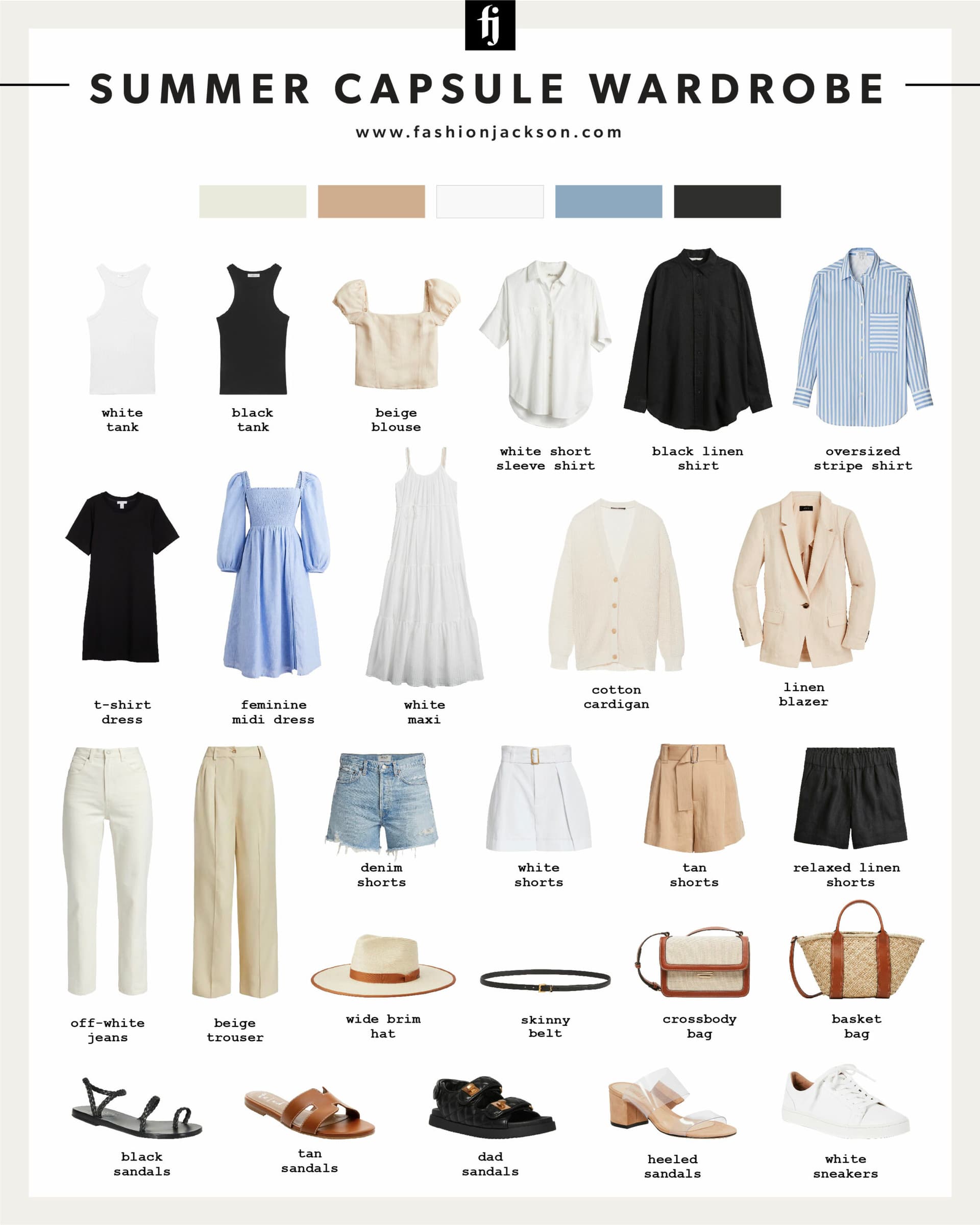
A functional 20-piece ethical capsule needs to cover four categories without overlap or redundancy:
- Tops (7 pieces): Three neutral tees in heavyweight organic cotton (white, black, and a warm grey or oatmeal), two button-front shirts (one crisp white poplin, one chambray or soft stripe), one fine-knit merino crewneck, and one lightweight turtleneck. These seven pieces work across every other category in the wardrobe.
- Bottoms (5 pieces): Two pairs of well-cut trousers (one dark, one mid-tone), one pair of straight-leg or wide-leg jeans in a true indigo wash, one midi skirt in a neutral or subtle print, and one pair of tailored shorts or a second skirt depending on your climate. Every bottom should pair with at least four of your seven tops.
- Layers (4 pieces): One structured blazer that reads as both casual and formal, one relaxed linen or cotton overshirt, one merino or wool cardigan, and one versatile outer layer, either a trench coat or a clean-lined puffer depending on where you live. Layers are where the outfit math multiplies fastest.
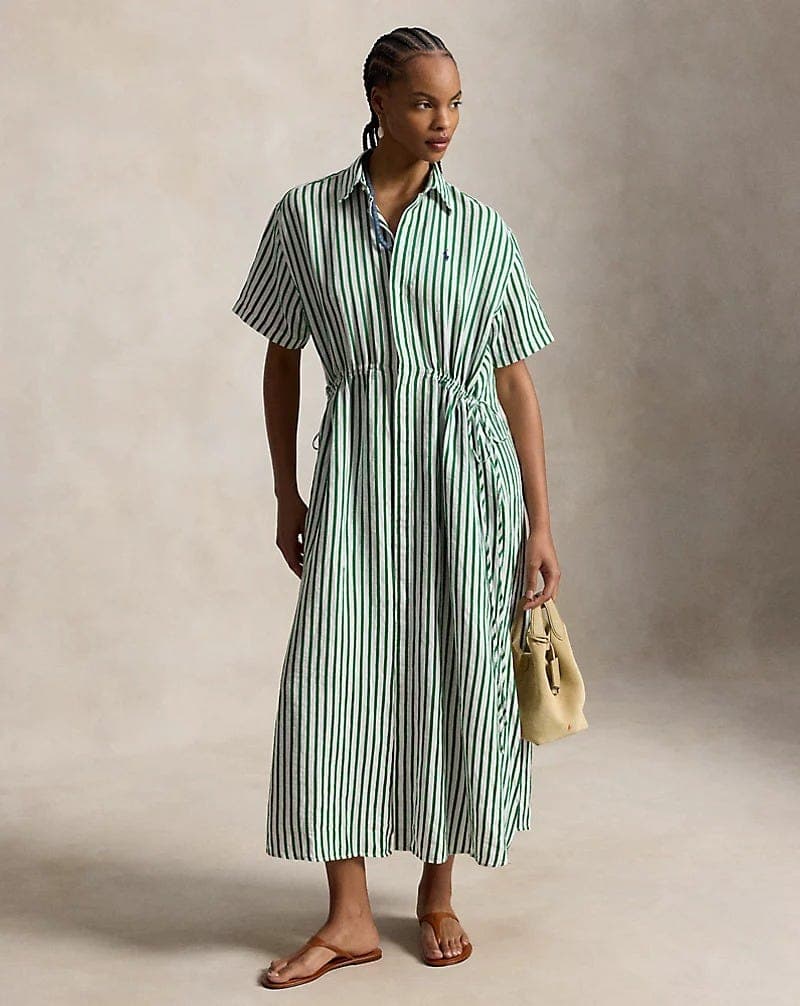
- Dresses and one-pieces (2 pieces): One wrap or shirt dress that transitions from day to evening, and one jumpsuit or tailored co-ord. These do heavy lifting as complete outfits while still layering under and over your other pieces.
- Footwear and bags (2 pieces each): Two pairs of shoes: one clean white or neutral leather sneaker and one low-heeled loafer or ankle boot. Two bags: one structured tote for daily use and one smaller crossbody for evenings. Accessories are intentionally minimal here, because the outfit combinations live in the clothing.
How 45 combinations actually happen
The math behind 45-plus outfits from 20 pieces comes down to a combinatorial principle that stylists have used for decades: when every piece in a wardrobe is designed to work with at least three others, the combinations multiply quickly. Your white tee pairs with all five bottoms, layers under every jacket and over every layer. Your blazer transforms your jeans-and-tee into an outfit that reads entirely differently than the same jeans worn with the merino and the overshirt.
To stress-test your own selections before buying, try this process:
1. List every top alongside every bottom and count only the combinations that feel complete and intentional.
2. Add each layer over those combinations and count again.
3. Remove any piece that appears fewer than five times in your combinations list.
If a piece can't work with at least a quarter of everything else in the wardrobe, it doesn't belong in a 20-piece system.
Building it without starting from scratch
The most sustainable capsule wardrobe is the one that starts with what you already own. Before purchasing a single new piece, pull everything from your closet and audit it against the 20-piece framework above. You may already have six or eight pieces that belong in the system. The gaps are your shopping list.
When you do buy new, prioritize natural fibers over synthetics: organic cotton, linen, Tencel, wool, and recycled cashmere are the most durable and lowest-impact options available at most price points. Second-hand sourcing for these pieces, particularly for blazers, trousers, and outerwear, cuts both the cost and the carbon footprint significantly. A vintage wool blazer from a well-maintained second-hand shop is both more ethical and more characterful than most new alternatives at the same price.
The money argument, plainly stated
A fully built 20-piece ethical capsule wardrobe, buying thoughtfully across a mix of mid-range sustainable brands and quality second-hand pieces, typically runs between $800 and $1,500 depending on your location and sources. That sounds steep until you compare it to the average American consumer's annual clothing spend, which research from multiple retail analysts has consistently placed above $1,800 per year, much of it on pieces worn fewer than five times. The capsule model, maintained properly, should serve you for three to five years before individual pieces need replacing. That's a fundamentally different relationship with getting dressed: one built on intention rather than impulse.
The closet that creates 45 outfits from 20 pieces isn't a minimalist experiment or a sacrifice. It's a more considered version of how you already want to dress, with the noise removed.
This article was produced by Prism’s automated news system from verified source data, official records, and press releases, then run through automated quality and moderation checks before publishing. The system is built and supervised by the people who set the standards it runs under. Read our full AI policy.
Did this article answer your question?