Build a Timeless Capsule Wardrobe With These Expert-Backed Steps
Forget the dramatic closet purge: building a capsule wardrobe starts with what you already love, not a blank slate.

There is a blueprint for a wardrobe that never fails you, and it is simpler than the fashion industry would have you believe. Audit what you own. Define a color palette. Invest in tailoring and core fabrics. Add sculptural statement pieces sparingly. That four-step sequence, distilled by Vogue Singapore's editorial guide to timeless dressing, reads almost like a formula — and in many ways, it is. The challenge is executing it without losing your nerve halfway through a pile of clothes on the bedroom floor.
The good news is that you have more to work with than you think.
Start Where You Are, Not Where You Think You Should Be
The most common mistake people make when building a capsule wardrobe is treating it as a demolition project. Modernminimalism's beginner guide is pointed on this: "The easiest way to build a capsule wardrobe isn't to start from scratch with a prescriptive formula or with a massive closet purge. In my experience, that approach creates overwhelm and friction (not clarity) and leads you away from your personal style."
The reframe is subtle but it changes everything. Instead of asking "What should I get rid of?", the guide advises starting with: "What do I actually wear?" Pull those pieces out first. Lay them on the bed, hang them on a rail, see them as a group separate from everything else crowding your wardrobe. "These items are your strongest capsule candidates," the guide notes. "Seeing them together, separate from the rest of your wardrobe, helps you reconnect with your real style instead of an aspirational one."
That last distinction matters more than it sounds. An aspirational wardrobe is full of pieces bought for a version of yourself that shops at certain boutiques, attends certain events, lives a slightly different life. A real capsule is built around the person who actually gets dressed every morning.
Build Your Color Foundation First
Once you have your most-worn pieces assembled, a pattern will likely emerge: you probably reach for the same handful of colors on repeat. This is your color palette revealing itself, and it is the structural logic of every capsule wardrobe that works.
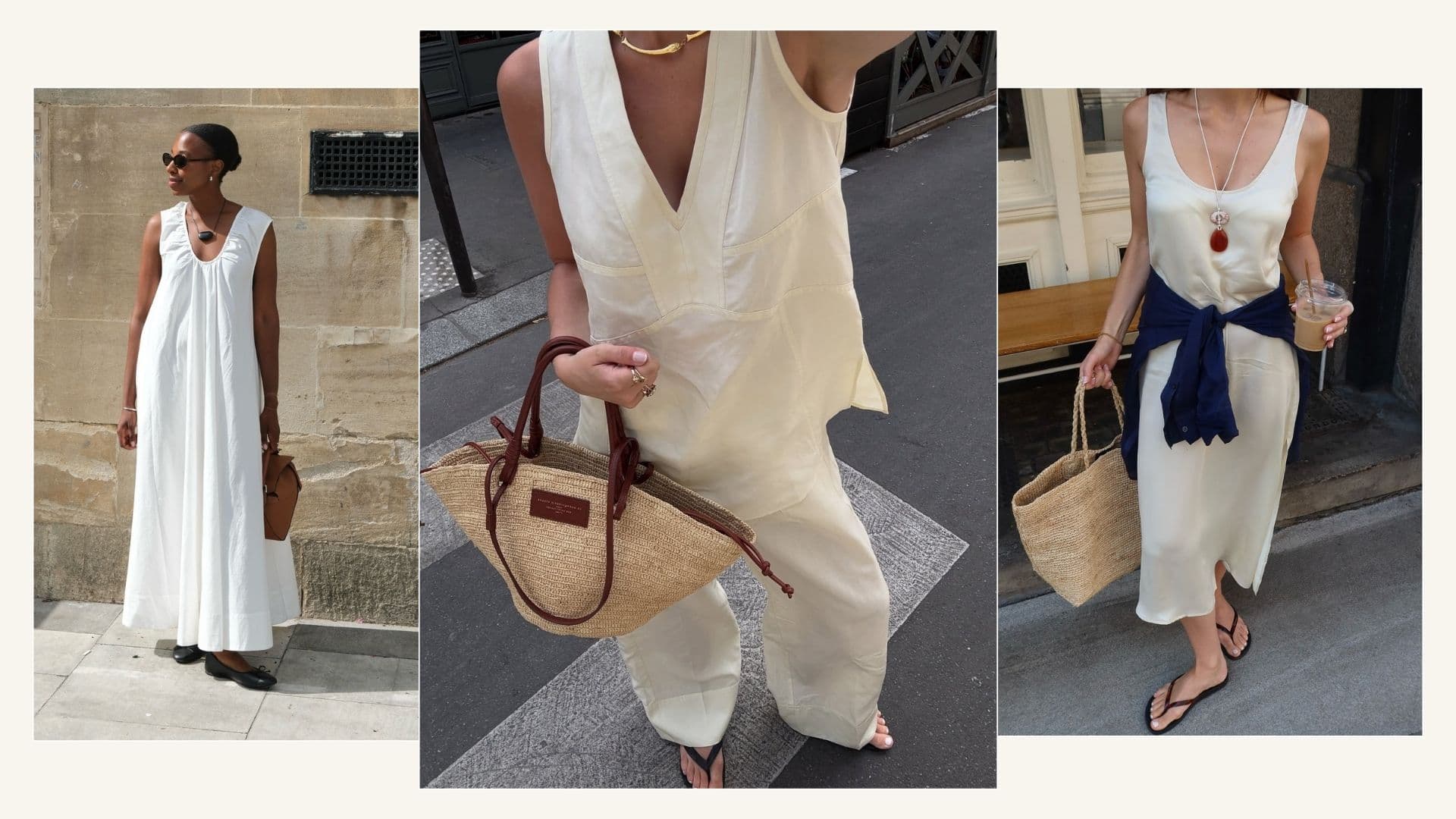
Modernminimalism recommends anchoring everything in a mostly neutral base. The common neutrals it identifies are worth committing to memory: black, navy, gray, brown, camel, taupe, cream, and white. "Neutral pieces are easier to mix and match, which is what makes a capsule wardrobe feel simple and functional." If color is important to your identity, the guidance is not to abandon it but to edit it: "choose one or two accent colors you love and already wear often. This keeps your wardrobe cohesive without stripping out personality."
The Vogue Singapore framework echoes this at a higher level, listing "define color palette" as the second essential principle after the initial audit. What Modernminimalism adds is the practical granularity, the actual list of neutrals, the specific permission to include accent colors without blowing up the system.
The Case for Limits: Numbers That Actually Help
There is a school of thought that says the capsule wardrobe works precisely because it has edges. Rector, whose approach is covered in detail by WhoWhatWear and whose original thinking appears on Un-Fancy, built a five-step method around a specific target: pare down your closet to 30 to 37 items. Then, crucially, wear only those items for three months.
That three-month commitment is what separates a capsule from a well-edited wardrobe. It is a test. Wearing the same curated selection through a full season tells you, empirically, which pieces earn their place and which ones were aspirational purchases all along. WhoWhatWear reports that Rector's personal experience of narrowing her wardrobe meant she "was able to define and understand her style more. Plus, she always feels like she has something great to put on, as every item hanging in her closet is something she'd love to wear right then."
For those who find even 30 to 37 pieces daunting as a starting point, there is a more radical framework: the 3-3-3 rule, which consists of limiting your closet to three timeless tops, bottoms, and shoes. The premise is that despite the small number of pieces, you should still be able to create an array of outfits throughout the year. It is an extreme version of the capsule concept, more useful as a thought experiment than a literal directive, but it illustrates the core principle: constraint is not deprivation, it is clarity.
What to Keep and What to Let Go
Whichever numeric framework you choose, the evaluation criteria remain consistent. Every item that stays should feature, as WhoWhatWear puts it, "timeless, classic design elements that transcend fleeting trends." Items that do not meet that standard should be donated, and any replacements chosen based on alignment with your actual lifestyle and specific needs. Not your Pinterest lifestyle. Your actual one.
Vogue Singapore's principles sharpen this further with two directives that deserve particular attention. The first is to invest in tailoring and core fabrics: fit transforms even a basic piece, and fabric quality determines how long a garment remains wearable and visually credible. The second is to add sculptural statement pieces sparingly. A capsule wardrobe is not a uniform; it has room for pieces with presence, strong silhouettes, interesting construction, the kind of garment that lifts an entire outfit. The word "sparingly" is the discipline that keeps those pieces from overwhelming the system.
The Financial and Psychological Return
Un-Fancy frames the payoff simply: "a capsule wardrobe represents more time, money, and energy for the things in life that matter (i.e., not your clothes)." Shopping only once a season, rather than accumulating pieces on impulse throughout the year, eliminates the low-level expenditure that adds up quietly: the sale top bought because it was 40 percent off, the trend piece that felt urgent in October and embarrassing by January.
The psychological return is less quantifiable but arguably more significant. When every item in your wardrobe is something you'd genuinely reach for, getting dressed becomes uncomplicated. The decision fatigue that comes from a wardrobe full of options you don't actually want disappears.
Making the Pieces Work Together
The final skill a capsule wardrobe demands is knowing how to style what you have. Modernminimalism's outfit tips are grounded in proportion, the detail that separates an outfit that looks considered from one that looks accidental. "Wide-leg trousers often pair best with a slimmer top and shoes, while oversized tops and chunky shoes work better when balanced with more fitted bottoms." Balance is the operating principle: volume on one part of the body offset by a cleaner line elsewhere.
A useful starting point when building outfits from a capsule is to anchor around a single piece. Pick a favorite pair of trousers or a top you reach for constantly, then build outward from there to see how many distinct combinations it generates. That exercise reveals both your strongest pieces and the gaps in your wardrobe, the missing layer, the shoe that would connect three different outfits if you had it.
A wardrobe built this way, through auditing what you love, committing to a neutral foundation with one or two considered accent colors, holding to a piece count that creates real discipline, and choosing only what is timeless and properly fitted, does not need to be replaced every season. That is the point. It gets better as you understand it more deeply, and it asks less of you every single morning.
Know something we missed? Have a correction or additional information?
Submit a Tip