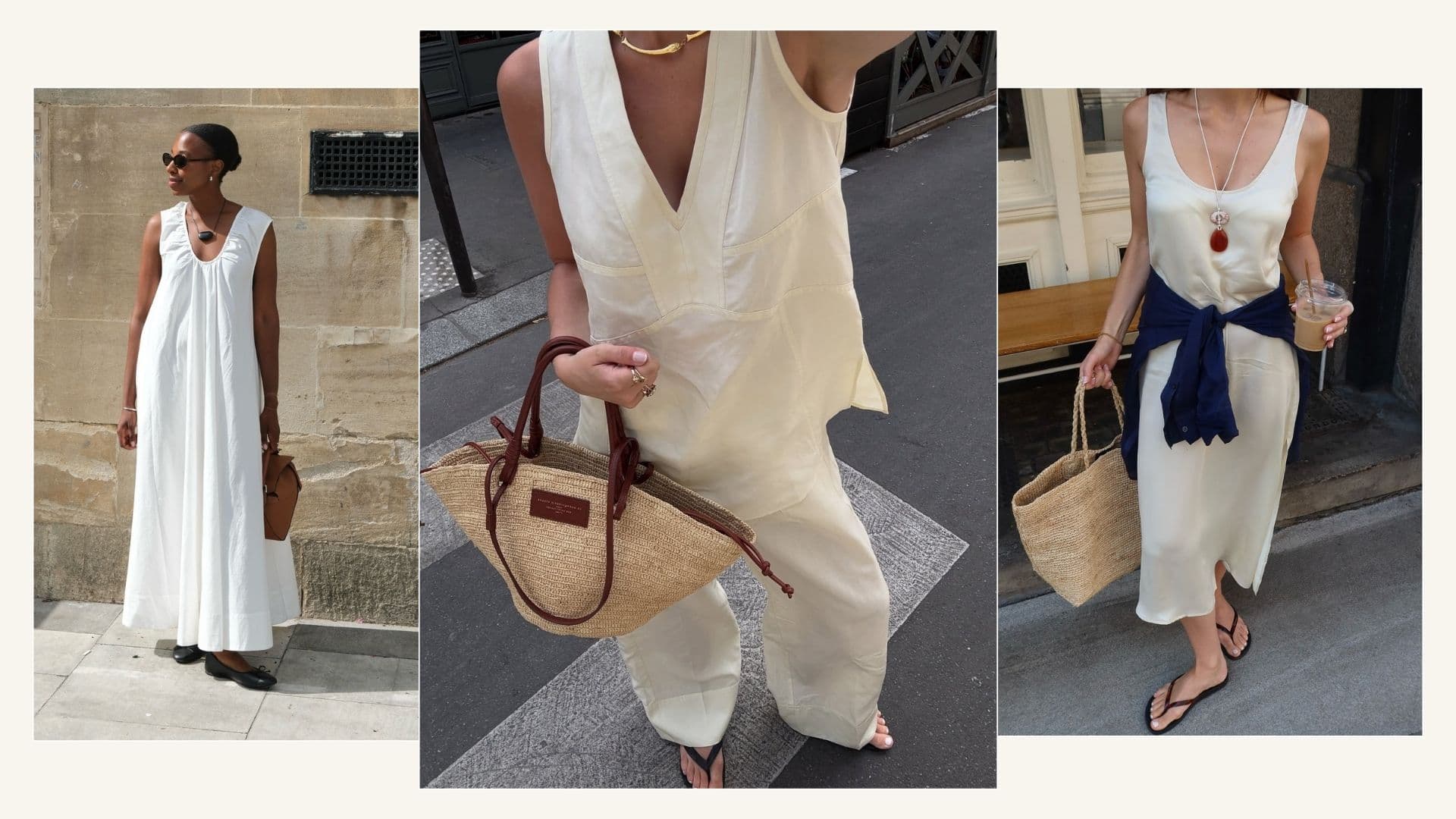
Building a Wardrobe Based on Ruffled Autumn Clouds by Emile Nolde (16-piece work wardrobe)
A 16-piece office wardrobe pulled from the palette of a 1927 Nolde seascape: this is what disciplined color thinking actually looks like in your closet.
The Painting That Started It All
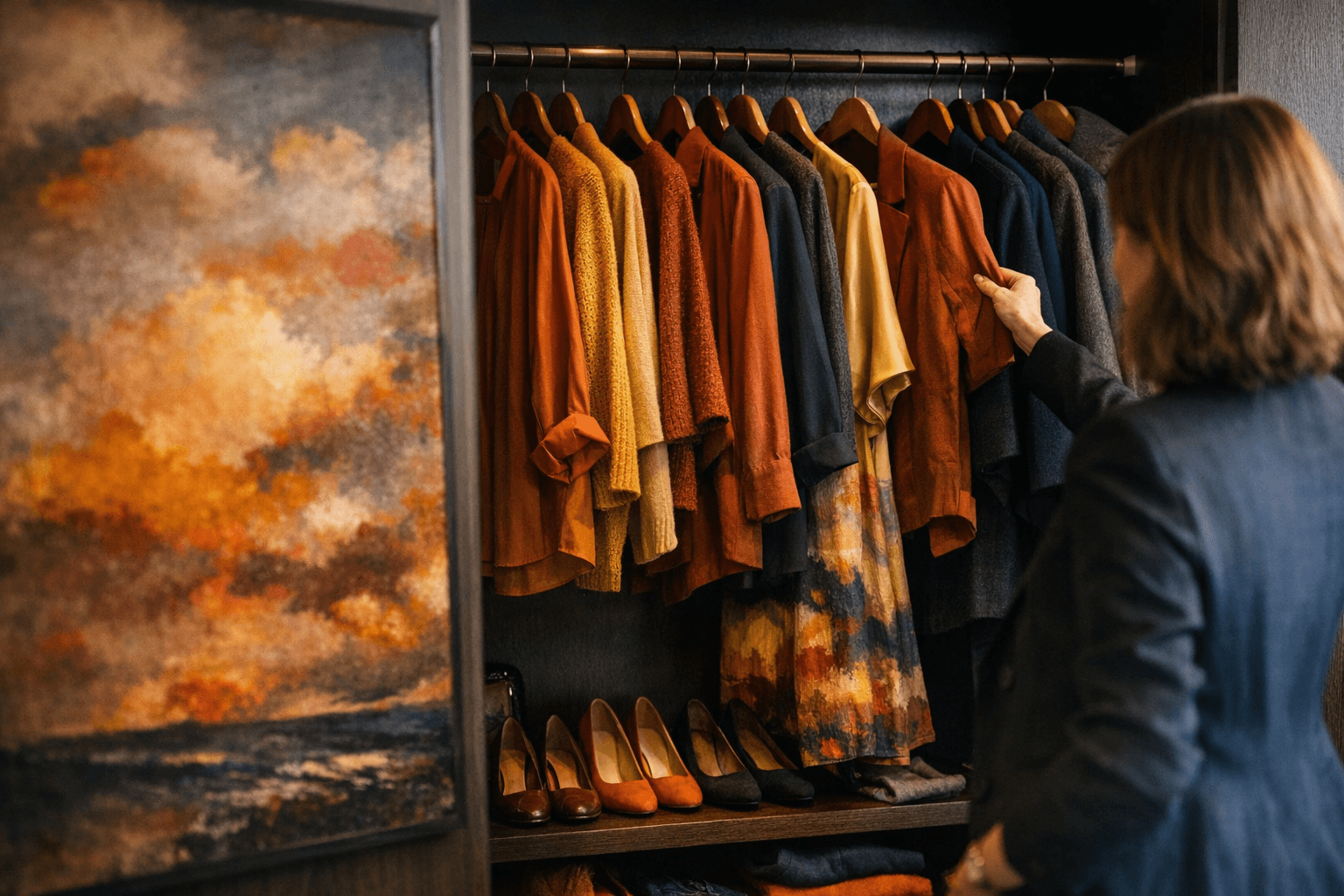
Emil Nolde painted "Ruffled Autumn Clouds" in 1927, and it is exactly as charged as that title suggests. Sun drives through dark clouds. Land bleeds into sea. It is a tumultuous, deeply felt Expressionist seascape from a painter the New York Review of Books once called "a great colorist whose paintings are so bold and sensual." The palette it throws off is not predictable: navy anchors the whole composition, but ivory floats through those cloud edges, pink glows somewhere in the warm light, yellow cuts through, and a moody petrol blue hovers in the distance. It is, accidentally, a near-perfect professional color story.
That is the premise here. Pull the palette directly from the canvas. Build a 16-piece work wardrobe around it. Wear it every day.
The Color Logic
The starting point is navy as the dominant neutral, which is a sound structural decision: navy reads as authoritative without the austerity of black, and it layers cleanly with almost every accent color in the painting. Ivory is the secondary neutral, pulled from those sun-reflecting cloud edges. The two together form the backbone of the wardrobe: a foundation you could get dressed from in the dark without ever looking truly bad.
The accent tier is where this palette earns its personality. Pink is warm and specific, not powder-room pale and not aggressively fuchsia. Yellow is the shot of light the painting delivers, grounded here by an L.L.Bean cardigan in that exact mustard-adjacent tone. Green sits at the edge of the palette, present in the painting but treated here as optional at the accent level. Petrol blue was the intended statement accent color. After an exhaustive search, the right piece simply did not exist in stores this season. The lesson embedded in that: sometimes you wait. A disciplined capsule-builder does not compromise on color just because the timing is inconvenient.
The 16 Pieces
Sixteen garments is barely enough to cover a standard work week, and this capsule makes no apologies for that constraint. The architecture is built on core trousers as the consistent anchor and interchangeable tops as the flexibility mechanism. Navy trousers ground every outfit. From there, the tops rotate across the accent colors, creating the visual variety that makes a 16-piece wardrobe read as more than it is.
The specific pieces assembled for this April wardrobe include:
- A Boden shirtdress in the palette's neutral register, which functions as both a standalone outfit and a layering piece
- A Lands' End navy tee, the workhorse that connects the trouser anchor to any accent layer above it
- A Primary striped tee that introduces pattern without leaving the established color story
- An L.L.Bean yellow cardigan, the single most important accent piece in the current build
- A Vince ribbon scarf that brings texture and can shift a simple outfit entirely
- Jenny Bird wavy square earrings, which earn their place because jewelry in a capsule context does the work of a full additional garment
- A Samsonite tote bag that handles both commute and, notably, the kind of long-trip packing this wardrobe is compact enough to support
The wardrobe template at this stage is notably clean. Every piece has a clear role. Nothing is aspirational filler.
Why the Dress Matters
One of the sharper observations embedded in this wardrobe's construction: wearing a dress to work changed the way higher-ranking people responded to the woman wearing it. That is a practical styling insight dressed up as aesthetics, and it belongs in how you think about the shirtdress entry in this capsule. The Boden shirtdress is not a backup option. It is a strategic piece. A dress reads as considered in a way that separates can struggle to match at speed, especially in a 16-piece wardrobe where you are always working against the calendar.
The Three-Layer Color Rule
One technique that emerged across the months spent building this wardrobe: when you find a color that works, buy it in three forms. A shirt, a sweater, and a tee shirt in the same accent color tripling the number of outfit combinations that color can produce without adding complexity. Pink in this wardrobe exists in multiple weights for exactly this reason. It is not redundant. It is a multiplier.
The math matters in a capsule this tight. Sixteen pieces needs to generate enough daily variation that the wearer does not feel the constraint. The three-layer approach is how you extract combinations that feel genuinely different even when they share the same color anchor.
Building Toward White
White was debated across every stage of this wardrobe's construction, which tells you something about how seriously the palette is being taken. The question was whether those luminous areas in the painting's clouds were white or ivory. The answer matters because white and ivory do not mix cleanly. The decision landed on white for practical office reasons: white is particularly appropriate in a professional environment, it pairs with every accent color in the palette without visual conflict, and it opens up summer outfit territory that ivory cannot quite reach.
White was not in the original capsule. It was a deliberate addition, and that deliberateness is the point. Every piece in a 16-piece wardrobe earns its place through a considered argument, not habit.
What 16 Pieces Actually Gets You
The wardrobe template at this stage is tight enough to pack into a single large suitcase for an extended trip, which is either a practical benefit or a useful stress test depending on how you look at it. The outfit combinations are plentiful enough because the color story is so internally consistent: navy grounds everything, the accents are warm and related, and the silhouettes are professional without being rigid.
The petrol blue accent remains outstanding. It will come. The right shade in the right garment at the right price is a patience exercise, not a failure. In the meantime, a white top or an additional green or pink piece can hold that structural slot without compromising the overall palette logic.
A wardrobe built on a 1927 Expressionist seascape and a disciplined edit of 16 pieces is, in the end, a wardrobe built on a single coherent idea: you know exactly what you own, you know exactly why you own it, and you know exactly how it connects to everything else in your closet. That kind of clarity is worth more than twice the number of pieces that lack it.
Know something we missed? Have a correction or additional information?
Submit a Tip