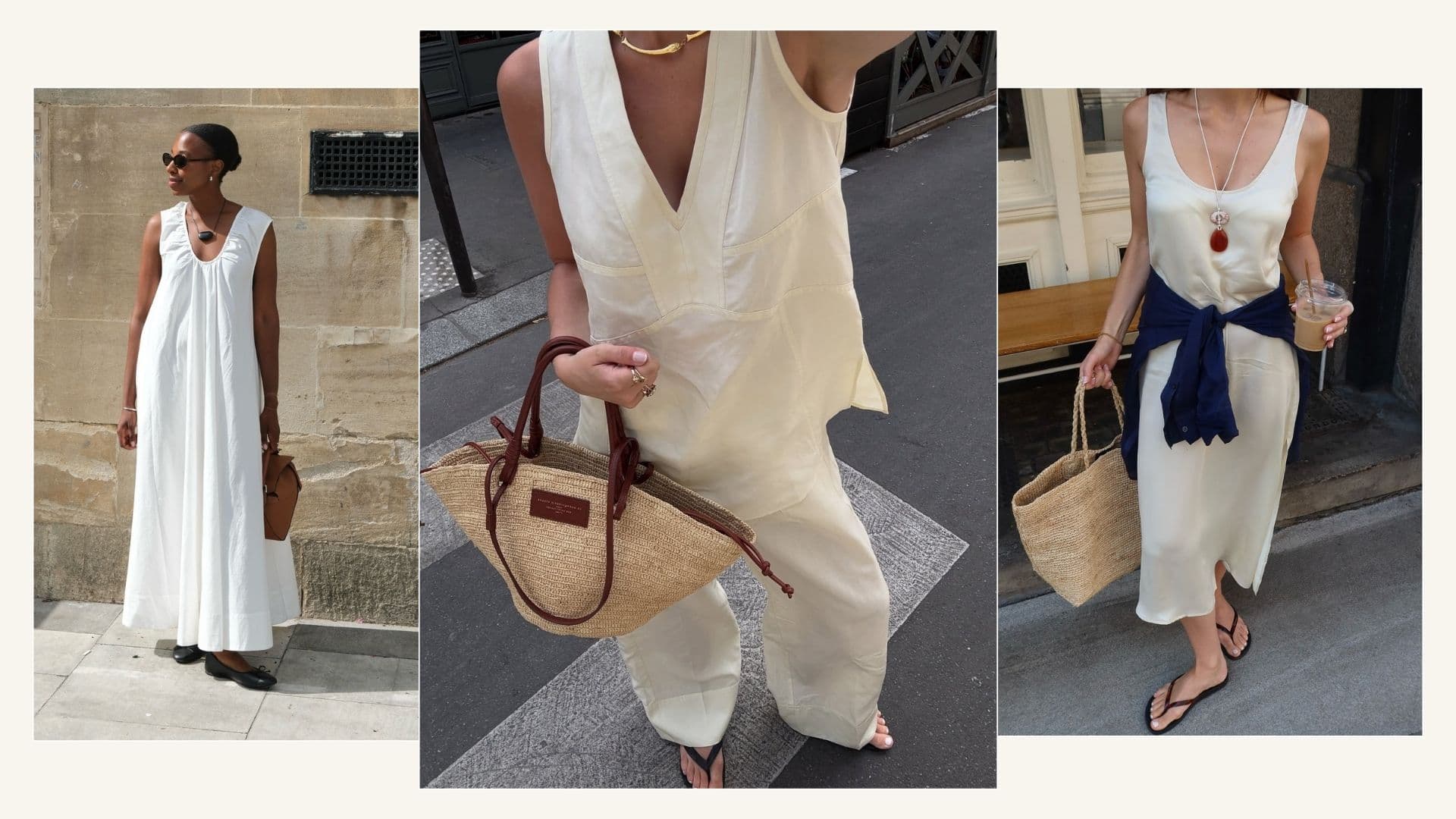
Carolyn Bessette-Kennedy's Neutral 30-Piece System Helps Founders Dress Smarter
Most wardrobes fail founders before 9 a.m. Carolyn Bessette-Kennedy's disciplined 30-40-piece neutral system offers a smarter fix.
Most wardrobes are an obstacle course. Too many choices, too few decisions made in advance, and a closet that eats into the cognitive bandwidth you need for actual work. The irony is that one of the sharpest dressing systems ever documented belonged to a woman who never once described it as a "system" at all.
Carolyn Bessette-Kennedy, the Calvin Klein publicist who became one of America's most photographed women after her 1996 marriage to John F. Kennedy Jr., was known to own about 40 pieces of clothing. That meant each piece was carefully selected and rigorously reworn. The result wasn't a wardrobe that looked sparse. It looked intentional, authoritative, and entirely modern. In 2026, with the FX series *Love Story* reigniting her cultural presence and founders increasingly asking how to dress with less noise, her approach reads less like a style archive and more like an operational framework.
The Founder Wardrobe Problem
Decision fatigue begins the moment you open an overstuffed closet door. This isn't a fashion issue — it's a documented cognitive drain that sabotages morning productivity. Professionals waste 30 or more minutes daily on outfit decisions, which compounds to over 180 hours annually. For founders and executives who are already making high-stakes decisions before noon, that drain matters.
From iconic entrepreneurs to heads of state, many outlier performers have pared down their decision-making around getting dressed for one reason: it lets them direct limited mental energy toward activities that matter most. The CBK system achieves the same outcome, but with considerably more sophistication than a daily grey turtleneck.
The Architecture of 30 Pieces
Bessette-Kennedy favoured clean lines, neutral palettes covering mostly black, white, brown, and denim, impeccable tailoring, and almost no visible jewellery or logos. According to fashion historians, her influence came from a genuine commitment to simplicity and her refusal to follow trends. She worked as a publicist for Calvin Klein, which gave her insider access to minimalist design principles, but it was her personal conviction that made her style legendary.
Jil Sander, Helmut Lang, Donna Karan, and Yohji Yamamoto weren't just brands to her; they were design philosophies she lived. According to personal assistants, Barneys alerted Bessette the moment new Yamamoto pieces arrived. She trusted craftwork over ego. Yet the system also had democratic range: she favored designers like Yohji Yamamoto, Prada, Miu Miu, and Ann Demeulemeester, but she also loved Gap T-shirts and a pair of Levi's.
Her limited colour palette made getting dressed easier and ensured everything in her wardrobe worked together, which is the core principle of capsule wardrobe dressing. When every item shares a tonal family, the math of getting dressed collapses into something almost automatic.
The Core Pieces
The essentials include a perfect white button-down shirt, quality black pants or jeans, a tailored black coat, a slip dress in black or neutral, cashmere sweaters in neutral tones, a structured leather bag, simple black heels and flats, quality sunglasses, and versatile ankle boots.
Her outerwear deserves particular attention. Carolyn Bessette-Kennedy's coats were the epitome of understated luxury, effortlessly blending practicality with elegance. From tailored camel overcoats to classic black wool trenches, her timeless outerwear choices reflected her minimalist aesthetic and impeccable taste. She favoured clean lines, neutral tones, and structured silhouettes, often draping her coats over sleek ensembles for an added touch of refinement.
On the bottom half, jeans were a consistent part of Bessette's rotation. She had a particular penchant for looser pairs and bootcut styles, specifically the Levi's 517 bootcut jeans designed for men. Her shoe rotation was equally decisive: there's a reason Bessette loved a knee-high boot — it instantly elevates any outfit. Though she had a particular affinity for a square toe, the options are endless. When she stepped out of boots, she preferred a sleek slingback pump with a strappy detail.
The Styling Logic
Bessette-Kennedy's minimalism was not only about form but also about materials and proportions: how fabrics interacted with the body and with light. This is the part most capsule wardrobe guides skip. Subtraction alone is not enough. A colourless wardrobe built from poor fabric reads as poverty of imagination, not precision.

She favoured pieces that felt timeless rather than trendy, silhouettes that balanced structure with ease, and styling choices that never tried too hard. Whether she was attending a formal gala, walking through Manhattan with JFK Jr., or simply taking her dog around the block, the formula remained the same: beautiful basics, thoughtful proportions, and a confidence that let simplicity shine.
The occasional textural surprise was always part of the equation. She mixed in leopard, faux fur, snakeskin, or a slick of red lipstick to add depth and interest to her pared-back uniform. Much of her wardrobe was made up of classic, elevated basics, but she also wasn't afraid to test the boundaries, adding in more artistic pieces by Yohji Yamamoto and the occasional bold print, from leopard to plaid. The restraint was total except where it wasn't, and that tension gave every outfit its authority.
Accessories as Punctuation
Practically a masterclass in curating a capsule wardrobe, her looks were marked by clean lines, sophisticated neutrals, and of-the-decade accessories. Think angular tote bags, oval sunglasses, and tortoiseshell headbands.
Bow headbands are to Blair Waldorf what plastic headbands are to Carolyn Bessette-Kennedy. She loved the hair accessory so much that she owned a selection of them, but her most iconic was the tortoiseshell. She didn't accessorize much, but when she did, she opted for a classic pearl necklace and nothing else. She reportedly once asked a Prada store to remove a logo from a ski suit she'd just bought. The logos-off rule held everywhere.
Building Your Own Version
The CBK system translates directly to a founder's week when you approach it as a decision-eliminating infrastructure rather than a style exercise. Understanding cost-per-wear — the actual value you extract from a garment divided by its purchase price — means that a $200 pair of trousers you'll wear 100 times becomes more economical than five $40 pairs you'll each wear twice.
Start with the colour palette first. Begin with basic pieces in neutral colours — black, white, cream, navy, camel — from accessible retailers. Invest your budget in one or two quality staples like a perfect coat or leather bag, then fill in with basics. The key is ensuring everything fits well and works together, not the price tag.
Then audit ruthlessly. You don't need a huge budget or a full wardrobe overhaul; you need a few really solid pieces and the discipline to stop adding things.
Why It Works Now
Fashion editor Erin Fitzpatrick of Who What Wear put it plainly: "What's most remarkable about her style is the fact that none of her outfits look outdated over 25 years later. Not one. That's impressive and shows how laser-focused she was on collecting truly classic pieces."
More than anything, Bessette-Kennedy resonates today because she dressed less for trends and more for self-expression. As Alexan Ashcraft, founder of Trends of the Times, told Yahoo: "Carolyn wasn't performing. Her clothes reflected her personal style and made sense for real life. In a fast-fashion, digital age where people are desperate to fit in and stay relevant, a style that embodies ease, timelessness, and confidence becomes irresistibly attractive."
Modern brands like The Row, Khaite, and other high-end minimalists explicitly credit Bessette's influence. The aesthetic she built in a TriBeCa loft with 40 rigorously edited pieces is now the reference point for the most directional dressing in fashion. That's not nostalgia. That's a proof of concept that holds.
Know something we missed? Have a correction or additional information?
Submit a Tip