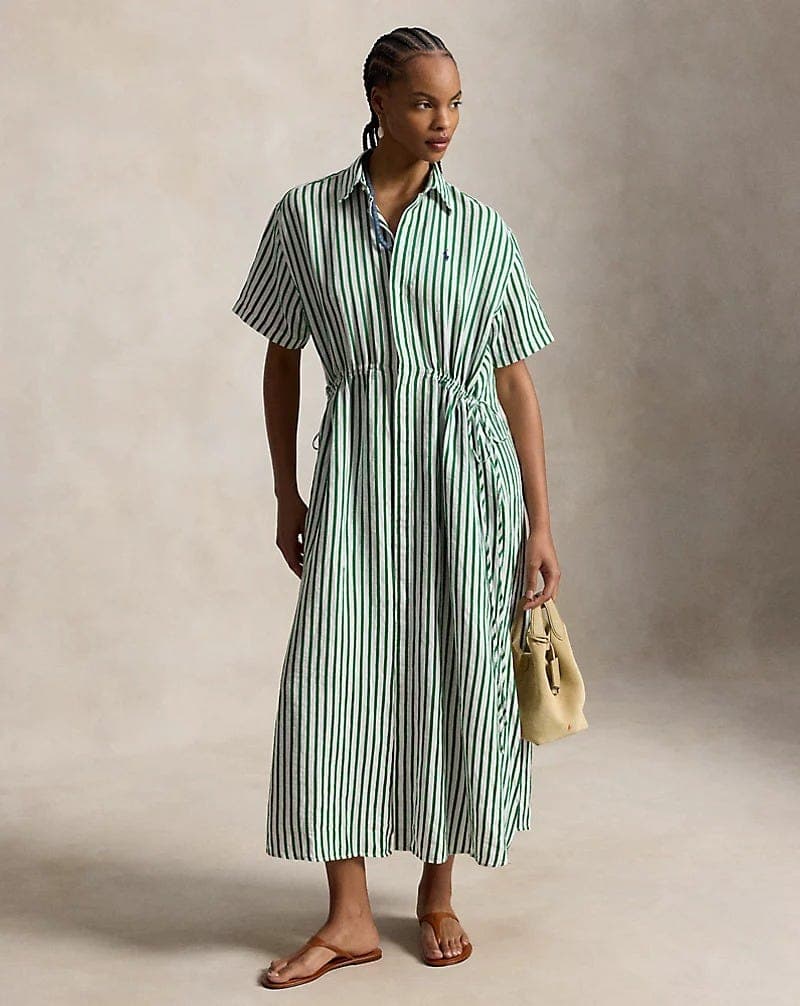
Fashion Editor’s Summer Capsule, Staples, Capris, and Staying-Power Buys
A summer capsule works when every piece earns three outfits, and this edit separates true staples from capri-shaped temptation before it takes over the closet.

The capsule filter that makes summer dressing easy
Summer wardrobe planning works best when it stops being abstract and becomes arithmetic. Kristen Nichols’ highly curated shopping list is built around staying power, not novelty: pieces that can move from heatwave errands to office hours to a late dinner without demanding a costume change. That feels especially smart now, when McKinsey’s State of Fashion 2026 survey found 46 percent of executives expect conditions to worsen and tariffs were named the number-one hurdle. In a tougher market, the best buy is the one you wear again and again.
The most useful way to read any summer capsule is with a simple test: can this be styled at least three ways with what you already own? If the answer is yes, it earns hanger space. If it needs a whole new ecosystem of shoes, bags, and layers to make sense, it is probably a trend piece pretending to be a staple.
The pieces that do the heavy lifting
Who What Wear’s summer 2026 basics are tellingly practical: boatneck tank tops, colorful tops, black slip dresses, white cotton dresses, capris, cropped flares, and knee-length skirts. That lineup tells you everything about the season’s priorities. The silhouette language is clean and wearable, but not boring, with enough variation to keep the wardrobe from collapsing into denim and tees.
Boatneck tanks are the quiet hero here. The neckline opens the collarbone, looks polished under a blazer, and still feels easy in heat. A black slip dress has the opposite energy, skimming the body with that liquid, barely-there drape that works with sandals by day and sharper shoes at night. White cotton dresses bring crispness and relief, the kind of fabric that reads fresh the moment you put it on, while colorful tops provide the one hit of personality that keeps a capsule from feeling sterile.
This is where the service angle matters. The strongest summer basics are not the most interesting pieces in the store; they are the ones that solve the most outfit problems. A great tee, a good slip dress, and a white cotton dress can each be styled at least three ways before a vacation suitcase is even zipped.
Where capris fit now
Capri pants are the headline trend, but they only deserve space if they are cut with discipline. Who What Wear has positioned capris as one of the biggest summer 2026 returns and as a lighter alternative to jeans, which is exactly why they are resonating. They show ankle, create breathing room around the leg, and can feel more polished than shorts without the commitment of full-length trousers.
The best thing about capris is their range. They can be worn for errands with a tank and flat sandals, sharpened for the office with a crisp shirt and loafers, or pushed toward dinner with a slingback or kitten heel. That versatility is what separates a real capsule piece from a fleeting trend buy. If the hem only works with one type of shoe, it is decoration. If it can pivot from practical to polished, it is worth the rail space.
Cropped flares and knee-length skirts sit in the same conversation. They are more directional than a straight summer dress, but still usable if the fabric has enough body and the proportions feel intentional. Bermuda shorts, another runway-driven update that is circulating through Who What Wear’s trend coverage, fall into the same category: a little sharper, a little more styled, and best treated as one seasonal swing rather than the backbone of the wardrobe.
Why staying power suddenly feels more important
The reason this edited approach feels so right is that the clothing problem is also a waste problem. The United Nations Environment Programme says 92 million tonnes of textile waste are generated worldwide every year, and every second the equivalent of a garbage truck full of clothing is incinerated or dumped in a landfill. The U.S. Environmental Protection Agency says discarded clothing is the main source of textiles in municipal solid waste, and it estimated the recycling rate for textiles in clothing and footwear at just 13 percent in 2018.
Those numbers give capsule dressing a harder edge. This is not about minimalism as an aesthetic. It is about reducing the churn of clothes that get worn twice and forgotten. A wardrobe built on repeat wear is, by design, a quieter answer to a very noisy industry.
There is also a lineage here that still matters. Coco Chanel’s clothes stressed simplicity and comfort, and helped free women from the restriction of petticoats and corsets. That legacy still reads modern because the instinct behind it is modern: clothes should work with a life, not just photograph well in one moment.
How to edit the shopping list without losing the fun
A strong summer capsule has a clear hierarchy.
- Keep the daily drivers at the center: boatneck tanks, white cotton dresses, black slip dresses, and the best tees you can find.
- Use capris, cropped flares, or a knee-length skirt as the shape that refreshes everything else.
- Add one or two color-forward tops so the wardrobe does not flatten into neutrals.
- Reserve Bermuda shorts and other runway-touched pieces for when you want a sharper seasonal note.
- Make room for swimwear and vacation-friendly items, but only if they can live beyond the beach, under a shirt, with a skirt, or paired with something already in rotation.
That is the real logic of the season. Summer 2026 dressing is not asking for more clothes, only for better judgment. The smartest wardrobes will feel airy, current, and distinctly edited, with every purchase carrying its weight long after the trend cycle has moved on.
This article was produced by Prism’s automated news system from verified source data, official records, and press releases, then run through automated quality and moderation checks before publishing. The system is built and supervised by the people who set the standards it runs under. Read our full AI policy.
Did this article answer your question?