Fashion's 20-Year Cycle Explains Why Older Generations Always Seem More Stylish
Science confirms what your wardrobe already knows: you're wearing your parents' era, and that's exactly why it looks so good.
There is a particular kind of smugness that comes with being young and fashionable. You've found the perfect wide-leg trouser, the right chunky clog, the vintage-inspired silhouette that feels entirely of-the-moment. And then your mother looks up from the sofa and says, without missing a beat: "I had that exact outfit." She is, of course, correct. Fashion moves in circles, and the science behind that circularity is more precise than most people realize.
According to research from Northwestern University, fashion operates on a measurable 20-year repeat cycle, a rhythm that means whatever your generation considers cutting-edge is, in all statistical likelihood, a revival of what the generation before yours was wearing at roughly the same age. The young may think they're the most fashionable, but chances are they're wearing trends from 20 years ago. It's a cycle fuelled by nostalgia, pop culture, and recurring consumer habits, and it explains, with remarkable neatness, why every generation secretly suspects the one before them had more style. They did. And so did the one before that. The cycle just keeps turning.
Why the 20-Year Rule Works
The mechanics of cyclical fashion aren't random. Twenty years is roughly the span between a trend's cultural peak and the moment it becomes nostalgic rather than dated. At ten years out, a style still feels too recent, too close to being embarrassing. At twenty, it has passed through the valley of uncool and emerged on the other side as vintage, referential, and newly desirable. The generation now shopping it wasn't old enough to wear it the first time, which means they have no emotional baggage attached to it; they only see the aesthetic, not the context. This distance is what transforms a trend from archive into inspiration.
Pop culture accelerates the process. When a beloved television show, a musician's red-carpet moment, or a viral image recontextualizes a past era as aspirational, the commercial machinery responds almost immediately. Retailers, resale platforms, and designers all begin pulling from the same reference point, and a trend that had been dormant for two decades suddenly feels urgent.
This Summer Is All About 2006
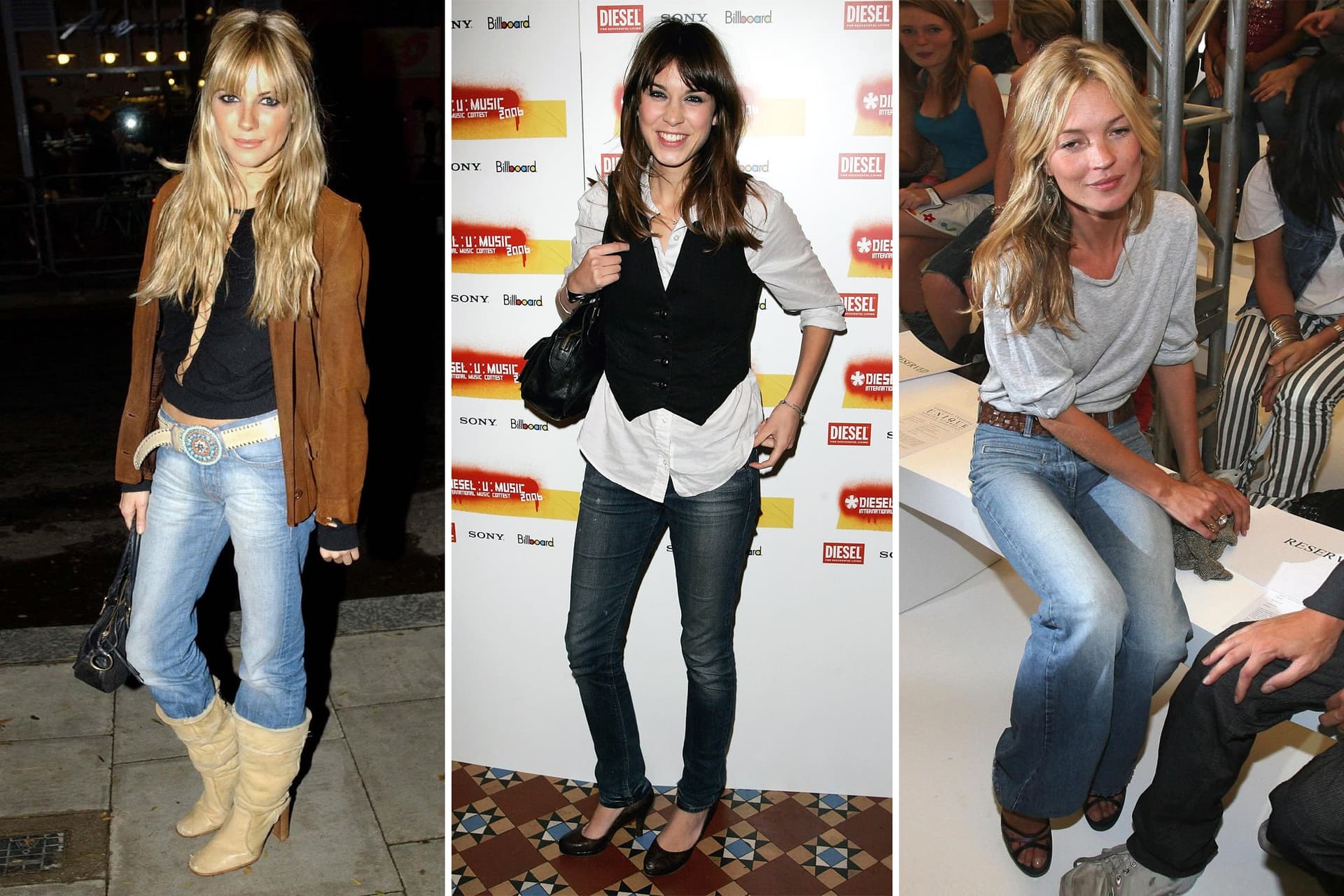
The current moment makes the Northwestern model legible in real time. This summer is all about 2006, and the wardrobes bearing that out are everywhere. Two decades ago, low-rise denim sat at its cultural zenith, bodycon silhouettes were the architecture of a night out, and ballet flats were the footwear of choice for the kind of woman who moved through the world with deliberate, minimal elegance.
All of that is back. And if you want a single data point that illustrates the cycle more vividly than any academic paper, consider this: ballet flats have recorded a 221 per cent year-on-year rise on Depop. That number belongs to the resale market, where real purchasing decisions, not editorial forecasts, determine what's actually moving. The clog and the chunky-soled platform had their moment, but after that brief shift towards clompy, chunky shoes, ballet flats are firmly back in the footwear zeitgeist.
Ballet Flats: The Capsule Piece the Cycle Keeps Returning To
All the cool girls were wearing them in the early Noughties, and the appeal then was the same as it is now: a flat, streamlined shoe that works with almost everything and carries the quiet confidence of someone who doesn't need height to make an entrance. What's changed this time around is the reach. The ballet flat has taken a surprisingly gender-neutral turn of late. Harry Styles wore a pair in mint-green to the Grammys; Dior's ballet flats appeared on the same red carpet, confirming that the silhouette now belongs to everyone.

For building it into a capsule wardrobe, the approach is clear: invest in quality and classicism rather than chasing the trend's most extreme iterations. The French sensibility is the right frame here. Sezane and Repetto both offer ballet flats built for longevity, with the kind of construction that will carry you through spring and summer and still feel relevant when the cycle eventually circles back to platforms. A well-made pair from either brand is not a trend purchase; it's a foundation piece that happens to be having a cultural moment.
Bodycon Dresses: The Return of the Clingy Silhouette
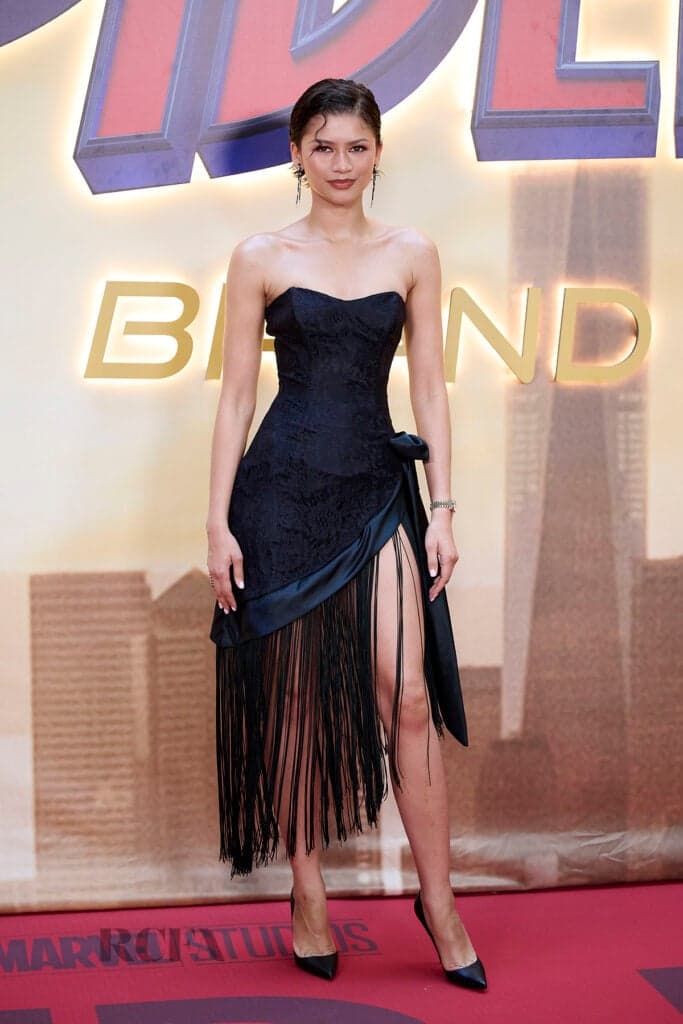
If ballet flats speak to the understated register of early-2000s dressing, bodycon dresses represent its opposite pole, and that end of the spectrum is returning with equal force. The cling's the thing, and SJP's status as an early archetype of this silhouette is being revisited now that the bodycon dress has shed its associations with a specific era and reclaimed its place as a statement of deliberate, body-forward dressing.
The capsule wardrobe case for bodycon is less about fabric weight and more about proportion: a single, well-cut bodycon dress in a neutral or tonal shade functions as a complete outfit without requiring layering or accessory work. Its inclusion in any 2006-influenced summer wardrobe is, at this point, almost structurally inevitable.
Building a Capsule Wardrobe Around the Cycle
Understanding the 20-year rule doesn't just explain fashion history; it gives you a genuinely useful framework for building a wardrobe. If you know a cycle is operating, you can shop with more intelligence: invest in pieces at the beginning of a revival rather than at its commercial peak, prioritize construction and material quality so the item survives until the next wave, and treat nostalgia not as a passive feeling but as a predictive signal.
The overnight transformation of a forgotten pile of hand-me-downs from your mother, or grandmother, into the season's most coveted capsule wardrobe is not an accident. It is the cycle making itself visible. Those pieces endured not because they were preserved out of sentiment, but because they were made well enough to last and designed with enough structural integrity to read across multiple eras.
The practical application: when you're building a capsule this season, look at what was being photographed in 2006 and ask which of those pieces were built to last. Ballet flats from Sezane or Repetto. A bodycon dress in a fabric that holds its shape. Low-rise denim cut with enough precision that it works as a trouser rather than a statement. These are not throwback purchases; they are the current wardrobe, confirmed by science, validated by Depop's sales data, and wearing remarkably well.
The generation after yours will rediscover all of it in 2046. In the meantime, your mother is already smiling.
This article was produced by Prism’s automated news system from verified source data, official records, and press releases, then run through automated quality and moderation checks before publishing. The system is built and supervised by the people who set the standards it runs under. Read our full AI policy.
Did this article answer your question?