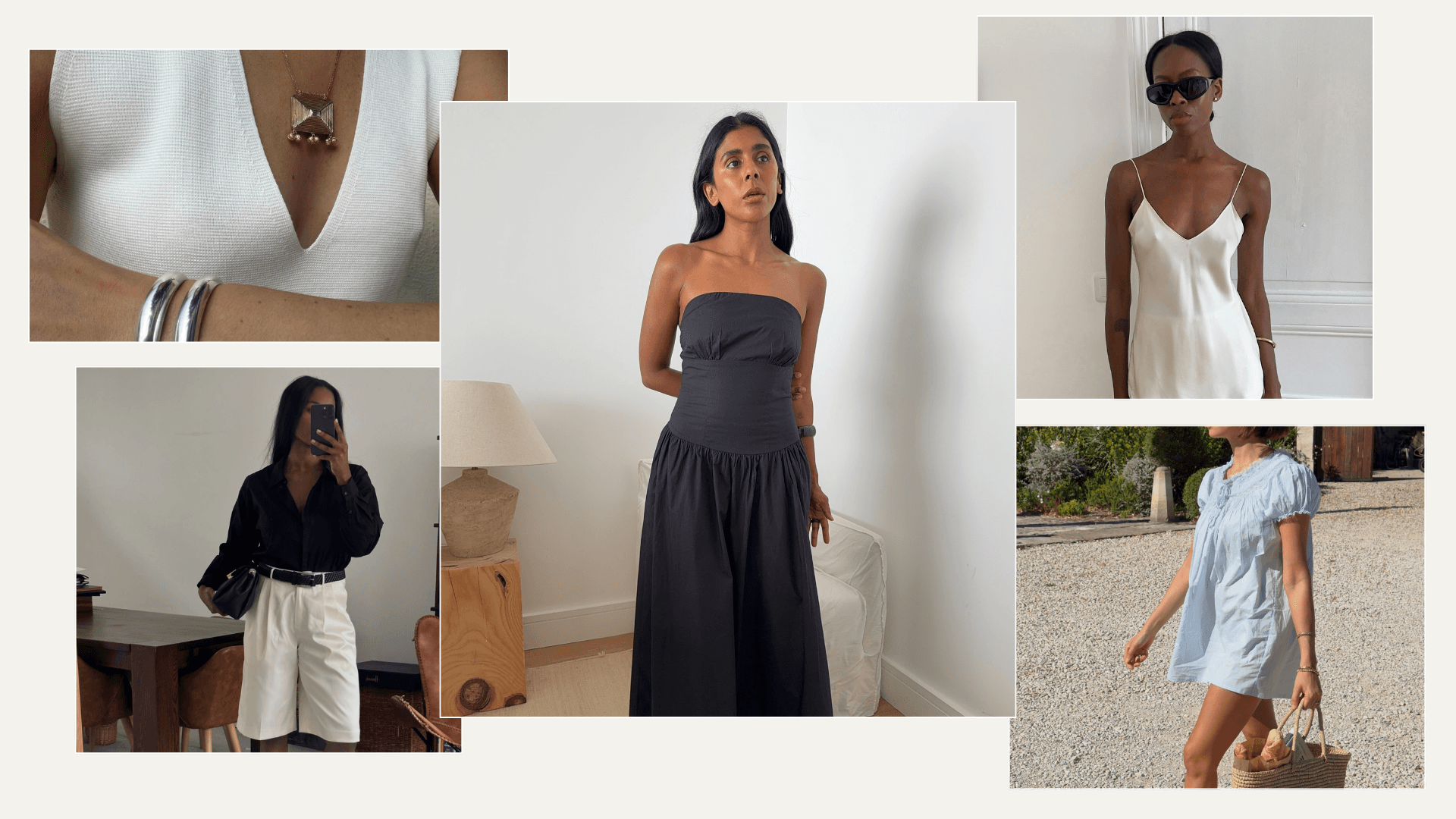
How to build a year-round capsule wardrobe for any climate
Build a closet around a tee, shirt, trousers, sweater, jacket and shoes, then swap only a few weather pieces to keep it working all year.
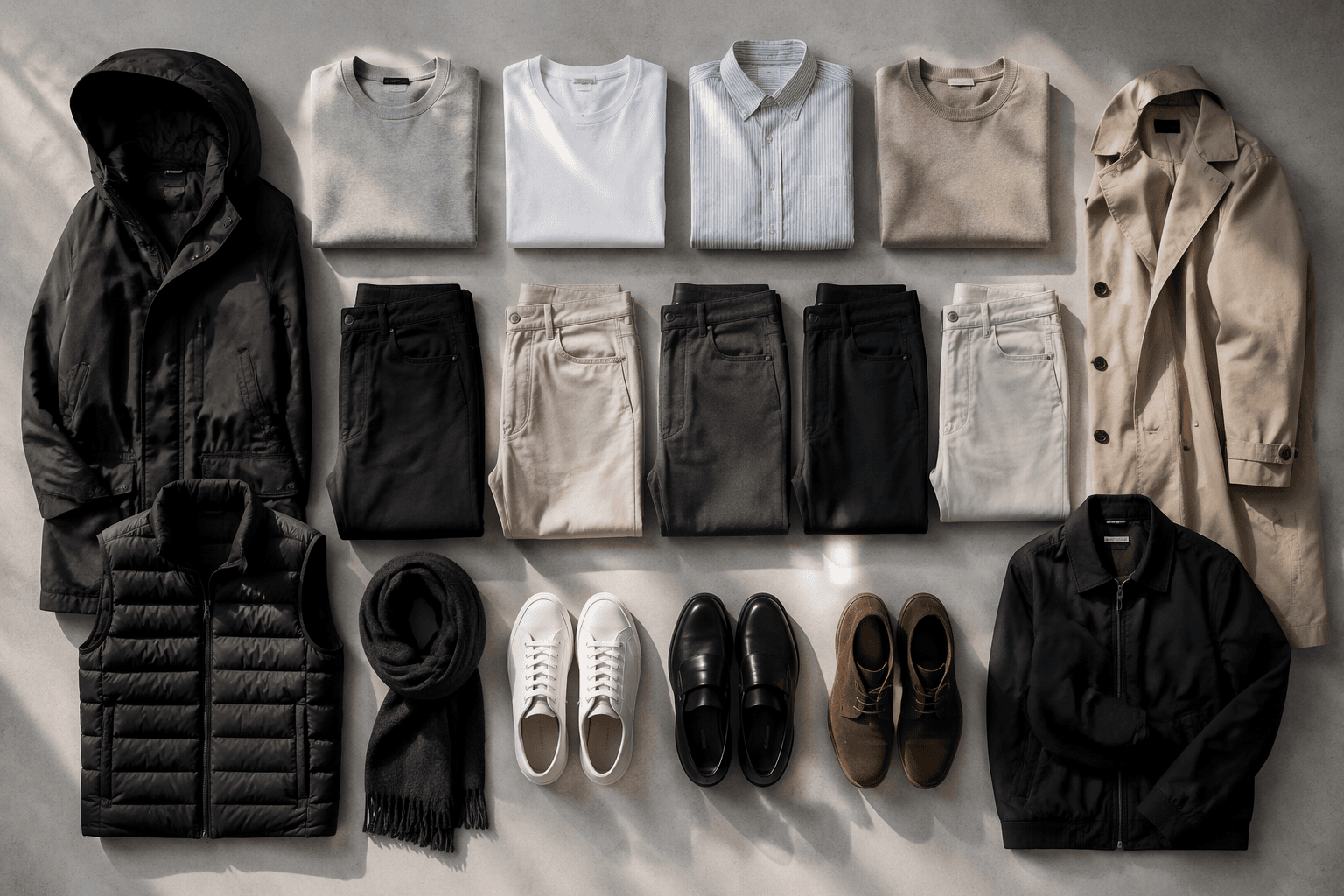
The smartest capsule wardrobe is not built for one perfect season. It starts with a hard-working core, a dependable tee or knit top, a button-front shirt, jeans or tailored trousers, a layering sweater, a jacket and shoes that can move from casual to polished without looking forced. From there, the weather only asks for small, strategic swaps, so your closet can handle spring rain, summer heat, fall layering and winter warmth without becoming four separate wardrobes.
The core that stays in place
A year-round capsule works best when the base feels calm and repeatable, not skinny and restrictive. Shira Gill has written that she loves the idea of a capsule wardrobe full of "simple, chic basics that mix and match easily," and that is exactly the right lens for the permanent pieces. These are the items that should sit in your closet for months, because they do the heavy lifting: a great tee or fine knit, a shirt with enough structure to tuck or layer, trousers or denim, a sweater that slides under a jacket, and shoes that can bridge day-to-night without demanding a costume change.
The trick is to make each of those pieces earn its keep across settings. Jeans should be polished enough for a dinner reservation when paired with a crisp shirt, while tailored trousers should still feel relaxed with a tee and sweater. A jacket matters here because it gives the capsule its backbone, the one layer that can make the whole outfit feel finished when the temperature drops or the air-conditioning turns aggressive.
What changes when the weather does
The point of a year-round capsule is not to pretend every month feels the same. It is to keep the core stable and rotate only a few pieces when the climate shifts, which keeps overbuying in check. Gill’s own approach is a useful model: in a June 23, 2026 Substack post, she said she had been slowly building a summer capsule over many years, adding one or two pieces a season at most, only when something genuinely needs replacing or a real gap appears.
Keep the swaps narrow and deliberate:
- Lightweight linen pieces for hot months, especially when you need breathability without abandoning structure.
- Heavier knits when winter takes over, because warmth should come from fabric, not bulk.
- Outerwear for colder stretches, from crisp mornings to wet commutes.
- Midweight pieces that bridge spring and fall, so you are not forced into a full closet reset twice a year.
- Seasonal texture, if you need it, added in small doses rather than as a wholesale refresh.
That is how you preserve the capsule idea without making it brittle. In practice, it means you are not rebuilding an identity every season, only adjusting for temperature and function.
Why the capsule keeps coming back
The idea is older than the current vocabulary around minimal dressing. The term capsule wardrobe was coined in the 1970s by Susie Faux, who owned the London boutique Wardrobe. In a May 7, 2018 Washington Post piece, Faux’s version of the concept was described as a closet of essential, timeless items, such as skirts and pants, that could be supplemented with seasonal pieces.
That same article noted the concept peaked in 1985 when Donna Karan introduced "Seven Easy Pieces," an interchangeable workwear collection. That history matters because it shows the year-round capsule is not a shortcut invented for social media; it is a long-running way of thinking about dressing with fewer, better-moving parts. The language has changed, but the logic remains: build around items that can be recombined, then let the season supply the variation.
The sustainability angle is practical, not preachy
The strongest case for a year-round capsule is not austerity. It is restraint with room to live. A July 14, 2025 Journal of Sustainability Research paper examined consumer motivations for adopting a capsule wardrobe, which places the idea squarely inside conversations about consumption, not just style. That makes sense, because a capsule asks you to buy less often, replace with intention, and stop duplicating the same category in different shades of almost-right.
Several sustainability-focused names have pushed the same principle from different angles. The Alliance for Sustainability published a capsule-wardrobe sustainability tip on 2024-08-21. Braun describes the capsule wardrobe as a principle that counters constantly changing fashion collections and encourages focus on essentials, while Earth911 has framed it through an "Earth Action: Build a Capsule Wardrobe" guide. Taken together, those references point to a simple reality: a good capsule is less about renunciation than about reducing the noise that leads to overbuying.
How to make the formula work in real life
Start by naming the climate you actually live in, not the one you imagine. If you move between air-conditioned interiors and humid streets, or you commute through genuine winter and then sit under office heat, your capsule should reflect that split. Gill has said, "what works for me may not work for you," and she has also written that her wardrobe works for her body, climate and lifestyle. That is the cleanest rule in the entire category.
The best year-round capsule has three layers of decision-making: the stable core, the seasonal swap, and the personal adjustment. Susie Faux’s original idea, Donna Karan’s interchangeable workwear, and Gill’s slow, gap-driven approach all point to the same answer. If you keep the core steady and let only a few pieces change with the weather, your wardrobe becomes easier to wear, easier to maintain and far less likely to drift into clutter.
This article was produced by Prism’s automated news system from verified source data, official records, and press releases, then run through automated quality and moderation checks before publishing. The system is built and supervised by the people who set the standards it runs under. Read our full AI policy.
Did this article answer your question?