How to wear black in summer with breathable, airy layers
Black works in a heatwave when the fabric does the heavy lifting. Think linen, cotton, and loose silhouettes that breathe instead of trap.

Why black can stay in rotation
Black does not have to disappear when the temperature rises. The smarter move is to keep the color and lighten everything else: the fabric, the cut, the amount of cloth touching your skin. Dark clothing absorbs more heat than light clothing, so a head-to-toe black look will feel hotter if it is made from dense, tight layers that cling instead of ventilate.
That is only half the story, though. Darker clothing can offer better UV protection than lighter colors, which is why black still earns a place in summer when sun exposure is part of the equation. The real point is that color is only one factor in comfort and protection. Weave, dye, fabric weight, fit, and whether a garment is wet all matter too. In other words, black can work beautifully in summer, but only when it is engineered to breathe.
What makes black feel cooler
Healthline’s heat guidance is blunt about the basics: loose, lightweight clothing helps sweat evaporate, while tight clothes get in the way of that natural cooling system. That detail matters more than most people think. If your black top is cut close to the body, it can hold heat against you even if the fabric itself looks summer-friendly.
Cotton is one of the safest bets for hot weather because it feels light and familiar against the skin, and linen is the other obvious warm-weather hero. Both fabrics have the relaxed, slightly crumpled ease that makes black feel less severe and more effortless. The goal is not to abandon black, but to let it appear in fabrics with air between the body and the cloth.
Healthline’s summer styling advice also points toward loose, lightweight, light-colored clothing as the easiest way to beat the heat. Black will never reflect the sun the way white or pale shades do, so the way to compensate is through construction. Think airflow first, silhouette second, darkness last.
The capsule pieces that do the work
A summer-black capsule should behave like a system, not a mood board. Every piece should solve for heat, movement, and repeat wear.
- Black linen trousers: Choose a straight or wide leg with a relaxed drape. Linen already has the right summer attitude, and in black it reads polished rather than beachy. The extra space around the leg matters as much as the fabric itself.
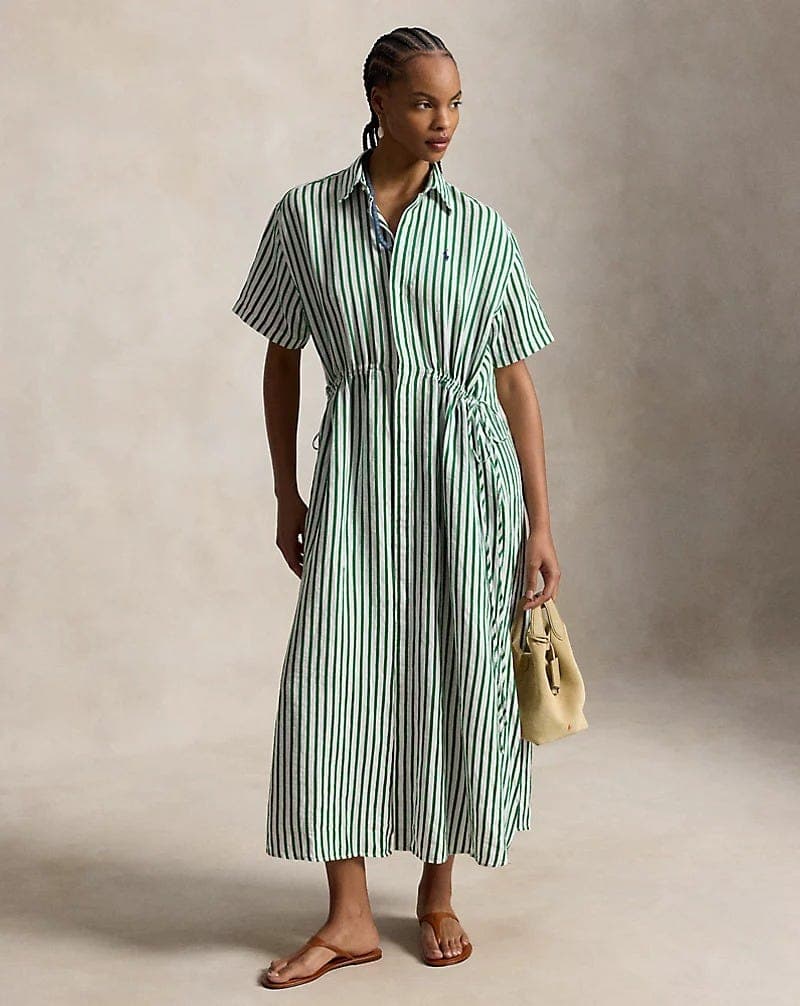
- Airy tank dresses: The best versions skim the body instead of hugging it. A tank dress in a breathable cotton or linen blend gives you one-and-done ease, but the cut has to stay loose enough to let air move.
- Open-weave shirts: A shirt with a looser weave or a semi-sheer texture is the easiest layering piece for black in peak heat. Worn open over a tank, it gives you coverage without the trapped, swaddled feeling of a heavier button-down.
- Lightweight cotton tanks: These become the base layer for everything else. A black tank should feel more like a summer staple than an undergarment: clean, airy, and cut with enough room to avoid clinging.
- Fluid shorts or skirts: If you want black below the waist, keep the shape easy. A soft, swingy skirt or a relaxed short in a lighter fabric keeps the color from feeling overbuilt.
The strongest capsule formula is simple: one breathable base, one airy layer, one relaxed bottom. That is how black keeps its edge without turning into a heat trap.
What to skip when the sun is punishing
The fastest way to make black feel unbearable is to stack it in heavy, tight, sweaty fabrics. Dense synthetics, body-con knits, and thick double layers all work against evaporation and ventilation. If a piece sits flush against the skin and does not move, it is going to feel hotter than its color alone suggests.
Wet clothing is another hidden problem. Health guidance on sun protection notes that wet clothes offer less UV protection than dry clothing, so a black outfit that gets damp with sweat or sea spray is not doing you any favors. That is another reason to favor fabrics that dry quickly and silhouettes that do not cling once you start moving.
The Centers for Disease Control and Prevention recommends tightly woven fabrics for better protection from UV rays, which is useful to remember if you spend real time outdoors. That may sound like a contradiction, but it is not. A tightly woven fabric can block more sun while still being wearable if the garment is loose, lightweight, and cut to allow airflow. The trick is to balance structure with ventilation, not to choose one at the expense of the other.
How to style black so it feels summer-first
The most effective black summer looks are the ones that look almost weightless. Pair black linen trousers with a ribbed cotton tank and an open shirt left unbuttoned. Wear a sleeveless black dress with minimal fabric at the waist and a hem that moves when you walk. Choose garments with a little visual space, whether that comes from a wide leg, a sleeveless cut, an open neckline, or a weave that lets light through.
This is where the science lines up neatly with style. PubMed Central research on heat stress shows that solar radiation compounds the strain on the body and reduces physical work capacity outdoors, especially depending on air temperature, humidity, and clothing coverage. That is not just a lab detail; it explains why a black outfit can feel fine in a cool room and suddenly oppressive on a humid sidewalk. Coverage, fabric, and airflow change everything.
Black in summer works best when you stop treating it like a winter color and start treating it like an architectural one. Let the silhouette be easy, the fabric be breathable, and the layer count stay low. Then black stops fighting the season and starts looking exactly where it belongs: crisp, considered, and fully in rotation.
This article was produced by Prism’s automated news system from verified source data, official records, and press releases, then run through automated quality and moderation checks before publishing. The system is built and supervised by the people who set the standards it runs under. Read our full AI policy.
Did this article answer your question?