Jazz shoes become the new capsule wardrobe flat
Jazz shoes are the capsule flat that feels sharper than a ballet flat and easier than a loafer. Their low profile is exactly why they work with trousers.
Why jazz shoes suddenly make sense
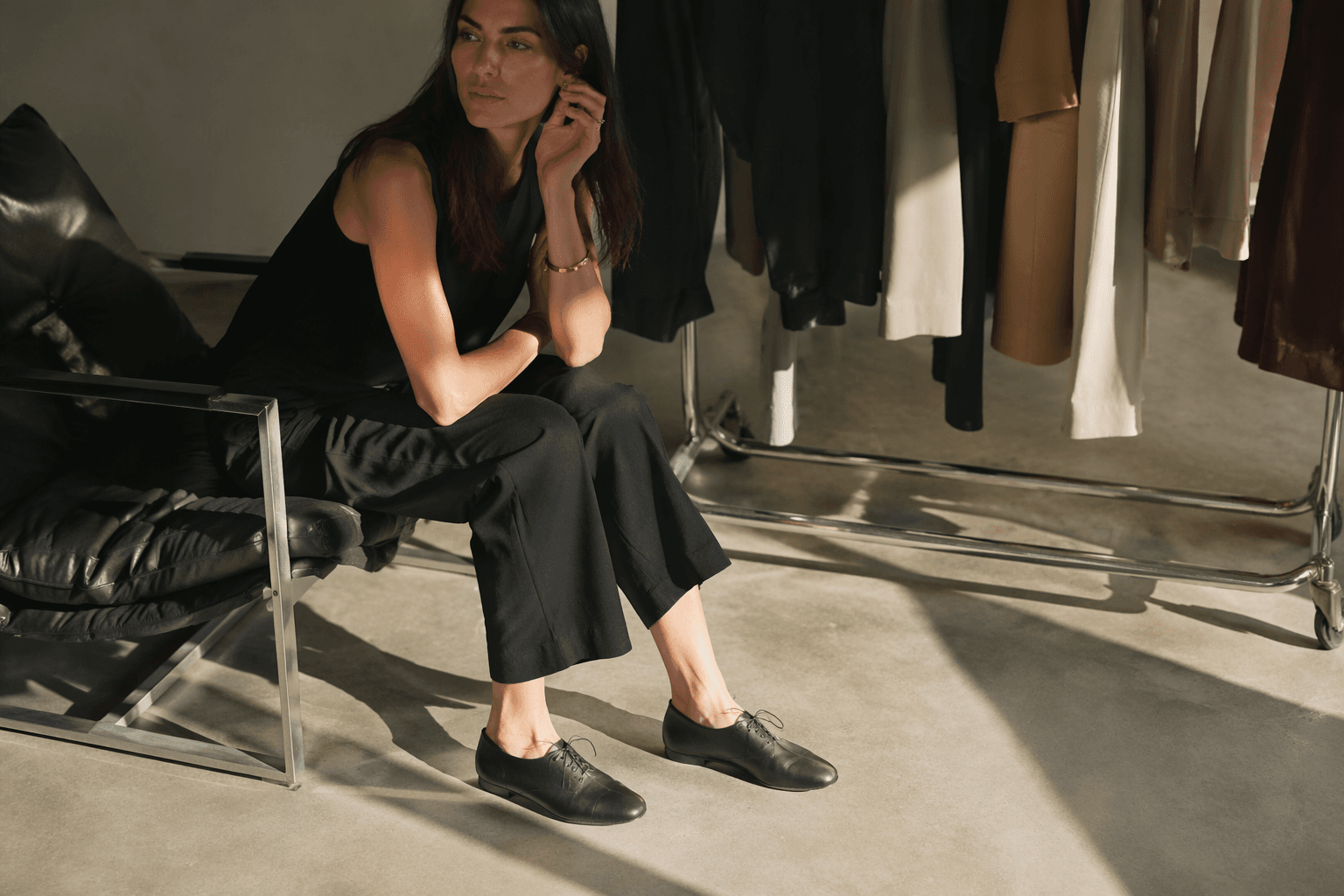
If your flat-shoe drawer has started to feel too familiar, jazz shoes are the cleanest reset. Megan Uy has been positioning them as the sharper, more modern answer to ballet flats, and the appeal is immediate: a low-profile shape, soft leather upper, and lace-up detail that makes the shoe feel tailored without getting fussy. They read like a cousin of the ballet pump, but with a little more structure and a little more edge.
That is also why the story is bigger than one shoe. Harper’s Bazaar has described jazz shoes as “the other” dance shoe and says they are aiming for staple status, while ELLE has noted that lace-up jazz shoes have been building momentum over recent months and have shown up at Mango, Lemaire, Arket and Alaïa. The message is clear: this is no longer a niche styling trick. It is a practical wardrobe shift.
What jazz shoes actually change
The best way to understand jazz shoes is to place them between two familiar poles. Ballet flats give you ease and delicacy, but can sometimes lean too soft for sharper tailoring. Loafers deliver polish and seriousness, but their heavier shape can feel rigid with relaxed trousers or denim. Jazz shoes sit in the middle, with enough refinement to work in a capsule wardrobe and enough softness to avoid looking overstyled.
Fashion coverage keeps returning to the same description for a reason: they sit somewhere between a brogue and a ballet flat. That hybrid quality is the point. The lace-up front adds graphic interest, while the slim sole keeps the line neat under wide-leg trousers, baggy jeans, and even trouser shorts. For anyone who wants a shoe that disappears into an outfit but still gives it intent, jazz shoes are unusually persuasive.
The styling formula that makes them useful
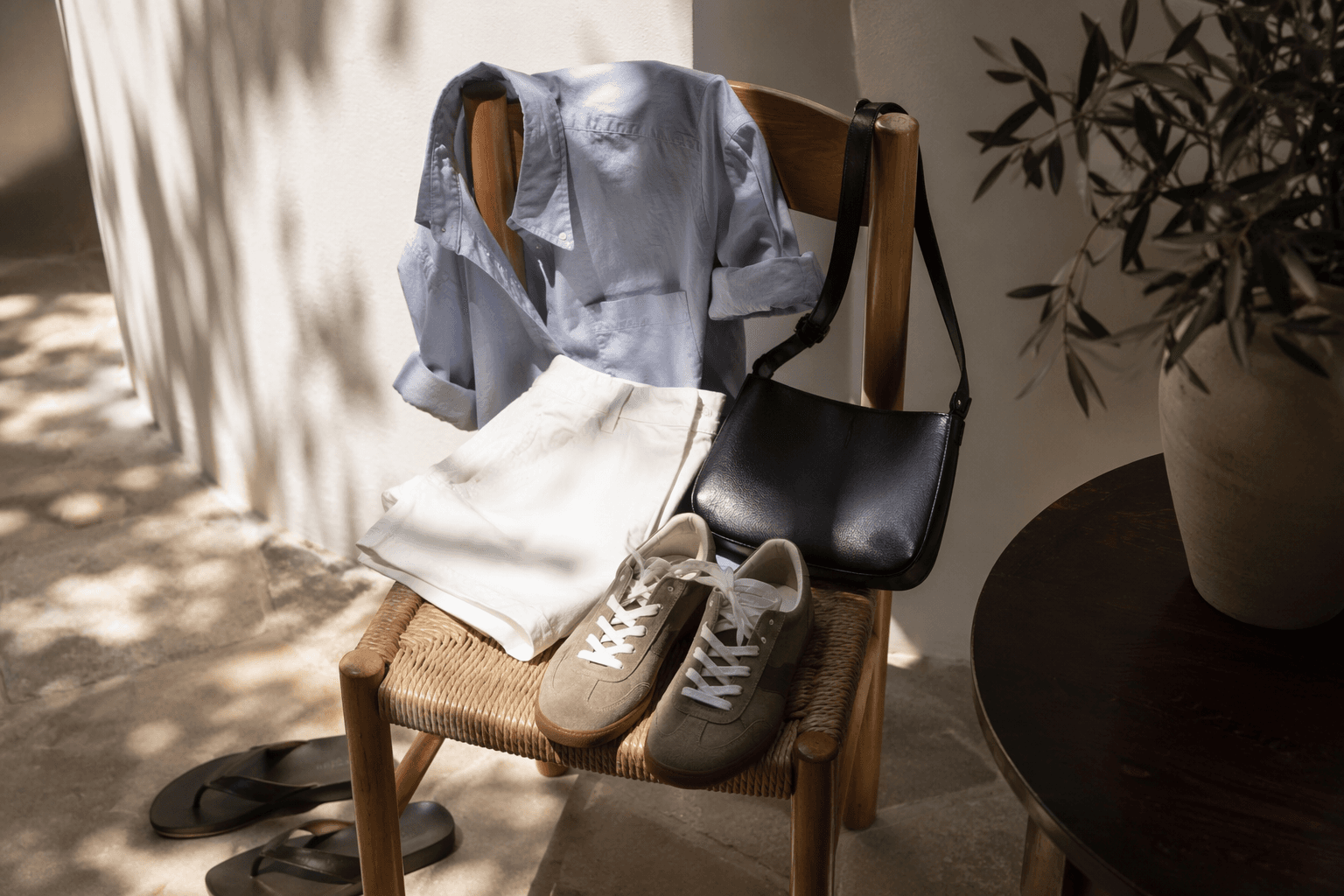
Megan Uy’s styling advice is what turns the trend into something you could actually wear tomorrow. She points to button-downs with trouser shorts, or baggy jeans with a blazer, which is exactly the kind of no-drama uniform capsule dressers need. The shoe does not demand a special outfit. It makes already-good basics feel more considered.
That versatility is where jazz shoes beat the more delicate flat. A ballet flat can look sweet with a skirt and perfectly fine with jeans, but jazz shoes sharpen the silhouette when the rest of the outfit is loose or tailored. They also keep trousers looking clean at the ankle, which is why they make such sense with cropped hems, puddling denim, and anything that skims rather than clings. If loafers are the answer when you want a little authority, jazz shoes are the answer when you want polish with less weight.
For a capsule wardrobe, the styling range is straightforward:
- Button-down shirt, trouser shorts, and jazz shoes for a neat, city-ready look.
- Baggy jeans, blazer, and jazz shoes for a smarter take on off-duty dressing.
- Wide-leg trousers and a fitted tank for a line that feels modern but not severe.
- Slip dress or midi skirt with jazz shoes if you want the shoe to edge the outfit away from pretty.
Why the trend is landing now
The current appetite for jazz shoes makes sense in the context of the broader dance-shoe revival. Ballet flats already had their strong recent return, and fashion now seems to be moving to the next iteration in that family. That sequence matters, because it explains why jazz shoes do not feel random. They are the next step for shoppers who liked the ease of ballet flats but want something slightly fresher and less ubiquitous.

The runway and celebrity proof only strengthens that case. A 2026 style roundup noted Eva Chen wearing jazz flats at the Loewe AW26 show, while Charlize Theron was seen in white jazz shoes with a Bottega Veneta look while promoting her film Apex. Celine’s spring 2026 runway also gave the style another layer of validation. When a shoe starts appearing in both directional runway moments and real-life celebrity dressing, it usually means the category has moved beyond curiosity.
Where to look, and what to expect
Megan Uy highlights options from Zara, COS, Bronx and ASOS, which is useful because it shows the shape is moving across price points and style registers. That spread matters. It means the jazz-shoe idea is not reserved for the most fashion-insider wardrobe. It is being translated for everyday shoppers who want something sleeker than sneakers and less expected than a standard flat.
Zara’s own current ballet-flat edit is another clue that flat shoes remain commercially central, with styles listed from £25.99 to £59.99. The retailer is clearly treating the category as a core business, and jazz shoes slot neatly into that commercial logic. They offer the freshness of a new silhouette without abandoning the practical, walkable category that already sells.
Who should swap, and who should stay with the classics
If you have grown bored with ballet flats but still want a shoe that works with everything from denim to tailoring, jazz shoes are the swap. They are especially strong if your wardrobe leans on trousers, button-downs, and relaxed suiting, because their low profile keeps the line clean while the lace-up detail adds a little visual discipline. They also make the most sense if you want a flatter shoe that looks more intentional than a sneaker and less formal than a loafer.
Stick with ballet flats if you want the softest, simplest finish and do not need the extra structure. Stick with loafers if your wardrobe depends on harder tailoring, sharper polish, and a more classic menswear note. But if the goal is a smarter capsule built around pieces that can move from office to weekend without changing character, jazz shoes are the pair that makes the rest of the outfit look newly considered.
This article was produced by Prism’s automated news system from verified source data, official records, and press releases, then run through automated quality and moderation checks before publishing. The system is built and supervised by the people who set the standards it runs under. Read our full AI policy.
Know something we missed? Have a correction or additional information?
Submit a Tip