Minimalism Versus Capsule Wardrobes: The Design Principles You Need to Know
Two wardrobe concepts that get confused constantly — minimalism is a visual design language, and the capsule wardrobe is a quantity strategy. Here's why that distinction changes everything.
Most closets fail for the same reason: the person building them confused two completely different ideas. They wanted to dress with intention, bought into the minimalist aesthetic, and ended up with a closet full of ecru linen that didn't actually work together. Or they set a 37-piece capsule rule, hit the number, and still had nothing to wear. The confusion is understandable. A capsule wardrobe is a wardrobe strategy about quantity — owning 30 pieces that generate 100 outfits. Minimalist style is a visual language about aesthetics — how those pieces look, feel, and interact. Getting that distinction right is the foundation of dressing well with less.
Minimalism Is a Design Philosophy, Not a Closet Count
Minimalist fashion is a deliberate design philosophy — one that uses clean silhouettes, restrained color palettes, and quality materials to create outfits that communicate confidence without clutter. It's not about owning fewer things. It's about what those things look like.
The visual rules of minimalist design are specific and learnable. Every minimalist garment prioritizes structure over decoration. Seams are precise. Hems are clean. Details are functional rather than decorative — a well-placed dart, a hidden button placket, a seamless pocket. Where maximalist fashion adds ruffles, embroidery, or hardware, minimalist fashion subtracts until only the essential shape remains. Jil Sander, known as the "Queen of Clean" and one of the most influential minimalist designers in fashion history, built an entire design empire on this principle.
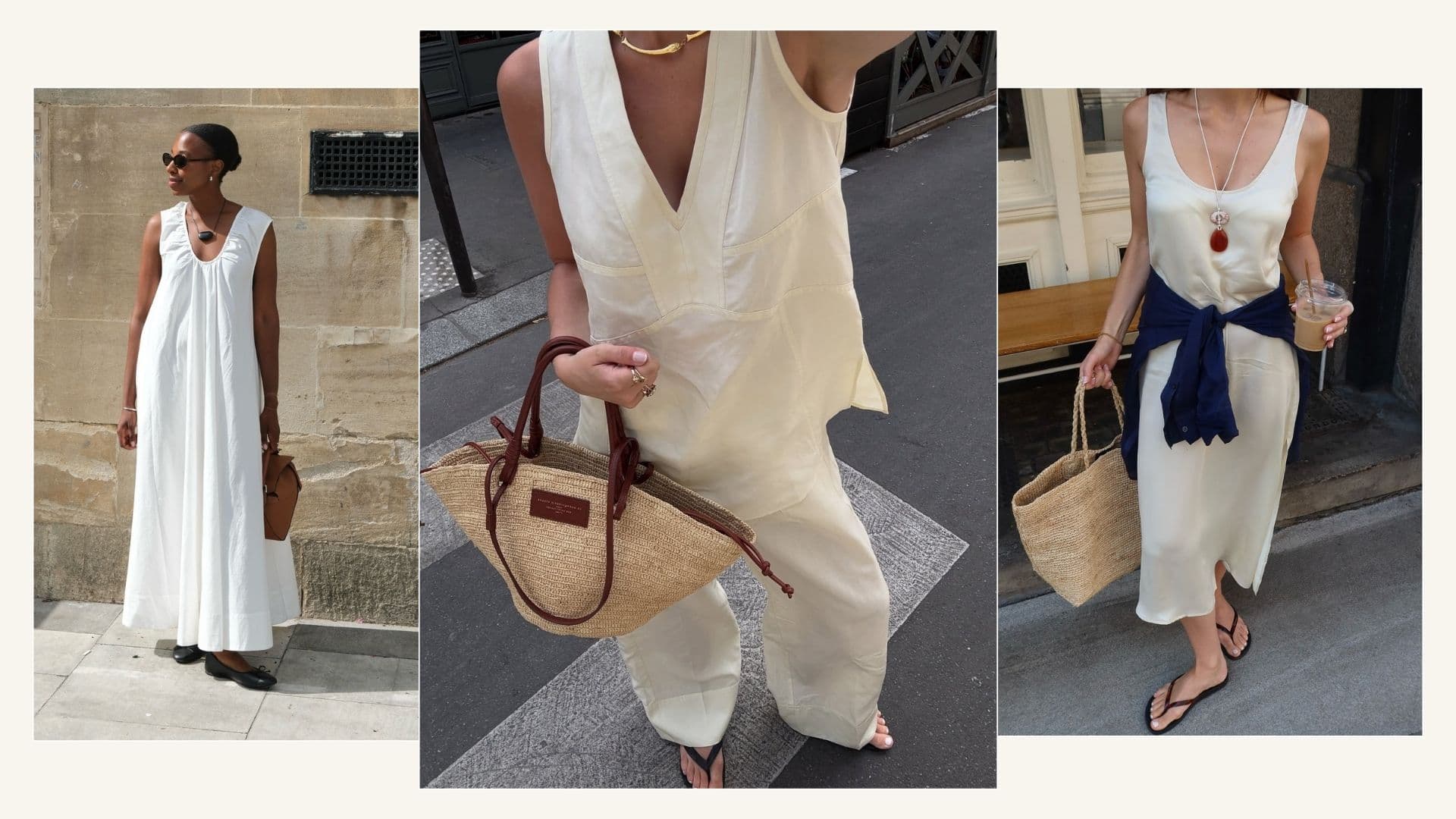
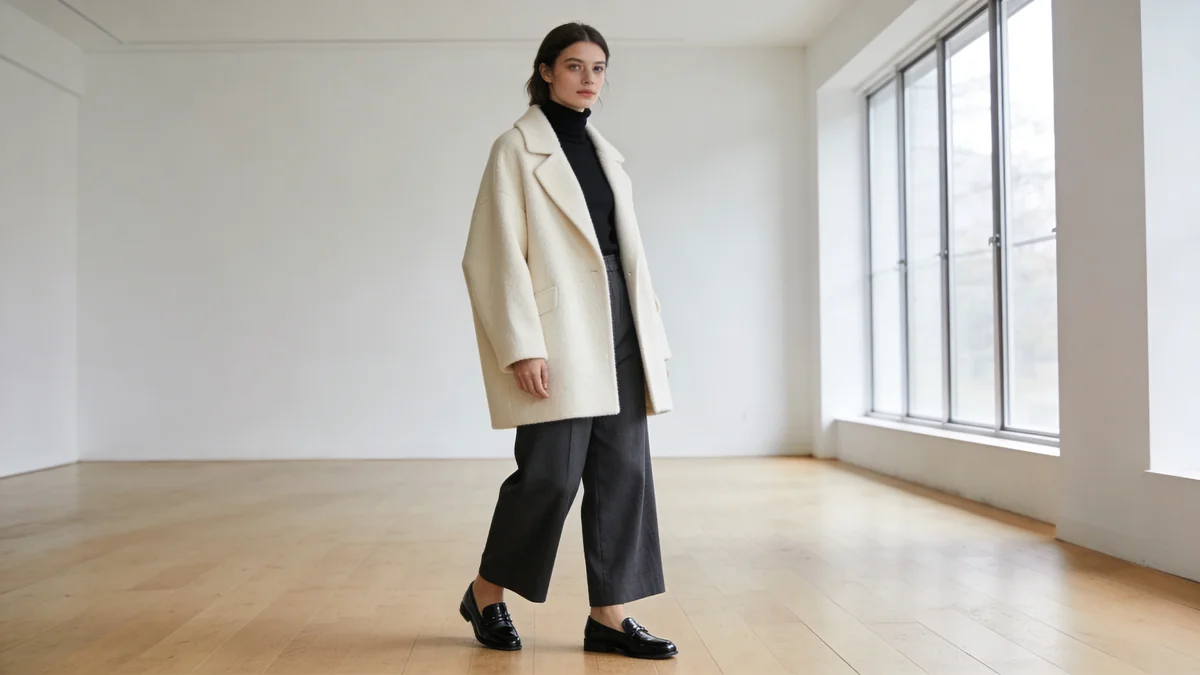
Color is where most people either get it right or derail the whole thing. Neutral color palettes — beige, ivory, black, white, gray — provide versatility enabling effortless outfit combination and extended wear. Natural fabrics including organic cotton, wool, linen, and silk dominate minimalist material selection due to durability and sustainability. Monochromatic dressing represents a minimalist trend enabling visual interest through texture and silhouette rather than color variation. That last part matters: minimalism never said boring. It said intentional. A head-to-toe oatmeal outfit reads as sharp if the textures are working — a slightly nubby Merino crewneck over fluid wide-leg trousers, grounded by a smooth leather loafer. Three neutrals, three textures, zero effort apparent.
Minimalist fashion trends emphasize tailored fits and architectural silhouettes creating a polished aesthetic that communicates intentional design rather than casual comfort. Structured blazers, straight-legged trousers, and carefully proportioned garments reflect minimalist commitment to timeless design transcending seasonal trends.
Minimalism also isn't monolithic. Three distinct interpretations dominate the fashion landscape in 2026 — Scandinavian, Japanese architectural, and quiet luxury — each with its own visual language and cultural roots. Scandinavian minimalism embraces cream, oatmeal, soft gray, and camel, a palette drawn from Nordic light and landscape. The silhouettes are relaxed but structured, reflecting the Nordic philosophy that clothes should serve life rather than demand attention. Brands like COS, Toteme, and Acne Studios define this space. Japanese minimalism goes harder on geometry — asymmetric hems, volume as structure, the negative space of a garment treated as intentional as the fabric itself.
The Capsule Wardrobe Is a Quantity Strategy
Strip away the aesthetics and a capsule wardrobe is arithmetic. The aim of a capsule wardrobe isn't extreme reduction, but high versatility. Three pairs of pants, four tops, two jackets, and one dress can already yield more than 30 outfit combinations. The original concept came from Susie Faux, a London boutique owner who coined the term in the 1970s to describe a curated collection of classic clothing items that don't go out of fashion, augmented with seasonal pieces. Her desire was to have a closet complete with items that are stylish, fit perfectly, and are easily assembled into outfits — she didn't define a number of items. She gave parameters, not rules.
The number obsession that followed came later. The ideal number for an elegant capsule wardrobe sits between 30 and 40 pieces per season, with 37 being the most cited reference among style experts. This range allows you to create over 100 different combinations while maintaining order and coherence. But the math works regardless of whether you land at 33 or 46. There's no perfect number for a capsule wardrobe. Ranges can be helpful, but they're meant to guide, not limit, you. The goal is to have enough options to get through your days comfortably, not to hit a specific number.
A minimal wardrobe differs from a capsule wardrobe in that it is comprised of your wardrobe as a whole, while a capsule wardrobe is a set of items for a given season that are meant to work interchangeably. That seasonal structure is key. The ideal capsule wardrobe adapts to the rhythm of the seasons while keeping a stable core of pieces year-round. The most effective strategy involves a core of 15 to 20 cross-season items, things like shirts, trousers, and lightweight knitwear, and 10 to 15 season-specific pieces, rotated at each wardrobe changeover.
Where the Two Concepts Cross — and Where They Don't
Here is where it gets interesting, and where most wardrobe guides get it wrong: you could build a capsule wardrobe entirely from maximalist prints. You could also own 200 pieces that all embody minimalist principles. The two concepts overlap, but they are not the same thing.
While the minimalist approach is about wearing a uniform and not spending too much time or thought on clothing, a capsule wardrobe is about maximizing your outfit possibilities. A true minimalist, in the Steve Jobs sense, might own a dozen identical black turtlenecks and consider the problem solved. That satisfies the philosophy but fails the capsule strategy entirely, because nothing mixes with anything. Conversely, a capsule wardrobe built around bold color-blocked separates, if every piece genuinely works with every other piece, is structurally sound even if it looks nothing like a fashion editorial shot against white plaster.
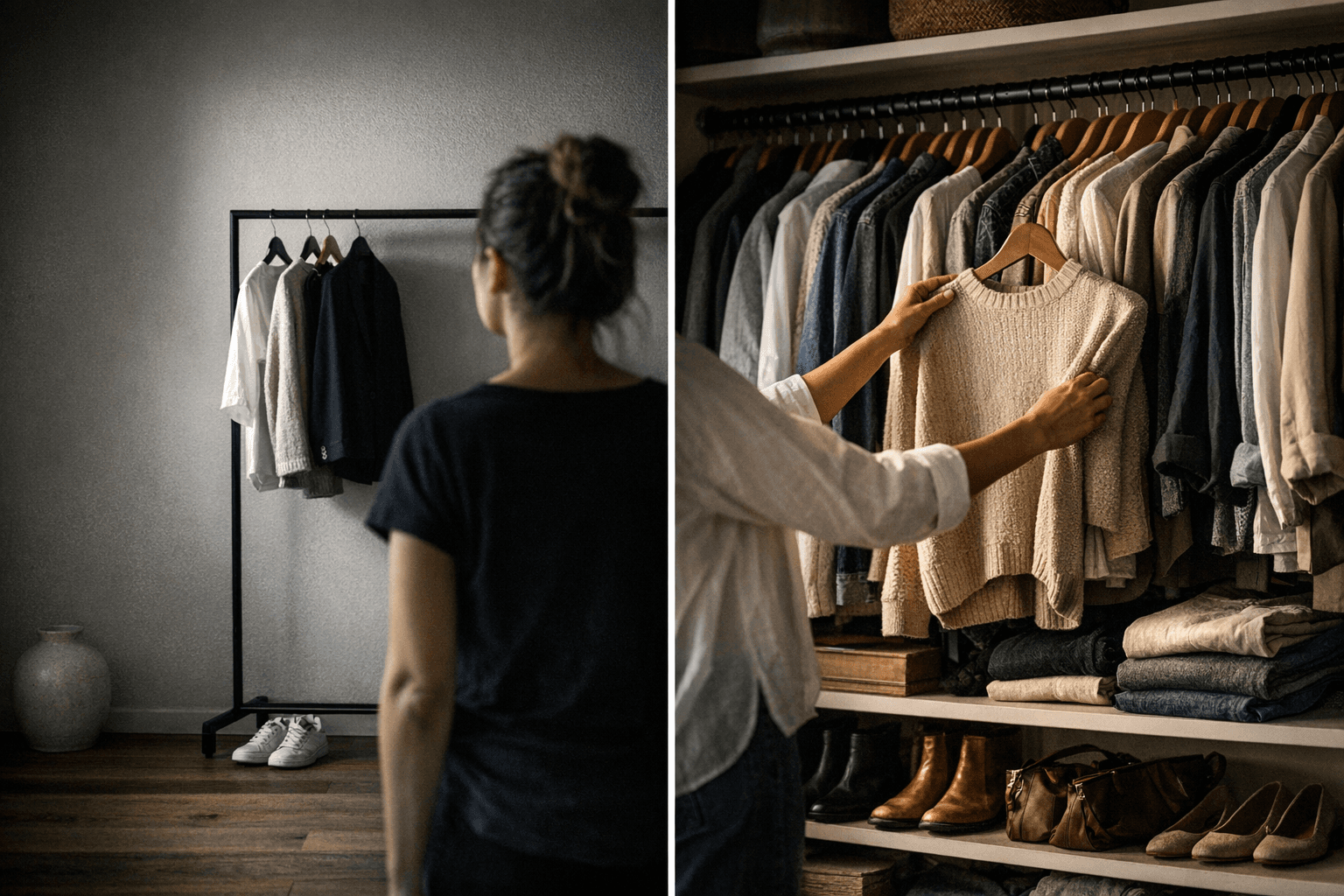
A capsule wardrobe doesn't just serve a functional purpose; it reflects a conscious, thoughtful approach to fashion that values quality, sustainability, and personal expression. Minimalism serves as the design language that makes that curation visually coherent — but it is not a prerequisite.
The Core Design Rules That Make Either System Work
Whether you're building a minimalist wardrobe, a capsule, or both, several design rules hold across all approaches:
- Color cohesion: Without a well-thought-out color palette, it can be difficult to create cohesive outfits. Too many different colors can undermine the minimalist approach. Aim for a primary palette of three to four neutral anchors, with one or two accent tones.
- Fabric quality over item count: Quality over quantity is a key principle, where the emphasis is on investing in well-made, durable items that withstand frequent use and transcend fleeting fashion trends. One well-cut wool blazer earns more outfit miles than three synthetic alternatives.
- Silhouette clarity: Silhouette is the backbone of minimal aesthetic outfit ideas. Even the simplest outfit can look intentional if the fit is right. Clean silhouettes don't mean tight or oversized by default — they mean balanced.
- Versatility as the filter: Minimalism is practiced through the careful selection of a limited number of items that serve multiple purposes and are essential to the wearer's lifestyle. A versatile wardrobe is achieved by ensuring each piece can be paired with several others, creating different looks and styles.
- Trend restraint: A trending color in a cheap piece is a harmless experiment. The same color in an expensive coat is a risk the capsule wardrobe should not take. Trends enter the capsule wardrobe through accessories and lower-priced items, never through the foundational pieces.
The Practical Payoff
Over 65% of consumers aged 25 to 40 now prefer capsule wardrobes to simplify their fashion choices and reduce waste. The pull toward both systems makes sense for more than just aesthetic reasons. According to the United Nations Environment Programme, the fashion industry accounts for roughly 10% of global CO₂ emissions, and the average person wears only 20% of the clothes they own. The capsule wardrobe was born as a response to that waste.
Building a capsule wardrobe isn't a one-time project — it's an ongoing process. As you wear your capsule, you'll notice what's working well, what you reach for most, and what you might want to adjust over time. That feedback is what helps your wardrobe continue to evolve and become more uniquely you.
The clearest way to use both systems together: let the capsule framework govern how many pieces you own and how they interlock structurally, then use minimalist design principles to decide what those pieces actually look like. Restrained palette, considered silhouette, quality fabric, functional detail. The capsule sets the ceiling; minimalism sets the standard. When both are working, getting dressed stops feeling like a decision and starts feeling like fluency.
Know something we missed? Have a correction or additional information?
Submit a Tip