Office-to-evening shoes, with glove heels leading the way
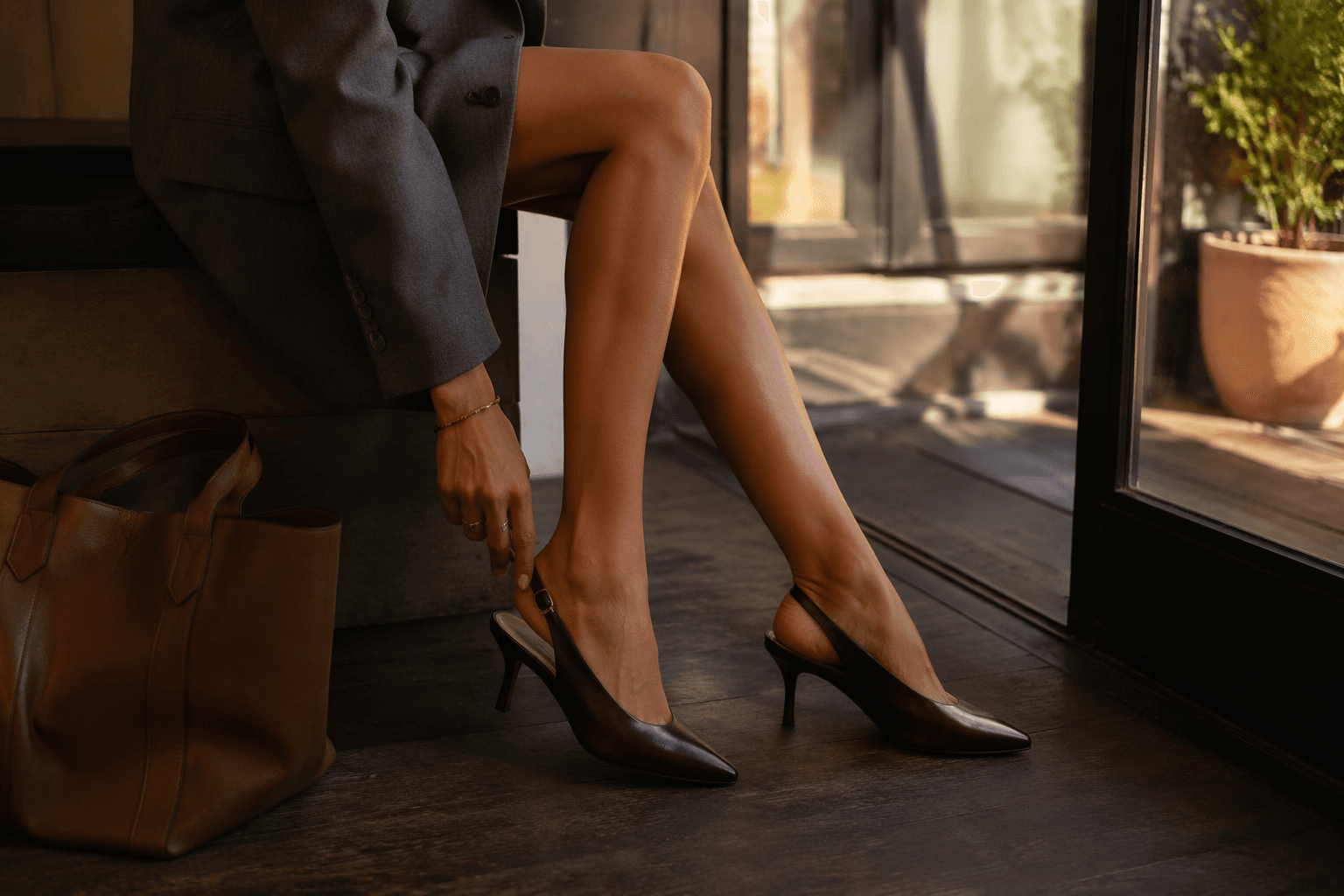
The smartest summer shoe now has to commute, polish, and still stay standing after dark. Glove heels solve that brief better than anything else in the capsule.
The new summer work shoe brief
The best summer shoe is no longer the prettiest pair on the shelf. It is the one that can handle the morning commute, sit neatly under a desk-day uniform, and still feel right at dinner without a bag change or a costume change. That is why the office-to-evening conversation has narrowed to a sharp, useful capsule: ballet flats, glove heels, and split-toe sneakers, each one built for a different kind of day.
What makes this moment interesting is not just taste, but utility. Fashion has been in a comfort-forward cycle for more than a year, with ballet flats holding their ground and ballet sneakers now sitting among the key shoe trends for 2026. At the same time, more directional hybrids are gaining traction, which is exactly where the glove heel starts to matter. It is polished enough for a meeting, but it does not punish you for taking the subway.
Why the glove heel has the strongest case
The glove heel works because it sits in the narrow space between sensible and styled. Fashion coverage in 2025 treated glove shoes as one of the year’s more divisive trends, with Khaite and Proenza Schouler helping push the silhouette into the conversation. That tension is part of its appeal: it feels current without tipping into gimmick, and it reads as office-appropriate without flattening the outfit.
The shoe’s advantage is balance. A flat can sometimes feel too casual for evening; a sharper pump can look right at 8 a.m. but become a liability by 8 p.m. The glove heel covers more territory because it keeps the foot visually refined while promising more wearability than a hard-edged dress heel. For a capsule wardrobe, that makes it the most efficient single purchase if you want one shoe to move from conference room to restaurant without recalibrating the rest of the look.
There is also a broader commercial logic behind that appeal. Footwear is not a niche category, and the numbers show real appetite for shoes that do more than one job. The U.S. footwear market was estimated at $97.72 billion in 2024 and is projected to reach $141.89 billion by 2034. That kind of scale tells you the modern buyer is still investing in pairs that can work harder, longer, and in more situations.
Where ballet flats still earn their place
Ballet flats remain the cleanest answer for days that ask for ease first. They have been riding high on the trend cycle for well over a year, and they continue to make sense because they solve the simplest wardrobe problem: how to look put together without wearing a heel. In a summer office setting, that means they can anchor wide-leg trousers, knee-length skirts, and cropped tailoring without adding friction to the rest of the outfit.
The reason they have staying power is their versatility. Ballet flats can look prim, but they can also read modern when paired with relaxed separates or a sharp bag. In the current cycle, they work less as a nostalgia play and more as a useful neutral, the kind of shoe you can keep in rotation when your wardrobe needs a reliable reset between work weeks, travel, and last-minute dinners.
Why ballet sneakers are the softer hybrid
Ballet sneakers are the clearest sign that comfort and polish are no longer separate categories. Their presence in the 2026 shoe conversation matters because they push the ballet-flat idea one step further, adding a sportswear note without losing the small, neat shape that makes the style office-friendly. For anyone who walks a lot or stands between meetings, they offer a more forgiving option than a true flat while still feeling intentional.
This is where the capsule logic gets practical. Ballet sneakers are best when the day is long and the dress code is fluid, especially if your office expects you to look composed but not corporate. They are less obvious than a classic flat, which helps if you want the shoe itself to do a little styling work while the rest of the outfit stays spare.
Why split-toe shoes still carry fashion weight
The split-toe option matters because it brings history and edge into the same pair. Maison Margiela says the Tabi first debuted in 1988 and was inspired by the traditional 15th-century Japanese tabi sock. The house also says Martin Margiela transformed the flat shoe into a heeled boot for his first show and finished the soles with red paint. That origin gives the split-toe shoe more than novelty value, it gives it a pedigree.
In practical terms, the split-toe sneaker or shoe is the choice for when you want the wardrobe to signal that you know fashion, but you still need to get through a normal workday. It is not the safest option in the capsule, which is exactly why it has power. If the glove heel is the smoothest bridge between desk and dinner, the split-toe shoe is the one that adds sharpness to an otherwise restrained uniform.
How to build the capsule around your real day
A summer shoe capsule works best when each pair solves a different part of the week. The aim is not to collect trends; it is to reduce decision fatigue. The current market, with its comfort-first momentum and steady appetite for more directional shapes, makes that easier than it used to be.
- Choose the glove heel if your schedule includes meetings, commuting, and after-work plans in one stretch. It gives the best mix of polish and comfort.
- Choose ballet flats if you want the most straightforward everyday option, especially for softer tailoring and lighter summer dressing.
- Choose ballet sneakers if your days involve more walking, more standing, or a looser dress code that still needs a neat finish.
- Choose split-toe shoes if your wardrobe leans modern and you want one pair that adds fashion tension without abandoning wearability.
That logic mirrors the wider history of shoes, which the Victoria and Albert Museum traces across more than 3,000 years of design. Heel heights, shapes, and materials have always shifted with the way people live, and the current comfort-first mood is simply the latest turn in that long rotation. Summer work shoes have always been a negotiation between function and fashion; now the negotiation is just more refined.
The shoe that earns the most rotation
For this capsule, the glove heel is the standout because it solves the broadest range of outfit problems without looking obvious. It is elevated enough for professional meetings, comfortable enough for subway rides, and directional enough to feel like a deliberate style choice rather than a compromise. In a season defined by practical polish, that is the pair most likely to stay in heavy rotation long after the trend cycle moves on.
This article was produced by Prism’s automated news system from verified source data, official records, and press releases, then run through automated quality and moderation checks before publishing. The system is built and supervised by the people who set the standards it runs under. Read our full AI policy.
Did this article answer your question?