Pack Just 12 Pieces for 30 Outfits Across Europe This Spring
Twelve pieces, one carry-on, thirty outfits: here's the exact spring Europe capsule that solves wrinkles, cobblestones, and chilly museum mornings at once.
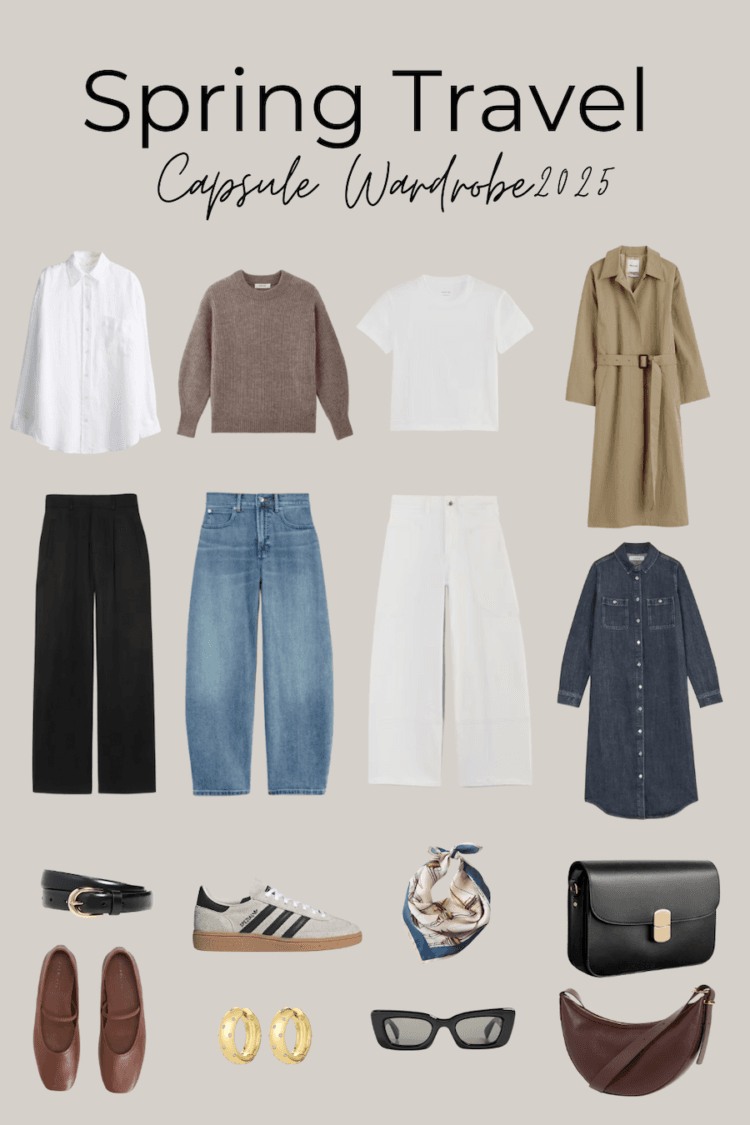
Your suitcase is not the problem. Your packing logic is. Most travelers heading to Europe in spring overpack by solving the wrong equation: instead of building for maximum combinations, they build for maximum scenarios, stuffing in "just in case" blazers and backup sandals until the bag weighs 23 kilos and still somehow produces the same three outfits on rotation. The fix is a 12-piece system designed around multiplication, not addition. Twelve items, layered and accessorized with intent, reliably generates 30 to 40 distinct looks. What follows is that system, built specifically for spring Europe: temperatures ranging from 10°C on a drizzly Paris morning to 20°C in a Rome piazza by noon, cobblestoned streets, museums with shoulder policies, and dinners that require at least the appearance of effort.
Before the list, the methodology. Each piece here is ranked against two criteria: packability (wrinkle resistance, compression behavior, layering range) and cost-per-wear (how many of those 30-plus outfits it actively enables). A piece that appears in 20 outfit combinations earns its carry-on square footage; a piece that appears in three does not make the cut. The color palette is locked to two or three neutrals plus one accent, which is the structural reason the math works. Everything connects to everything else. Nothing is an island.
1. Neutral Tee No. 1: The White Foundation
A fitted white tee in a cotton-modal blend is the single highest-frequency piece in this capsule. It layers under the trench, under the knit, under the trousers tucked in for a café lunch, or alone with denim on a warm afternoon. The wrinkle situation with cotton blends is manageable: a quick steam in the hotel bathroom or a hang overnight handles most creases. Tuck it in to register as polished; leave it out to register as off-duty. This piece enables roughly 12 of your 30 combinations on its own.
2. Neutral Tee No. 2: The Stripe or Muted Color
The second top introduces just enough visual variety to make your repeat outfits feel intentional rather than tired. A fine Breton stripe reads as quietly European and works across contexts from the Louvre to a canal-side lunch. Alternatively, a soft sage, dusty blue, or terracotta solid creates contrast against the neutral base without breaking the palette rule. The stripe version has an extra functional advantage: pattern camouflages minor travel wear between washes better than a plain pale color.
3. Lightweight Linen-Blend Blouse or Button-Down
This is the piece that handles register shifts within a single day. Worn open over a tee on a brisk Flemish morning, it reads as a light jacket. Tucked into trousers for an evening aperitivo, it reads as intentional dressing. Linen blends are the fabric workhorse of spring travel: breathable in afternoon warmth, structured enough to not look like sleepwear, and packable enough to fold flat into a packing cube. Look for a relaxed cut rather than a fitted one; the ease of fit is what makes it multi-functional.
4. Packable Trench Coat
The trench is doing two jobs at once: outerwear and outfit. Spring in Paris and Amsterdam can hold below 55°F (13°C) well into May, and a trench handles that range while also functioning as a style anchor. The key word is packable: wool trenches are beautiful and completely impractical here. Seek out a water-resistant nylon or cotton-poly blend that compresses into itself or a small stuff sack. Brands like Quince, H&M, and Target all carry versions in the $50 to $100 range that behave well in luggage. Worn open and belted loosely, it finishes an otherwise casual outfit; thrown over a dress with a scarf at the neck, it covers the shift from sightseeing to dinner without a wardrobe change.
5. Wrinkle-Resistant Trousers
This is the highest cost-per-wear item in the capsule, and arguably the one worth investing in. Tech-fabric trousers from labels like Athleta (the Brooklyn or Endless pant silhouettes are widely cited for this application) hit a specific and rare sweet spot: breathable, quick-drying, wrinkle-resistant, and polished enough to read as intentional rather than athletic. Paired with loafers and the blouse, they pass a Parisian dinner without drama. Paired with sneakers and a tee, they handle six hours of cobblestone walking without complaint. The silhouette should lean tailored, not tapered-athleisure. Ponte fabric is a strong alternative if the tech-trouser aesthetic feels too utilitarian.
6. Dark Wash Jeans
Jeans earn their single capsule slot because of a specific spring Europe logic: they don't wrinkle meaningfully, they hold up in the cooler part of the temperature range (when linen trousers become uncomfortable), and they shift register easily based on what you pair them with. A dark wash reads dressier than mid-wash and works for both daytime sightseeing and evening use. The one material note: denim is your bulkiest piece and should be worn on the plane, not packed, to preserve carry-on space.
7. Day-to-Night Dress
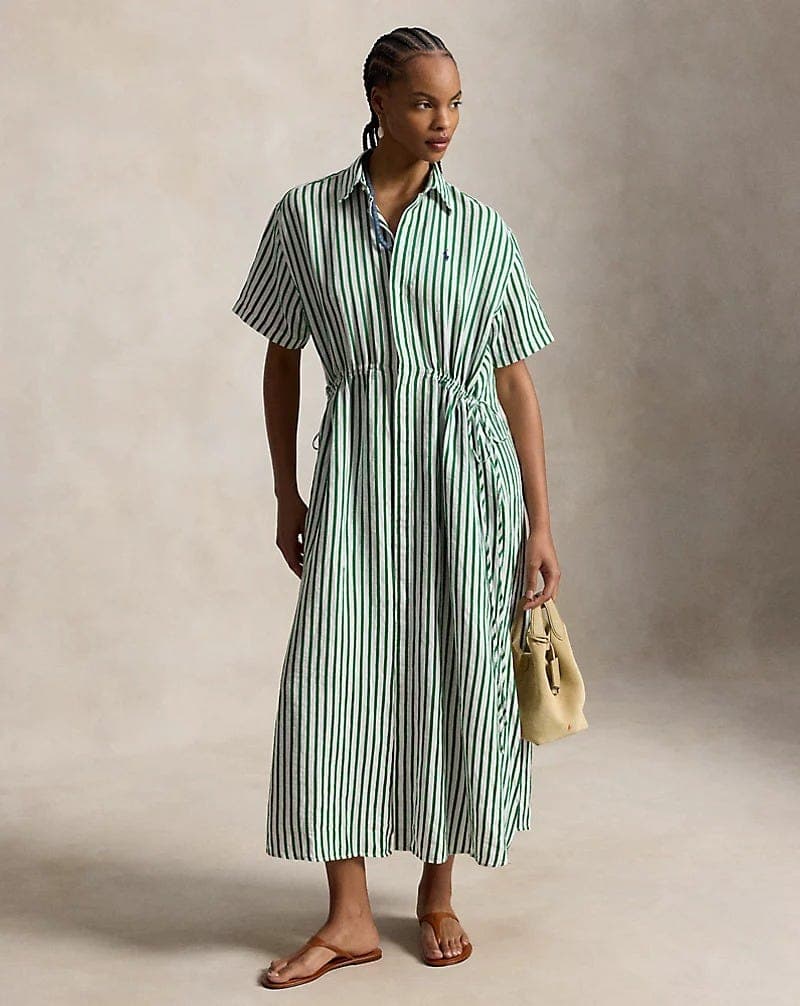
One dress, doing the work of many. The brief for this piece is specific: a midi or mini length in a solid or subtle print, in a fabric that doesn't show wrinkles (jersey, ponte, or a matte crepe), with a silhouette simple enough to accept layering. The trench over it in the morning, the knit over it when a gallery turns cold, bare with sandals in the evening. For Rome and Barcelona, where spring afternoons genuinely warm up, a dress becomes the most comfortable option on the itinerary. For Paris and Amsterdam, layering keeps it viable across the full day. Note: a silk scarf knotted at the neckline or tied to the bag completely transforms this dress's visual without adding any pack weight.
8. Compact Knit or Lightweight Sweater
The compact knit is the thermal problem-solver of the capsule. A fine-gauge merino or cotton ribbed crewneck compresses to almost nothing in a packing cube, adds a layer of warmth equivalent to something twice its size, and works across the full outfit range. European museums and churches are frequently cold regardless of outside temperature, and a knit draped over the shoulders or pulled on between the dress and the trench handles that transition. Merino wool has the added advantage of resisting odor, which extends wears between washes on a longer trip.
9. Comfortable Sneakers
European cities walk. A single average day of sightseeing in Paris or Rome regularly hits 15,000 to 20,000 steps, and cobblestones amplify foot fatigue dramatically. The sneaker in this capsule needs to satisfy two criteria simultaneously: enough sole support for a full day of uneven stone pavement, and enough visual cleanliness to pair with a dress or trousers without reading as gym-wear. A low-profile leather or canvas sneaker in white, cream, or a neutral earth tone threads that needle. This is the piece that gets worn onto the plane to save carry-on space.
10. Loafer or Low Heel
The second shoe shifts the register of every outfit it touches. Swapping sneakers for a loafer with the dark jeans and blouse creates a different outfit entirely, without changing a single clothing piece. That shoe-swap alone accounts for roughly 10 of the 30 combinations in this capsule. A leather loafer in tan, black, or a warm cognac works across textures and colors without clashing. A low block heel in a neutral achieves the same register shift while remaining walkable on most European surfaces. The rule for the second shoe: it should be broken in before departure. Blisters on cobblestones are a specific kind of misery.
11. Silk Scarf
The scarf is the highest-leverage accessory in the capsule and probably the most underestimated. Worn at the neck, it elevates a tee-and-jeans combination into something that reads as considered. Tied to a crossbody bag, it adds color to a monochrome outfit. Draped over the shoulders when entering a church in Rome or the Vatican (where bare shoulders are not permitted), it solves a dress code problem without requiring a dedicated cover-up. Pack it in a neutral with an accent print, or choose one accent color that coordinates with the palette. Silk compresses to nothing, weighs nothing, and functions across more scenarios than almost any other single piece in this kit.
12. Crossbody Bag
The final piece is structural: a compact crossbody in leather or a durable coated canvas keeps hands free for coffee cups and camera, sits close to the body in crowded markets and transit, and functions as the outfit's compositional anchor. Size matters here in both directions: large enough to carry a compact umbrella, a day's essentials, and a folded scarf; small enough to not read as a backpack or day bag, which shifts the outfit's register downward. The silk scarf tied to the strap changes the bag's look across different outfit days, effectively multiplying its visual range for zero extra weight.
The Outfit Matrix
Twelve pieces produces 30-plus looks through a simple layering formula. The base equation is: tops (4 options) paired with bottoms (3 options) equals 12 base combinations. Add shoe swaps (2 options per combination) and that doubles to 24. Add scarf-on versus scarf-off, plus trench versus knit as the outer layer, and the number comfortably clears 30 distinct looks. The dress operates as its own circuit: trench plus dress plus sneaker for daytime, knit plus dress plus loafer for evening, dress alone with scarf for warm afternoons.
For a Paris itinerary, lean on the trousers and loafer combination for daily use; the city's visual standard rewards a slightly more structured silhouette, and temperatures tend to stay cooler. For Rome, the dress gets its heaviest use; the heat arrives faster, the dress-with-loafer combination handles both afternoon ruins and evening aperitivo, and the scarf earns its pack weight at every basilica door.
How to Pack It
All 12 items fit in a standard carry-on (most airlines accept bags up to 22 x 14 x 9 inches) when jeans and the trench are worn onto the plane. The remaining 10 pieces pack flat into two compression packing cubes: one for tops and the knit, one for the dress, trousers, and accessories. The silk scarf and crossbody bag slot into the personal item. Compression cubes from brands like Eagle Creek or Osprey maximize space without requiring force; the goal is organization, not vacuum-sealing.
The capsule works because it was built around travel pain points first and aesthetics second. Wrinkles are managed at the fabric level. Cobblestones are addressed by the shoe choice. Museum dress codes are solved by the scarf. Chilly gallery air is handled by the knit. The 12-piece limit forces the kind of curation that most packing lists avoid, but it's exactly that constraint that makes the whole system function. Thirty outfits from one carry-on is not a trick. It's just the math of building a wardrobe that was designed to multiply.
This article was produced by Prism’s automated news system from verified source data, official records, and press releases, then run through automated quality and moderation checks before publishing. The system is built and supervised by the people who set the standards it runs under. Read our full AI policy.
Did this article answer your question?