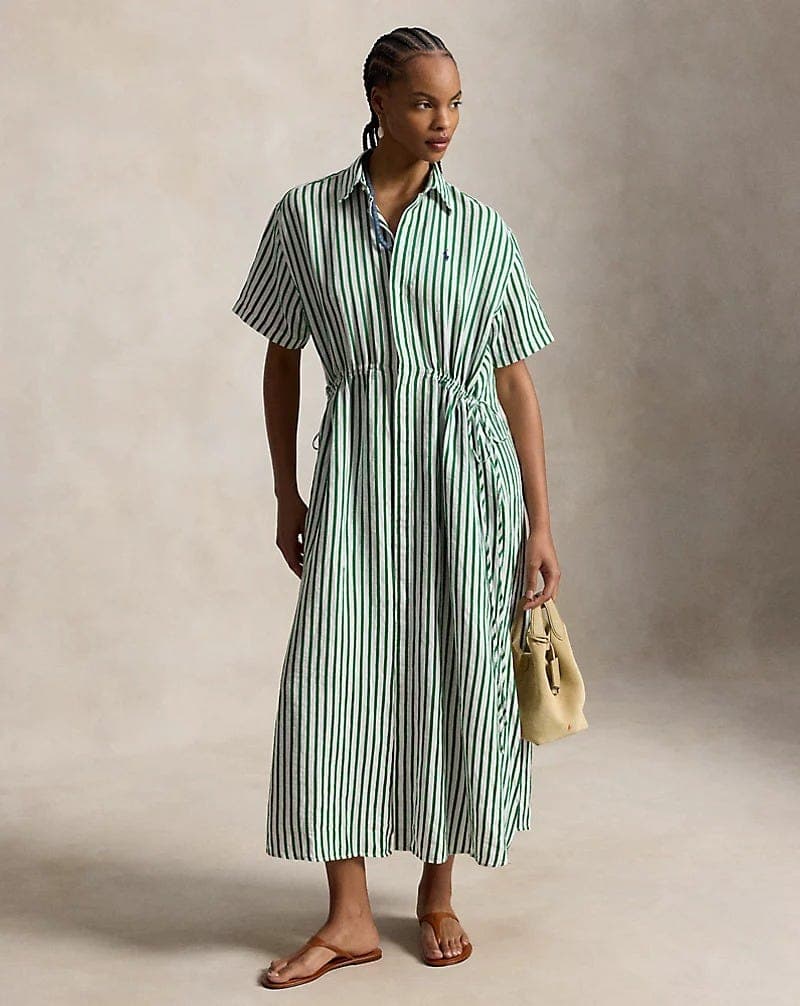
Restwear is replacing loungewear, with polished comfort leading the way
Restwear is less a new category than a smarter way to make comfort look deliberate, with cotton, poplin, and linen doing the heavy lifting.
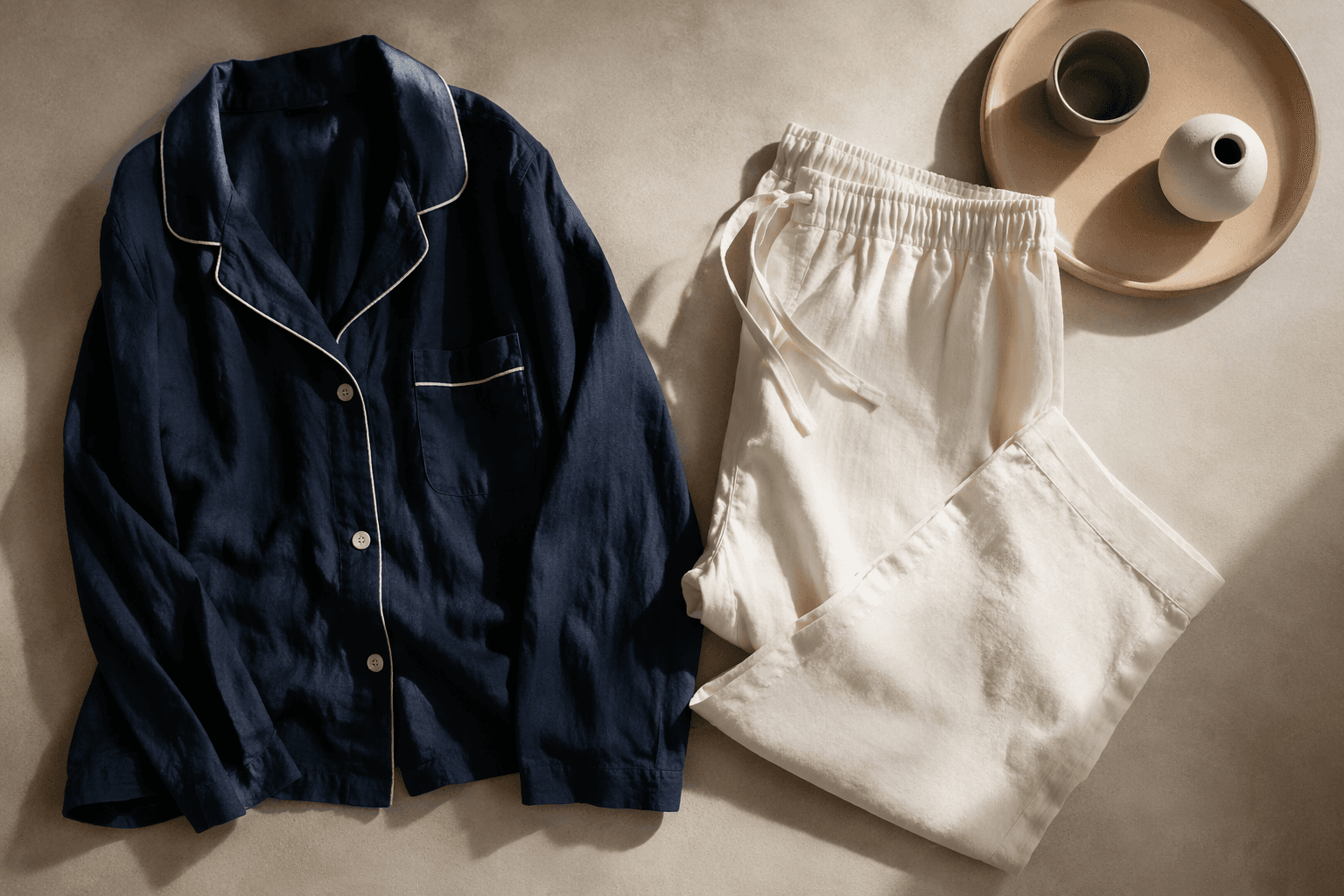
Restwear works because it solves the oldest style problem in modern wardrobes: how to look considered without feeling dressed up. The best pieces are not trying to pass as pajamas, and they are not pretending to be tailoring either. They sit in the useful middle, where a soft set can leave the house, survive errands, and still read polished on a laptop camera or at an airport gate.
What restwear is, and why it is not just loungewear
The difference is behavioral as much as aesthetic. Loungewear stays indoors, while restwear is built for the blur between bed, sofa, street, and screen. That is why pajama-style pieces have moved from at-home wear into street style, with boxers peeking out from tailored blazers and pajama dressing becoming part of the wider bed core look.
The shift has been sharpened by designers who know how to make ease look intentional. Michael Kors, Miu Miu, and The Row helped popularize the idea, and the result is less novelty than a new set of style rules: relaxed does not have to mean vague, and comfort does not have to mean anonymous. Kendall Jenner and Bella Hadid have also embraced pajama dressing, which matters because those are the kinds of names that turn a silhouette into a signal.
That is also why the strongest restwear pieces are the ones that already carry some structure. Linen and poplin sets from Quince, MagicLinen, Cou Cou Intimates, and Deiji Studios are designed to move from home into public without a costume change. Their appeal is not just softness, it is the clarity of the line, the easy drape, and the fact that they can be worn repeatedly without looking like an outfit you assembled by accident.
Why the shift has real commercial weight
This is not a fantasy trend invented for mood boards. The numbers give it a very practical backbone. Cotton Incorporated’s 2025 Lifestyle Monitor found that 80% of consumers own at least one pair of pajamas, and 53% own one to five pairs. In other words, the building blocks already live in most wardrobes; restwear is about using them more intelligently.
The same survey explains why cotton keeps surfacing in the conversation. Fully 84% of consumers say cotton apparel is the most comfortable, 90% wish cotton were in more products, and 75% believe better quality garments are made from natural fibers such as cotton. Add the fact that 72% prefer cotton for pajamas, and the logic becomes obvious: the most convincing restwear does not feel technical or precious, it feels breathable, familiar, and durable enough to wear again and again.
There is also a longer arc behind the moment. Sleepwear spending was already rising in 2020, up 2% year-to-date through September and gaining a share point. That matters because it suggests the current restwear appetite did not appear overnight, it was building as consumers became more interested in clothes that look softer, simpler, and easier to live in.
WGSN’s 2025 outlook reinforces the same idea from a different angle: fashion and wellness are converging around something easy and uncomplicated. That is exactly the emotional pitch of restwear. It offers the reassurance of comfort, but with enough polish to make you feel like you made a decision, not a concession.
How to build the rotation
The smartest restwear capsule is small on purpose. You do not need a full drawer of matching sets, just a tight rotation that can be mixed, repeated, and sharpened with one or two outer layers. The goal is fewer items, more combinations, and a cleaner line between comfort and sloppiness.
The three pieces that do the most work
- A pajama-style shirt in cotton, poplin, or linen. This is the piece that instantly reads intentional when half-buttoned with straight-leg trousers or worn open over a tank.
- Relaxed trousers or shorts with a clean finish. The shape should skim, not cling, and the waistband should feel easy enough for travel, but tidy enough for public life.
- One sharper layer, ideally a blazer or structured coat. This is what turns restwear into an outfit, especially when you wear boxers, a soft set, or a pajama shirt underneath.
If you want the capsule to feel current rather than costume-like, keep the palette controlled. Cream, washed blue, pale grey, ink, and stripe work because they read like clothing rather than sleepwear. The pieces that hold up best are the ones with enough substance to stand alone, a crisp collar, a generous sleeve, a pressed hem, or the kind of cotton that does not collapse the second you leave the house.
The daily-life payoff is where restwear earns its place. For errands, it gives you a uniform that looks deliberate without requiring effort. For travel, it removes the false choice between stiff and sloppy. For working from home, it solves the camera problem immediately, since a pajama shirt or matching set looks more composed than an old sweatshirt but still feels like comfort.
The polish test
The easiest way to tell whether a restwear piece belongs in your wardrobe is to ask if it can handle contrast. A cotton shirt should look better with tailored trousers than with sweatpants alone. A linen set should feel at home under a trench or blazer. A pair of boxers should read as styling, not sleep, when they peek out from beneath a sharp jacket.
That is why restwear is best understood as a capsule-building system, not a one-off trend. It takes the pieces many people already own and gives them a sharper purpose, especially in a wardrobe that prizes repeat wear and fewer, better choices. The design language is soft, but the logic is strict: comfort first, polish always, and no extra items needed to make the outfit work.
The result is a quieter kind of style confidence, one that looks perfectly current because it has learned how to make ease feel finished.
This article was produced by Prism’s automated news system from verified source data, official records, and press releases, then run through automated quality and moderation checks before publishing. The system is built and supervised by the people who set the standards it runs under. Read our full AI policy.
Did this article answer your question?