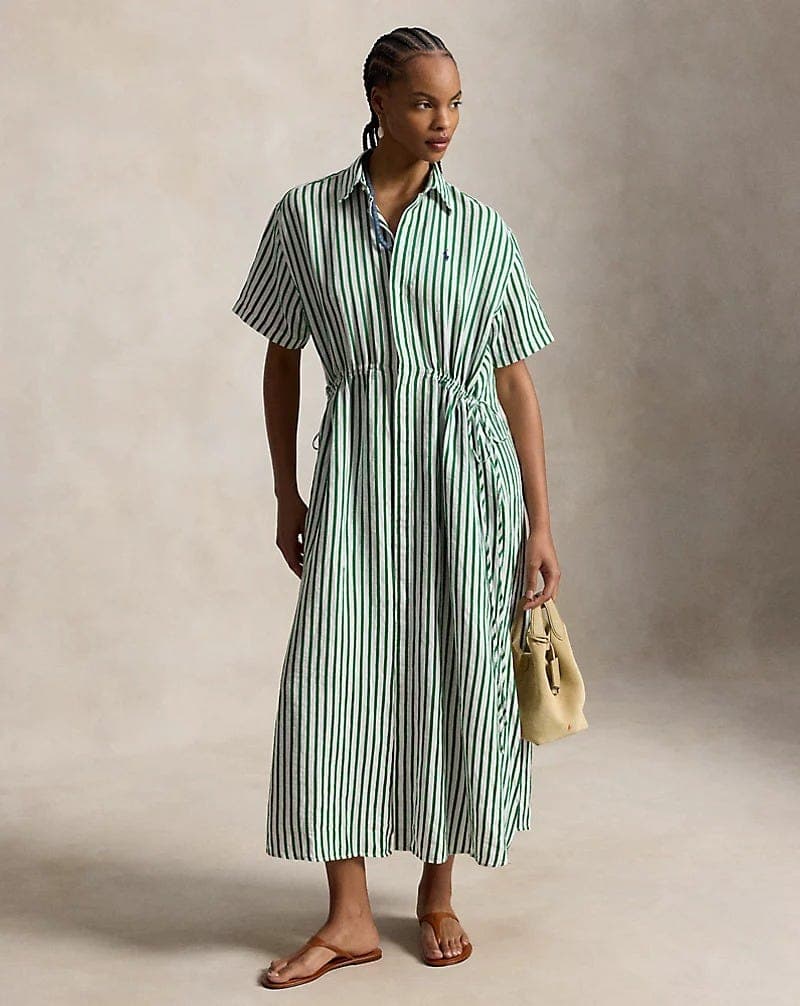
Six Tips to Build
Six practical tips that turn a chaotic suitcase into a 7-10 day travel capsule: from outfit math to the one footwear rule most packers ignore.
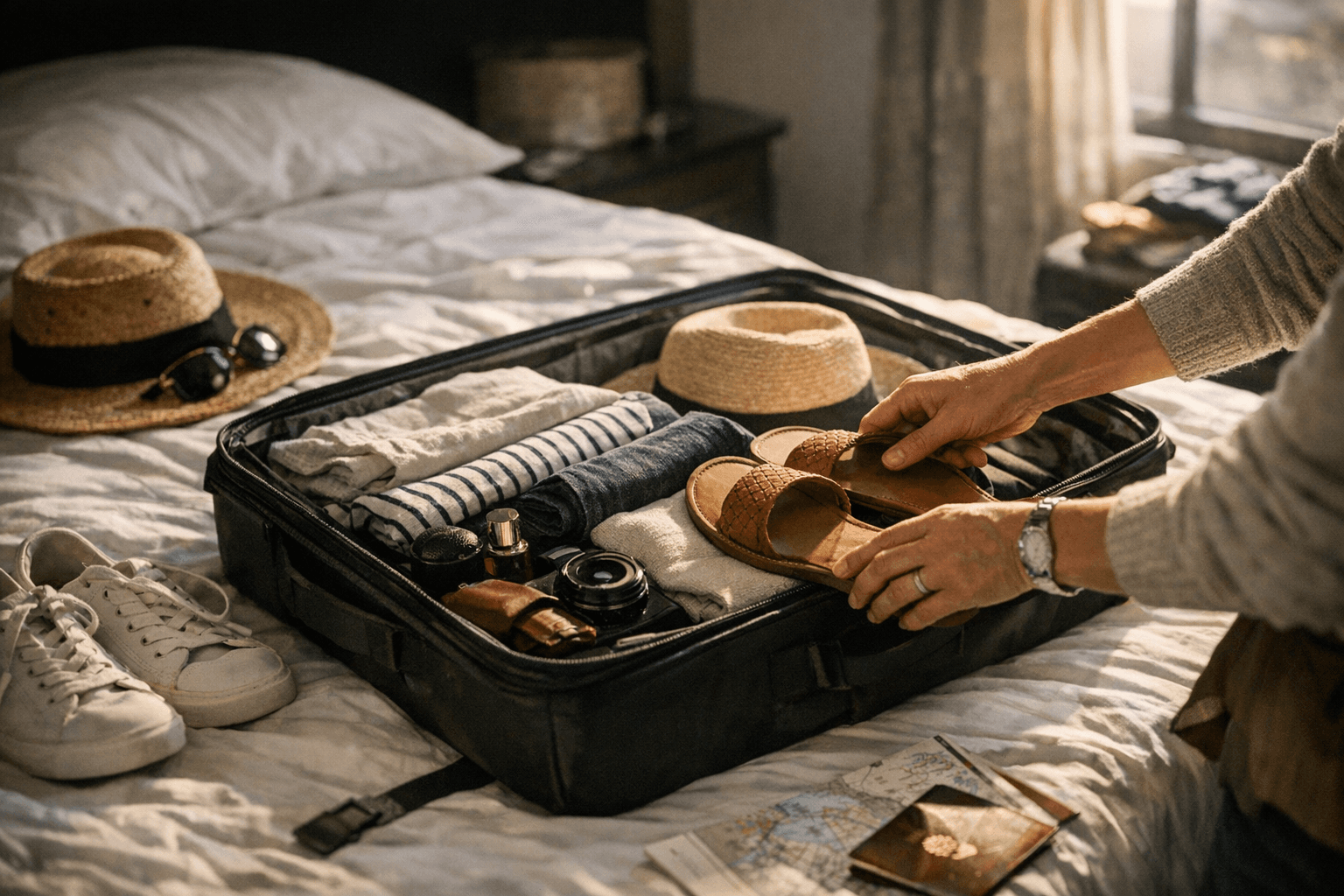
The gap between wanting to pack light and actually doing it is where most trips fall apart. You show up at the airport with a bag that weighs more than your carry-on limit, wearing the same two outfits on rotation, wondering why the other half of your suitcase never got touched. A tight travel capsule fixes all of that. Here are six tips to build one that actually works.
Plan Around What You're Doing, Not What You're Feeling
The single most common packing mistake is shopping (or packing) by mood. You grab a silky slip dress because it feels vacation-coded, or you throw in a linen blazer because it looks good on the hanger. Neither of those moves asks the real question: what are you actually doing on this trip?
Before anything goes into a bag or onto a shopping list, map your itinerary by activity type. A 7-day trip might break down into three beach days, two city exploration days, one nicer dinner, and one travel day. Those categories tell you exactly what you need, and more importantly, what you don't. Packing to a destination's schedule eliminates impulse additions and forces every piece to pull real weight.
Lock In a Color Palette Before You Touch a Single Item
Two to three neutrals plus one accent color. That's the framework. Not five neutrals with a "just in case" red dress thrown in. A defined palette means every top talks to every bottom, every layer works over every outfit, and you're never standing in a hotel room holding something that matches nothing else in the bag.
The most functional travel neutrals tend to be ones that hide wrinkles and minor wear: navy, warm beige, olive, and charcoal all perform better on a 10-day trip than stark white or light grey. Your one accent, whether it's a rust, a cobalt, or a deep terracotta, should show up in at least two pieces so it doesn't read as a one-off mistake. A defined palette also acts as a filter against impulse buys before you even leave home: if it doesn't fit the palette, it doesn't make the cut.
Choose Silhouettes That Shift Registers
The math behind a 7-10 day travel capsule relies entirely on versatile silhouettes. A straight-leg trouser that reads office-appropriate at dinner but relaxed enough for a long walk. A relaxed button-down that layers under a jacket in the morning and knots at the waist over a swimsuit in the afternoon. A structured midi skirt that pairs with a chunky sandal for daytime and with a heel at night.
The pieces that do the most work are the ones that can be dressed up or down without needing a completely different outfit to make the transition. Think about outfit formulas: five tops, four bottoms, and two layering pieces on a 10-day trip can generate well over 30 distinct combinations if every item talks to every other item. That's not a math trick; it's the entire point of building a capsule rather than just throwing in your favorites.
Sew (or Tailor) to Your Exact Proportions
This is where sewing your own pieces becomes a serious advantage over buying off the rack. Ready-to-wear is graded to a median body, which means off-the-rack trousers that are perfect in the waist might break wrong at the ankle, or a blazer that sits perfectly on the shoulder might pull across the back. Those fit issues don't disappear when you're traveling. They get worse.
When you sew or tailor to your specific proportions, every piece hangs exactly as intended, which means you look pulled together even in low-maintenance fabrics. For a travel capsule, fit and fabric are the two non-negotiables. A well-cut ponte trouser in the right inseam length will outlast and outperform a designer equivalent that doesn't actually fit. If you sew, a travel capsule is one of the best use cases for the skill: you can fill precise gaps, match your exact color palette, and build in functional details like deeper pockets or wrinkle-resistant fabric choices from the start.
Commit to Fewer Shoes, Better Shoes
Footwear is where most travel capsules break down. The temptation is to cover every scenario: sneakers for walking, sandals for the beach, heels for dinner, loafers for casual days. That's four pairs of shoes, which is also four opportunities to blow your weight limit and run out of bag space.
The more practical rule: commit to two or three shoes maximum, and make sure each one covers at least two activity categories. A leather sneaker or a refined walking shoe handles transit days, long city walks, and casual dinners. A flat sandal with some structure works for beach adjacency and daytime sightseeing. A low block heel or a sleek mule handles everything that needs dressing up. Three shoes, full coverage, no compromises you'll regret mid-trip. The key is choosing before you pack and being honest about the footwear choices that have historically sat untouched in your suitcase.
Test Every Outfit Before You Zip the Bag
The final step sounds obvious and gets skipped almost universally. Before anything goes into a suitcase, physically put on the outfits you plan to wear. Not a mental inventory of what could theoretically work together, but actual outfit construction. Lay pieces out on the bed if you won't wear them, but go through each combination you're counting on.
This step catches the things that look good in theory but fail in practice: the top that's slightly too cropped to tuck in, the shoes that don't actually work with the trousers, the layer you packed for "flexible coverage" that doesn't actually layer over anything in the bag. It also forces honest reckoning with the pieces that only work with one other item. A single-use piece is a weight tax on your luggage. The outfit test is what separates a capsule that reduces decision fatigue on the road from one that just looks small in the suitcase before you leave.
A travel capsule built on these six principles doesn't require a minimal wardrobe sensibility or a willingness to repeat the same look every day. It requires intentionality before you pack, so that the trip itself stays effortless.
This article was produced by Prism’s automated news system from verified source data, official records, and press releases, then run through automated quality and moderation checks before publishing. The system is built and supervised by the people who set the standards it runs under. Read our full AI policy.
Did this article answer your question?