Taylor Swift and Daisy Edgar-Jones inspire repeat-wear summer dresses
Taylor Swift and Daisy Edgar-Jones make the case for one summer dress doing the work of four. The smartest versions move from errands to weddings with nothing more than a few styling shifts.

The new summer-dress brief
The best summer dress now has to do more than look good once. It has to survive errands, dinners, weddings, and carry-on life without feeling repetitive, which is why the smartest dresses are the ones that shrink decision fatigue instead of adding to it. When 95.6 percent of readers are only viewing and not sharing, the appeal is obvious: a dress with real capsule value is easy to understand at a glance and even easier to wear again.
Taylor Swift and Daisy Edgar-Jones are useful reference points here because neither one reads like a costume designer’s idea of summer. Swift’s repeated outfits and street-style looks reinforce the idea that a strong dress deserves a second and third outing, not a single debut. Edgar-Jones brings the opposite but equally persuasive energy: soft, practical, and unfussy, with a wardrobe that recent fashion coverage describes as full of colorful light knits and breezy summer dresses.
Why the capsule approach works now
The most convincing summer wardrobes are being built from fewer pieces, not more. One chic edit from Who What Wear argues that an eight-piece warm-weather wardrobe is enough when every item is elevated and wearable on repeat. Another capsule plan, built from just eight articles of clothing, leaned into an anti-trend mood and the simple logic of mixing and matching until the outfits start multiplying on their own.
That is exactly where summer dresses become useful rather than decorative. The most hard-working versions are the simple midi dress and the minimalist maxi, because they can swing casual or polished with small styling changes. They are the kinds of pieces that do not demand a new wardrobe around them; they create one.
The errand dress: simple, polished, and almost impossible to overthink
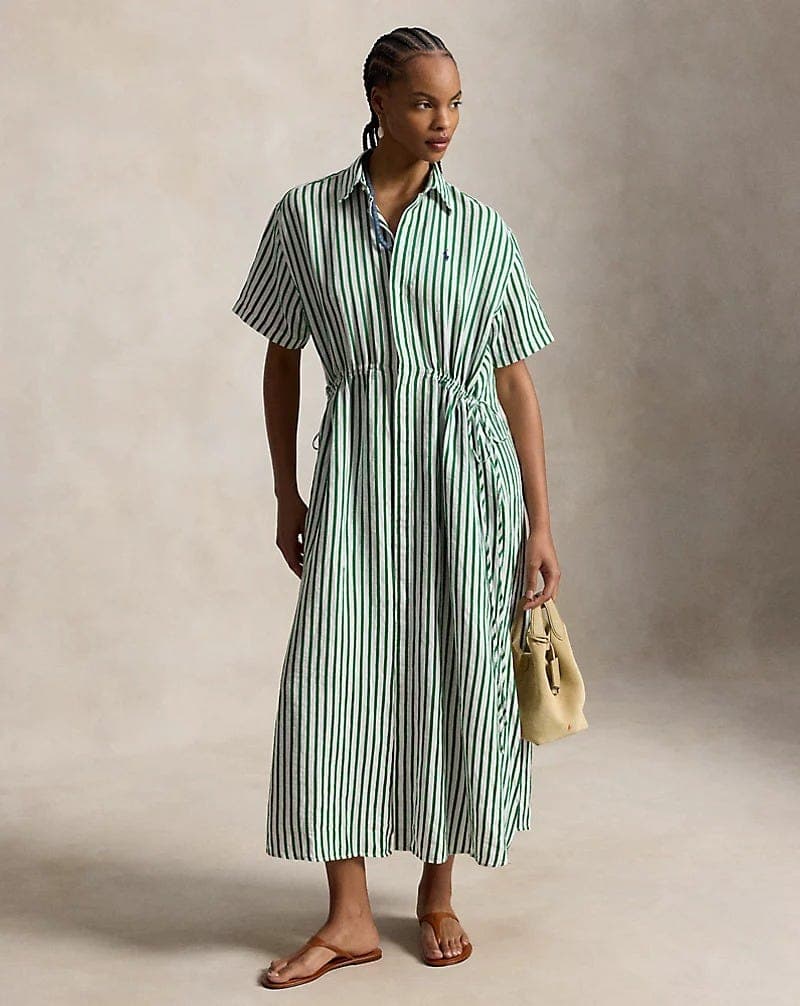
For daytime, the best formula is the easy midi. It sits in that sweet spot where it feels relaxed enough for a coffee run but tidy enough that you do not look as if you just threw on the first thing you found. Who What Wear’s capsule coverage makes simple midi dresses one of the most useful summer staples, and that tracks: a clean midi with a straight or softly flared skirt can handle flat sandals, a woven tote, and bare-minimum accessories without losing its shape.
This is the dress that lets you leave the house fast and still look deliberate. Skip anything with one-note novelty, like a print or cut that only works in a single context. The point of a capsule dress is that it should look just as right grabbing groceries as it does at an unplanned lunch.
The dinner dress: minimal lines, maximum mileage
When the sun drops, the most adaptable choice is the minimalist maxi. Recent summer dress coverage has singled out minimalist maxis as especially versatile, and that versatility is the entire argument for keeping one close. The long line gives you instant polish, while the spare silhouette leaves room for styling shifts that make the same dress feel newly dressed up.
For dinner, the trick is not transformation so much as calibration. Change the shoe, tighten the accessories, and the dress moves from daytime ease to evening restraint. A minimalist maxi in a fluid fabric feels especially smart because it does not fight the body; it skims, falls, and keeps its shape with less fuss than a more structured piece.
The wedding dress: choose ease that can still look formal
Wedding guest dressing can become a trap when every option is trying too hard. The better answer is a dress that already has enough presence to stand up in a room, then lets accessories do the finishing. A midi with a clean neckline or a minimalist maxi with a strong drape is more valuable than anything overworked with embellishment, because it will not look dated the second the event ends.
This is where the capsule logic earns its keep. A wedding dress that can later be worn to a dinner or summer party is a far better investment than one that only works under specific lighting. Repeat wear is what turns a pretty dress into a wardrobe asset.
The travel dress: packable, comfortable, and ready to reappear
Daisy Edgar-Jones has become a particularly good reference for this part of the summer wardrobe because her style reads comfort-led without losing charm. In Vogue Philippines, she said her summer 2025 packing list would center on “shorts and T-shirts and lovely dresses,” and added that she is “quite comfort-led.” That is the exact spirit a travel dress needs: something soft enough to live in, but polished enough that you can step off a train or plane and still look composed.
A recent Glamour note on Edgar-Jones wearing a Mango Selection dress on May 16 only sharpened that appeal, because it shows how approachable her dressing can feel. The lesson is not about chasing her exact dress, but about finding one with the same practical ease. Choose a silhouette that folds well, wears lightly, and does not need a complicated shoe or bag to make sense.
The four formulas that make one dress work harder
- Errands: a simple midi, flat sandals, and an easy bag.
- Dinner: a minimalist maxi, a sharper shoe, and pared-back jewelry.
- Weddings: a dress with fluid movement, polished accessories, and a silhouette that does not need embellishment to feel special.
- Travel: a breezy dress that packs flat, feels comfortable in transit, and looks finished the moment you arrive.
These formulas are why the current summer mood feels less like trend-chasing and more like wardrobe editing. Daisy Edgar-Jones brings the softness, Taylor Swift brings the repeat-wear proof, and the dress itself does the real work. In a season that rewards ease, the smartest summer style is the piece you can reach for again without thinking twice.
This article was produced by Prism’s automated news system from verified source data, official records, and press releases, then run through automated quality and moderation checks before publishing. The system is built and supervised by the people who set the standards it runs under. Read our full AI policy.
Did this article answer your question?