The Viral 3x3x3 Sudoku Packing Method Creates 27 Travel Outfits
Nine pieces of clothing, 27 possible outfits: the Sudoku packing method is the carry-on hack that finally makes overpacking feel embarrassing.
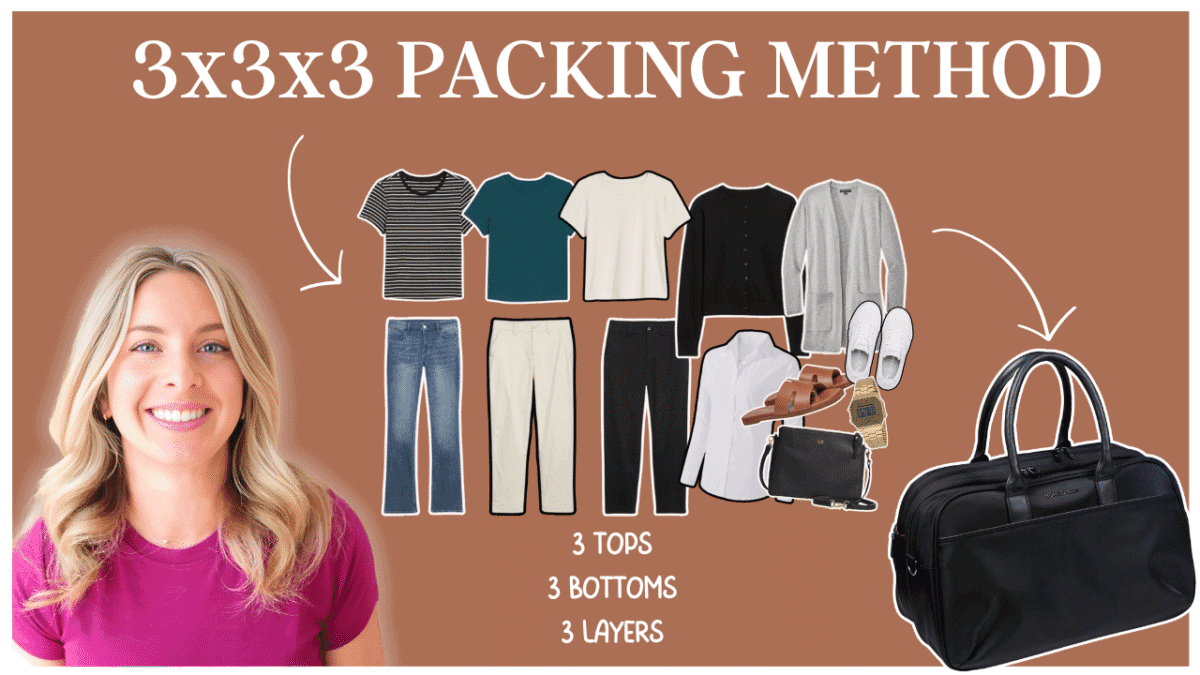
You already know that feeling: standing in front of an overstuffed suitcase at midnight before a trip, surrounded by "just in case" blazers you will absolutely not wear. The 3x3x3 packing method, which travel blogger Aly Smalls of Like Where You're Going has broken down in a guide that's been circulating hard since its March 14 publication, is built on a genuinely elegant premise: pack nine pieces of clothing organized into three categories, and those pieces will combine into far more outfits than you'd ever manage by stuffing in complete looks. The math is simple: 3 tops × 3 bottoms × 3 layers = 27 distinct outfit combinations from a suitcase you can actually lift into an overhead bin.
The method goes by two names. Smalls calls it "the 3×3×3 packing method (sometimes called the Sudoku packing method)," and the Sudoku analogy is more than a cute nickname. "It's sometimes called the Sudoku packing method because the pieces combine in different ways, similar to how numbers interact in a Sudoku puzzle," she explains. Just as every number in a Sudoku grid has to coexist with every other number in its row, column, and box, every garment in your suitcase has to function with every other garment. Nothing gets a free pass. No "just in case" denim jacket that only works with one specific outfit. No silk blouse that clashes with your only pair of trousers. The discipline is the point.
How the Method Actually Works
The core structure is three categories of three pieces each: layers, tops, and bottoms. "Instead of packing complete outfits, you pack versatile clothing that works together," Smalls writes. That distinction matters more than it sounds. When you pack complete outfits, you're locking each piece into a single context. When you pack versatile pieces that genuinely mix, each item multiplies. A linen button-down can be a top under a blazer, a layer thrown over a tank, or, if you're building it right, an overshirt worn open above wide-leg jeans.
The method's power is combinatorial. Each of your three tops can pair with any of your three bottoms, giving you nine top-and-bottom combinations before a single layer enters the equation. Add three layers into the rotation and those nine combinations each split into multiple looks depending on whether you're layering, carrying, or skipping the third piece entirely. The result is a suitcase where, as Smalls puts it, "each piece is chosen to mix and match with the others," and the outfit count grows from nine items into something that can cover a week-plus trip without repeating.
Building a Spring Capsule: Color Palette First
Smalls demonstrates the method with an example spring and early summer travel capsule built around a specific, intentional color story: neutrals, navy, and soft pink. This is where most capsule attempts fall apart before they start. People choose pieces they love individually without considering whether a dusty rose linen top will actually work with their olive cargo pants. In the 3x3x3 structure, color harmony isn't aesthetic decoration; it's structural. "All of these pieces share a similar color palette of neutrals, navy, and soft pink," Smalls notes, "which makes mixing and matching much easier."
The palette approach means that even your most unexpected combinations, the layer you grabbed last-minute with the bottom you almost left behind, will still read as intentional. Navy and soft pink are not neutrals in the technical sense, but they function as a cohesive family that allows pieces to move freely between all three categories without clashing.
Fabric Is a Packing Decision, Not Just a Style One
Here's where Smalls gets specific in a way most packing guides avoid: she names merino wool as the best travel fabric, and she backs it up with personal experience that's genuinely hard to argue with. "Personally, I find merino wool is the best fabric to travel with," she writes. "I can wear 2 t-shirts for 2 weeks not wash them once. They air out overnight and do not smell or get wrinkled or 'stretched out.'" That claim is based on her own experience rather than a lab test, but it reflects what anyone who's traveled with merino already knows. The fabric's natural antimicrobial properties, its ability to regulate temperature across a range of climates, and its resistance to the kind of travel wrinkle that makes linen look defeated by day two make it genuinely exceptional for this kind of packing system.
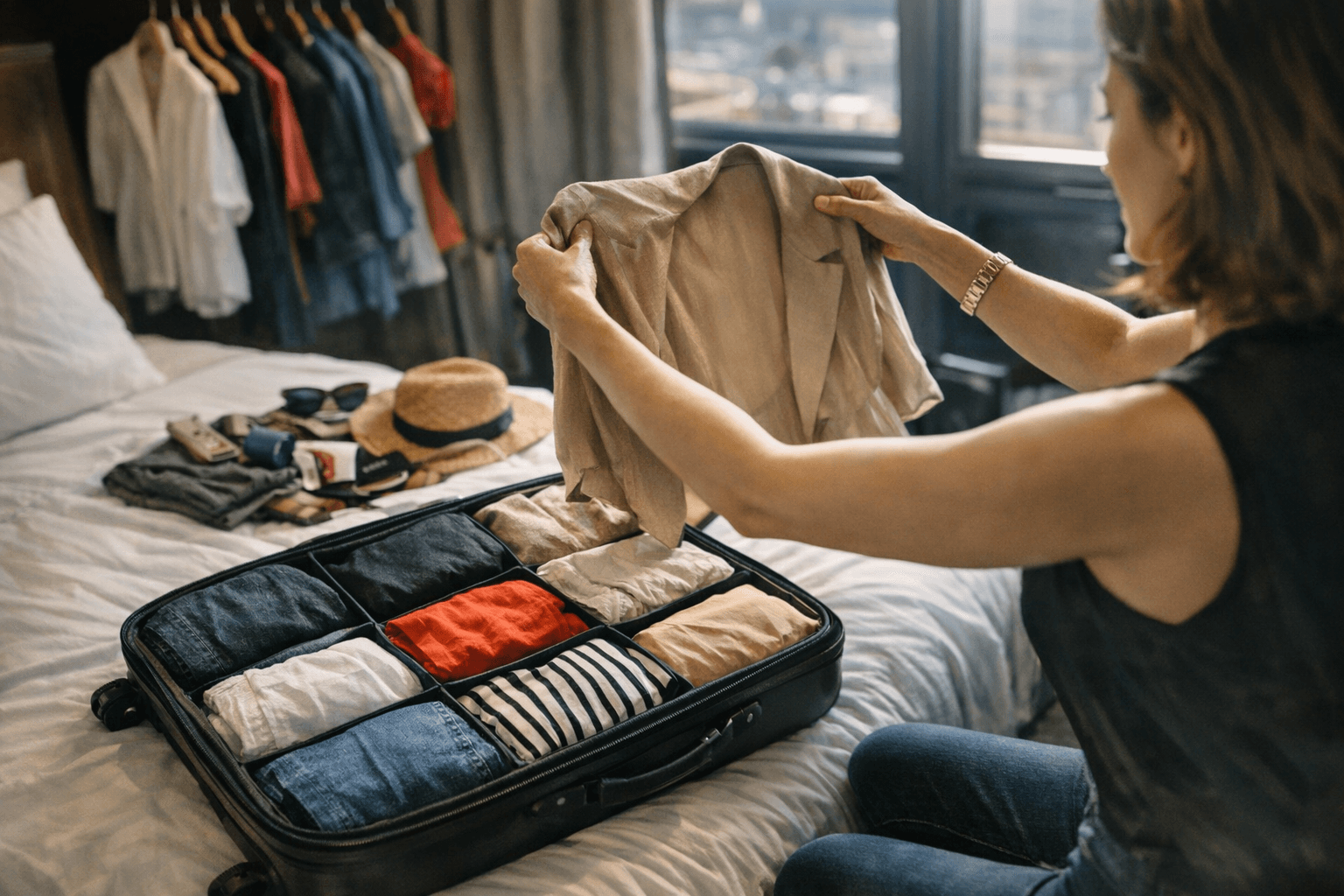
For bottoms, Smalls flags a specific substitution worth knowing: if space is tight, swap a linen maxi skirt for a silk one. "If you're tight on space, choose a silk maxi skirt (instead of linen) which packs down extremely flat." Linen is beautiful on arrival and a compressed, wrinkled situation inside a bag. Silk compresses without protest and shakes out looking clean. It's a small swap with a significant impact on how much physical space your capsule takes up.
The Six-Item Emergency Edit
For short flights or extreme carry-on constraints, Smalls offers one more layer of editing: strip the capsule down to six packed items by wearing your travel-day outfit rather than packing it separately. "If you're extra tight on space (or if your flight is less than 6 hours), I would forgo the additional 'travel day outfit pieces' and wear items from within my capsule. For example, wear the jeans, a t-shirt and the heaviest layer, so that you're only packing 6 items of clothing." This is smart not because it's counterintuitive but because it forces a second check on whether your capsule pieces are genuinely wearable in a travel context, and not just hotel-dinner pieces that require arriving pristine.
The Method in Real Life: A Tested Edit
The method is gaining real traction outside the travel-blogging core. The blogger known as Therecruitermom applied it to her own upcoming travel schedule and described the appeal with unusual clarity: "Just like a Sudoku board, every piece has to work with the others, no random fillers, no 'just in case' items that never get worn. Each top pairs with multiple bottoms, every layer complements your core pieces, and shoes coordinate across outfits." Her tested capsule leaned into accessible mid-market brands, including an AYR tee, a Quince button-down, a Spanx stripe top, an A&F trench, a green jacket, and a sweater as the layer component, paired with Quince jeans in size 31, Paige white jeans (she flags to size up if you're between sizes), and sweatpant-style jeans that run large and require sizing down to a 30. Her tags for the post tell you something about who this method is reaching: midsize fashion bloggers, size 12 and 14 shoppers, curvy moms, women looking for wide-leg denim options, and anyone searching "airport outfit women" at 11pm the night before departure.
That demographic spread is part of why the Sudoku method is circulating so widely right now. It's not a minimalist-fashion-girl framework that only works if you already own a perfect wardrobe of quiet-luxury neutrals. It works with Quince and Paige and A&F because the system is about how pieces relate to each other, not about what brand made them.
The Underlying Logic
Smalls is clear that the nine-piece example isn't prescriptive. "You don't have to copy these exact pieces, you can use this as a foundation and adjust based on your personal style, color preferences, etc." The method transfers across aesthetics, climates, and trip types. A coastal trip in soft linen tones and a city trip in charcoal and black both accommodate the same 3x3x3 architecture. What doesn't transfer is the instinct to pack "just in case." That instinct is what the Sudoku rule is designed to override: every piece earns its place by working with every other piece, or it doesn't make the cut.
Nine items. Three categories. Twenty-seven combinations. The suitcase overhead fits on the first try.
This article was produced by Prism’s automated news system from verified source data, official records, and press releases, then run through automated quality and moderation checks before publishing. The system is built and supervised by the people who set the standards it runs under. Read our full AI policy.
Did this article answer your question?