Un-Fancy — a minimalist fashion blog (Courtney Carver / Caroline Rector resources)
Your whole wardrobe, 37 pieces: Caroline Rector's Un-Fancy method proves a tight color palette and basic outfit math can replace a closet full of clothes you never actually wear.

The average person wears 20% of their wardrobe 80% of the time. That stat alone should make you want to torch the other 80% and start over. That is, essentially, what Caroline Rector did in 2014 when she launched Un-Fancy, a personal outfit journal that became one of the most-referenced capsule wardrobe resources on the internet. She is a wardrobe stylist based in Texas, and her method isn't about aesthetic minimalism as a personality trait. It's about building a system that makes getting dressed easier, more creative, and radically less expensive over time.
The framework she popularized sits alongside Courtney Carver's Project 333, the minimalist fashion challenge Carver first introduced in 2010: dress with 33 items or less for 3 months. Together, these two approaches form the backbone of what is now a full-blown capsule wardrobe movement. If you've been circling the idea but never actually pulled the trigger, this is the step-by-step plan to start this week.
The Logic Before the List
The Un-Fancy approach is process-driven, not prescription-driven. The sequence matters: audit first, pare second, test a small set for one full season, then iterate. You are not trying to build a perfect wardrobe on day one. You are trying to figure out what a functional wardrobe looks like for your specific life. That distinction is everything, especially for beginners who get stuck in research mode and never actually edit a single drawer.
Rector's seasonal capsule sits at 37 pieces. Carver's Project 333 challenge caps at 33. The number you choose matters less than the discipline of choosing a number and holding to it. What the number does is force trade-offs. When everything can stay, nothing gets evaluated. When you have a hard limit, every piece has to justify its place.
Your 7-Day Capsule Starter Plan
Day 1: The Full Audit
Pull everything out. Not "sort through" it, not "glance at it." Remove every item from your closet and drawers and put it on your bed or floor. This is the move Rector herself describes as the most important step: starting from a clean slate rather than subtracting from an existing pile. It resets your reference point. You see what you actually have, including the four versions of the same black top and the blazer you bought for a 2019 interview and never wore again.
Day 2: Edit for Real Wear
Go through each piece and ask one question: did I wear this in the last three months? Not "could I wear it" or "would I wear it if I had somewhere to go." Actually wore it. Pieces that didn't make the cut go into a box, sealed and stored. You're not donating yet. You're just removing them from daily decision-making. This is your buffer period before you commit.
Day 3: Anchor Your Color Palette
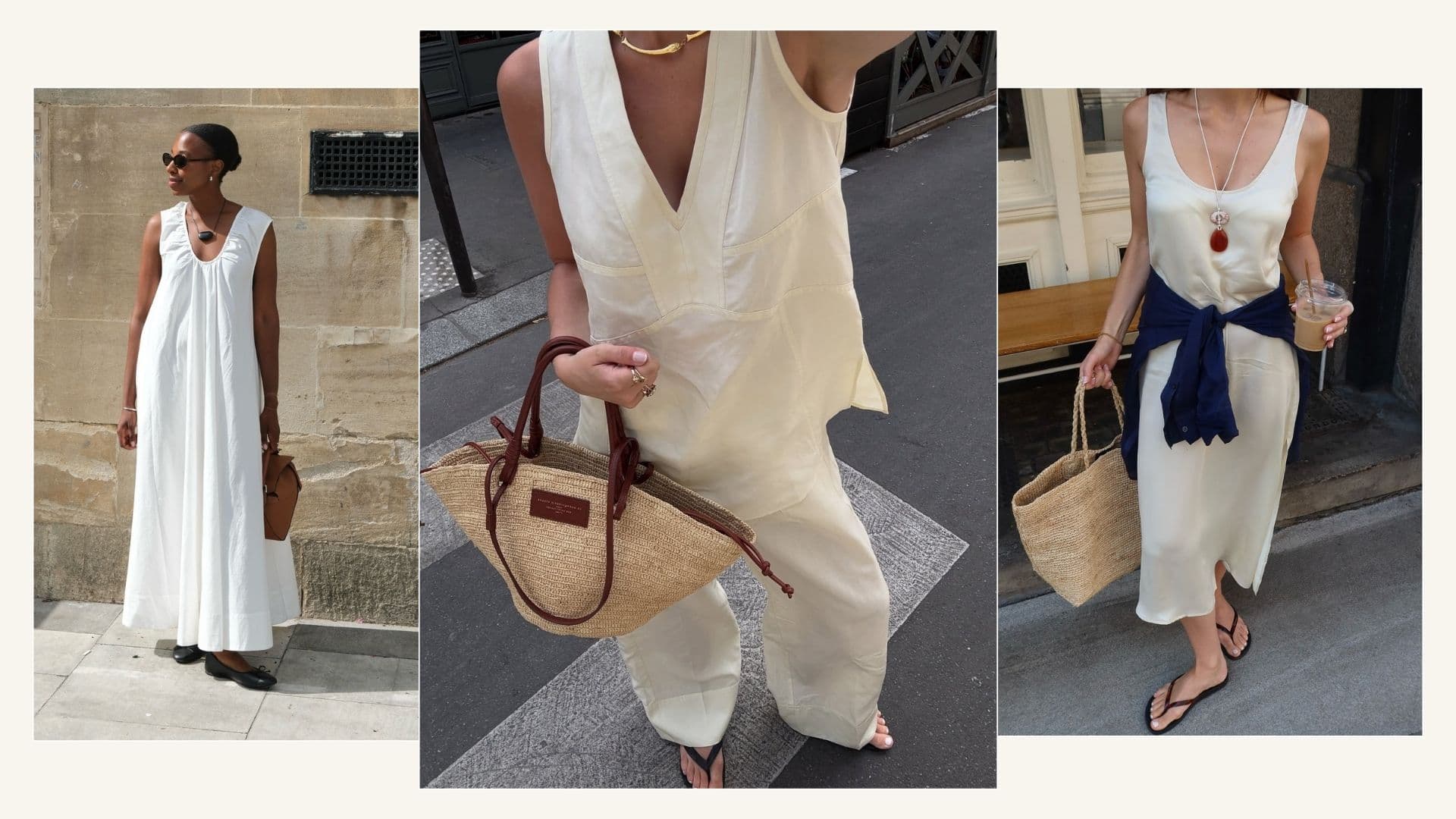
This step trips up most beginners. The goal isn't a monochrome wardrobe; it's a coherent one. Rector's experience with capsule living pushed her toward neutrals as a dominant base, using a mix of blues and greens in tops against grey, khaki, and denim on the bottom. The palette logic is straightforward: choose two to three neutrals that anchor everything (think navy, camel, warm white), then pick one to two accent colors you actually reach for. Every piece you keep or buy should connect to that palette. If it doesn't work with anything else you own, it doesn't earn a slot.
Day 4: Set Your Piece Limit and Categorize
Your target is 33 to 37 pieces for the season. Distribute them across categories based on your actual life, not an aspirational one. A rough starting template:
- 8 to 10 tops (a mix of casual, polished, and mid-register)
- 4 to 5 bottoms
- 2 to 3 dresses or jumpsuits
- 2 outerwear pieces
- 3 to 4 shoes
- 5 to 6 accessories (scarves, belts, bags that complete looks)
Rector uses what she calls a "3 of each" rule in her own building process: for every category, include pieces that are casual, pieces that make a statement, and pieces that sit in between. That internal range is what allows outfit multiplication across a tight set.
What Counts, What Doesn't
This is the most common point of confusion for Project 333 starters. Under Courtney Carver's original rules, items that do NOT count toward your 33 include wedding rings and sentimental jewelry you never take off, underwear, sleepwear, workout clothes (if you actually use them for working out), and at-home loungewear. Items that DO count: every top, bottom, dress, shoe, bag, jacket, and accessory you reach for when getting dressed to go somewhere.
For workwear specifically: if your job requires a uniform or specific dress code, those pieces can be tracked separately from your core capsule. The point isn't bureaucratic rule-following; it's building a framework for intentional dressing. Adapt the structure to your context.
Day 5: Build 12 Outfit Equations
This is where the system pays off. Take your edited set and write out 12 outfit combinations before you start your week. Not aspirational outfits. Outfits you'd actually wear on a Tuesday. The Un-Fancy outfit journal model is built on exactly this: daily documentation of what got worn, how pieces performed, and what combinations actually worked in real life rather than in theory.
A basic outfit equation format:
- Bottom + top + shoe + one accessory = outfit
- Layer outerwear or a third piece to shift the register (casual to polished)
- Swap the shoe to create a second outfit from the same core pieces
When you can build 12 outfits from 37 pieces without repeating a combination, you have a functioning capsule.
Day 6: Track Your Repeats
For one full week, note what you actually reach for each morning. The repeat data is more useful than any planning exercise. It shows you your real default pieces, the ones doing the heaviest lifting, and where the gaps are. It also shows you what sounded good on paper but didn't get worn. After a full season of tracking, you'll have a clear picture of which pieces earn their slot for next season and which don't.
Day 7: Plan Your Seasonal Swap
Capsule wardrobes are seasonal by design. Rector builds a new 37-piece set four times a year, though many pieces carry over across seasons. The swap is not about buying new things; it's about rotating what's in active use. Store off-season pieces, revisit the box you sealed on Day 2, and decide what comes back in versus what gets donated for real. Some capsule practitioners limit themselves to 80 total pieces across the full year, with items cycling in and out per season rather than each season requiring a full new set.
A Real-Person Example Capsule
Here's how a 37-piece spring capsule might actually look for someone with a hybrid work schedule (three office days, two remote, occasional weekend social plans):
Tops (9): white linen button-down, navy stripe tee, cream ribbed tank x2, blush silk blouse, grey crewneck sweatshirt, black fitted turtleneck, chambray shirt, olive green linen top
Bottoms (5): straight-leg dark wash jeans, wide-leg cream trousers, khaki chinos, navy midi skirt, black slim-cut trousers
Dresses/Jumpsuits (3): navy wrap dress, white shirt dress, khaki linen jumpsuit
Outerwear (2): camel trench coat, light grey blazer
Shoes (4): white sneakers, tan leather loafers, black ankle boots, strappy tan sandal
Bags (3): structured black tote, cognac leather crossbody, canvas weekend tote
Accessories (6 that count toward total): cognac belt, navy silk scarf, straw hat, pearl drop earrings, gold hoop set, black baseball cap
Total: 37 pieces. Every piece works with the palette. Every shoe goes with at least three bottoms. The blazer alone functions as outerwear, a workwear layer, and a weekend polish piece. That's outfit multiplication in practice.
The Iteration Is the Point
Caroline Rector launched Un-Fancy with a strict set of rules, then watched her relationship with her wardrobe evolve into something she describes as a genuine creative practice. The framework created the conditions for that shift. A capsule wardrobe doesn't lock you into austerity; it removes the noise so you can hear what you actually like. After one season of tracking what you wear and what you don't, the next capsule builds itself. That's the method. Start small, document honestly, and let the data tell you what your wardrobe actually needs.
Know something we missed? Have a correction or additional information?
Submit a Tip