West Village wardrobe is the new cool-girl capsule
New York’s West Village wardrobe is the rare capsule that feels effortless and useful, built from caps, tees, jeans, trenches, and flats that actually get worn.
Why the West Village wardrobe is the one people will actually copy
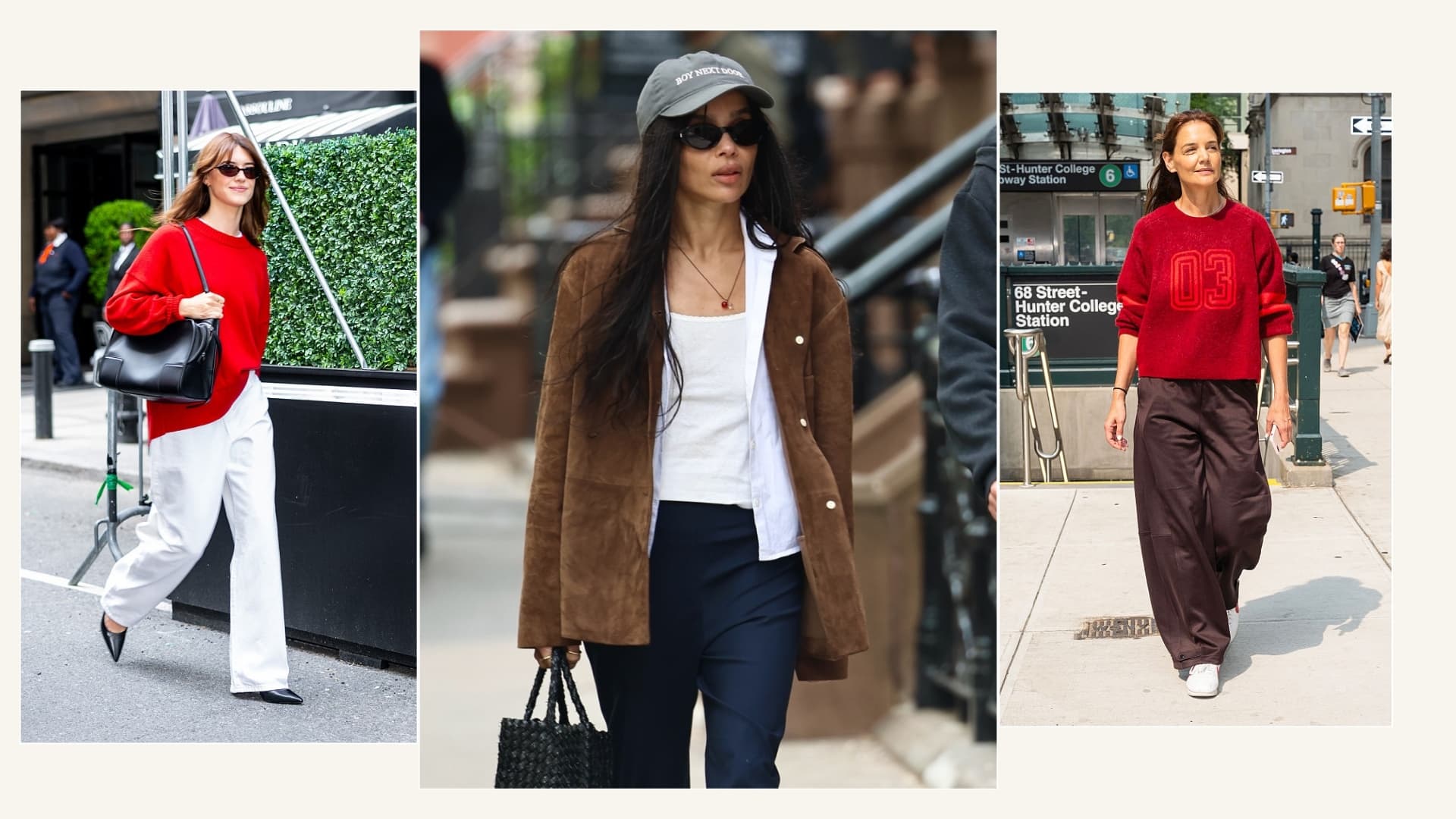
The smartest thing happening in New York style right now is not some runway fantasy. It is the anti-fuss uniform: baseball cap, baggy tee, loose jeans, trench coat, flip-flops, flats. Who What Wear’s Remy Farrell and Joseph Maglieri frame it as the West Village wardrobe, and the appeal is obvious the second you look at it on the street. It reads like ease, but it is really a system.
That is why it lands harder than the more polished, ultra-feminine runway mood shaping 2026, with its knee-length skirts, kitten heels, and cropped cardigans. Those clothes look precious. The West Village version looks lived-in, and that is the point. It has the low-effort, high-repeat energy people want when they are tired of dressing like every outfit needs a full production crew.
The beauty of the look is that it already exists in most closets, or can be built cheaply without chasing anything rare. A cap, a roomy tee, denim that actually moves, one clean trench, and a flat shoe do most of the work. Put that on and you have something that works on the New York subway, at a coffee stop, and outside a show without changing the volume or the mood.
The five-piece spring formula
This is not a shopping list so much as a rotation. The West Village wardrobe works because each piece has a job, and none of them tries too hard.
- Baseball cap: It kills the preciousness fast. A cap makes even the simplest outfit feel intentional, especially when you want to hide the fact that you got dressed in five minutes and still look better than everyone who took an hour.
- Baggy tee: The tee should hang, not cling. The relaxed shape gives the whole outfit that slightly borrowed, slightly slouchy energy that feels more current than anything too fitted.
- Loose jeans: This is the backbone. Straight, wide, or puddled, the jeans should give the outfit space to breathe. Tight denim would overwork the look; loose denim makes it feel like you know what you are doing.
- Trench coat: This is the smart layer that pulls everything together. Over a tee and jeans, a trench gives the kind of quiet polish that makes the outfit look considered without losing the ease.
- Flip-flops or flats: The shoe is the shortcut. Flip-flops make the outfit feel nonchalant in a very New York way; flats make it sharper and more city-proof. Either way, the point is a shoe rotation that feels smarter, not bigger.
If you want the formula to feel even more personal, change the shirt or the denim before you change the shape. That is how the look stays wearable. It is built for repeat, not for reinvention.
Why these references keep showing up
The celebrities driving this are not dressing for novelty. Jennifer Lawrence, Zoë Kravitz, Emily Ratajkowski, and Katie Holmes keep hitting the same note because the note works. It is the kind of off-duty styling that looks relaxed but still photographs with enough clarity to spread fast.

The recurring street-style touchstones tell the same story. Mary-Kate and Ashley Olsen in supersized Oxford shirts and wide-leg trousers are basically the blueprint for making volume look expensive. Paloma Elsesser in a trench and flats strips the whole thing down to clean lines and movement. Chloë Sevigny in a band tee and distressed denim keeps the West Village wardrobe from getting too neat, which is exactly why it still feels cool.
That mix is the real magic here. You get polish from the trench, attitude from the tee, structure from the jeans, and ease from the shoe. Nothing in the formula is precious on its own, but together it creates that specific New York balance of slightly undone and completely in control.
Why capsule dressing keeps winning
The phrase itself is old, which is part of why it still works. Susie Faux revived the capsule wardrobe idea in the 1970s at her London boutique Wardrobe, defining it as a small set of essential pieces that do not go out of fashion and can be updated seasonally. Donna Karan made the concept famous in 1985 with her seven interchangeable workwear pieces, and the logic has barely changed since.
That history matters because the West Village wardrobe is basically a modern, street-level version of the same idea. Instead of building around office tailoring, it builds around off-duty utility. Instead of asking for a full closet refresh, it asks for better combinations of pieces you already know how to wear. That is why it feels so current: it is capsule dressing with less theory and more real-life mileage.
The runway backdrop still matters
New York Fashion Week is still the machine that turns these street-level habits into a broader mood. The CFDA’s spring-summer 2026 preliminary schedule ran September 11-16, 2025, with more than 60 runway shows and designer presentations. Michael Kors opened the American collections on September 11, and Alexander Wang returned to New York Fashion Week for the season, which is the kind of sign that keeps the city’s fashion engine humming.
The official calendar also brought in first-time additions including 6397, Amir Taghi, Dwarmis, Lii, Maria McManus, Nardos, Raúl Peñaranda, Rùadh, and SC103. That mix tells you plenty about where fashion is headed: the old names still matter, but the new entries are what make the schedule feel alive. The 2025 CFDA/Vogue Fashion Fund finalists, Ashlyn, Bach Mai, Bernard James, Don’t Let Disco, Gabe Gordon, Heirlome, Jamie Okuma, and Meruert Tolegen, only sharpen that picture.
And the infrastructure around the week is part of the story too. The CFDA NYFW Fund, established in 2022, has supported nearly 50 international editors so far. That is not trivia. It is proof that fashion week is still a global attention machine, and that the street outside the shows can be just as influential as the runway inside.
The bigger style shift underneath it all
Vogue Singapore’s NYFW spring-summer 2026 coverage pointed out another layer of churn: Chanel, Mugler, Jean Paul Gaultier, and Jil Sander were all debuting collections under newly appointed creative directors. That kind of turnover makes the moment feel unsettled, which is exactly why the West Village wardrobe resonates. When the top of the industry is in reset mode, the easiest clothes often look like the smartest answer.
That is the quiet power of this micro-trend. It is not about chasing a celebrity outfit for one weekend and moving on. It is about building a spring uniform that can survive real life, real weather, and real repetition. The West Village wardrobe works because it is not trying to become a scene. It already knows how to be worn.
This article was produced by Prism’s automated news system from verified source data, official records, and press releases, then run through automated quality and moderation checks before publishing. The system is built and supervised by the people who set the standards it runs under. Read our full AI policy.
Did this article answer your question?